
Glen Ample Raspberry Variety: Description and Advantages
Content
Description
The Glen Ample raspberry variety is a delicious, aromatic, mid-early variety. It is suitable for both open-air and indoor cultivation, making it ideal for commercial production.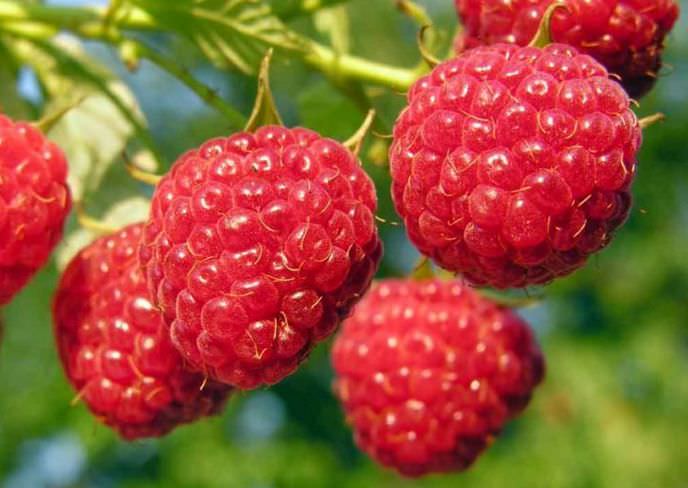
The stems of this raspberry bush are strong, robust, vigorous, and thornless. The shoots reach 3-4.5 m in height. This variety is characterized by high fruiting potential.
Each shoot produces up to 30 laterals, each bearing 18-20 berries. The yield per shoot ranges from 1.2 to 1.6 kg of berries per season.
Video "Description of this raspberry variety"
From the video you will learn what this raspberry variety is.
Varietal characteristics
The Glen Ample bush, when young, grows vigorously, slowing down during the ripening period of the berries.
In the first years of planting, the shoots are green, then they become woody.
The leaves of the bush are oval-shaped, dark green in color with light pubescence, and slightly wrinkled.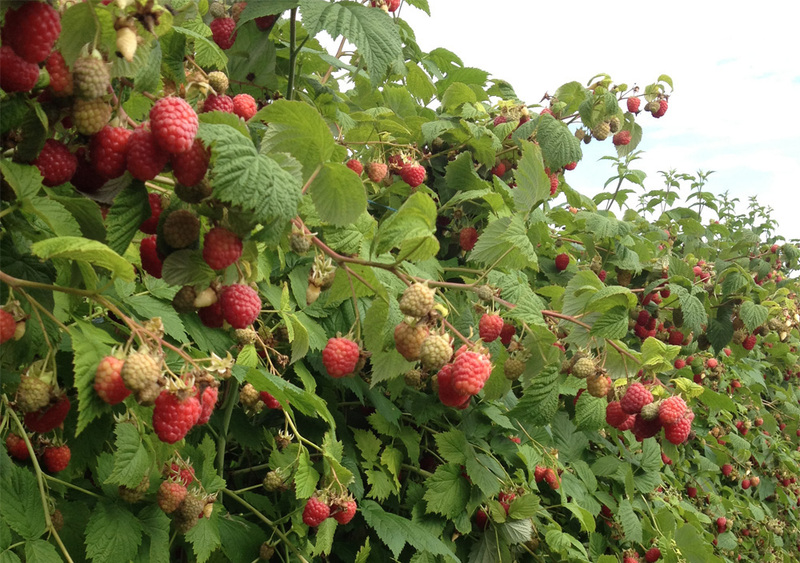
White flowers, 1 cm in size, gather in small inflorescences, located at the top of the stems and in the leaf axils. The shrub blooms from June to July.
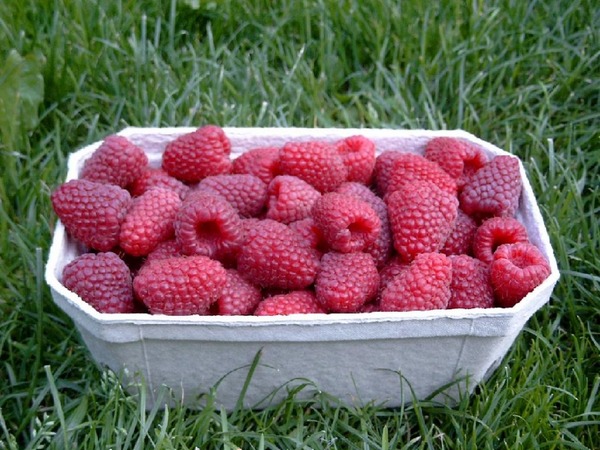
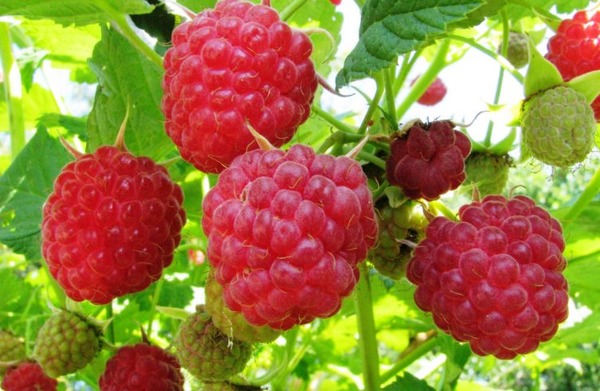
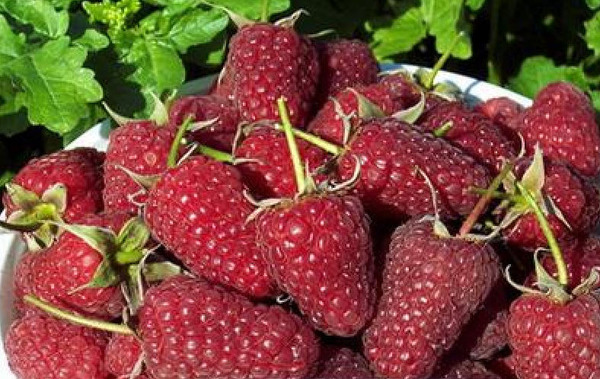
The fruits are large, weighing 5-6 grams, can reach 10 grams, a large percentage of large berries.
Glen Fine raspberries, like Glen Coe raspberries, produce round, slightly elongated berries of a juicy, bright red hue. When fully ripe, the berries turn a deep burgundy.
The pulp of the berries is juicy, sweet with a slight sourness.
The fruits have a dense, elastic consistency and are distinguished by their high transportability characteristics.
The berries adhere well to the bush and do not fall off even after full ripening.
The yield volume reaches up to 30 t/ha when planted industrially using intensive technologies, and on average – 4-4.5 kg from each bush.
The Glen Ample raspberry harvest begins in mid-to-late July and lasts for about a month.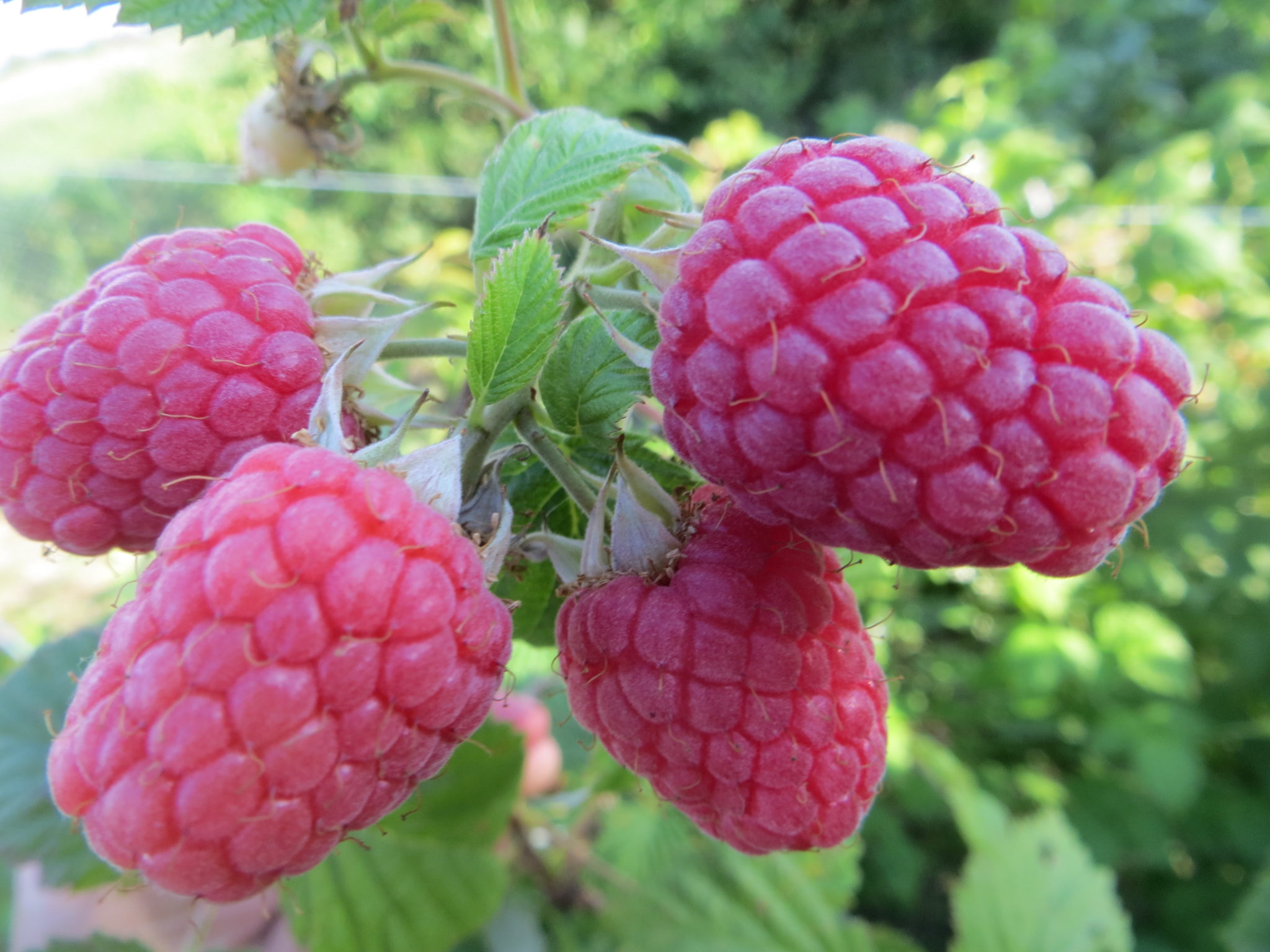
It begins bearing fruit in the second or third year; in the first year, the berries are small and few in number. On average, a plantation of this variety lives up to 10 years.
The variety has high resistance to aphid-borne diseases. Disadvantages include susceptibility to root rot.
Grown in the usual way, like most summer raspberry bushes, it is cut out after the final harvest.
Landing requirements
This variety is successfully used for both open and closed ground cultivation. It is grown in Europe in greenhouses and plastic tunnels, and is excellent for mechanical harvesting.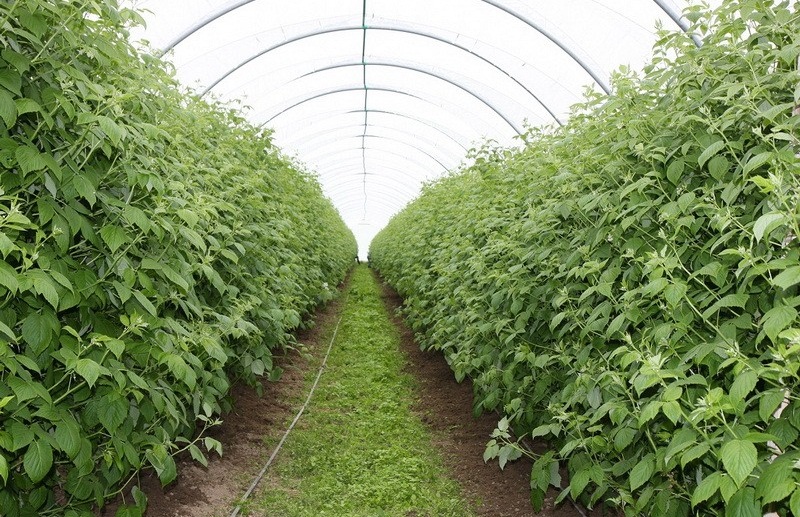
Growing Glen Ample raspberries in Ukraine has shown that heavy, clayey soil in regions with abundant rainfall and warm, snowless winters is not a suitable location for growing this variety.
This variety requires the following climatic conditions: soil that doesn't freeze in winter, and covering the bushes with snow during frosty winters. In warm, fertile climates, this variety can often be everbearing, with flowers and ovaries appearing at the tops of the shoots in August.
It is preferable to plant this variety in a sunny location, but if this is not possible, it can also grow in the shade.
The bush is unpretentious and tolerates strong winds and drought well.
The soil required is the same as for most raspberry bushes: fertile, well-drained.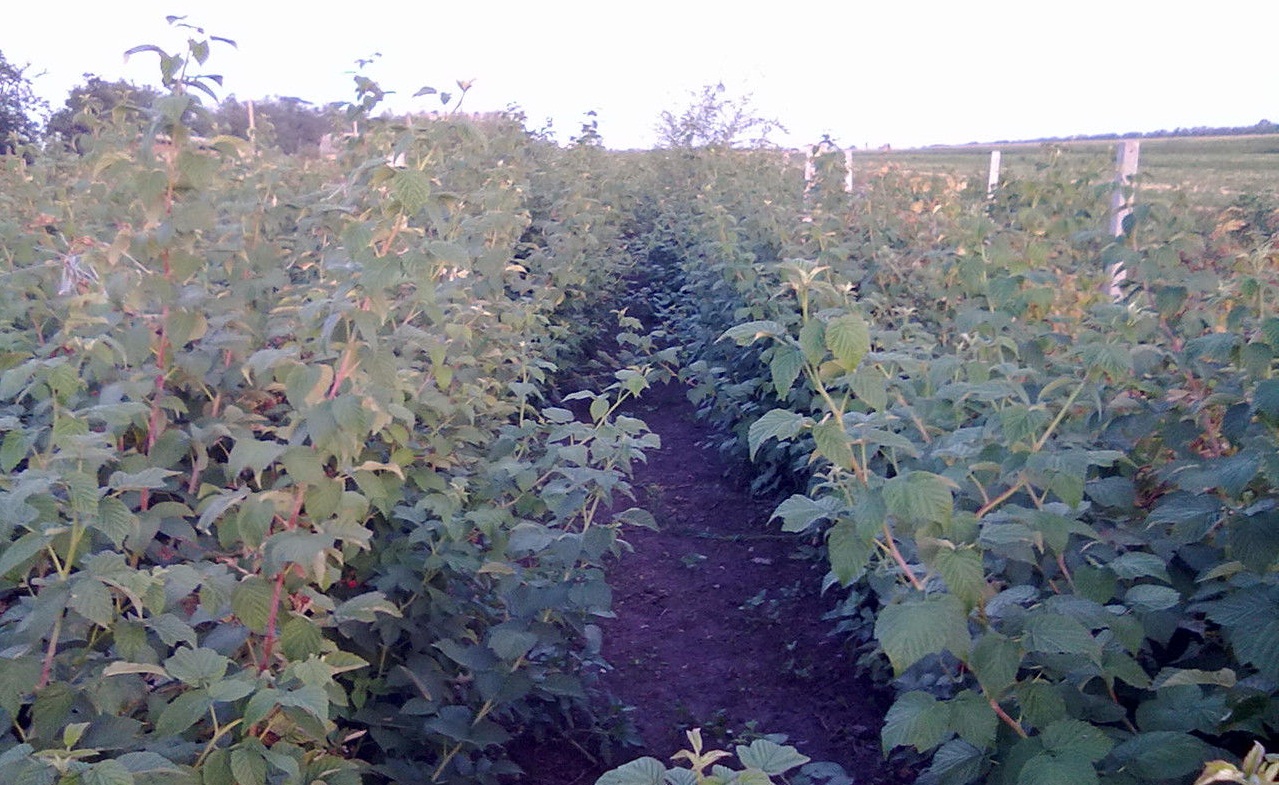
The bush produces the required amount of root shoots, thanks to which it has the ability to reproduce quickly.
For industrial cultivation, the distance between rows is 3-4 m, for private plots 2-2.5 m.
Planting and care
The procedure for planting Glen Ample raspberries in winter or autumn is no different, except for the process of preparing for planting seedlings.
In early spring, you need to dig holes measuring 50x40x40 cm, with a distance of at least 50 cm between them, and a distance of at least one and a half meters between rows.
Mix the top layer of soil with fertilizer, filling the prepared hole one-third full.
It is necessary to take into account that 10 kg of compost or humus, 50 g of potassium sulfate, and 400 g of wood ash will be used for each hole.
Place the raspberry seedling in the prepared hole so that the replacement bud is below the soil surface. Carefully spread the root system, cover with prepared soil, and compact it.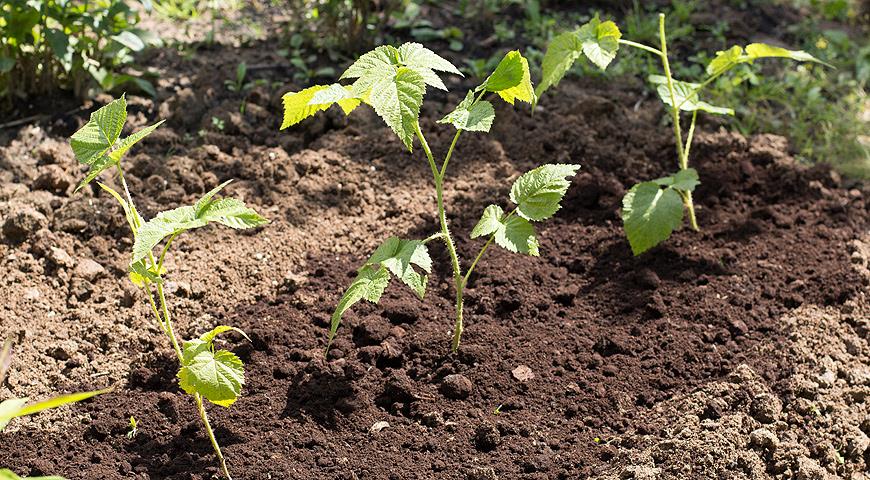
Watering during planting is accomplished as follows: dig a narrow hole around the diameter of the seedling and fill it with water. After the water has soaked into the soil, fill the hole with humus, sawdust, or dry straw, and trim the seedling to a height of 30 cm above the soil.
After two days, if there is no rain, water the Glen Ample raspberry seedlings.
There is a risk of delaying the favorable planting time for spring planting, in which case the survival rate of seedlings may decrease.
In the spring, you can plant raspberries using purchased seedlings or shoots harvested in the fall and stored in a cool place. Fall planting requires advance site preparation, which should be done at least a month in advance.
The soil should be dug over, weeded, and fertilized with compost at a rate of 2-3 buckets of organic fertilizer per square meter. If you add other fertilizers, such as 200-400 g of superphosphate and 100-200 g of potassium sulfate, you can rest assured that the soil will remain fertile for five years, maximizing the potential for a bountiful harvest.
The best time for autumn planting of raspberries is the end of September or the beginning of October.
Experienced gardeners believe that autumn planting is more effective than spring planting, as it allows for time-consuming, thorough preparation of the site, and, importantly, allows the seedlings to take root, establish themselves, and begin vigorous growth in the spring before temperatures drop.
The primary factor in spring raspberry care is clearing the area of decayed leaves, which can cause plant diseases and serve as breeding grounds for many insect pests. If the raspberry bushes are tall, they are tied to a trellis. Subsequent care includes weeding, shallow tilling of the soil around the bushes, mulching, watering, and fertilizing.
Spring fertilization of raspberries with nitrogen fertilizers consists of watering the bushes with a special solution, which is prepared as follows: dissolve one shovel of cow dung in one bucket, adding 5 g of urea.
The prepared solution is added to the soil under each bush in late March or early April. You can also apply other nitrogen fertilizers at a rate of 20-25 grams per square meter. After applying, be sure to loosen the soil.
Other types of fertilizing are not advisable, provided that you added phosphorus-potassium fertilizers during the planting process.
In the fall, after the harvest is complete, prepare the raspberry bushes for winter. To do this, clear the area of any remaining mulch that has been there all summer. Dig the soil to a depth of 8-10 cm. It is recommended to add compost and wood ash during digging no more than once every two years.
Unlike in spring, nitrogen fertilizers are not applied in the fall, as they stimulate vigorous growth of young shoots, which, if they shed their leaves late, are susceptible to frost damage. If it's time to fertilize the soil in your garden, you can apply potassium-phosphorus fertilizers in furrows 15-20 cm deep, no closer than 30 cm from the bush. The required amount is no more than 60 g of superphosphate and 40 g of potassium salt per plant. This fertilizer will promote flower bud formation, which will increase the future harvest.
Video: Planting Raspberries
In this video you will see how to properly plant and care for raspberries.