
Proper care of raspberries after harvesting
Content
Watering
In the fall, post-harvest care for raspberries involves generously watering the bushes, as this is the period when buds form that will bear fruit and yield a new harvest next year. The final autumn watering is done when the first frosts arrive.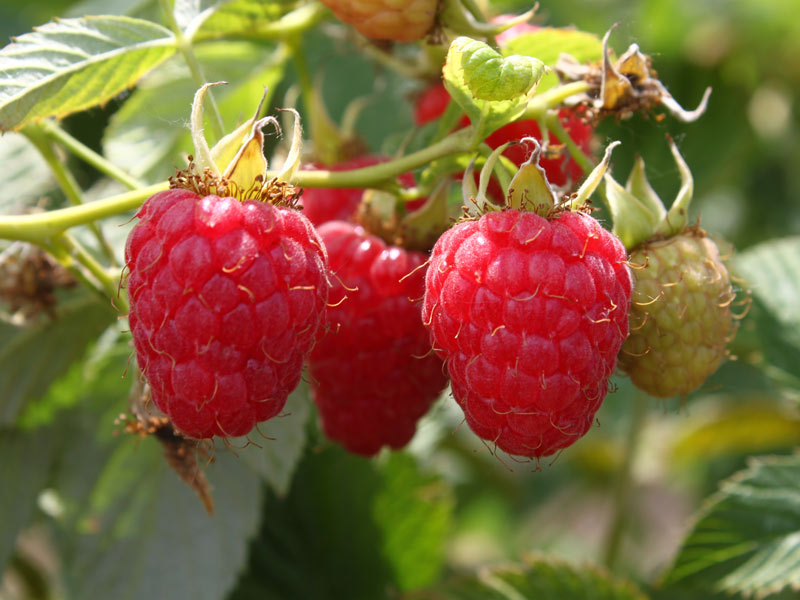
The raspberry patch is watered generously for the last time before wintering, at a rate of at least 35 liters per plant.
Video "Leaving"
From the video you will learn about proper care after harvesting.
Top dressing
Autumn fertilization of raspberry bushes is an important and necessary part of caring for the bushes after the raspberry harvest. Since the bushes have been actively bearing fruit and growing vigorously, the soil has provided them with a wealth of nutrients. Fertilizing is done to replenish the depleted, poor soil with beneficial nutrients.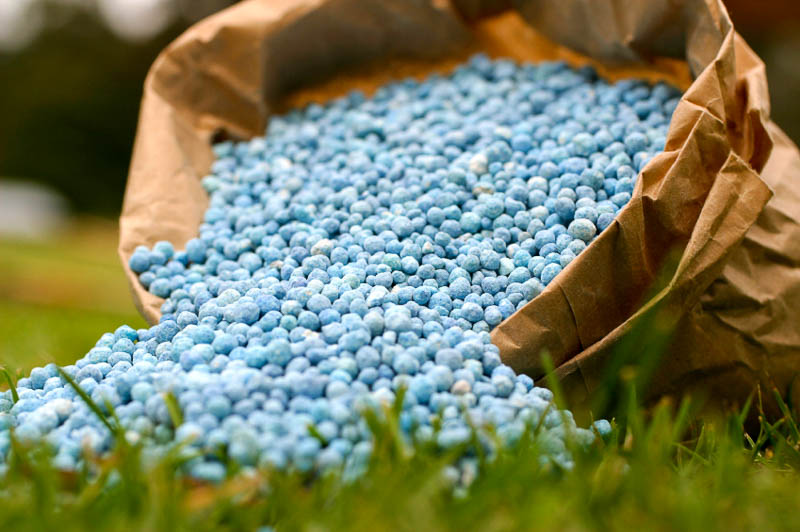
Gardeners, observing certain plant characteristics, know what to do with raspberries, how to fertilize them, and what kind of feeding they need.
Symptoms of a deficiency of macronutrients: nitrogen, magnesium, potassium, phosphorus are external signs on the lowest leaves.
Nitrogen deficiency causes the lower leaves to turn yellow, their growth is gradually stunted, the leaf margins curl inward, and the shrub takes on an unhealthy appearance. However, nitrogen fertilization should not be performed in the fall, even if the plant shows all the signs of nitrogen deficiency.
This type of fertilizing will stimulate the growth of young shoots that will not survive the winter because they will be too young and weak. Typically, nitrogen fertilizing is done in the spring.
A phosphorus deficiency manifests itself as a change in leaf color in the lower layers of the shrub. The leaves become crimson, purple, or lilac-tinged. To compensate for the deficiency, phosphorus-containing fertilizers should be applied to saturate the soil with this micronutrient.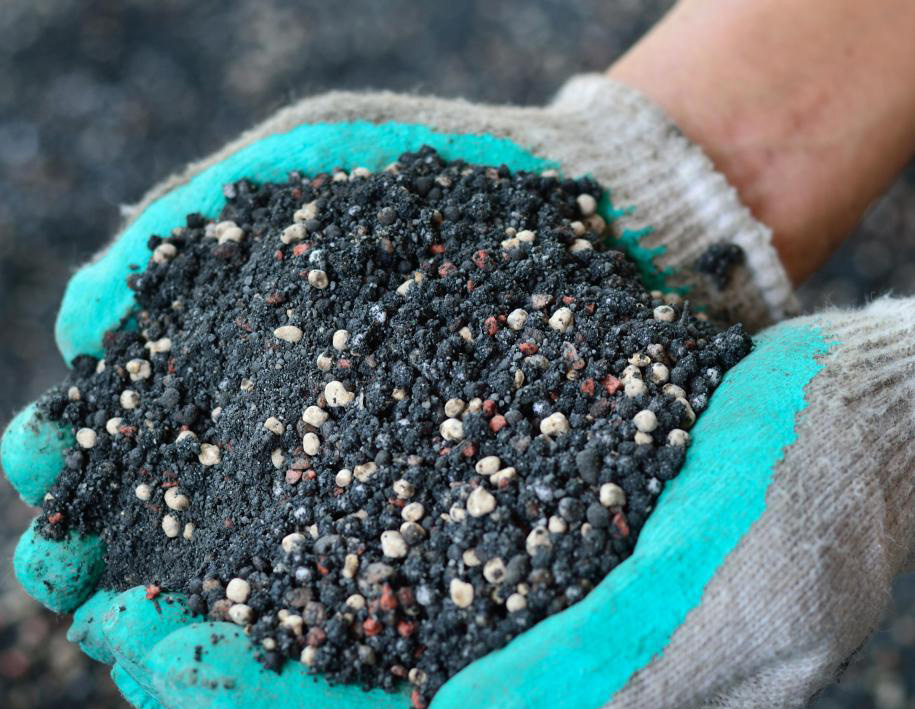
Potassium deficiency is characterized by a foliar disease called marginal necrosis, in which the edges of the leaf blade turn brown and die. After applying potassium fertilizer, the affected parts of the plant will not recover, but the micronutrient deficiency will be replenished, the plant will strengthen, prepare for cold weather, and successfully overwinter.
If for some reason fertilizing raspberries with commercial fertilizers in the fall is not possible, many farmers use green manure plants. These include blue lupine, vetch, and mustard. These crops are sown between rows of bushes in early summer, and in late fall, the mature green manure plants are dug into the soil. Over the winter, the green manure plants will rot and enrich the soil with nutrients, resulting in a bountiful raspberry harvest the following season.
Raspberry bushes are also fed at this time of year with manure at a rate of three buckets per square meter of the plot. In late autumn, fallen leaves should be removed from under the bushes to prevent insects from hiding there over the winter. The soil under the bushes should be dug over, and the mulch can be collected or dug over.
Trimming
Fall pruning of raspberries is a key step in caring for them. After the last harvest has ripened, the raspberries are harvested and pruning begins. Thin, dry, and weak branches should be removed. If the bushes are tall, pruning is done in stages: branches are shortened to the height that can be reached with pruning shears, and then shortened to 25-30 cm above the soil surface.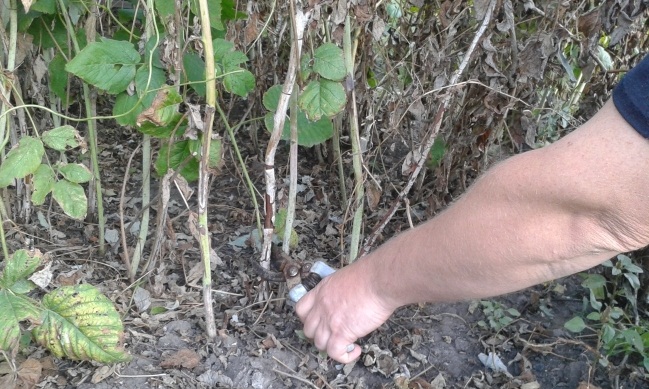
When preparing for winter, gardeners often make the mistake of gathering raspberries into bunches, tying them, and then overwintering them. This can lead to the flower buds on the shoots, which won't be covered by snow, freezing.
Before the first frost, raspberry bushes are bent to the ground as low as possible and fixed in this position at the level of the bottom wire of the trellis, removing all the leaves from the branches.For these purposes, put on a household glove, firmly clamp and grasp the shoot, moving your hand from the bottom up.
The leaves must be harvested in this manner only; tearing off the leaves is unacceptable, as the flower buds on the branches grow from the bottom up, and in this case there is a risk of damage and breakage.
Leaves on the bushes, after picking raspberries, should not be left on the shoots, as they will cover the buds, which during rain will cause the leaves to get wet and further burn the buds.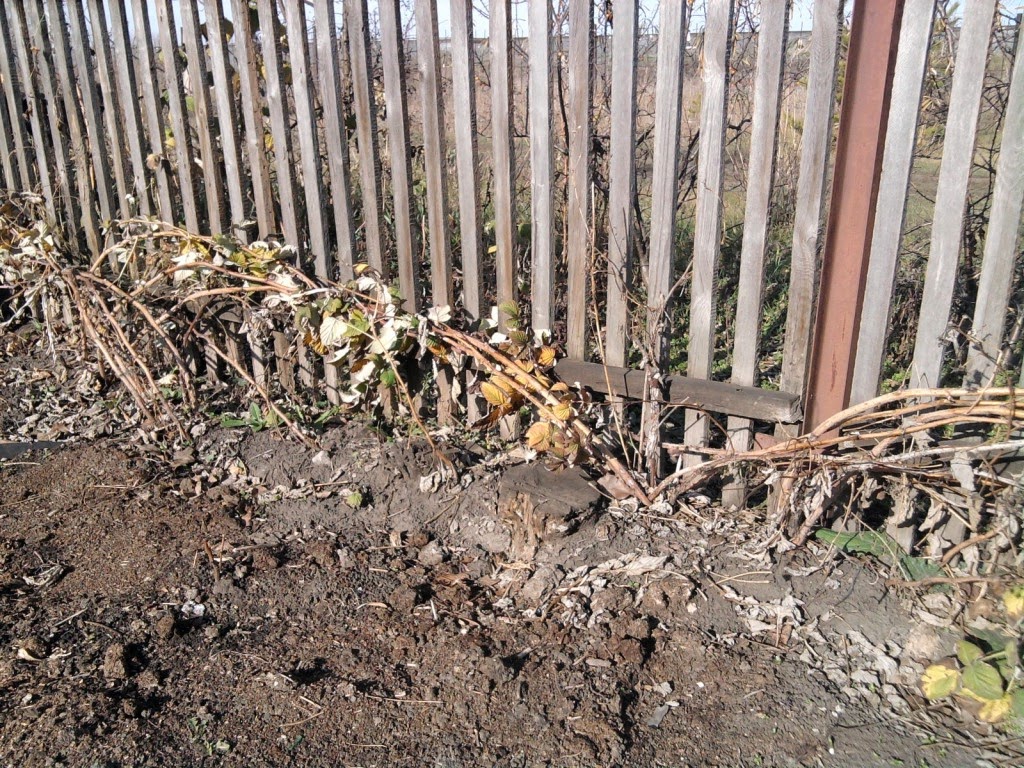
Fall pruning of raspberry bushes is essential to prepare the bushes for winter. Proper pruning reduces pest infestations, and the plants survive the winter better. Fruiting shoots are cut back to the roots with pruning shears.
Pruning everbearing raspberries varies slightly depending on how many crops you plan to harvest next season. If you plan to harvest two raspberries, prune the bush like a regular raspberry bush, but if you plan to harvest one large raspberry bush in late summer, remove all the shoots.
Reproduction
Propagating raspberries at home is a low-cost procedure. If you initially purchase seedlings or roots of the desired variety, then expanding your raspberry patch will be a breeze.
An overview of several effective propagation methods used by experienced gardeners.
- Propagation from roots.
Prepare the bed and add organic matter, then dig a trench 30–50 cm deep. Place the roots in the trenches, arranging them in rows along the entire length. Water and cover with soil.
During fall planting, the roots should be earthed up to protect them from frost. On average, one kilogram of roots produces up to 100 seedlings. In the fall, all seedlings are dug up and planted in their permanent location.
Thus, in the spring, 6-7 young plants will emerge in the place of a single seedling. These will serve as a propagation center, from which new seedlings will grow over the course of several years. Each year, at the end of summer, they will need to be dug up and replanted in a vacant spot.
- Cuttings.
To propagate raspberries this way, take 10-cm-long cuttings. Before planting in the fall, treat them with fungal protection, cover them with peat, and place them in a basement or cellar where they will await spring. The peat requires periodic watering.
- Propagation directly on the plantation.
This propagation method is performed in the spring and is only applicable to second-cycle shrubs. All young shoots are removed from the area using a cloth or flat-bladed pruner.
New shoots, forming in late spring, are more resistant to diseases and pests, and are also more productive, with more fruits ripening on them.
- Propagation of raspberries from a mother bush.
Young shoots up to 8 cm tall are separated from the mother plant and dug up along with a small piece of soil, without damaging the roots. It's best to do this early in the morning, after which the seedlings are immediately placed in a plastic bag to prevent moisture from evaporating from the soil.
It's best to plant the seedlings in a greenhouse until they take root. If planting in a greenhouse isn't possible, they can be planted in separate containers.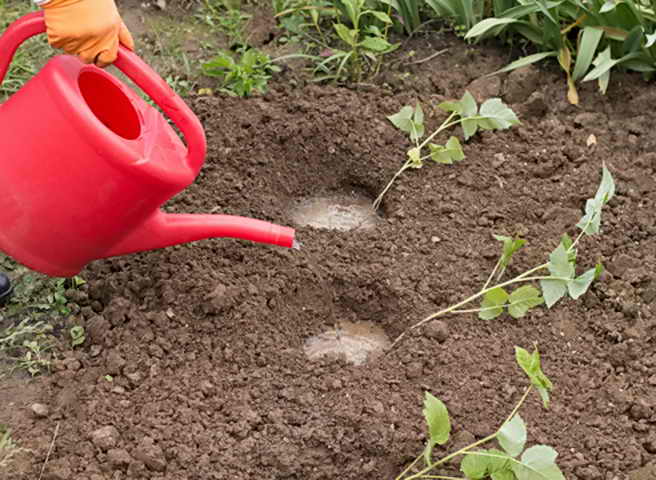
You can plant all the seedlings in one large box, but be sure to space them 10-15 cm apart. Firm the soil to the diameter of the raspberry seedlings, and water. Cover the box with clear plastic. Open the plastic twice a day, morning and evening, for ventilation.
On average, after two weeks, new leaves appear on the seedlings. This indicates the beginning of the formation and development of the root system. By the end of the third week, all planting material is transplanted to a bed protected from sun and wind.
Processing
To eliminate insect pests, after the final harvest, the plants and soil beneath them should be treated. To do this, spray the bushes with a solution prepared from Fufanon, 10 ml per 10 liters of water, using 1.5 liters of the resulting solution per bush.
To treat raspberry bushes in winter to remove lichen and moss, water the soil under the plants with a solution of copper or iron sulfate.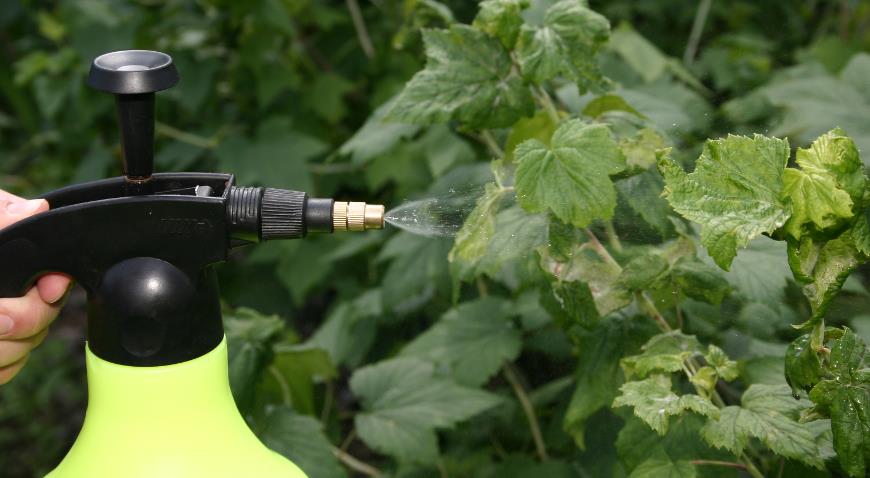
To avoid various insects that may be hiding in weeds and last year's leaves under the bushes, everything must be removed and cleaned before winter.
If this is not done, the pests will overwinter there in this form, causing irreparable damage to the plant.
Video "Cropping"
From the video you will learn about pruning raspberries.