
Raspberry trellis: types and how to make your own
Content
Purpose
Modern raspberry varieties, especially everbearing ones, typically have tall (up to 1.8 m), sometimes flexible shoots with fairly long fruiting branches. And since gardeners prefer to grow large-fruited varieties that produce multiple harvests throughout the season, raspberry bushes simply can't handle the strain—they bend and sometimes break.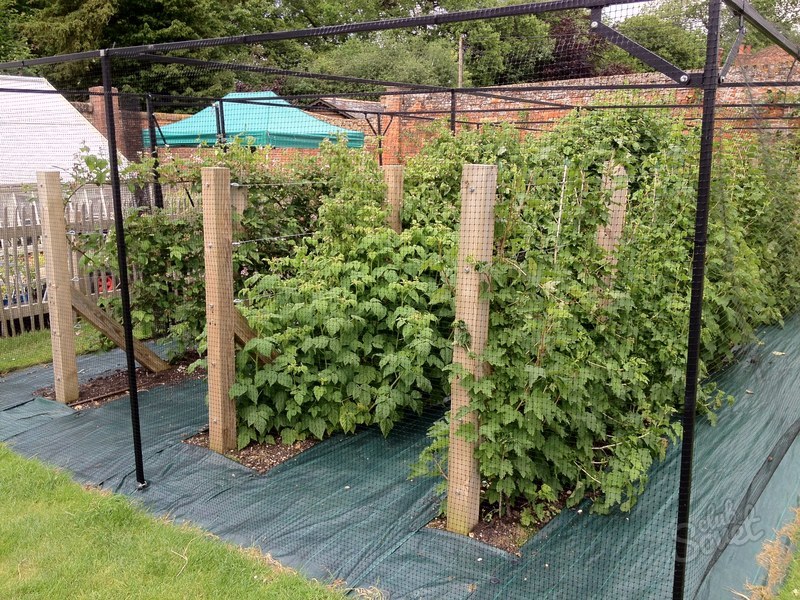
To avoid crop loss and maintain the healthy appearance of the bushes, it is recommended to tie raspberries to a trellis, preferably a high-quality structure rather than a simple wooden stake. Of course, not all gardeners have the time, or even the inclination, to make and install a raspberry trellis. However, it's important to understand that only low-growing bushes with a small number of berries or single bushes can be tied to a stake. However, tall everbearing varieties require a good trellis; otherwise, the wind and the weight of the berries will cause the shoots to collapse, resulting in the loss of the harvest.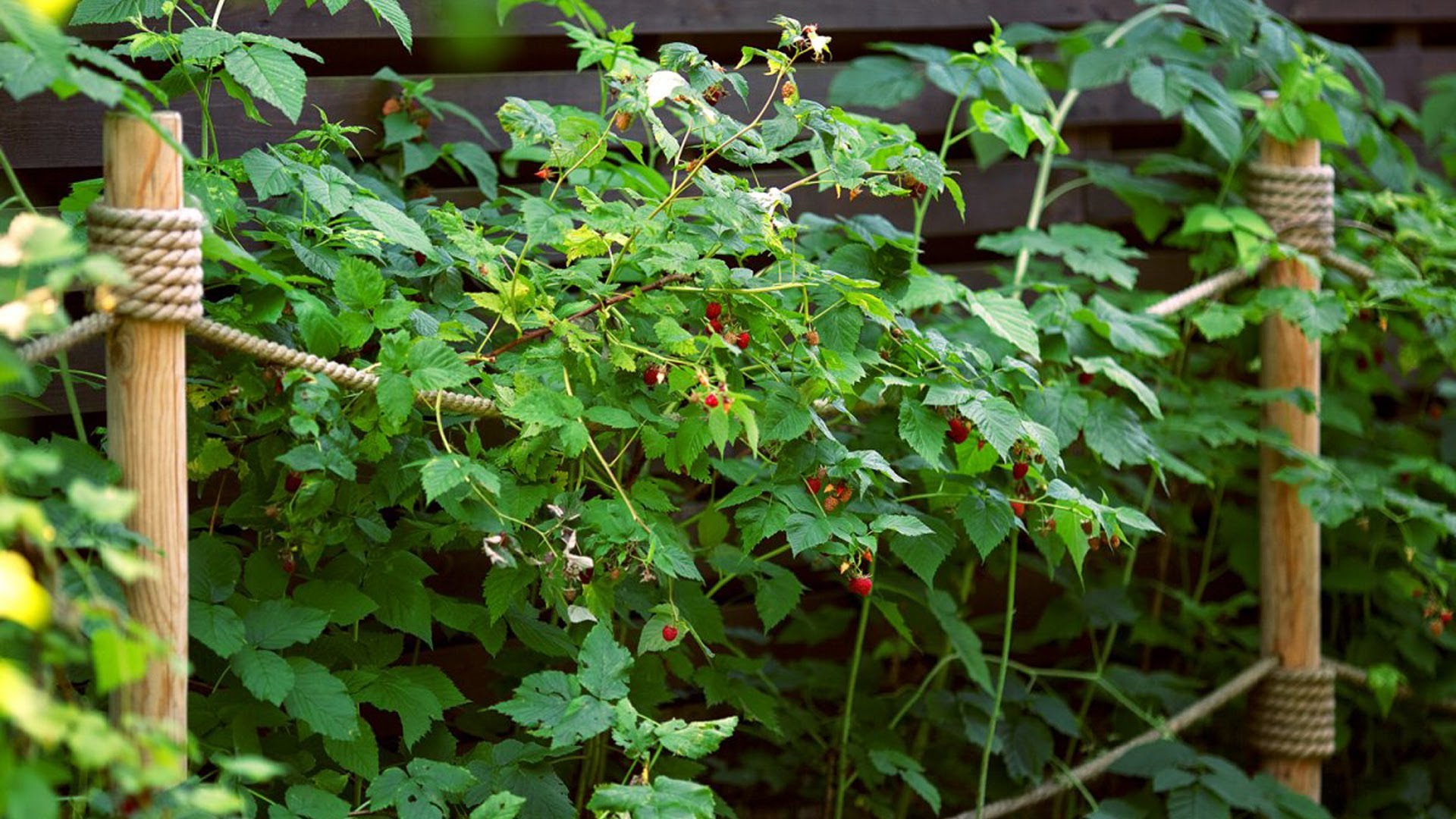
It is necessary to install the trellis immediately after planting the seedlings, and it is better to plant young bushes immediately under the trellis at a distance of 50 cm from the structure. This option is considered the most acceptable, as the bushes will grow later, making it more difficult to install supports. If raspberries are planted in the fall, the bushes are usually already pruned, so staking them is unnecessary. This is best postponed until spring, when lateral shoots appear. Further staking is carried out as the branches grow throughout the season.
Video "Best Views"
From the video you will learn about the best types of trellises.
Advantage of using
Growing raspberries on a supporting trellis is a very convenient agricultural technique with a number of advantages for both the gardener and the plants:
- uniform illumination of bushes and, as a result, mass ripening of berries;
- thanks to the large amount of sun, the berries are sweeter and juicier;
- good ventilation of plantings by the wind, which prevents moisture stagnation and the development of fungal diseases;
- fixed shoots do not bend from rain, strong wind and other weather conditions;
- the branches of the lower tier do not contact the ground, due to which the berries always remain dry and clean;
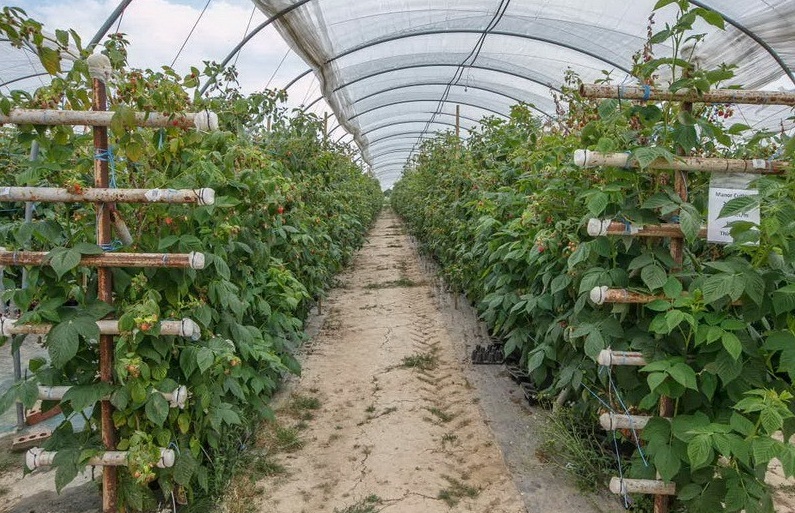
- It is easier to care for raspberries growing on a trellis: water, feed, and prune.
- A high-quality trellis support for raspberries can be used for several years, and if necessary, it can be dismantled or moved to another location.
Design options
It would seem that there's nothing special about a trellis—support posts with several rows of wire attached to them. That's all. However, trellis structures, particularly those used for tying up raspberries, come in a wide variety of shapes, types, and even subtypes. Gardeners divide all types of trellises into two main groups:
- single-strip – consisting of one surface and intended for fixing stems;
- and two-lane ones - more advanced designs that allow not only to support, but also to shape bushes.
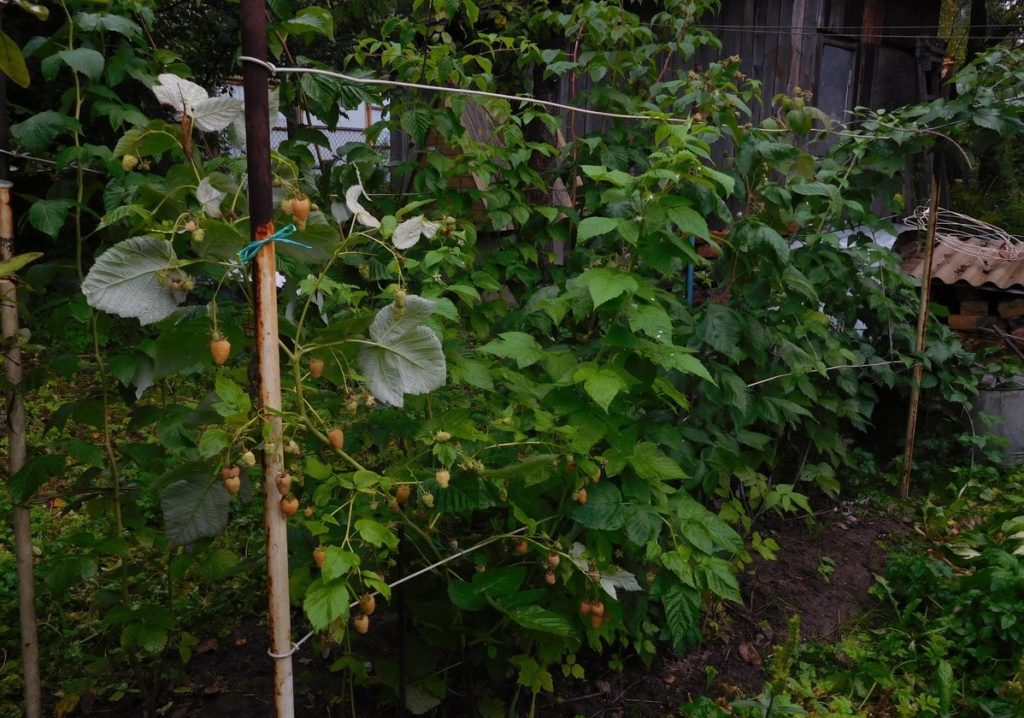
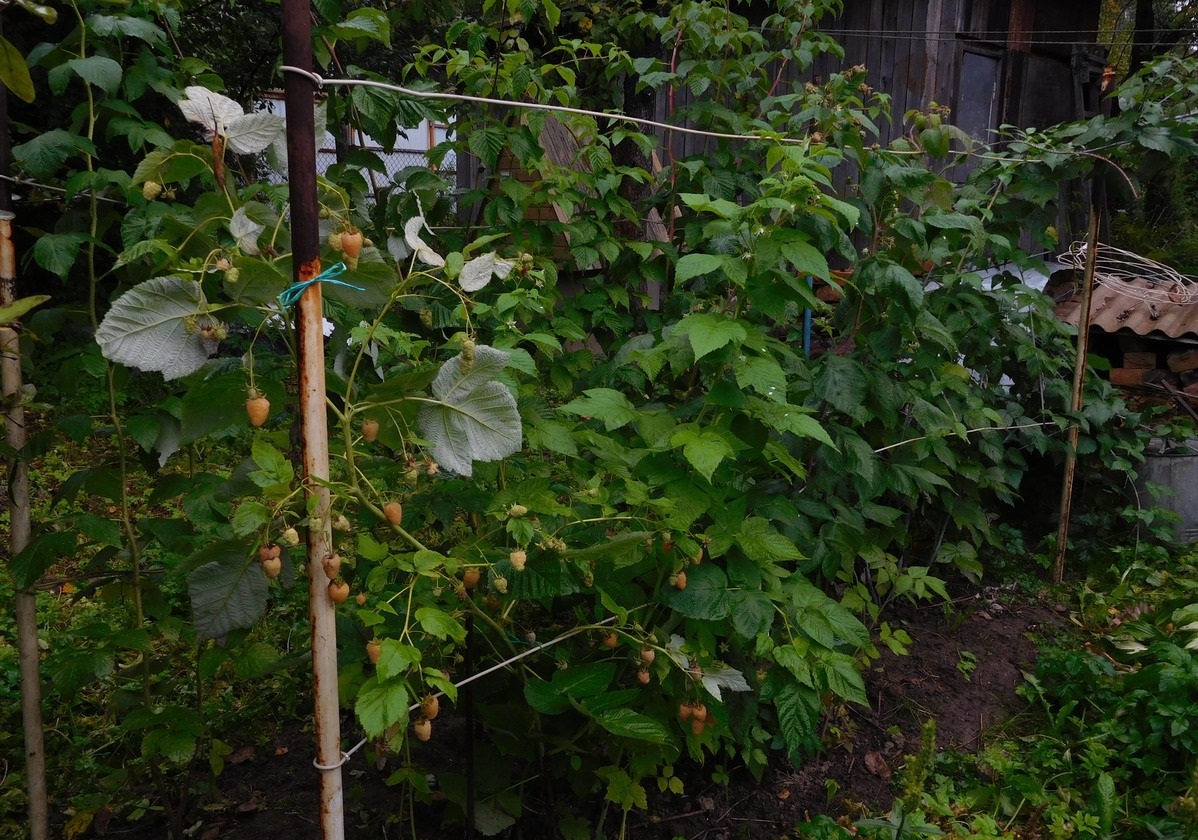
Each of these groups, in turn, is subdivided into several types, depending on the method of tying and the arrangement of the shoots. Single-rowed varieties are divided into the following methods:
- vertical flat - the most common type of structure, on which plants are located in a strictly vertical position;
- free - each shoot is attached to such structures separately;
- fan-shaped – the stems on this structure are arranged in a fan-shaped pattern, which is very convenient for remontant varieties with long and flexible shoots;
- horizontal (this type of structure is used to prepare raspberries for winter) - used to fix shoots inclined to the ground when covering for the winter.
It's worth noting that these types of structures are virtually identical in appearance. They all consist of posts with rows of wire attached, and the only difference is the method of tying the plants. Single-stripe structures are convenient for growing small quantities of raspberries in private gardens, but for large-scale commercial cultivation of shrubs, it's better to use double-stripe trellises, which are classified as:
- T-shaped. As the name suggests, the structure consists of pipes (beams, rebar) arranged in a "T," with wire stretched along the edges of the upper bars. The stems are positioned on opposite sides to leave room in the middle for new growth.
- Y-shaped. This is a more modern option, with the upper parts attached to hinges, allowing the angle of the trellis to be adjusted, making it higher or lower.
- V-shaped. This is a trellis with both planes sloping downwards. The stems are also trained on both sides, but it's important to remember that the distance between the top wires should not exceed 2 m.
- Tent-type. These are rather bulky structures, used primarily on farms where machine berry harvesting is practiced.
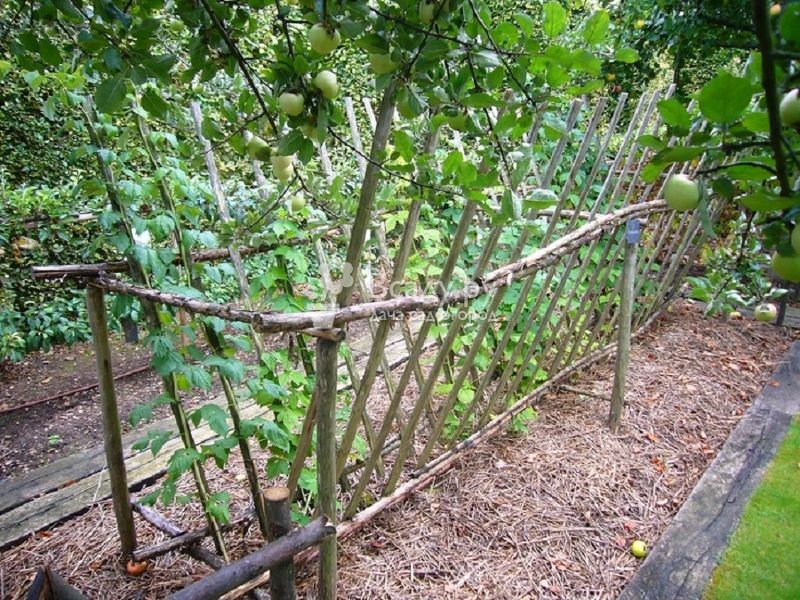
Two-lane trellises are more functional because, in addition to securing shoots, they control the growth of the raspberry bushes: they prevent them from becoming dense and spreading beyond the designated area, which has a beneficial effect on the bushes.
How to make it yourself
Any trellis structure consists of a frame and several rows of wire, so constructing and installing one yourself isn't all that difficult. You'll need any support material (wooden posts, thin pipes, rebar scraps), wire (reinforced twine can be substituted), and a shovel.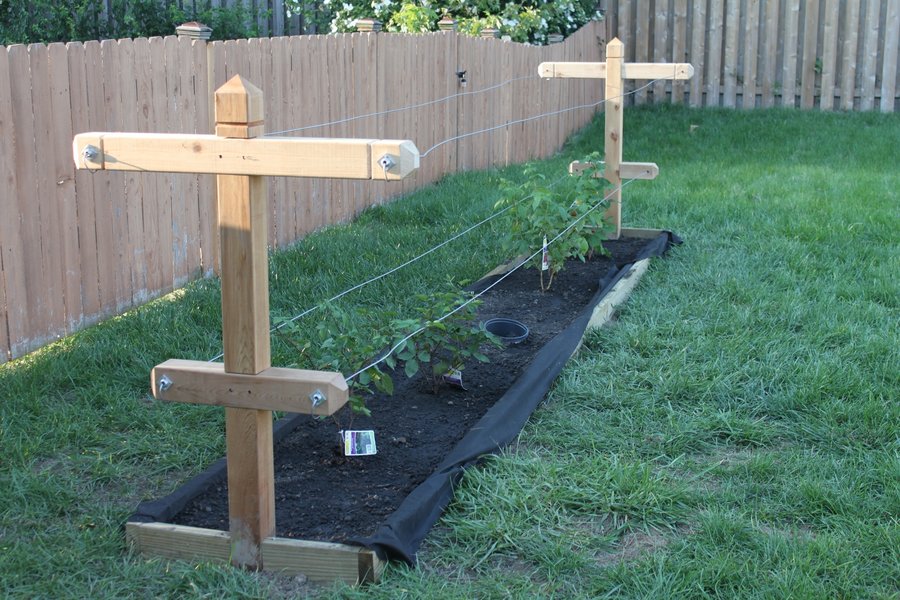
The production of the simplest trellis with a vertical plane consists of the following steps:
- First, you need to decide at what distance the supporting pillars will be located and mark out the area;
- If wooden posts or beams are used, the lower part should be treated with an impregnation that prevents damage and rotting of the material;
- then you can begin installation: dig holes about 40-50 cm deep, insert the posts, fill them with soil and compact them well;
- Next, several rows of wire are stretched, the ends of which are secured to the posts: the first row should be placed at a level of 50 cm above the ground, the second - 30 cm, the third and subsequent ones - at your discretion, taking into account the varietal characteristics of the raspberry.
Other types of trellises are made using similar technology.
To install a T-shaped or Y-shaped structure, you first need to make a support of the required shape, and then simply dig it into the ground and stretch the wire.
In general, there is nothing complicated about making and installing a raspberry trellis, and thanks to such a support, you will be able to not only preserve but also increase the harvest of your favorite berries.

DIY Video
This video will show you how to make your own trellis.