
How to properly tie up raspberries: technology and features
Content
What is it for?
To achieve a good harvest from your raspberry bush, you need to know some care tips. One of the essential rules for success is staking the bushes. Failure to do so increases the risk of small and tasteless berries. Therefore, it's important to know how to staking raspberries properly.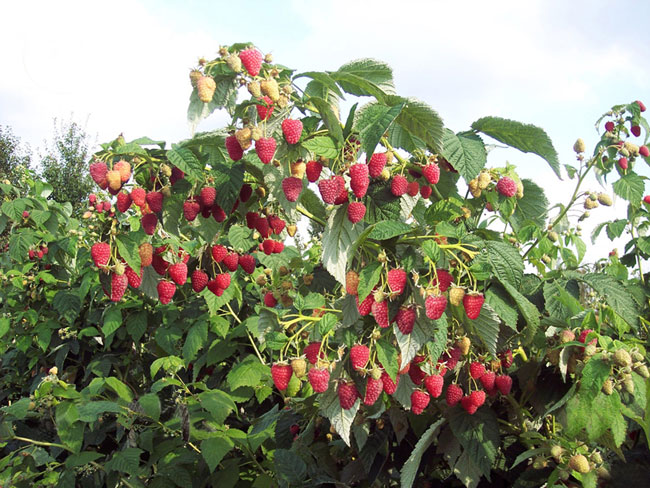
Of course, staking isn't always necessary for abundant fruiting. Some varieties don't require it. However, the vast majority of yellow and red raspberry varieties do require staking. This is because their shoots are brittle and flexible, and they can break in the following situations:
- in strong and gusty winds;
- during prolonged rains;
- during abundant fruiting;
- provided the bushes are tall enough. Some raspberry varieties can grow up to 2 m or even higher.
Besides protecting raspberry bushes from physical damage, staking can somewhat simplify harvesting. It can help organize erratic and thorny shoots. But the most important reason for staking raspberry bushes is to increase yield. This is because the branches need adequate light to ripen the large, sweet berries.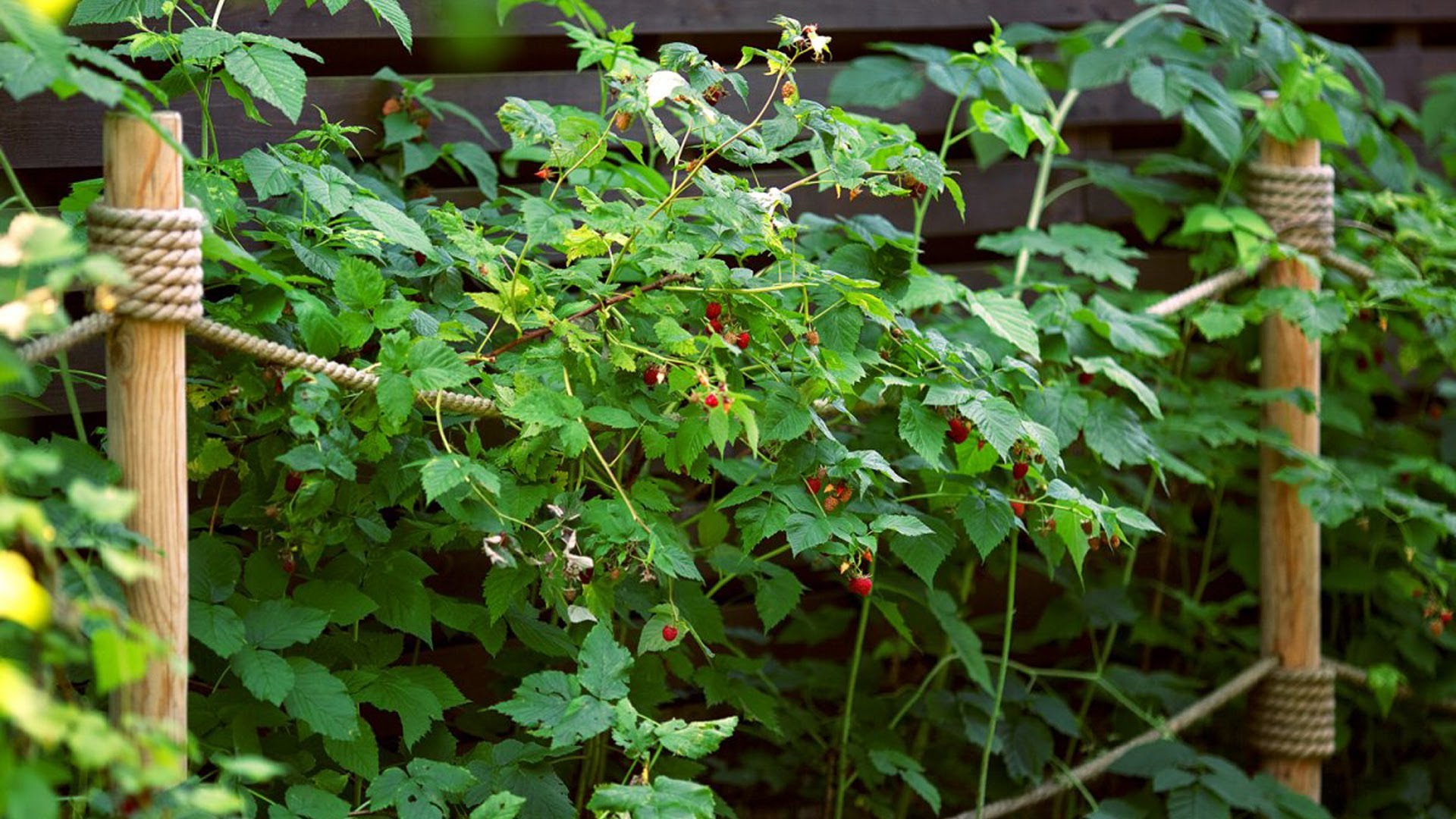
To achieve the desired results, raspberries should be tied up in early spring. This procedure is performed before the buds on the shoots have opened. However, tying can also be done before winter begins. This creates more favorable wintering conditions for the bushes.
Raspberries are considered a relatively low-maintenance plant. However, if certain care guidelines, including staking, are not followed, they can produce a ton of new shoots and become wild. Therefore, staking is an important and necessary part of caring for them. Staking raspberry bushes provides the following benefits:
- protection of plants from various fungal infections, as well as insect pests;
- Fruit-bearing young shoots growing in the middle of the row receive more favorable conditions for their growth. It's worth noting that with dense planting, bushes located in the thicket die off very quickly;
- shoots do not break under the weight of the formed crop, as well as under unfavorable climatic conditions;
- Berries set and ripen much faster on the branches. Moreover, their ripening is more uniform, as the fruits receive an equal amount of sunlight;
- harvesting becomes more convenient and less traumatic (this statement is especially true for varieties that are characterized by the formation of a large number of thorns).
-
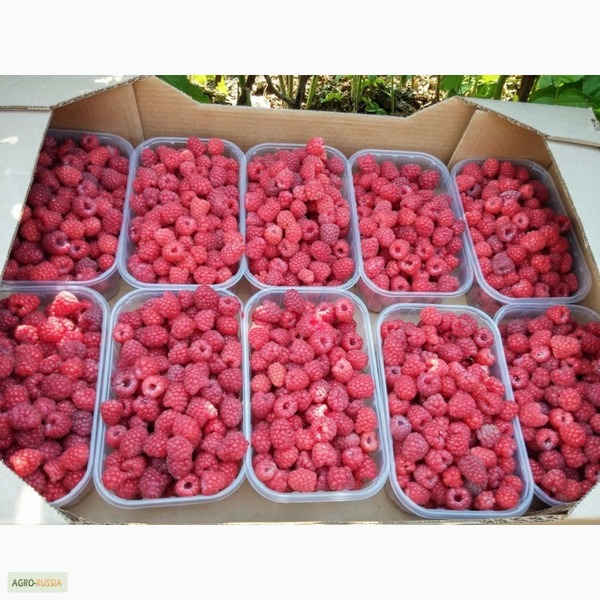
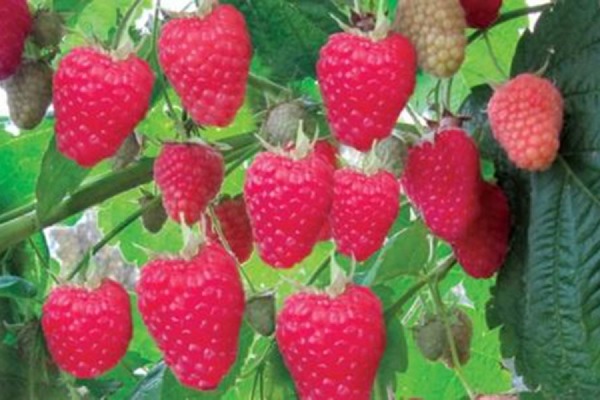
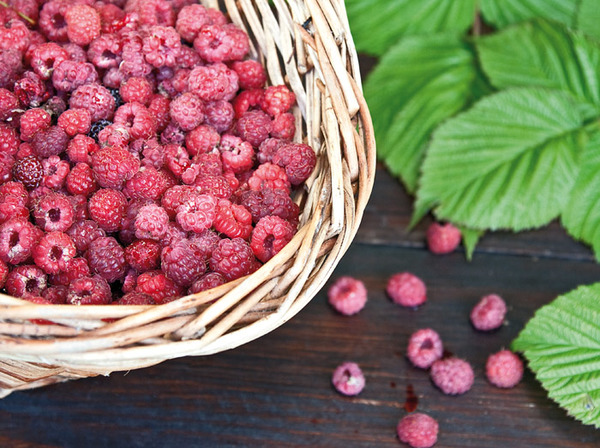
If the raspberry bush is properly supported, all the benefits listed above will be available, and the maximum harvest volume can be collected from a single bush.
Video "Tresel Garter"
From this video you will learn how to make a trellis and tie up a bush.
Methods of garter
Many beginning gardeners often ask the question, "How to tie up raspberries?" This is a pressing question, as there are several options for tying up raspberry bushes:
- The stake method. Here, a bunch of stems consisting of 6-7 shoots should be secured at a height of 1.5 meters. The stems should be tied to a 2-meter stake located in the center of the bunch. The top of the tall shoot should be bent into an arc and also secured to the support.
- Fan method. In this case, stakes are placed between the bushes. Only half of the bush is tied to the driven stake on each side. This results in half of the shoots of one bush being on the right side of the stake, and half of the shoots of the neighboring plant on the left. The height of the driven stakes should be approximately 2 m. As a result, after tying, the raspberry shoots resemble a fan, hence the name of this tying method. The advantage of the fan method is improved air and light access to the young, vertically growing stems. Despite this, this method is rarely used in gardens.
- Trellis method. Here, a wide variety of structures can be used as supports, consisting of posts with wire stretched between them.
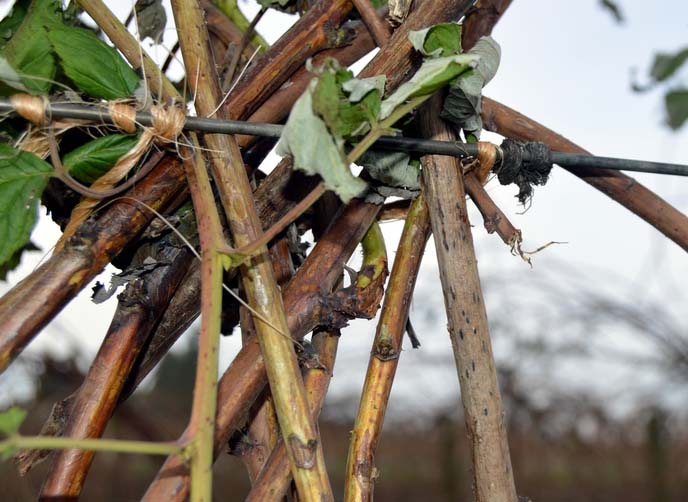
The most common of the methods described above is the stake method. It's easy to implement, doesn't require much time to set up, and is also quite cost-effective. It's most often used for smaller raspberry patches. When using this method, wooden stakes can be replaced with reinforced concrete posts or metal pipes. However, despite its advantages, this method has the following disadvantages:
- the shoots are illuminated unevenly;
- inside the bush, after tying, the ovaries begin to develop more slowly;
- protection of branches from breaking is insufficient;
- There remains a risk of various diseases and pests appearing in dense plantings.
Many gardeners have recently begun to prefer trellis-based rather than stake-based raspberry tying.
Types of trellis garters
Today, the most progressive and modern method of caring for raspberry bushes is trellis staking. It's used in large gardens where plants are planted in rows. This method ensures uniform light distribution to the bushes and protects the branches from strong winds. Furthermore, if this method is implemented correctly, harvesting and protecting the plants from pests is much easier. The main advantage of trellis staking raspberries is that it doubles their yield.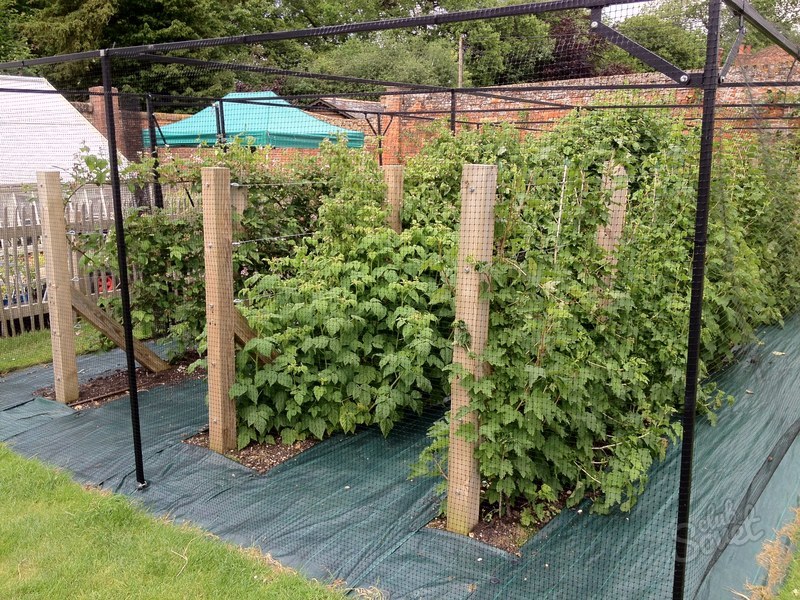
It's worth noting that there are various ways to tie raspberry bushes to trellises. Let's look at each option in more detail.
Single
When using a single trellis, wire should be stretched between the posts. It is stretched at three levels: 165, 105, and 75 cm from the ground.
The technology for placing supports is carried out as follows:
- poles (2 meters and higher) must be dug into the ground by half a meter;
- the supports should be placed at a distance of 4 meters from each other;
- First, it is necessary to dig in the pillars with supports, and then install the remaining supports;
- Three rows of wire are pulled tight and fixed using special clamps and bolts.
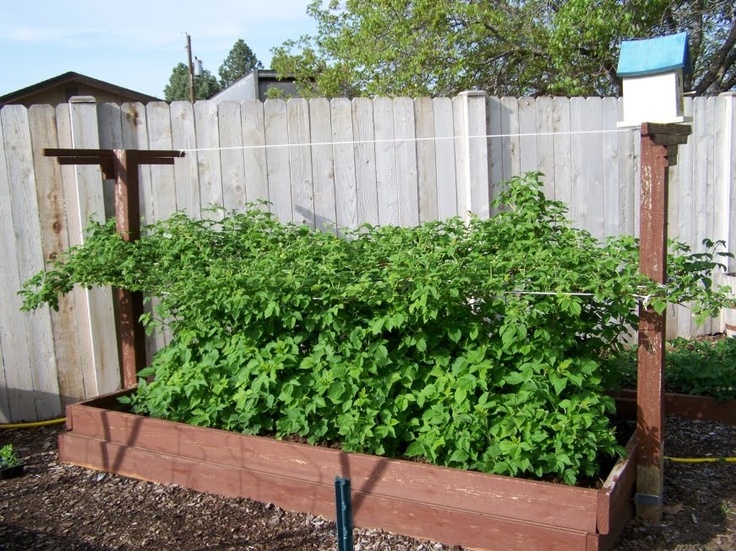
The resulting structure is compact, making it suitable for smaller gardens. The key feature of this method is that each plant stem is individually tied. This ensures good light and protection from the wind. The downside of this approach is the risk of branches breaking during harvest. However, this is only possible if the lower row is not tied.
Double
With a double trellis, two half-meter crossbars are installed. Wire is then stretched across their ends, with the bottom edge 0.9 meters above the ground and the top 1.5 meters. This design, unlike a single trellis, allows for many more shoots to be planted in the same area, resulting in a bountiful harvest. However, this design somewhat complicates harvesting, and the risk of shoot breakage remains quite high.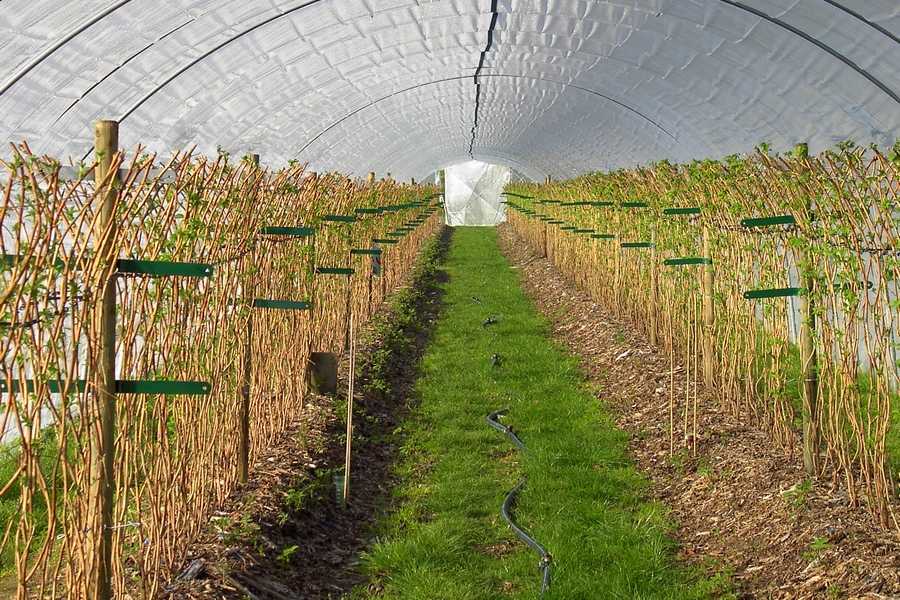
Scandinavian
Another trellis staking option is the Scandinavian method. It involves stretching wire on a one-meter crossbar, located one meter above the ground. This requires the installation of paired posts.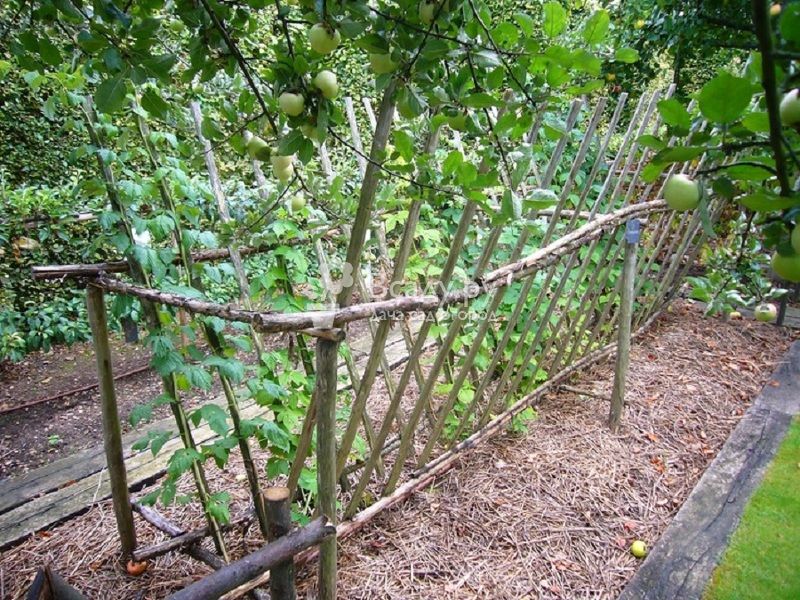
They should be up to one and a half meters high and buried half a meter into the ground. The distance between them should be one meter.
The same spacing is maintained for adjacent pairs of supports. As a result, when the raspberry canes fall around these structures, they develop a V-shaped profile.
Movable turnstile
The trellis-style staking method, using a movable turnstile, is quite complex to implement. It allows the supports to be adjusted from vertical to horizontal. This design allows the crossbar to be tilted 120 degrees. The shoots will be supported by the crossbar. This design allows for quick and easy harvesting. The stems are well-lit, which greatly contributes to a bountiful harvest.
Growing without garters
Some varieties of red and yellow raspberries can be grown without staking. However, this method is only suitable for upright varieties characterized by thick canes and growing to a height of no more than 1.5-1.8 meters. Such varieties include Rubin Bulgarian, Spirina Belaya, Skromnitsa, Koralovaya, Balsam, and others.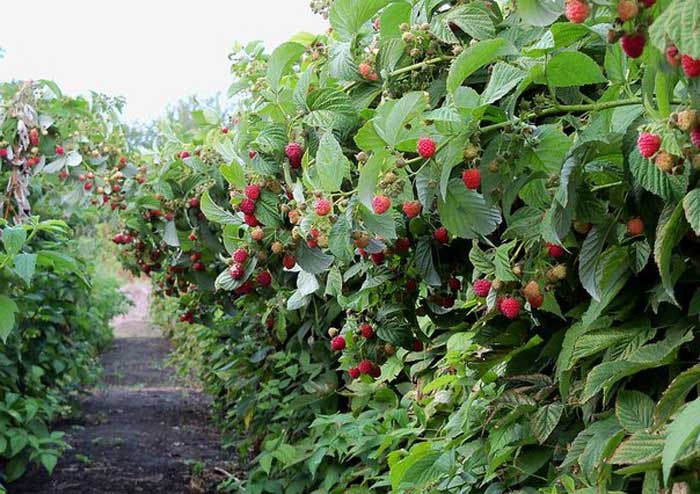
The cultivation of such varieties is carried out as follows:
- During the first year, emerging shoots are left undisturbed. This results in a continuous strip of shoots that can reach 50-70 cm in width;
- The following year, all stems extending beyond this strip are removed. It's important to avoid excessive internal crowding. Therefore, thinning is performed, with the distance between adjacent shoots being approximately 20 cm.
If you follow these recommendations, you can get a fairly high yield. Otherwise, staking raspberries is essential.
Video: "Staking Down Raspberry Bushes"
This video will show you how to tie up a berry bush.