
Raspberry diseases and pests: how to treat them
Content
Raspberry bushes – description
The common raspberry belongs to the Rubus genus, which is part of the Rosaceae family. It is a subshrub or shrubby herb. The plant has a woody, twisted rhizome that produces numerous adventitious roots. These roots give the root system a branched and robust structure, allowing shoots to grow to a height of 1.5-2 meters.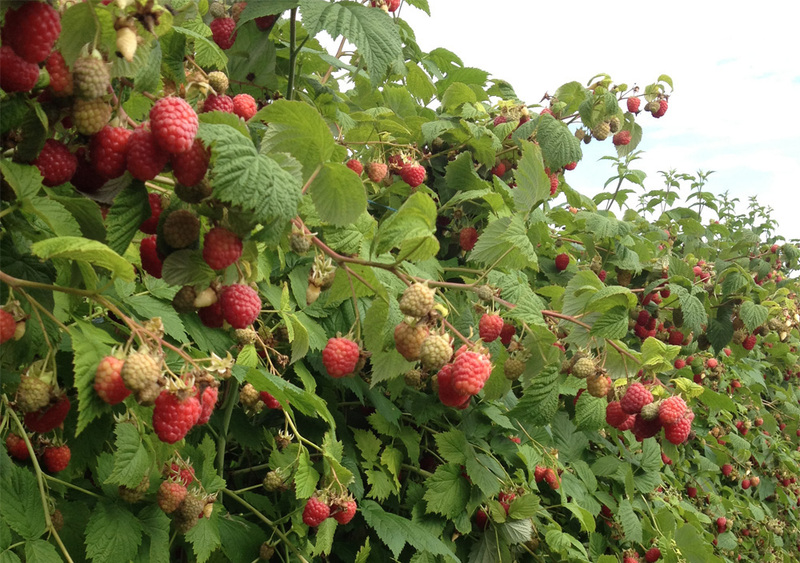
In the first year, raspberry branches are grassy, bluish-green, and succulent. They are covered with thin, dense, small thorns. The following year, they become woody and turn brown. After the fruiting period ends, the woody shoots die off. In their place, green stems form again the following year.
Alternate petiolate leaves form on the shoots. They are compound and consist of 3-7 oval leaflets, the upper surface of which is dark green. The lower surface, however, remains whitish. This color is due to the fine hairs.
During flowering, small, racemose inflorescences of white flowers form on the stems. They are no more than one centimeter in diameter. The flowers are located at the tops of the stems or in the leaf axils.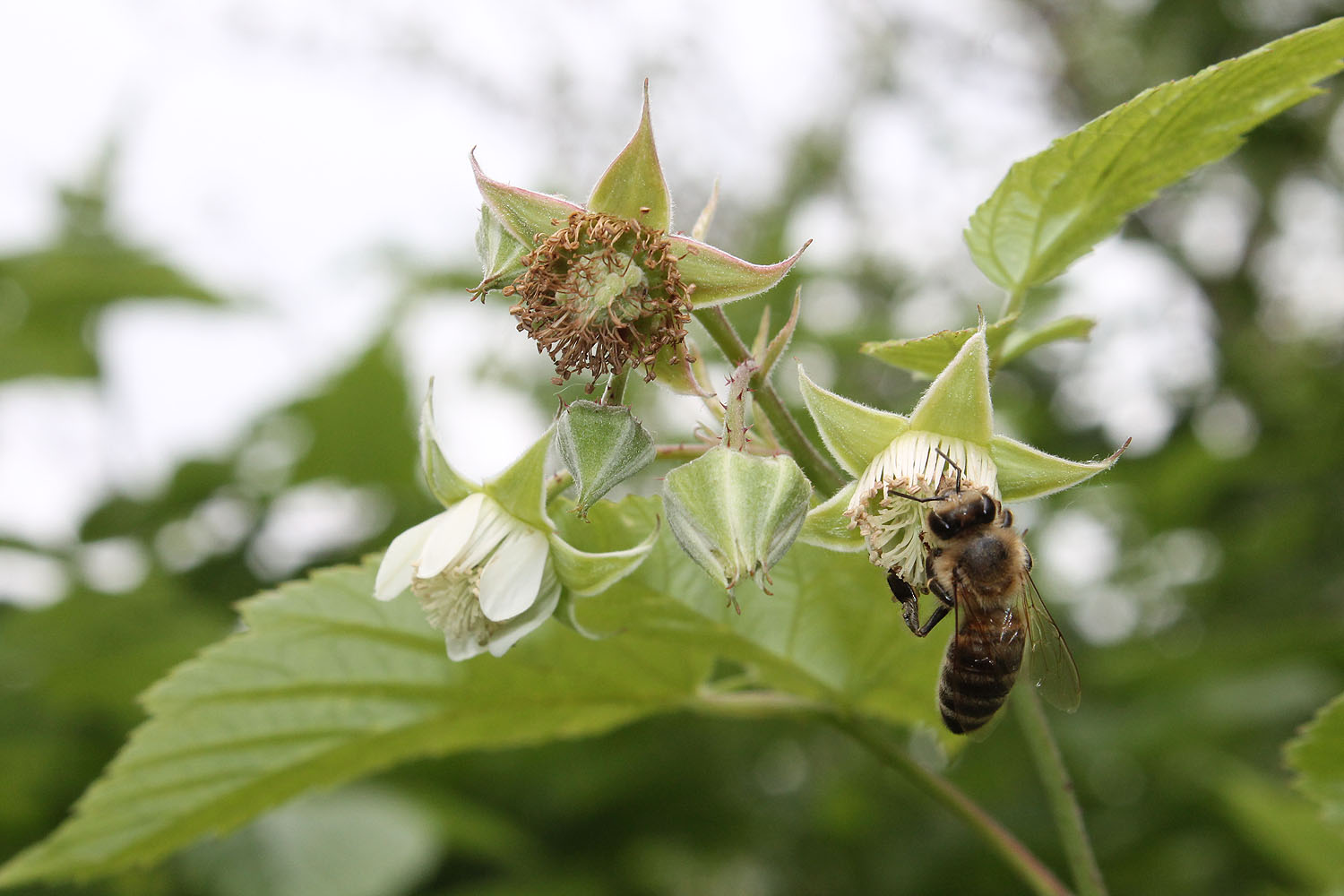
Fruiting does not begin until the second year after planting. During the first year, flower buds form on the shoots. From these, fruiting shoots begin to develop the following spring. However, breeders have developed everbearing varieties whose shoots begin to bear fruit in the first year of planting.
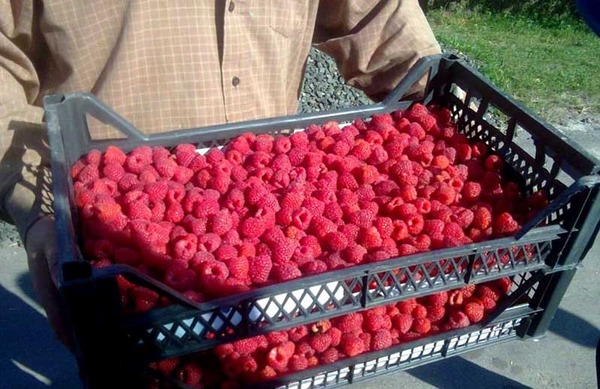
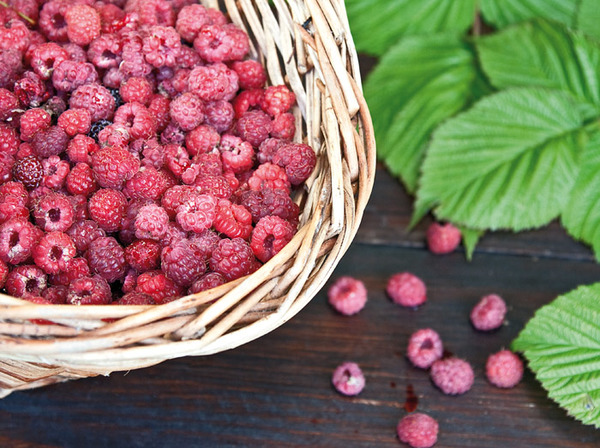
Raspberries are made up of many small, hairy drupes that have fused together to form a complex fruit. Depending on the variety, the fruit's color can vary: yellow, red, dark red, and even black. Red raspberries are most commonly grown.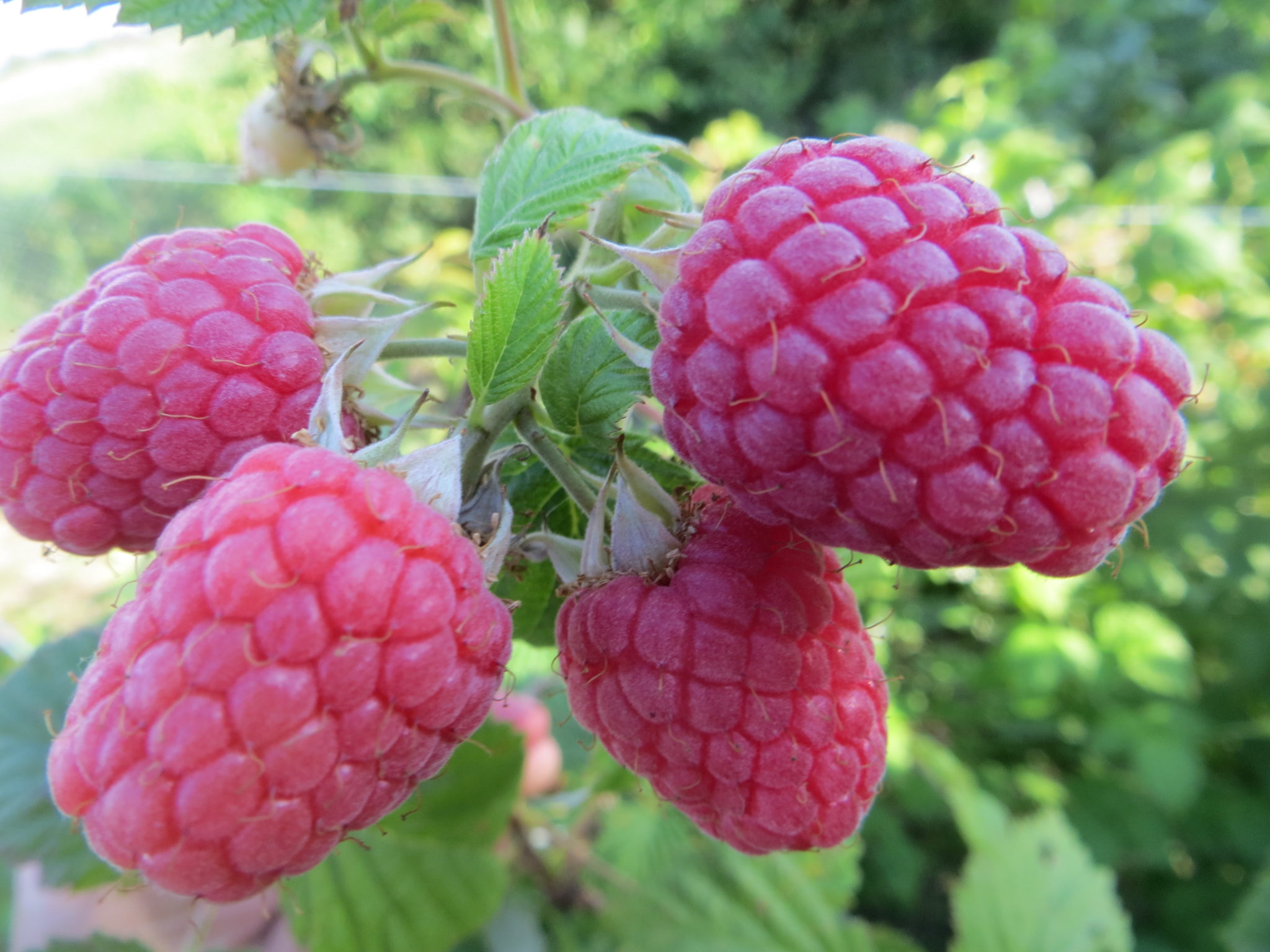
Raspberries are often used as a folk remedy for various respiratory ailments. The berries are beneficial due to their high content of various microelements and vitamins. However, despite this, raspberry diseases and pests are not uncommon. The only way to protect raspberry bushes from diseases and insect attacks is to adhere to all agricultural practices, including preventative measures. Only then will you reap a bountiful and delicious harvest.
Video: "Raspberry Bush: Growing and Care"
This video will show you how to properly grow this aromatic berry.
Diseases and their treatment
Raspberry diseases are often caused by improper care. Raspberry diseases develop even with minor deviations from growing guidelines. Therefore, it's important to carefully monitor your plants to identify any problems early on. This will make treatment much easier and faster.
Raspberry diseases can be very diverse. Let's look at the most common ailments of this plant. The bushes have little resistance to them.
Chlorosis
If your raspberry bushes are experiencing yellowing leaves, this could be the first symptom of a disease called chlorosis. This disease is caused by a virus that enters the plant through breaks and cuts. The virus is transmitted by insect pests such as mites, nematodes, and aphids. These insects can infect the bushes not only with chlorosis but also with yellowing.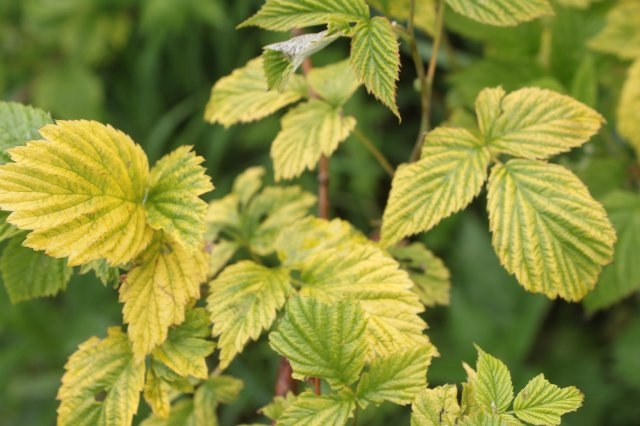
Chlorosis develops as follows:
- first the leaf blade begins to turn yellow between the veins;
- then the yellowing spreads asymmetrically over the entire leaf;
- the leaf begins to wrinkle;
- shoots are elongated and become thinner;
- The fruits become deformed and small. They dry out quickly.
Chlorosis is caused by highly acidic soil and wet soil. The disease can be prevented by adding gypsum to the soil during tillage. It is also important to eliminate the raspberry pests that carry this disease. All infected bushes will need to be dug up and burned.
Raspberry leaf curl virus
With this disease, raspberry leaves begin to shrink and become wrinkled. The leaf blade itself becomes stiff, and its underside turns brown. The berries also dry out and become deformed. The fruit takes on a sour taste. The bush will die in about three years. This disease cannot be cured. The only way to stop the spread of the infection is to destroy the affected plants.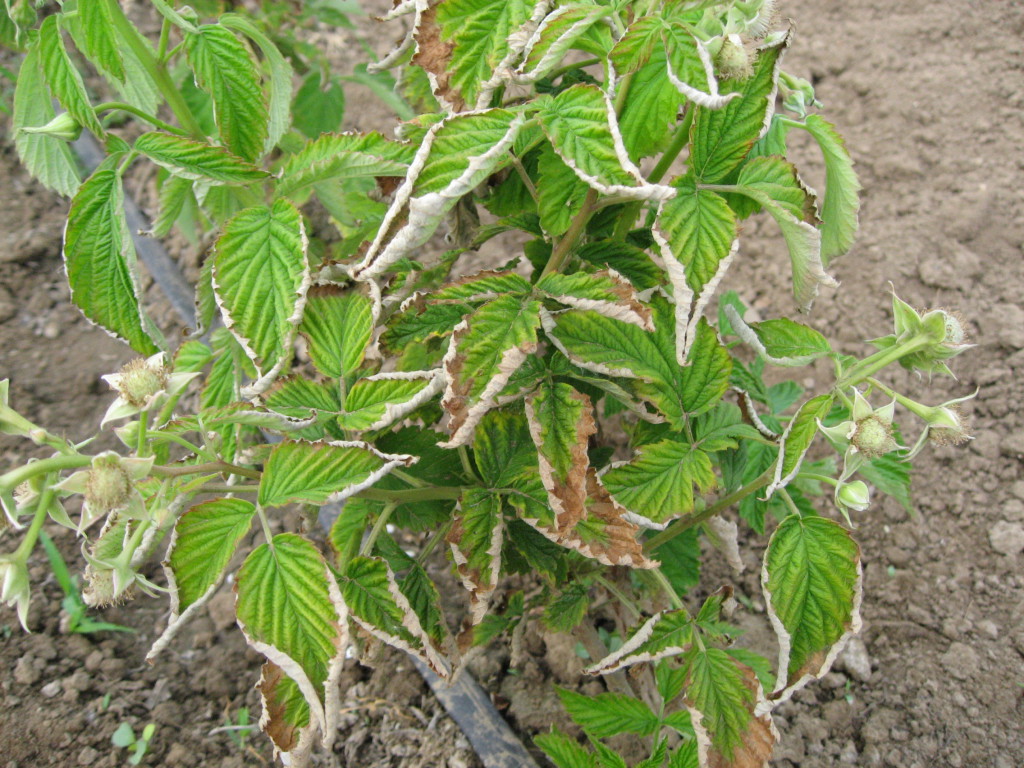
Mycoplasma disease
Another harmful disease is witch's broom, a mycoplasmal infection. When infected, numerous small, fruitless shoots form on the bushes, reaching 30-50 cm in height. There is no treatment, as this disease is considered incurable. The only option is to destroy the infected bush.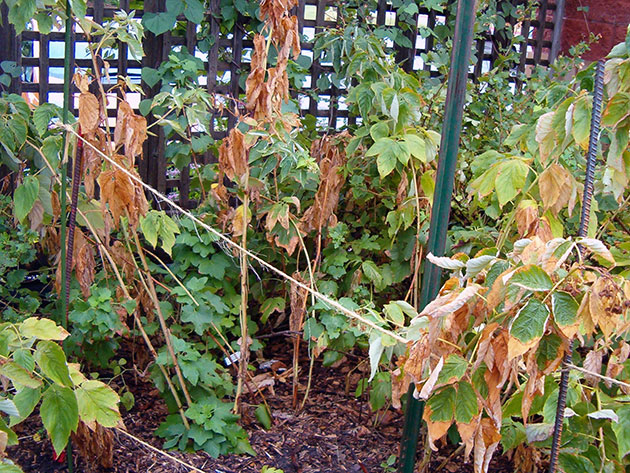
Rust
Sometimes a fungal infection can cause raspberry bushes to dry out. Rust is caused by fungal infections. When infected, dark spots can be seen on the underside of leaves in May. After a while, these leaves begin to fall off, and brown ulcers form on the stems.
Rust, like the diseases described above, is incurable. No lasting immunity develops. Therefore, only preventative measures are possible to prevent the bushes from becoming infected.
Purple spot
A common raspberry disease is didymella, or purple spot. It causes shoots to dry out. The disease progresses as follows:
- light purple spots appear on young stems;
- They gradually spread out. Their edges darken and acquire a reddish-brown color. Black dots (pycnidia) form in the center of the spots;
- after some time they merge;
- their surface cracks, which leads to brittle shoots and prevents bud development.
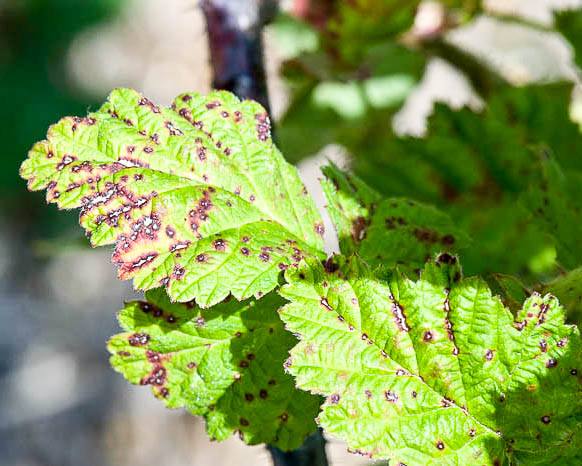
A damp summer promotes the spread of the disease. Treating the bushes with a 1% Bordeaux mixture solution can help.
Powdery mildew
Powdery mildew is another dangerous fungal disease affecting raspberries. It often attacks bushes in the first half of summer, especially during damp weather. Affected shoots become covered with a loose white coating. As a result, the leaves begin to dry out and the fruit becomes deformed. If these symptoms are detected, treat the shoots with a solution to combat the fungal infection.
Anthracnose
Raspberries are also quite susceptible to anthracnose. The disease manifests itself as small gray spots with purple margins on the stems and leaves. These spots merge, forming ulcers. This causes the leaf blades to curl, eventually falling off. The fruit on the bush does not ripen fully, becoming dark and deformed. This disease should be treated in the same way as other fungal infections.
As we can see, there are different raspberry diseases and their treatment depends on the pathogen.
Pests and their control
Raspberries are quite attractive to many insect pests that infest them. Diseases and pests must be monitored closely, as delays in treatment may prevent the opportunity to effectively address the problem and preserve even a portion of the harvest. The following measures can help protect raspberry bushes from pests:
- proper care of plants;
- compliance with all agricultural practices;
- periodic inspection of shoots to detect insects.
Following these measures will allow you to, if not prevent pests, at least detect them at an early stage of infestation. Pest control can be accomplished using both folk remedies (mustard, grain, etc.) and more aggressive chemical solutions.
Let's take a closer look at the most common raspberry parasites.
Aphid
This plant is attacked by the raspberry shoot aphid, or leaf aphid. This insect also parasitizes other garden berry crops. Aphids settle in colonies. The insects can be found in inflorescences, at the ends of shoots, and on the undersides of leaves. Aphids feed on plant sap and transmit many viral diseases. Therefore, they are quite dangerous for bushes.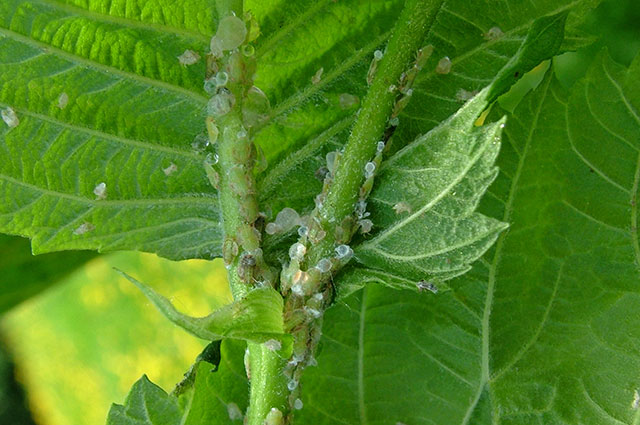
To combat aphids, raspberry bushes should be sprayed with actellic or karbofos when the raspberry buds open.
Spider mite
Raspberries are often plagued by spider mites. This pest also occurs on red and black currants, gooseberries, grapes, and other plants. Spider mites can be found on the underside of leaves, where they cover them with their webs. The areas where the mites sucked sap become discolored and marbled. This causes the leaves to dry out and fall off. The mite appears on raspberry bushes during dry and hot summers. Spraying the bushes with acaricides, such as phosphamide, cidial, malathion, and others, is considered an effective control measure. Regular and adequate watering is also a preventative measure.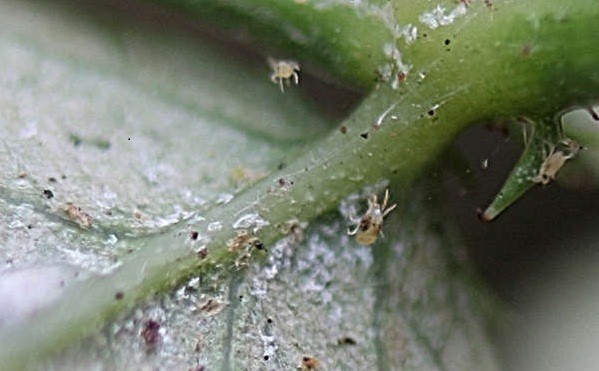
Gall midges
This is the raspberry (shoot) stem gall midge, or raspberry midge. The insect lays eggs in the cracks of shoots. Swellings form at the site of gall formation. As a result, the stems die after a while. The presence of the raspberry gall wasp on bushes manifests itself in the same way. To combat these pests, use ambushom, malathion, and actellic.
Raspberry beetle
In addition to the pests described above, raspberries can also be affected by the raspberry beetle. It measures just 4 mm in length and is covered in gray and yellow hairs. This beetle can be found in buds, flowers, and leaves. Their larvae can also be found in the soil. The best time to control it is during bud formation. The insects should be shaken off the bush and destroyed. Afterwards, digging is essential, especially between rows. Affected plants should also be sprayed with Decis, Confidor, and a 10% malathion solution.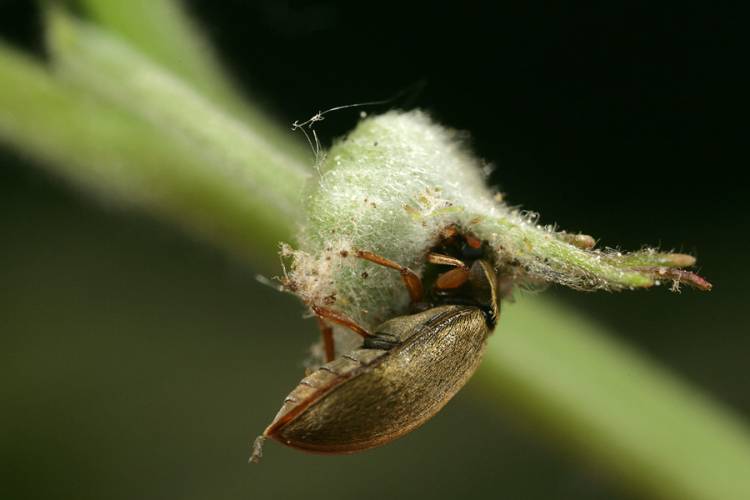
Strawberry-raspberry weevil
The strawberry-raspberry weevil is a common pest of raspberries and strawberries. The insects overwinter in fallen leaves and the soil, and in spring, they lay eggs in buds. The hatched larvae begin to eat the bud from the inside. In early and mid-summer, a new generation of these pests emerges, devouring the leaves. To control the weevil, spray the buds with actellic, metaphos, or malathion five days before they open.
Raspberry bud moth
Raspberries are also infested by a butterfly with dark brown wings with golden spots. This is the raspberry bud moth. Early raspberry varieties are less resistant to this insect. The butterfly feeds on the pods. To control it, plants should be sprayed with Confidor, Decis, and other similar products in early spring.
Raspberry stem fly
One of the most dangerous pests in this case is the raspberry stem fly. Its larvae chew spiral-shaped passages inside the stems, causing the tops of the stems to wither. During flowering, the larvae burrow into the ground, where they overwinter. To combat this fly, cut off all damaged shoot tips and spray the bushes with malathion or actellic in early spring.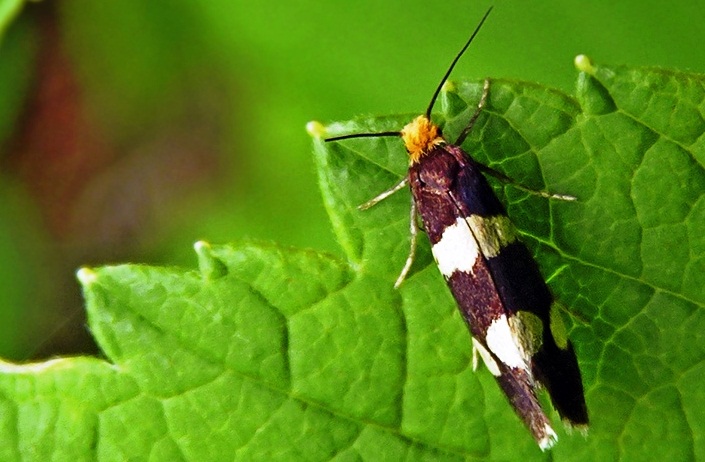
To prevent future plant infections, all fallen leaves must be removed from the area.Although there are effective methods for controlling insects, they don't always produce the desired results, especially in advanced stages. Therefore, to protect your harvest and raspberry bushes, you should periodically inspect the plants for pests. Only timely treatment will help you save part of the harvest and preserve your raspberries for next year.
How to treat raspberries – prevention
An important part of raspberry care is disease and pest prevention. Each individual case will require specific prevention.
Spring processing
After the snow melts, the area needs to be tidied up. This procedure includes the following steps:
- on the raspberry bush, the frostbitten tops of the stems should be cut off;
- remove damaged shoots, as well as those that grow inside the bush;
- Next, rake up all of last year’s leaves along with the branches and burn them;
- After this, nitrogen fertilizers should be added to the soil;
- Next, tie the shoots to the trellis.
Treatment for diseases
In the spring, as a preventative measure against various diseases, you can spray raspberry bushes with Bordeaux mixture and nitrafen. Both the plants and the surrounding soil should be treated. This treatment should also be repeated in the fall, after the harvest.
Pest control
In addition to diseases, raspberries should also be treated against certain pests. This procedure is carried out in the spring after the buds have opened. For this, use actellic or malathion. This treatment is also carried out in the fall after harvest. At this time, the bushes should be pruned and prepared for winter.
Autumn processing
In the fall, raspberry bushes should be thoroughly prepared for winter. To do this, cut off all diseased, broken, and damaged branches. Remove all leaves from the stems. To do this, put on a mitten, clamp the stem with it, and slide it upward. This should be done carefully to avoid damaging the buds.
After this, all cut or removed material (leaves, branches) must be burned to destroy possible parasites and pathogenic microorganisms that may overwinter in them.
As we can see, raspberries can suffer from a wide range of diseases and insect pests. To avoid negative consequences, it's important to properly care for the plants and carry out preventative treatments in a timely manner.
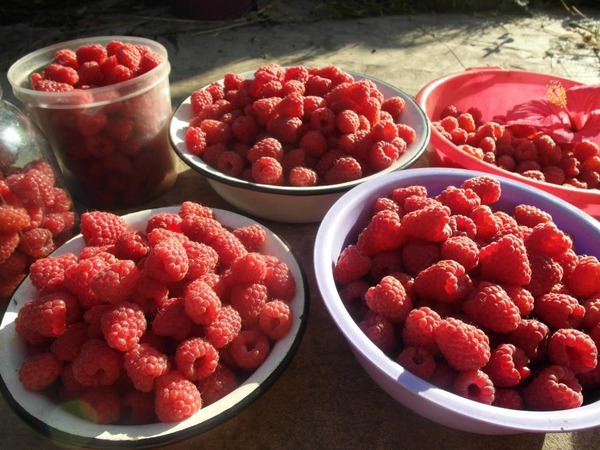
Video: "Raspberry Diseases and Pests"
From the video you will learn how to combat pests and diseases of this berry.