
Description of the 10 best-yielding leek varieties
Content
Early and mid-early
Early-ripening leeks are especially good for planting in northern regions where warmth doesn't last long, such as the Urals. They are commonly used fresh and for canning.
Columbus
The Columbus leek has a pleasant, delicate flavor. It's a very early variety, ripening in just 85 days. It's cold-hardy. Its maximum height is 70–80 cm, with a stem length of 20–30 cm. With proper care, the plant can weigh up to 400 g. Unlike some other varieties, Columbus doesn't require hilling to whiten the stem.
Vesta
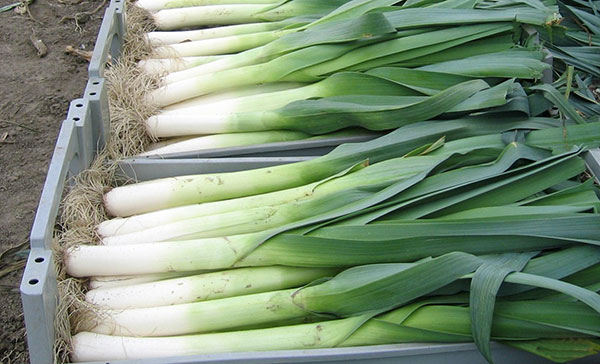
The Vesta leek has a semi-sharp, slightly sweet flavor. It is resistant to disease, heat, and frost, but requires regular earthing and fertilizing. In temperate climates, it is recommended to plant from seedlings (70 days after sowing). The plant reaches a height of 100–150 cm, with the white part reaching 30–50 cm with 2–3 earthings per season. The bulb is slightly prominent and medium-dense. This is a high-yielding variety. It can be eaten fresh, dried, frozen, and canned.
Elephant's trunk
With regular hilling, the white part of the Elephant Trunk leek grows up to 30 cm. It has a pleasant, sweet flavor. The variety's advantages include a long shelf life—up to several months in sand (in an upright position). In southern regions, direct sowing is acceptable. In cold and temperate climates, seeds are sown for seedlings in late February and transplanted into the ground in early May.
Mid-season
Mid-season varieties are characterized by a more powerful stem and large leaves. They can be stored for 2–2.5 months. If left in the soil, securely covered, these onions will sprout next year, producing seeds.
Casimir
A productive variety with a small or absent bulb. The white stem is 20 to 30 cm. The leaves are almost vertical. It can be eaten fresh or dried. It responds well to storage, becoming juicier. It responds well to watering and fertilizing. Best grown from seedlings.
Winner
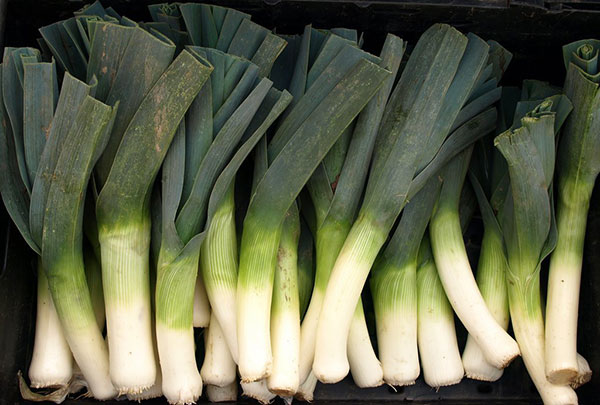
The "Pobeditel" leek is distinguished not only by its juicy, slightly pointed stem but also by its tender, pleasantly aromatic greens. It can be preserved and eaten fresh. It overwinters well. The white part reaches a height of 20 cm with a diameter of 3.5–4 cm. The average weight is 200 g. The leaves have a gray tint and a bluish bloom.
Depending on soil and weather, it matures in 130–160 days. It is frost-resistant, making it a good choice for northern regions.
Elephant
The Elephant leek is a Czech selection. A mature plant reaches a height of up to 150 cm. The leaves are wide, bright, blue-green. It is resistant to both high and low temperatures.
The Elephant leek takes about 130 days to mature. Once harvested, it can be stored for 60–90 days. Its flavor is sharp and distinct. It's suitable for fish and meat dishes, soups, and salads.
A high-yielding variety: with proper care, you can harvest up to 4 kg of onions per square meter. It is recommended to plant from seedlings. It requires moisture and hilling, but appreciates fertilizing.
Mid-late and late ripening
The growing season of late-ripening leek varieties ranges from 180 to 200 days. These varieties are cold-hardy, so in temperate and southern regions, they are often saved for spring harvest. The blanchable part is typically thick and short.
Alligator
Alligator leeks weigh up to 300 g. The white part is up to 30 cm. Not only the stem but also the greens, with a slight garlicky aroma, are distinguished by their excellent flavor. They can be eaten fresh or canned. The leaves are raised and positioned high. An average yield of 3.4 kg per square meter is 3.4 kg.
Carantanian
A large, spreading plant up to 1 m tall. The productive part weighs up to 300 g. This variety has excellent flavor, produces fresh greens until frost, and overwinters well, making it suitable for the Ural climate.
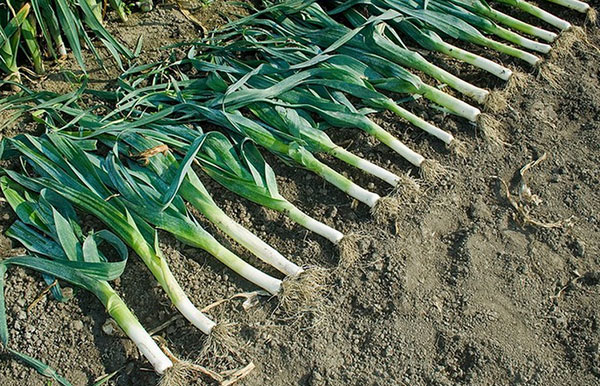
Full maturity is 200 days, with selective harvesting possible after 125 days. For most regions, it's recommended to grow seedlings, preferably at least 70 days old before planting.
Bandit
A Dutch-bred variety. The short, thick stem has excellent flavor. The leaves are folded along the main vein. The white part averages 7 cm in height, but proper mulching or hilling can increase it to 30 cm. This variety is frost-hardy and suitable for harvesting in late fall and spring. As with other late-season varieties, growing from seedlings is recommended. It requires fertile soil and regular watering.
Autumn Giant
The Autumn Giant onion is distinguished by its particularly large white part—up to 40 cm long and up to 8 cm across. However, to achieve this result, hilling is recommended 3–4 times during the growing season. The overall height is up to 80 cm. Ripening time is 150–200 days. Drought-resistant. Average yield is 3–4 kg per square meter.
Autumn Giant has a good shelf life. Its flavor is semi-sharp. The "Giant" variety is suitable for eating fresh, making soups, and salads. It can also be frozen.
Video: Growing Leeks
The author of this video shares his experience of planting, growing, and harvesting leeks in his garden.