
Popular onion varieties: description and characteristics
Content
About onions
There's quite a variety of this vegetable, making its description ambiguous. It's a highly sought-after vegetable, as most dishes can't do without it. There are hot and sweet onions. They have different vitamin and mineral compositions, so they're used to treat certain ailments, prepare folk remedies, and prevent infectious and viral diseases. This root vegetable has strong antibacterial properties, so it's consumed at any age, as long as there are no previous stomach problems.
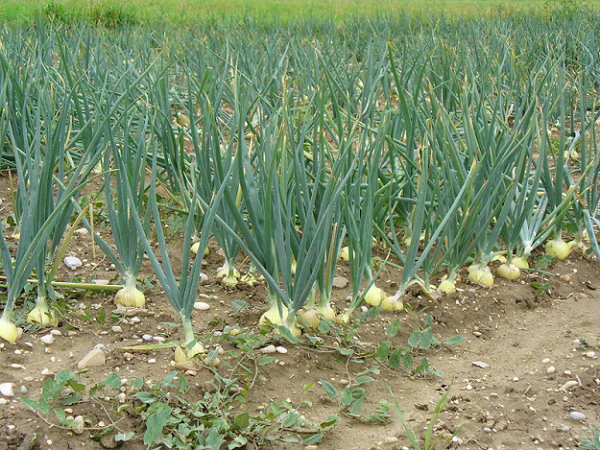
By choosing the right site, variety, and proper care of the seedlings, you can get an average yield of about 150 centners per hectare.
The main types of vegetable crops can be distinguished: ornamental onions, wild onions, sweet onions, green onions (onions for greens, from which the feathers are cut off), white onions, blue onions and other bitter varieties.
Wild onions can be found in the wild. They are undemanding and thrive in almost any conditions. They are not used as food, but are more often used in folk medicine.
Ornamental onions are a group of perennial plants. Some species (black onion, Chinese onion, and bell onion) may have a superficial resemblance to vegetable onions, including a bulb with a base, cotyledons, scales, tubular pinnae, peduncles, globular inflorescences, and other elements.
Despite their superficial resemblance, ornamental onions are not used in cooking. They are typically grown in lawns and flower beds, as they resemble wildflowers. For example, black onions have beautiful white and light blue flowers (unusual for their name). Black onions originate from the shores of the Mediterranean Sea. They received this name because they darken more than other varieties when dried.
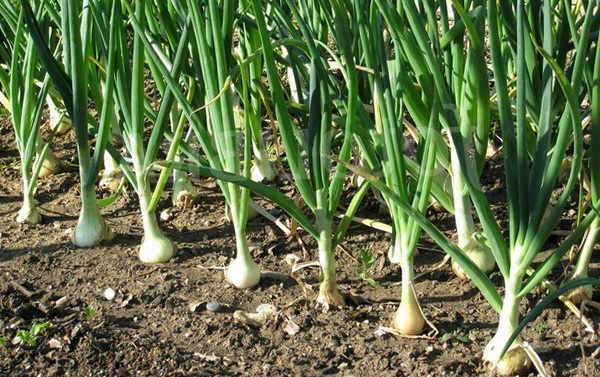
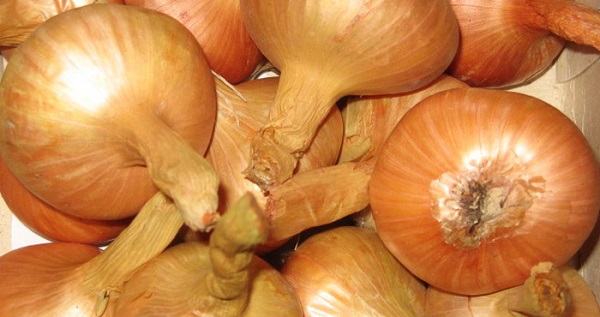
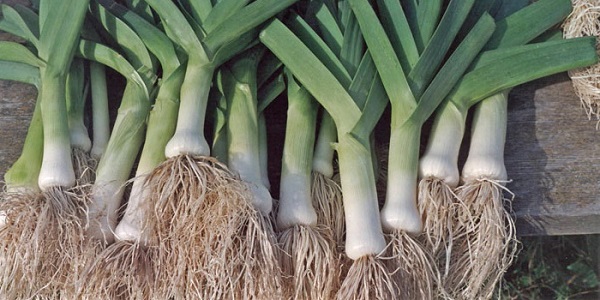
Ornamental Chinese onion is commonly used to treat joint problems. In fact, Chinese onion originates from India. It contains numerous substances that help reduce inflammation and swelling. Therefore, it is commonly used to treat joint problems and relieve the effects of insect bites.
Bulgarian ornamental plant varieties are not very common. Bulgarian species produce tall, bell-shaped flower heads. When the foliage falls, the seed heads form a beautiful ball that can hang on the stem until late autumn. These Bulgarian ornamental plants (alliums) are also found in gardens where gardeners grow flowers rather than vegetables.
Vegetable varieties. Blue onion is a variety that has become popular as a culinary addition. The first varieties were developed through selective breeding in Spain. They have a milder flavor, containing fewer glucosides (special enzymes) that impart pungency and bitterness to the fruit. Blue onion contains vitamins B, C, vitamin PP, carotene, sucrose, fructose, maltose, and glucose. Blue onion is used not only as a food but also in the preparation of medicinal products for the treatment of the liver and gastrointestinal ailments. Blue onion can be effectively used to treat sore throats, flu, and colds, as well as to lower cholesterol and restore water and salt balance.
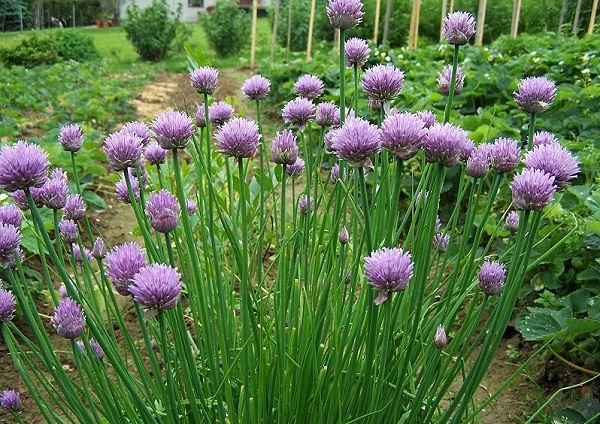
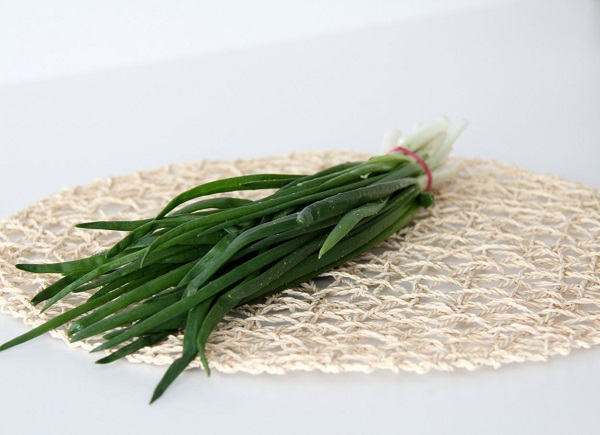
Another variety worth mentioning is green onions. They don't have a distinct bulb, so their leaves are used for food. The leaves continue to grow after being cut. Green onions grow quickly and renew themselves after the leaves are cut, allowing for several trimmings per plant throughout the season. Their unusual shape makes them a beautiful addition to garden beds. Green onions sprout very quickly, making their leaves the earliest source of vitamins.
Moreover, green onions don't require much care. Just water the seedlings periodically and trim off the tops when they're big enough. The most common variety is Chinese onion (Batun).
Green onions are now grown almost everywhere in the world because they germinate very well and grow quickly. You can trim the tops and water the plants for a long time. After just a week, you can repeat the process. Thus, by planting Chinese onions, you can have a long supply of fresh greens for salads and other dishes. Green onions are available at almost any specialty store; they are easy to grow.
Video "Onion Types Overview"
The video discusses the different types of onions and how to plant them.
Onion varieties for storage
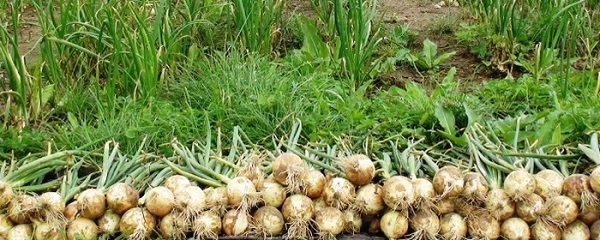
Currently, gardeners distinguish many different types of onions. Each onion variety will differ in taste, ripening time, size, and other characteristics. For this reason, it is quite difficult to single out a few specific varieties. Therefore, each farmer or gardener decides for themselves which vegetable to grow in their garden.
We will provide a more detailed description of varieties that are stored well at home for a long time.
Stuttgarter Risen
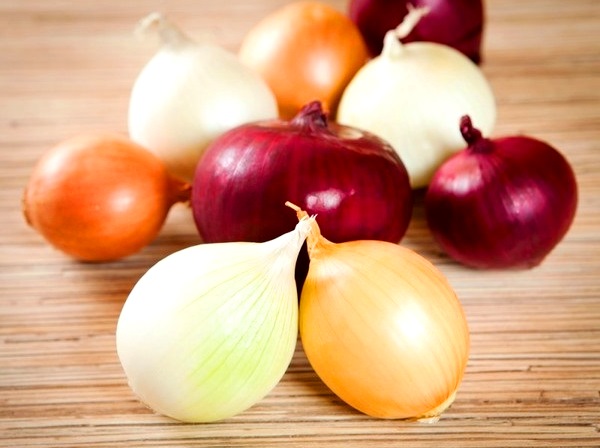
The result of the work of German breeders, it is now rightfully considered one of the most common bulbous onions. This large white onion matures from seed in four months. It has a pungent flavor, an ideal shape, and a long shelf life. This variety is also noted for its good disease resistance and ease of harvesting.
Sturon
A newly bred white onion. This hybrid was created by crossing the Stuttgarter Riesen variety. It stores very well, maintaining its round, elongated shape. Higher yields are noted.
Orion
A white onion developed by British breeders. Many years of work were spent on achieving its perfect round shape. Fruits can reach 200 grams in weight, and Orion's early ripening period makes it ideal for growing in cold climates (Siberia, the Urals). This variety is excellent for long-term storage at home. Due to its high yield, many gardeners prefer to grow it.
Popular varieties of red onions
Red onions have a milder flavor than most other varieties. For this reason, red onions are often used for special dishes, as they are very difficult to substitute. There are quite a few varieties of this species, but we'll cover the most popular ones, which are preferred by home gardeners and private farmers.
Bombay
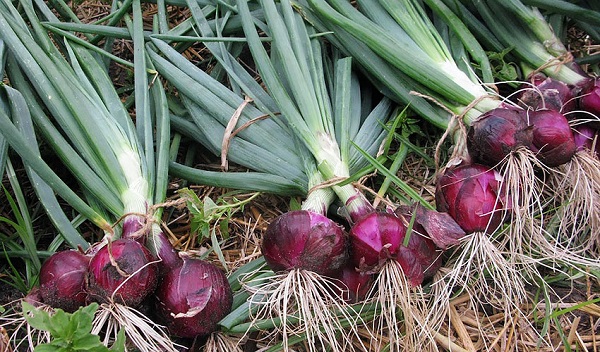
A red onion, commonly considered a salad onion, it's typically used in fresh salads and is also used as a seasoning in meat marinades. The greens and bulbs are juicy and tasty, without a strong, pungent flavor. This variety is rich in phytoncides and vitamins. Large farms grow this particular variety for their green onions. It's more popular than blue onions or white onions. Bombay is a mid-season red onion. Its fruits are dense, flat, and large.
Brunswick
An early-ripening red onion that produces a good harvest in a single year. It is best grown from seedlings. The fruits are flat, and the dried skins are purple, thanks to a special enzyme. For this reason, some consider this an onion. It has good weather resistance and stores well.
Purple onions (or blue onions) are classified as red varieties due to the outer color of their skin.
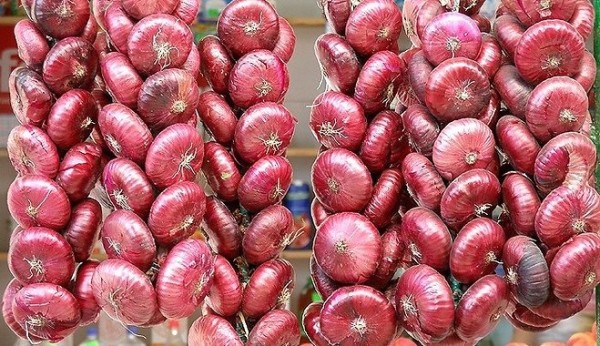
Carmen
A mid-season red onion. It takes up to 130 days from the first shoots to the vegetable's full maturity. The bulbs are dark red with a purple tint. Each bulb averages about 60 grams. The flavor is semi-sweet with a slight tang. It's perfect for fresh salads.
Red Baron
An early-ripening red onion. It can produce a harvest within three months of planting. The fruits are round and flattened. The bulbs are light in weight, averaging about 20 grams. They have a semi-sharp flavor and store well. Red Baron is grown primarily in northern regions, where colder weather sets in earlier.
Chalcedony
A mid-season variety with pungent-flavored bulbs. Each bulb weighs approximately 85-100 grams. Good shelf life is reported. Susceptible to mildew but resistant to downy mildew and neck rot.
Varieties of large onions
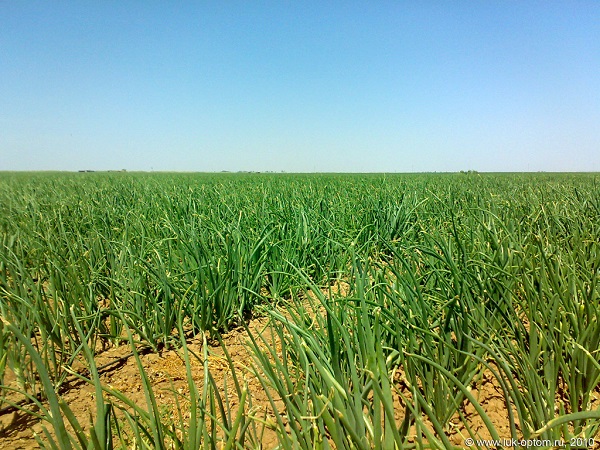
Now let's give examples of varieties of this vegetable crop, which, after ripening, produce large-sized bulbs.
Globo
A mid-season white onion that can grow to very large sizes. A single bulb can weigh up to one kilogram when fully ripe. It is very juicy and sweet. It is usually grown from seedlings in open areas. With proper care, very large bulbs can be dug up.
Texas Yellow
A very popular Dutch variety, it has good temperature tolerance and is resistant to various diseases (especially pink root rot). This vegetable is popular in northern regions. It is easy to grow and grows very quickly, requiring little care. Bulbs weighing up to 800 grams can be harvested in a single season.
Exhibition
This is a mid-season white onion that, with proper care, produces fruits weighing 500 to 800 grams. It has an average shelf life of four months. Exhibition has a sweet flavor without pronounced pungency or bitterness.
Stardust
Another large-fruited vegetable with a semi-sharp flavor. A single root typically weighs up to 400 grams. The outer color is pure white. The fruits have a pleasant flavor and keep well. Stardust sets should be stored at 14-16 degrees Celsius (57-61 degrees Fahrenheit), otherwise they will begin to bloom. Leave plenty of space between plants and rows. Stardust is disease-resistant.
Dzhusai
A fragrant white onion. It is a herbaceous, frost-hardy, perennial plant. It has a garlic-like flavor. It has a small false bulb and flat, narrow leaves. In Russian, this plant is known by a variety of names. The garlic-flavored leaves are used for edibility. Dzhusai emerges early in the spring and can also grow until autumn. Dzhusai can yield up to 25 kg (including the scapes) per ten square meters of land. Dzhusai grows in one place for up to five years, after which new plantings are needed.
White onions can be placed in a jar of water so that their root system is submerged. Some growers place several jars of onions on windowsills. As they grow, green tips will appear, which should be cut off and used for edible purposes. If green onions are to be eaten, the bulb itself can be discarded once it becomes soft and begins to shrink. It will lack nutrients, as they have been absorbed into the leaves.
Green onions can be grown from almost any bulb variety. However, it's best to plant green onions separately in a garden plot.
Video: "Onion Varieties for Greens"
This video describes in detail the methods for planting different types of onions.