
Secrets of Growing Multi-Tiered Onions: Expert Advice
Content
Description
This onion belongs to the Allium family. It is also known as the viviparous onion and the Egyptian onion. The multi-tiered onion gets its name from the formation of aerial bulbs. As a result, the crop grows in several tiers. It's worth noting that this plant is not found in the wild.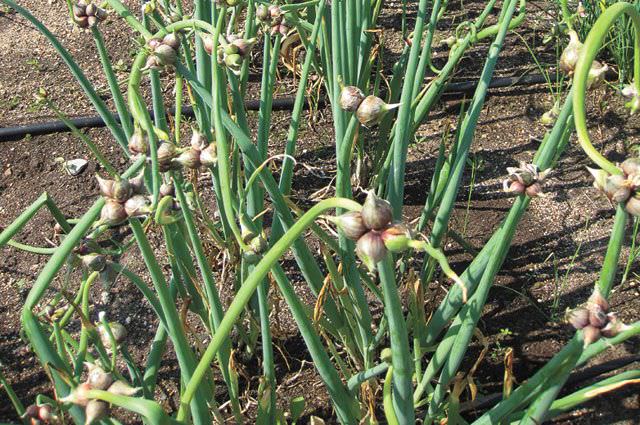
It has an unusual appearance. The aboveground portion of the plant consists of tubular, broad leaves covered with a waxy coating on top. This gives the leaves a slightly bluish tint. The aboveground portion can grow to approximately 40 cm in height. The tubular stalk ends in an inflorescence, from which aerial bulbs subsequently form. The first segment of the stalk can grow up to one meter in height. From this inflorescence, a new stalk develops, which also ends in aerial bulbs.
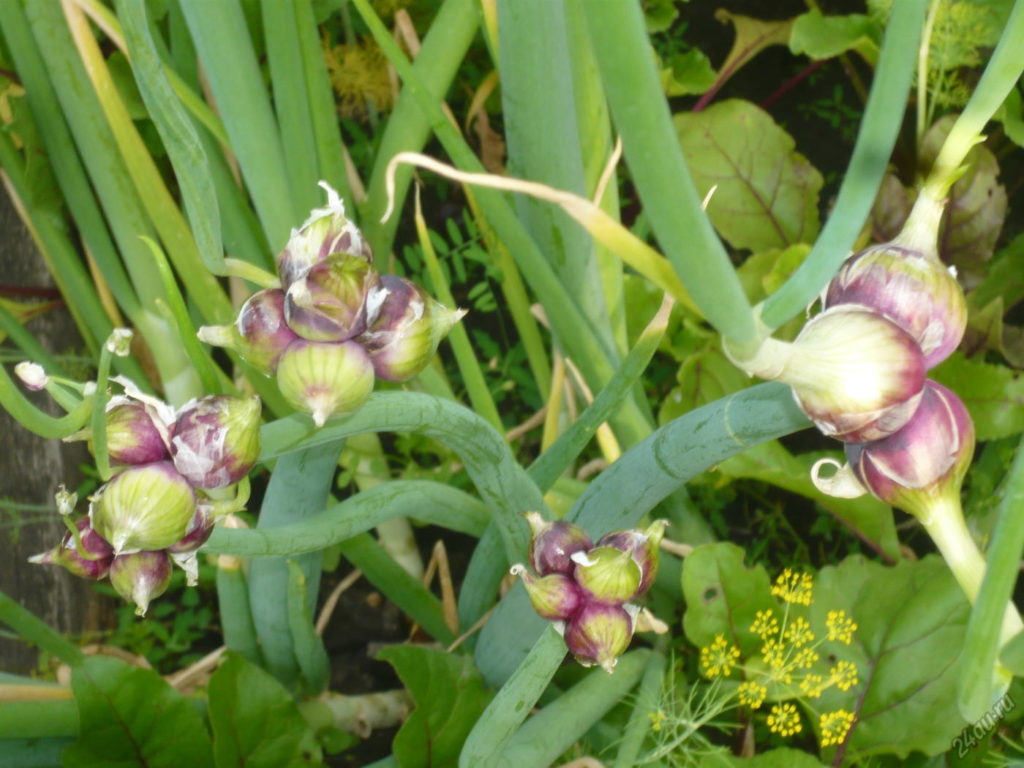
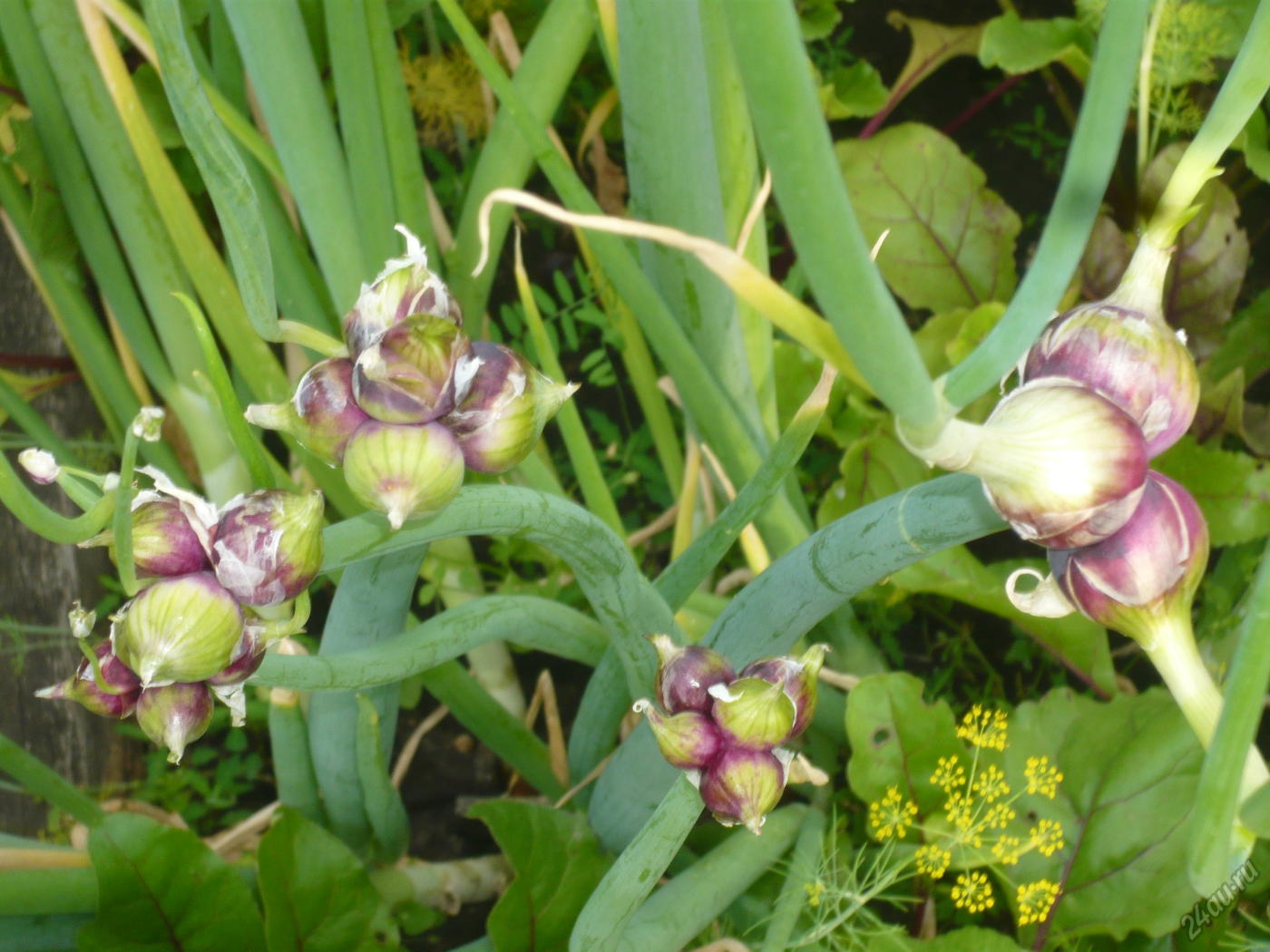
As a result, a single plant can form up to four to five such levels. The approximate weight of one aerial bulb is up to one and a half grams. These fruits are produced in clusters. A single cluster can contain from 3 to 30 bulbs. The bulbs are covered with a tough skin.
This plant currently has a small number of varieties. It's not yet widely grown by gardeners. However, it has a bright future ahead, as it possesses many beneficial properties that far surpass those of other varieties.
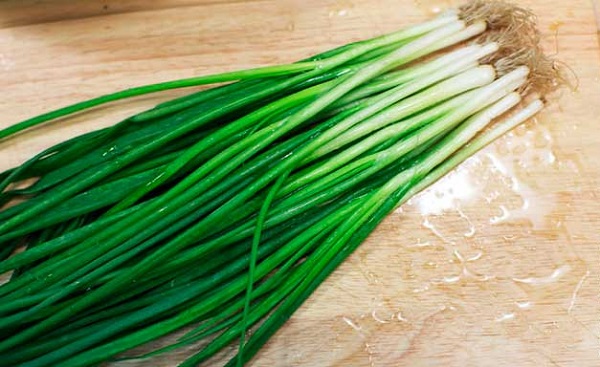
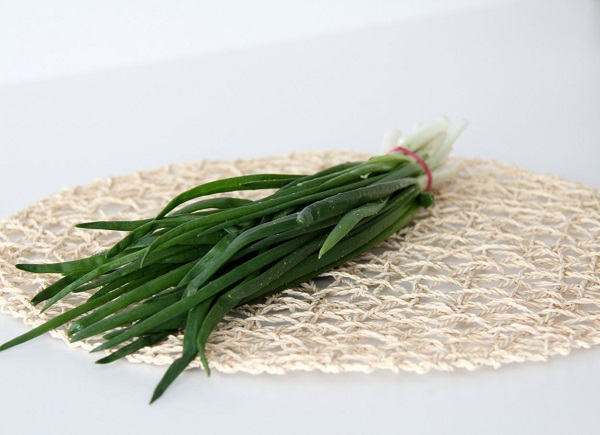
It's worth noting that the multi-tiered onion is better at producing greens in early spring than other varieties of this crop. Its greens are crisp and soft, but not overly juicy. Cut greens regrow quite quickly (about a week earlier than those of the Welsh onion).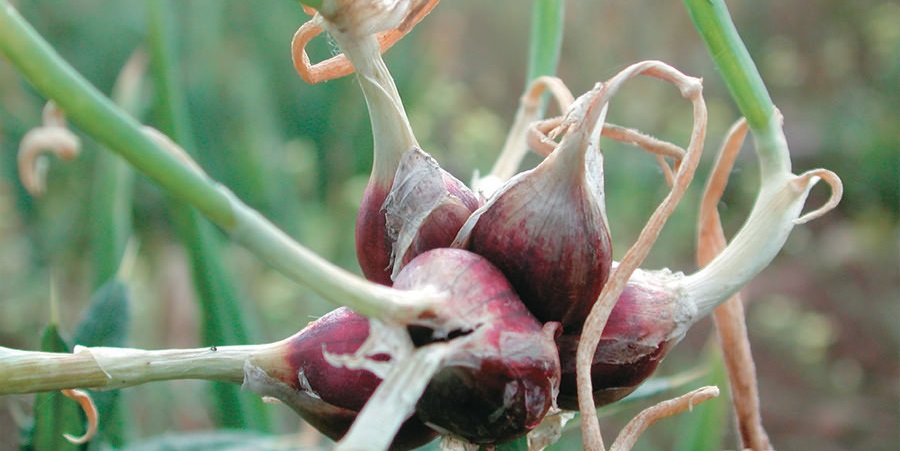
Interestingly, the feathers begin to grow even under the snow. This plant has excellent frost resistance and can withstand temperatures as low as -7 degrees Celsius. At the same time, the foliage itself grows many times more.
With its high yield, this onion is much more profitable to grow than other varieties. It can withstand a variable number of cuttings per season. Cuttings can be done every 20 days. If the plants have been heavily fertilized and watered frequently, the cuttings can be done more frequently.
For planting, use aerial bulbs. They can even be stored frozen. The bulbs gradually thaw and begin to sprout in the spring.
The advantages of this variety include the following points:
- an unpretentious plant that requires simple care;
- high fertility;
- Excellent frost resistance. The bulbs can withstand temperatures down to -50 degrees Celsius;
- good resistance to pathogenic microflora and pests.
By growing this variety in your garden, you will have greens on your table from early spring until late autumn.
Video "Description"
From the video you will learn the description of an interesting type of onion.
Bulbs
The multi-tiered onion differs from other varieties of this crop by its rather exotic flower stalks. These stalks can form several tiers, each of which forms a unique nest. These nests consist of aerial bulblets. These fruits have an elongated yet rounded shape. Their skin can be a variety of colors:
- yellow;
- brown;
- violet.
The inner scales of the bulbs are whitish in color with faint green specks.
It's worth noting that the fruit size gradually decreases from the very first to the last top tier. Naturally, the largest specimens will be located on the first tier.
Because of these characteristics, the stalks must be tied up, otherwise they will break under the weight of the harvest. Without staking, the flower stalks will lie on the ground, and the formed bulblets will begin to sprout in the soil. For this reason, this variety has another name: walking onion.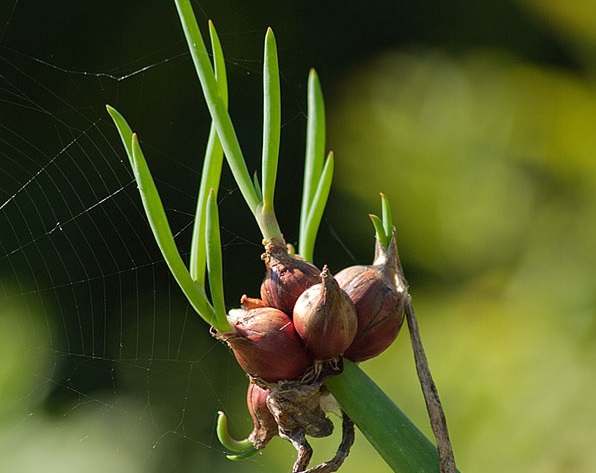
Often, single white flowers can be found between the formed heads. They are completely sterile.
This species of onion is incapable of producing seeds. This plant reproduces exclusively vegetatively and by division.
Landing
Experienced gardeners estimate the planting time for multi-tiered onions by eye. If planted in summer, the bulblets have ample time to root. They develop a couple of leaves and then go into winter. However, in early spring, the tops will begin to actively grow.
If multi-tiered onions were planted immediately after the fruit ripened, it's important to be aware of one peculiarity: the tops can only be harvested in March of the following year. Harvesting the onions in the fall can ruin the bulbs. In such a fragile state, they are unlikely to survive the winter.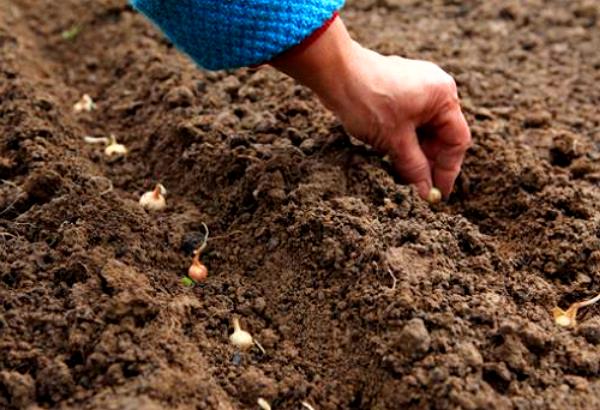
Root bulbs are planted in a nested square pattern. Adjacent bulblets should be spaced approximately 20 cm apart. If the seedlings are very small, they can be planted more closely. The planting depth should also be adjusted. Large seedlings are planted at a depth of 10 cm, while all other seedlings should be planted at a depth of up to 6 cm. Each group of seedlings is planted separately, as they will have different sowing patterns and harvest times.
Experienced gardeners, who have worked with this onion variety many times, use a more efficient method when planting it. This approach involves dividing the bed into two halves. Plant bulbs densely in one half, and sparsely in the other. This allows the first half to be harvested early in the spring. The plants can be simply pulled from the soil, effectively thinning the bed. The second half is left until summer. By June, it will have developed a lush foliage. It can be cut as often as needed. The bulblets harvested from the second half can be planted in the soil. The trimmed stumps will soon produce another bountiful harvest, and the planted material will root and overwinter well.
Growing
Multi-tiered onions are grown, planted, and cared for in virtually the same way as the familiar bulbous variety. Under certain conditions, a plant can grow in the same location for five years. If all agricultural practices are followed, a single three-year-old plant can yield up to 4 kg. This yield is obtained from plants planted in one square meter.
When planted in early spring, the entire above-ground portion of the plant dies by late autumn. The onion overwinters in this state. Thanks to its high winter hardiness, the bulbs easily survive even the coldest winters. They thrive with just a little snow on top. However, to achieve this, the plant must develop a well-developed root system.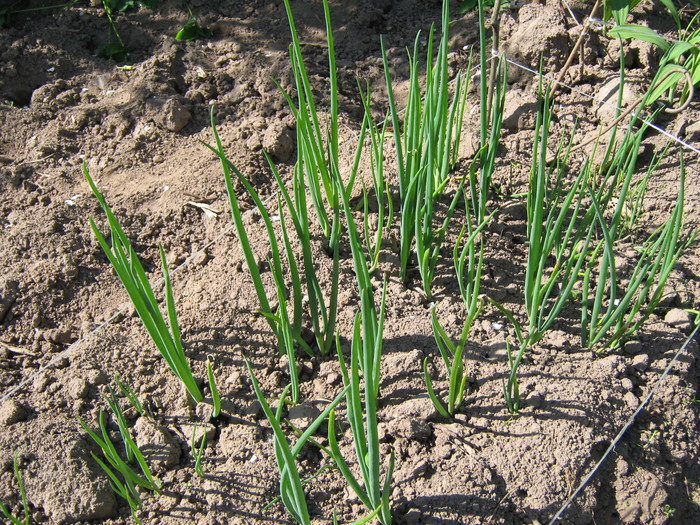
When growing multi-layered onions, it's important to remember that they are susceptible to sudden temperature fluctuations, which are typical in March and April. These can occur during a prolonged and early thaw followed by severe frosts. However, bulbs that fall from the bush can retain their viability under such conditions, even if they were above ground.
This variety is grown as both an annual and perennial crop. Southwest- and south-facing slopes, which clear early from snow, are considered ideal locations for its cultivation. The soil should be light and fertile. Cultivation practices for this onion are virtually identical to those for Welsh onions.
However, there are some specific considerations. For example, if the plant is grown as a perennial, it's best to form raised beds when planting in damp northern soils lacking black soil. If the plant is an annual, then when choosing dry garden plots in southern and central regions, the bulbs should be planted on a level surface. In this case, the planting pattern and site preparation are no different from those for Welsh onions.
Reproduction
As noted above, this onion does not reproduce from seeds. It is propagated exclusively vegetatively. For this, bulblets are used: basal or aerial bulblets. The latter sprout directly on the bush as early as July. They have no dormancy period. Meanwhile, underground bulblets will not ripen until September.
Aerial bulblets root much better. For planting, select large bulblets that have formed in the first two tiers. By autumn, they will produce 2-3 daughter bulblets in their first year.
You should plant those heads that have already formed root tubercles or full-fledged roots at the end.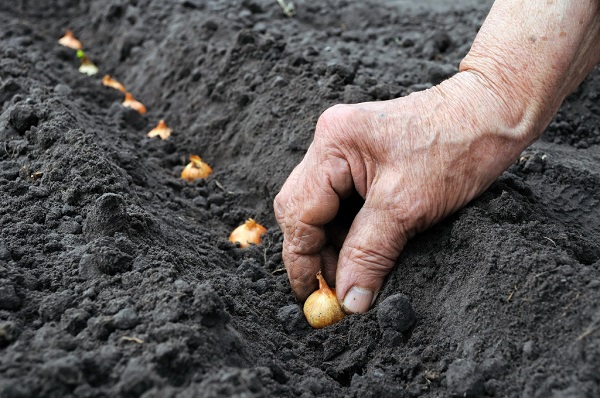
For propagating this variety, it's best to use planting material obtained from three- or four-year-old plants. Selected heads intended for spring or winter planting or forcing must be thoroughly dried and stored at zero degrees Celsius.
Care
Caring for multi-tiered onions begins when the snow melts from the beds. At this time, it's necessary to remove all last year's dead plant debris. Fertilizing is then applied. By the third or fourth year, when the bulbs are planted in the same spot, the beds become very dense. Therefore, they should be thinned out in early spring or fall. One or two basal bulbs should be left in each nest. Excess bulbs can be eaten or used as future planting material.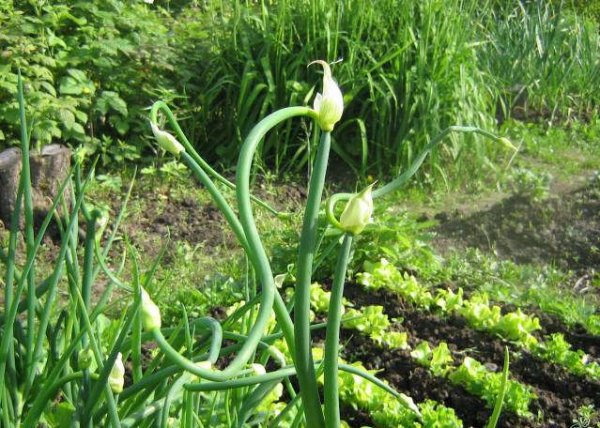
In early spring, the bulbs can ripen under plastic. This method of cultivation will produce greens approximately 15 days earlier than when planted outdoors. In greenhouses, the bulbs will have a lighter color but a less pungent flavor.
Bulb ripening is slowest in rainy, cool weather. However, the plumes will grow well regardless of weather conditions.
During hot and dry weather, the heads are harvested in late July or early August. During this period, the stems begin to turn yellow and dry out.
Top dressing
The first feeding is done in early spring. At this time, it is recommended to use mineral fertilizers. These include superphosphate, potassium chloride, and ammonium nitrate. Mix these three substances at a rate of 10 g per square meter of bed.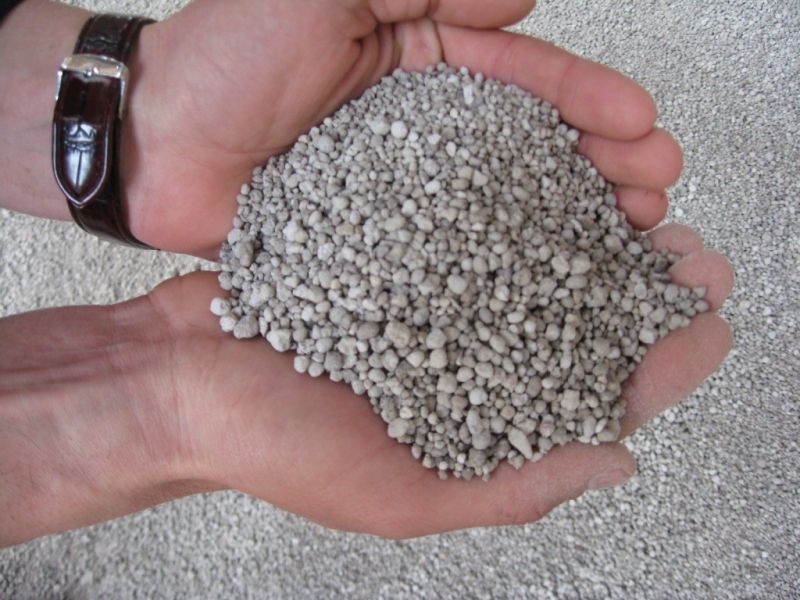
A second feeding is carried out after a month. Each time, it is necessary to loosen the soil between the rows.
As we can see, multi-tiered onions are a very profitable perennial plant that will provide you with tasty and healthy greens for several years.
Video "Growing"
This video will show you how to grow a multi-tiered variety of onion.