
Chives: what kind is this?
Content
The beneficial properties of chives
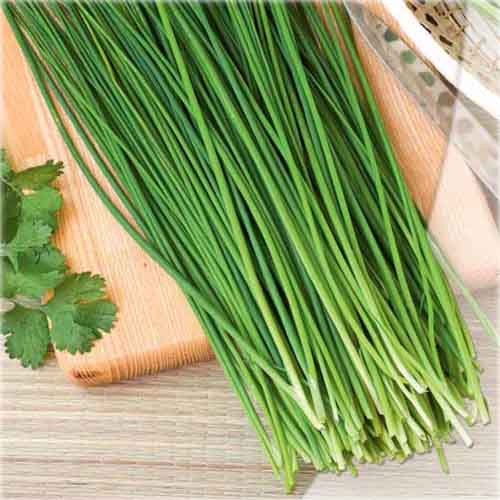
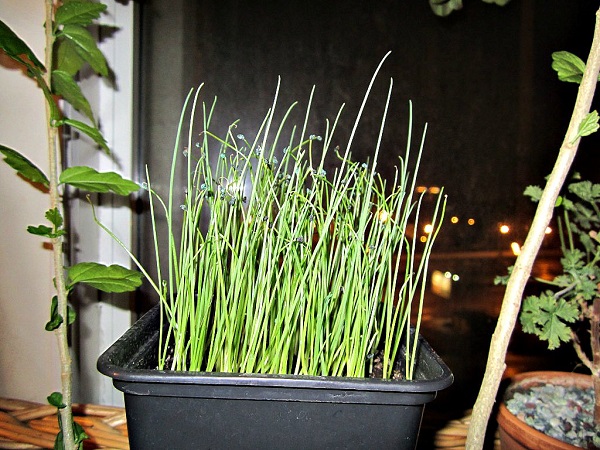
Chives have an unusual appearance. This perennial variety resembles a bush, consisting of tubular, thin, awl-shaped leaves colored bright green. These leaves can reach 20 cm in length. The underground part of this plant, however, resembles an elongated, small bulb with a fine, threadlike, white root system.
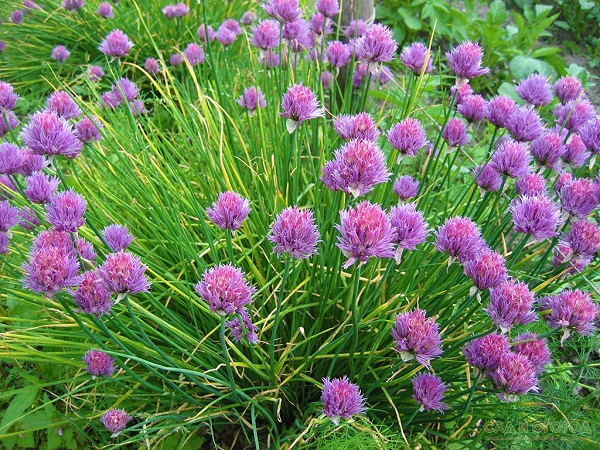
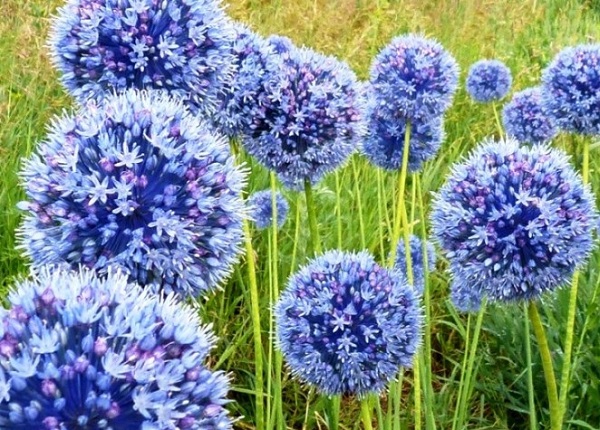
Chives form inflorescences that resemble spherical umbrellas. The inflorescence consists of light pink and pale purple flowers. After the plant finishes flowering, black seeds form.
Chives are famous for their beneficial properties, which include the following:
- Chives can be eaten year-round. They have a subtle, delicate onion flavor. At the same time, they are very tasty;
- Aesthetic appearance. The bright greenery and flowers of the bush attract attention. Therefore, chives are often grown in gardens not only for culinary purposes but also for decorative purposes. Many grow these onions in flower beds;
- Chives contain a large number of various beneficial substances: trace elements (copper, iron, selenium, manganese, zinc, and copper), vitamins (groups A, C, B, K, and E), amino acids (tryptophan, histidine, methionine, lysine, arginine, etc.), fats, proteins, carbohydrates, and dietary fiber. The leaves contain approximately 12% dry matter and 3% sugar;
- Greens are characterized by low color value. 100 g of greens contain only 30 kcal.
Chives also have medicinal properties. Therefore, they are often used to treat a variety of infectious diseases, as well as cardiovascular, kidney, and gallbladder conditions. The medicinal properties of chives are due to the presence of phytoncides, which prevent the development of infections.
Given all the beneficial properties listed above, this onion is a great addition to your garden. And the fact that it can be grown on a windowsill makes this plant doubly valuable.
Video: "The Amazing Vitamin Plant"
The video talks about the beneficial properties of onions.
Biological features
The biological characteristics of chives include the following:
- The plant has excellent cold resistance. This allows the bush to easily overwinter outdoors. Therefore, this variety is often grown in Siberia and beyond the Arctic Circle. It will thrive on a windowsill just as well as outdoors. Seedlings can withstand temperatures down to -3–4°C, while mature perennials can withstand temperatures down to -6–8°C.
- This is a perennial variety whose greens can be harvested even from open ground until almost the end of winter. No other onion variety can boast such characteristics;
- Chives are great for growing on a windowsill;
- pleasant taste, which is significantly different from the onions we are used to;
- The leaves of the chives are covered with a bluish waxy coating, which gives the whole plant a very beautiful appearance.
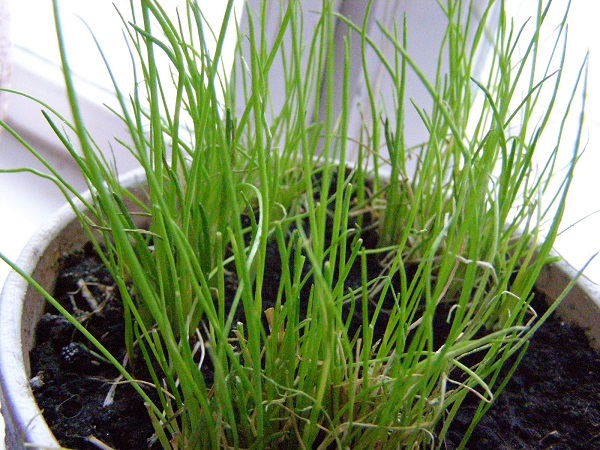
Thanks to its frost resistance, this perennial variety, when planted outdoors in spring, will produce delicious greens within a few weeks, after the snow melts and the sun warms. After trimming the leaves with scissors, water the plant thoroughly to ensure rapid growth of new foliage.
Another unique feature of this variety is that it lacks a traditional bulb. Chives form numerous bulblets, each covered in a membranous membrane.
These are the characteristics of chives. Thanks to them, their popularity among gardeners and flower growers continues to grow with each passing year.
Features of cultivation
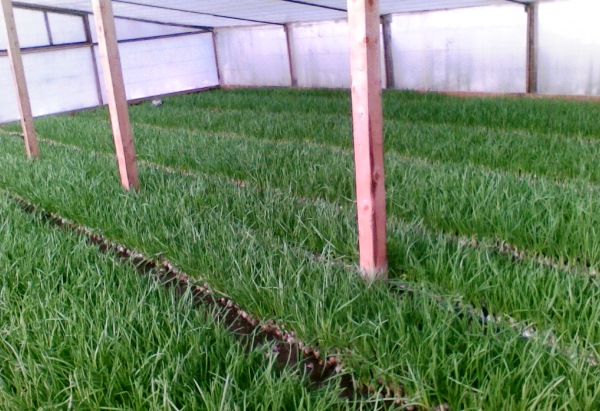
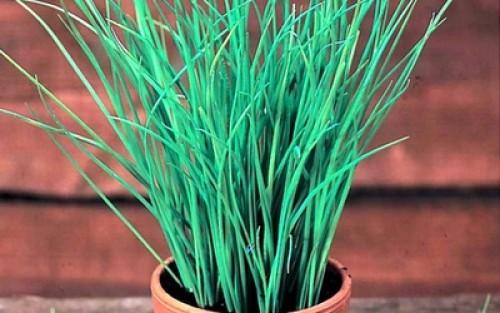
Chives can be grown on a windowsill in a flowerpot, in a greenhouse, or in the open ground. As we've already established, this plant will thrive in all settings. However, it's important to note that growing this variety requires specific agricultural practices. Care for it, whether grown on a windowsill or planted in a greenhouse or open ground, is virtually the same.
There are three ways to grow chives:
- vegetatively by dividing the bush;
- using seeds;
- by seedling method.
Let's examine these methods in more detail. Vegetative propagation of chives is accomplished by dividing old bushes into individual planting units. Each unit should have 4-5 branches. Growing this onion variety using this method requires pruning the roots and leaves of the separated units before planting. To do this, trim the tops of the leaves by approximately 15 cm, and trim the roots by 5-8 cm. Growing in this situation requires a planting pattern of 45-60 x 25-30 cm.
Planting material obtained by dividing the bush is recommended for early spring. Some sources claim that chives can be planted as early as April or May.
By dividing the bush, this onion variety can be grown in a greenhouse, on a windowsill at home, or in the open ground. This is a fairly simple cultivation method. When used, the plant can be annual or perennial.
Many prefer to grow this plant from seed. Planting is usually done in the spring. However, seeds can also be sown in the summer or before winter. However, the optimal time for planting is considered to be spring (April or May). Seeds collected from the previous season can be used as planting material. For sowing seeds, the soil must be prepared in the spring. Preparing the soil for seed planting involves the following steps:
- leveling the ground surface;
- then it is rolled;
- After this, it is cut up.
Planting should be done in moist, fertile soil. Chives care begins in the fall, when the soil is prepared for spring planting. In the fall, dig the selected plot to a depth of approximately 20-30 cm. When digging, add organic matter (humus or compost) to the soil.
Planting seeds, like dividing the bush, is also done using a 45-50 x 25-30 cm spacing pattern. The seedlings should be sown to a depth of no more than 0.7 cm. After sowing, add a layer of moist soil over the seeds and compact it slightly. Then, add loose soil on top.
If the seedlings were planted correctly, the first shoots will appear within 7-10 days. Once the first shoots have formed, loosen the soil between them to improve aeration.
Thinning of beds occurs when the first true leaves appear. This should leave a distance of 10-15 cm between plants. Seedlings removed during thinning can later be used as transplants. This is called seedling cultivation. When using seedlings, they should be planted in a 15 x 3-4 cm pattern. For planting, use seedlings grown in the same year as the sowing.
Regardless of the growing method used, proper care of the beds is essential. Chives care consists of the following steps:
- Water as needed. The soil should always be kept moist;
- After mass leaf cutting, care involves fertilizing with slurry containing ash. Mineral fertilizers can also be used, but they must be applied very carefully.
- periodically it is necessary to weed to remove weeds;
- During the growing season, leaves can be cut 2-3 times;
- In the third year of cultivation, it is necessary to remove not only the leaves, but also some of the bulbs.
The above-described care for chives will be an excellent help for a good harvest.
Collection and storage
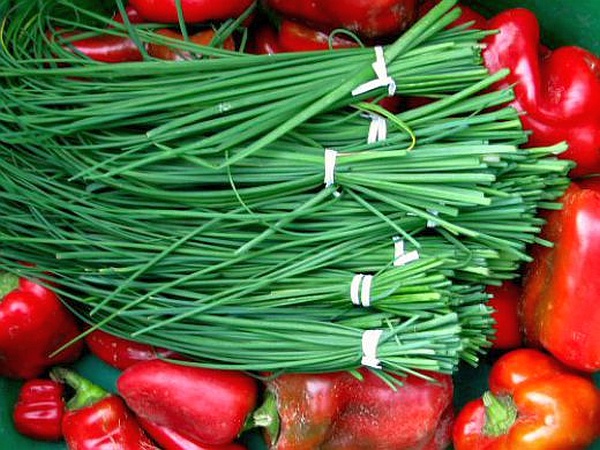
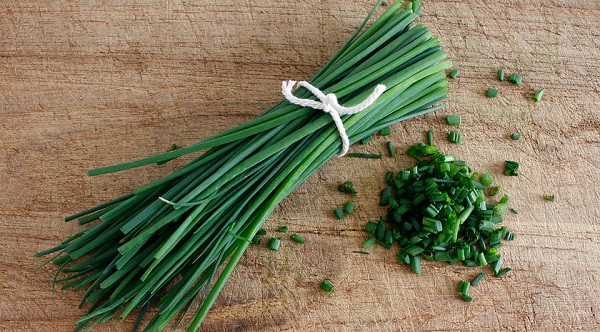
Harvesting chives can occur 2-3 times during the growing season. The leaves should be cut when they reach 20 cm in length. For storage, the greens should be thoroughly dried and finely chopped. In this form, chives can be used as a seasoning for various dishes.
You can also freeze the leaves of this onion whole. To do this, I pack them in plastic bags and place them in the refrigerator.
Thus, chives are a great addition to both your home and garden. The key is to follow all the proper growing practices, and you'll always have fresh greens.
Green Arrows of Health video
This video provides interesting information about onions.