
How to grow onion sets from seeds
Content
Seed preparation
The seeds must be fresh, from the previous year's harvest (each additional year of storage reduces germination by 50%). It's best to purchase nigella seeds in advance, at least a month before planting, to determine their quality immediately. To do this, perform the following test: count 20 seeds, wrap them in several layers of damp cloth, place them on a saucer, and place them in a plastic bag. To ensure germination, a warm location and periodic moisture are necessary. After 10 days, count the germinated seeds and determine the germination percentage. 75% is a good rate; between 50 and 30%, a denser sowing is required. If less than 30% of the seeds are viable, it's best to replace the seedlings.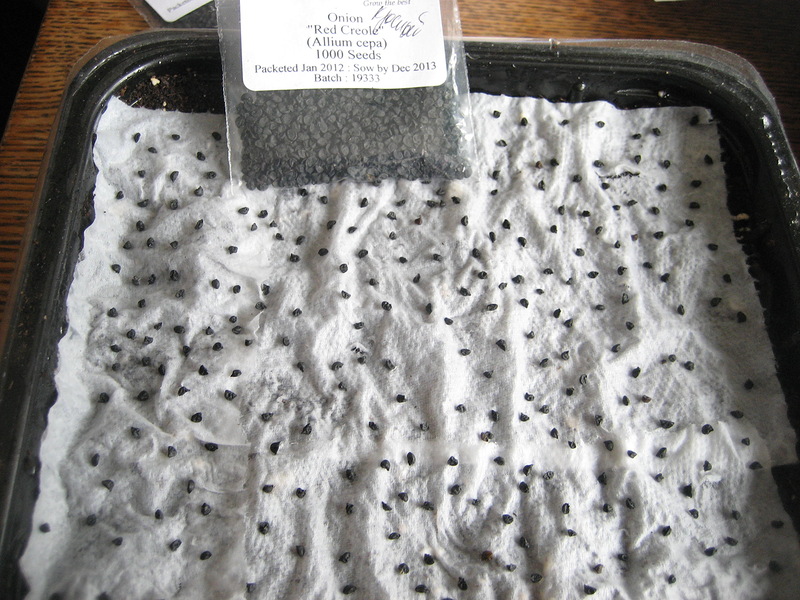
Seed preparation begins several days before sowing. First, they are warmed for 20 minutes in water heated to 50 degrees Celsius, then cooled for 2-3 minutes under running water. If pre-disinfection has not been performed (the manufacturer provides this information on the packaging), you must do it yourself.
Most often, seeds are soaked for 1 day in a weak solution of potassium permanganate, where they are not only freed from fungal diseases, but also receive additional nutrition. For the same purpose, you can use a solution of one of the following fungicides: Quadris, Aliette, Fundazol, or Ridomil. A growth stimulator is also very helpful.
Soaking onion seeds in Ecopin for 3 hours awakens them, shortening germination by several days, healing any injuries, and accelerating water penetration to the embryo. Afterward, the seeds are wrapped in a damp cloth and placed in a warm place. Inspect them daily. When 3-5% of the seeds sprout, they are ready for planting.
For convenience, they are dried until they are loose. Those who have planted onions before know their tendency to "disappear" against the black soil. A simple trick to ensure even planting is to dust them with chalk while drying.
Video "How to Grow"
This video will show you how to grow onion sets from seeds.
Preparing seedlings
Growing onions from seedlings is much more profitable and effective if:
- you have little planting space (the savings will be 25%);
- you use expensive varietal seeds (you will need 3 times less of them);
- it is necessary to grow semi-sharp and sweet onion varieties with a long growing season;
- You want to grow a record harvest with minimal effort.
Start growing seedlings in early February. You'll need a warm greenhouse or shallow boxes filled with fertile soil. Plant the seeds 4-6 cm apart. Until germination, the ambient temperature should be 18-25 degrees Celsius, then lower it to 14-16 degrees Celsius to prevent the seedlings from stretching. After two months, when 3-4 true leaves have formed, the seedlings can be planted outdoors. If you don't have a greenhouse and have limited space on your windowsill, you can plant the onions in a compact "snail" arrangement. To do this, add 1 cm of fertile soil to a 10 cm wide and 1 m long strip of laminate underlayment.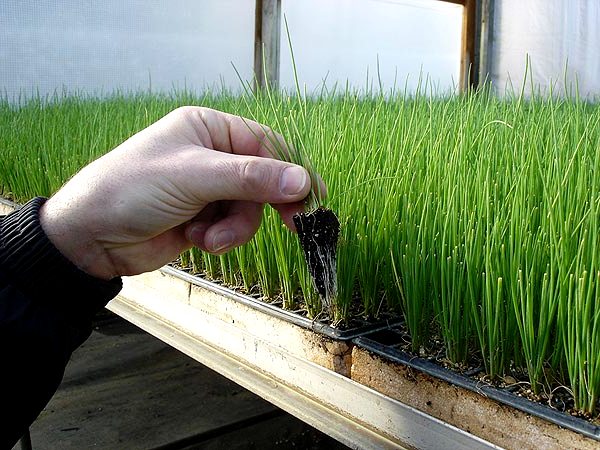
Using tweezers, place the seeds 2 cm apart from the edge. Then, roll the tape into a roll and secure with a rubber band. Place the "snail" in a container, water, and cover with plastic to maintain humidity. This method is worth trying to grow a very interesting onion, which will be discussed below.
Onion varieties
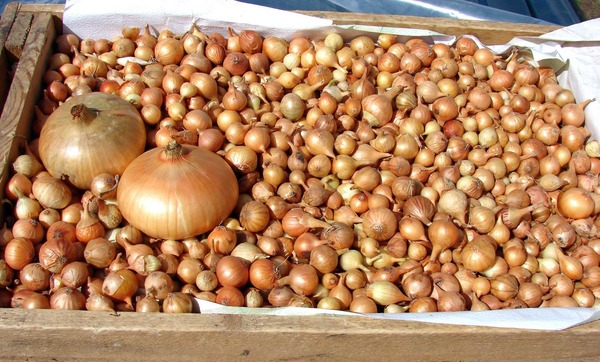
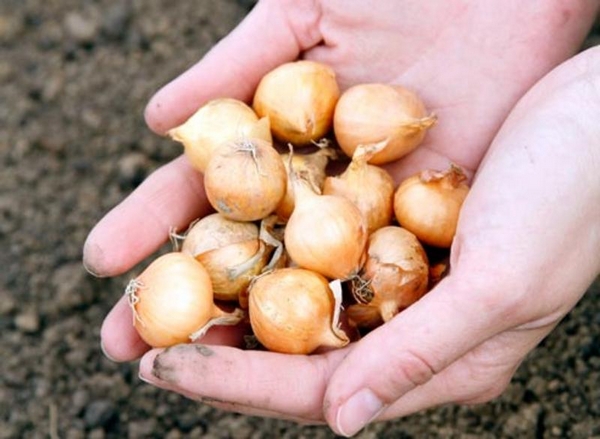
Using seedlings, you can grow giant bulbs (up to 1 kg) of the Dutch variety "Exhibition," which are unusually sweet and delicious. In a single season, you can grow full-sized turnips from nigella seeds, providing ideal conditions for early varieties such as Odintsovets, Chalcedony, Shaman, Centaur, and Olina. The varieties "Sibirsky odnoletniy" and "Agro ozimy," which are distinguished by their increased cold tolerance, are suitable for winter sowing. Sets are grown for high-yielding varieties such as "Stuttgarten Riesen" and "Centurion."
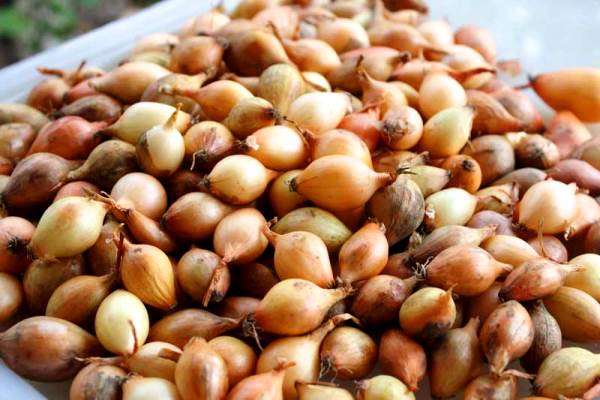
Planting onions in spring
In the spring, nigella seeds are planted as early as possible. For this purpose, it's best to prepare the bed in the fall by fertilizing with humus, digging, and leveling. Before planting, apply 1 tablespoon of superphosphate and nitroammophoska per square meter of soil, along with a handful of wood ash. The seeds are planted to a depth of 1.5-2 cm. Onions can be planted in two ways: in six-row bands or scattered.
Method 1. Using the sharp end of a hoe, make shallow furrows 15-20 cm apart and sow the seeds 1-1.5 cm apart. Onions planted in rows are easy to loosen and thin.
Method 2. Using a rake, lightly rake the soil to the edges of the bed, scatter the seeds at a distance of 1.5 cm, cover with soil, gathering it around the edges, and lightly compact. This method ensures that the bulbs mature to a uniform size.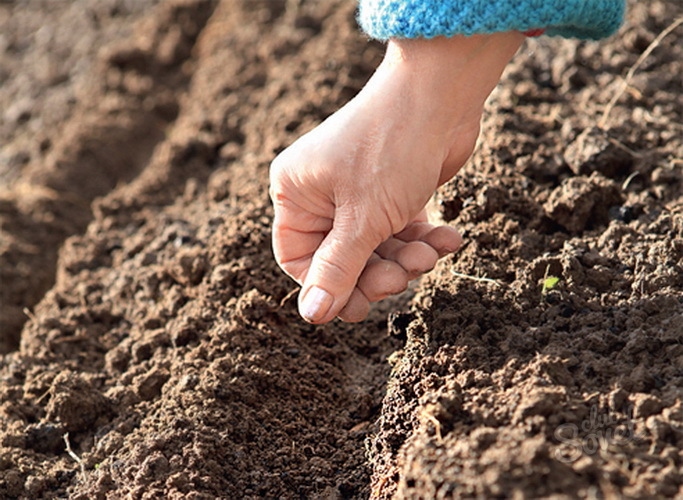
The planted onions are mulched with a 1-centimeter layer of compost or peat, watered with a fine-mesh watering can, and covered with plastic wrap until germination. For the tender sprouts, it's crucial that the top layer remains loose and the soil moist. In areas where the onions have sprouted very densely, thin them out once the plant has formed two leaves.
The beds must be kept clean; weed-choked onions will grow small. If the weather is dry in May and June, water the onions 1-2 times a week. In July, watering is stopped. Harvesting begins when the tops have yellowed and fallen over. The dug-up sets are cleared of any remaining leaves and laid out in the sun to ripen.
We sow onions before winter
Planting onions in winter is not much different from planting them in spring. You can use beds that were rich in organic matter for previous crops. These include cucumbers, tomatoes, cabbage, and legumes. Don't soak the planting material before winter. Since nigella seeds begin to germinate at temperatures of 2 degrees Celsius, they are sown before the onset of sustained frost.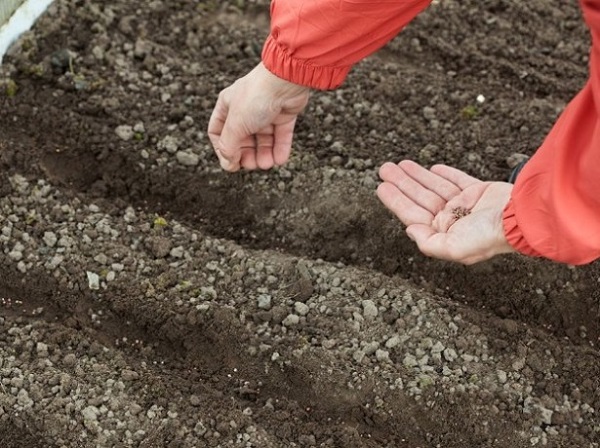
Considering that some onions may not sprout (they may freeze or rot during a long, cold, damp spring), it's best to increase the number of seeds sown. Once the seedlings emerge, thin them out, leaving 5 cm between plants. Onions grown this way will ripen 10 days earlier. Small onions can be grown in the same way as onion sets from seed, sown in spring; leave 1-1.5 cm between seedlings.
Green onion sets
Large onion sets are used for green onions. When planted in spring, the dry necks of the bulbs are trimmed and soaked in warm water (30-35 degrees Celsius) for 24 hours (this will shorten the forcing period by 5-7 days). While fertility requirements remain the same, lighting requirements are much lower. Green onions can be planted in partial shade.
Onion bulbs are planted in multi-row strips with a minimum spacing of 1 cm within each row and 20 cm between rows. Bridge planting is also used, where the bulbs are planted like cobblestones on a pavement, almost flush with each other. The onion bulbs grow for 25-30 days. The harvest is completed when the leaves reach 30-40 cm in length.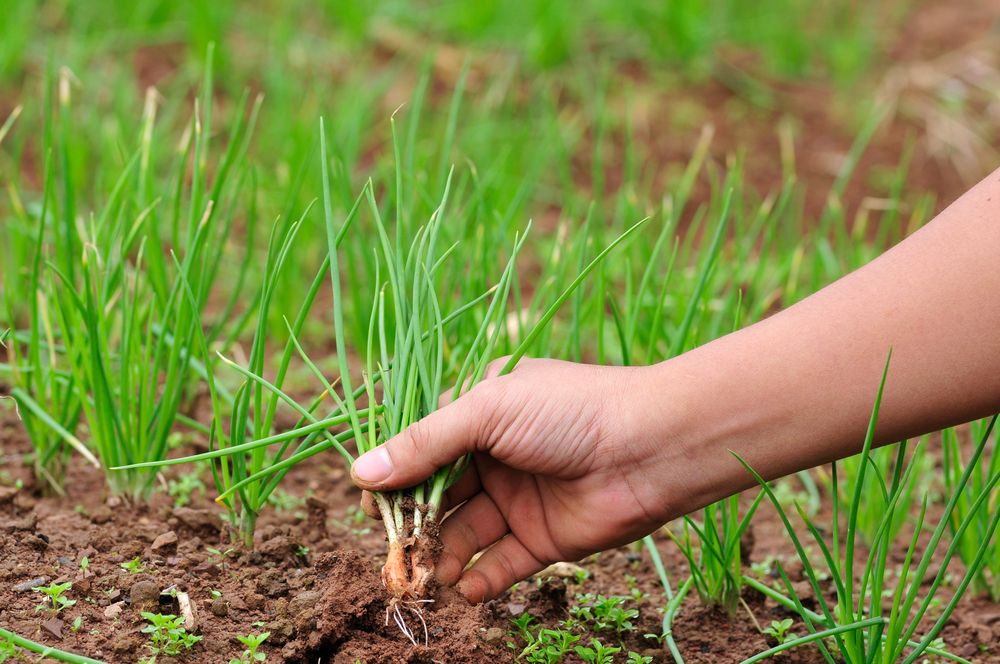
Winter planting is carried out using one of the methods described above, but the crops are covered on top with an eight-centimeter layer of manure or humus, which is removed in the spring.
Green foliage from onion sets can be harvested even in winter. It's interesting to learn about the experience of Valery Medvedev, who grows vegetables year-round.
To grow green onions on a windowsill, you will need a box, sawdust, and planting material—large onion sets.
Hardwood sawdust is poured with boiling water, allowed to cool, and the excess water is drained. The box is filled 2/3 full and the bulbs are tightly packed in. The remaining sawdust is used to fill the gaps, creating a thin top layer.
For irrigation, use a saltpeter solution—3-5 grams per liter of water. It will take 25 days for the plants to ripen.
Video "Green Onion Sets"
This video will show you how to grow green onions.