
Features of growing Indian onions
Content
Landing features
To grow Indian onion, you first need to know what kind of soil is suitable for it. This plant should be planted in a soil mixture made from the following ingredients:
- coal;
- sand;
- leaf and sod soil.
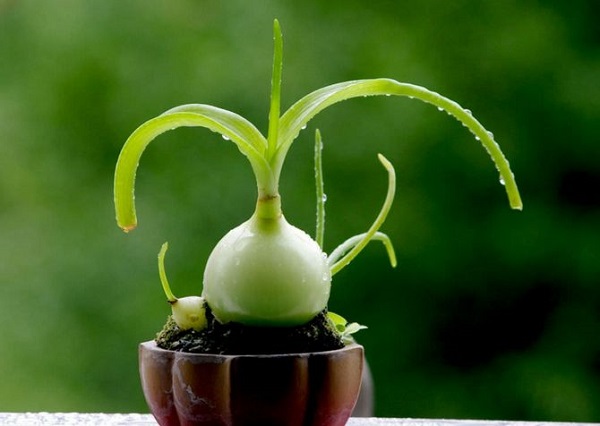
Indian onions can be grown both outdoors and in flowerpots. When growing outdoors, choose a site that receives no direct sunlight. It's best to plant the plant in the shade of trees. Planting outdoors is only possible after the soil has warmed up well. Frost-free planting is essential.
Bulbs should be planted only halfway into the soil. Only the root portion of the bulb should be placed in the soil. If the root portion is large enough, its tip should be slightly above the soil level.
If planting was carried out during the warm summer period, the bulb will germinate well and form many small babies around itself, which can be used for further propagation.
Since ornithogalum has a developed root system, it does not require fertilizing after planting.
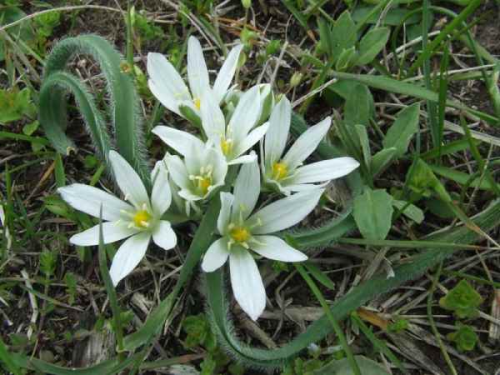
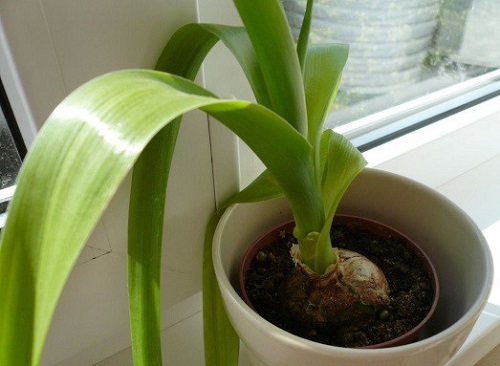
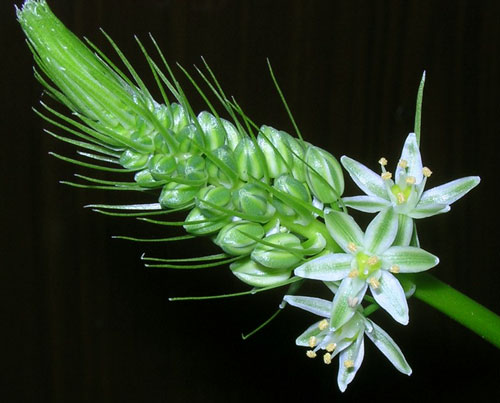
For the winter, it's recommended to dig up the bulbs and store them. To do this, place them in peat or sand. Ornithogalum can also be planted in flowerpots and cared for as a houseplant.
In addition to bulbs, seeds can be used as planting material. Before planting, Indian onion seeds need to be stratified. This process takes 3-4 months. To obtain bulbs from seeds, follow these steps:
- soak the seeds;
- After this, they are placed in a cool place where the temperature is -4 degrees Celsius. The seeds should remain in these conditions for a couple of weeks;
- Then they are sown in containers (flower pots, boxes, plastic cups, etc.). They should be filled with moist soil.
Seeds are planted in spring or summer. Germination takes 6-8 months. When the first few leaves appear, the seedlings should be pricked out. Young bulbs are transplanted into open ground only after a year.
Ornithogalum can also be grown directly as a houseplant. It thrives in plastic pots. When indoors, place the pot near a north- or northeast-facing window.
Video: "Ornithogalum Transplantation"
The video explains how to properly transplant a plant into another pot.
Caring for Indian onions
Indian onion, wherever it grows, is easy to care for. Shade is the key to its vigorous growth and development. Therefore, it's essential to avoid direct sunlight. Therefore, ornithogalum should be planted on the north side of the plot, preferring well-shaded areas.
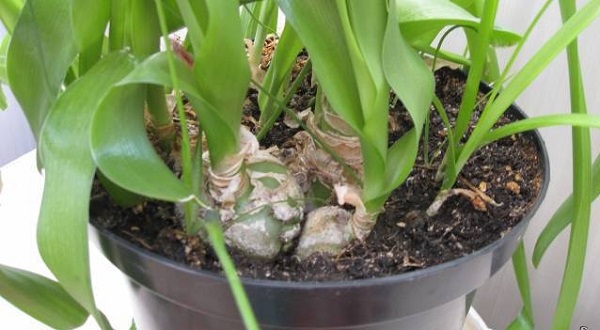
Care for ornithogalum consists of the following points:
- Watering. This flower needs to be watered fairly frequently. It's important to keep the soil moist at all times;
- For summer growing, the optimal temperature for the plant is considered to be +20-22 degrees Celsius. However, in winter, it is lowered to +10-12 degrees Celsius. Dug-up bulbs should be stored at this temperature; they will not germinate under such conditions.
- Fertilizers. As the plant grows and develops, it needs to be fertilized periodically. Various fertilizer options can be used for this purpose.
In the spring, when the leaves of the Indian onion begin to dry out a bit, prune them. After this, the plant will begin to grow. In the summer, if the plant is grown in flowerpots, it can be moved to the balcony or veranda.
Repotting should also be done periodically. If the Ornithogalum caudatum is grown outdoors, repotting is not necessary. This procedure is usually carried out in the spring and should be done once every two to three years. Planting the bulbs outdoors after wintering is also done in the spring, when the weather has settled in and the soil has warmed sufficiently. Early May is considered the optimal time for planting bulbs outdoors.
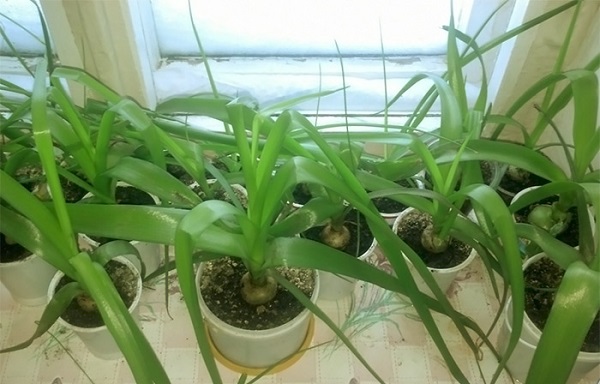
Plants grown outdoors should always be dug up for the winter. Some gardeners store the dug-up bulbs in the refrigerator, first placing them in a plastic bag. They can also be surrounded by dry moss or placed in peat moss. Alternatively, they can simply be planted in a flowerpot and cared for over the winter as you would a houseplant.
As we can see, ornithogalum is a fairly easy-to-grow plant that can be grown both in open ground and in flowerpots. Its medicinal properties will remain pronounced in both growing conditions.
Methods of reproduction
Indian onion can be propagated in the following ways:
- sowing seeds;
- children that are separated from the adult bush;
- by dividing the bulb.
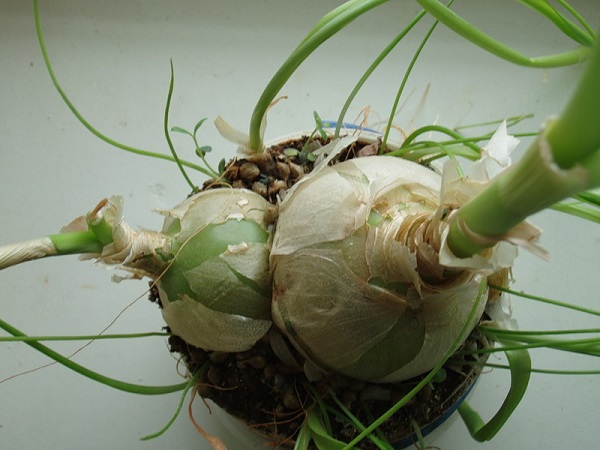
Seed propagation is possible both when growing ornithogalum in the garden and at home. However, obtaining seeds at home is difficult, as pollination requires manual intervention. Artificial pollination of ornithogalum caudatum is only possible in the second year of the plant's life. Outdoor pollination is performed by bees. If you place the houseplant on an open balcony, you can hope for pollination by insects.
Seeds should be collected when the fruit capsule formed after flowering is completely dry. They are sown in special containers. Before planting, preparation of the seedlings is essential. Plants grown from seed can be transplanted to their permanent location only two years after sowing.
The easiest way to propagate Indian onion is by using offspring. Because of its ability to form offspring, ornithogalum is sometimes called "pregnant onion." Small onions emerge from the mother plant's outer shell. Their number can vary widely: from two to two dozen.
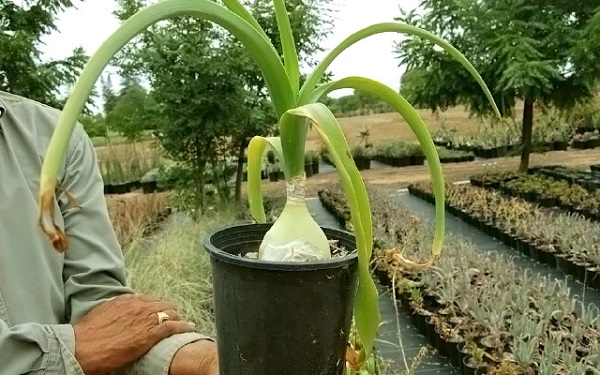
As they grow, the baby bulblets break the scales of the parent plant and separate from it. They have the ability to root independently. The emerging young bulblets do not need to be immediately separated from the mother plant. This should only be done once the baby bulblets have formed their first true roots. This usually takes up to two weeks.
You don't have to wait for the bulblets to separate on their own. They need to be forcibly separated in the spring. Each separated bulblet should be planted in the soil with the pointed end facing up.
Gardeners and florists sometimes propagate Indian onions by dividing the bulb. For this purpose, use a fairly large bulb, at least 5 cm in diameter. Cut it in half, trimming the roots. Allow the halved bulb to rest for a couple of days. After this, plant the halves in pots and water them thoroughly until the first shoots appear.
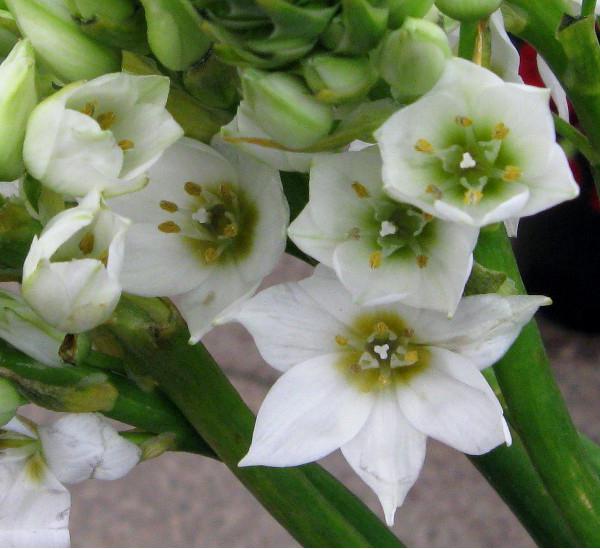
Although this flower can be propagated three different ways, the most popular method remains propagation by cuttings. This is truly the easiest method to implement, requiring little time or effort. And the results are almost always positive.
Medicinal properties
Indian onion has pronounced medicinal properties. Therefore, it is often planted both outdoors and indoors. These medicinal properties are found in the leaves, bulbs, and stems of the plant. More specifically, the medicinal properties are found in the sap of the ornithogalum caudatum. The sap of this flower is a colorless, odorless mucus. The medicinal properties of Indian onion begin to manifest two years after planting the seeds or bulblets. The plant's medicinal properties only increase with age.
The beneficial properties of the juice are due to the presence of a large number of various active substances. The medicinal properties of ornithogalum include the following effects:
- wound healing;
- antiseptic;
- anesthetic.
To achieve the desired medicinal effect, it's important to monitor the plant's growth and development. For example, growing stems should be periodically broken off. They should be approximately 15-20 cm long. Large, mature leaves are best for medicinal purposes. Even leaves with slightly dried edges can be used.
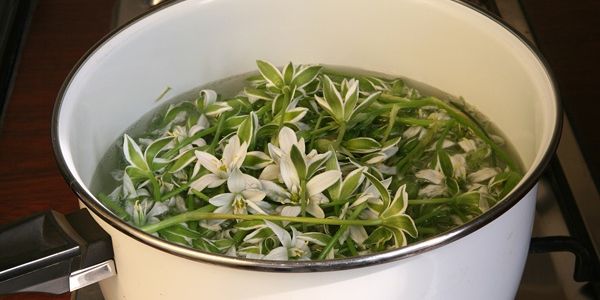
Fresh juice has the most pronounced medicinal properties. They also manifest well in tinctures prepared with alcohol or vodka. When the plant juice or tinctures made from it come into contact with a sore spot, a burning sensation and slight tingling will occur. This effect improves blood flow to the affected area.
Remember that Indian onion is a purely medicinal plant, bearing no resemblance to the common onion, other than a superficial resemblance. Although the plant belongs to the Allium family, ornithogalum is a poisonous flower. Therefore, when treating with its juice, it is essential to adhere to a specific concentration. Otherwise, an overdose is possible, which will negatively impact the patient's overall health.
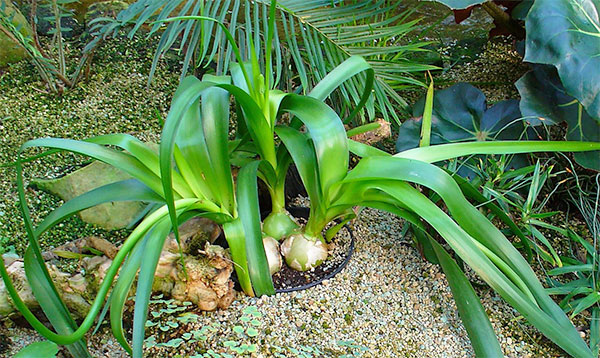
In folk medicine, there are a wide variety of recipes for preparing medicinal remedies from the juice of Ornithogalum caudatum. When preparing such a remedy, it is essential to strictly follow the instructions and adhere to all directions. Tinctures made from the juice of Ornithogalum caudatum can be used both externally and internally.
Medicinal preparations made from Indian onions help to get rid of many ailments, including fungal skin diseases and even radiculitis.
Therefore, many gardeners and florists recommend growing ornithogalum in the garden or at home, as this plant has remarkable medicinal properties. Indian onion will be an excellent addition to your garden or home.
Video "Properties of the sagebrush"
The video shows how to prepare onion tincture.