
Dutch varieties of onion sets: description and cultivation
Content
Description of varieties
Varieties can be divided by taste: hot, semi-hot and sweet.
Hot peppers ripen early, store well, are rich in essential oils, and have firm flesh. They can be harvested not only by hand but also by machine, as they are usually tightly packed in several layers of dry scales. However, these varieties are not considered very productive.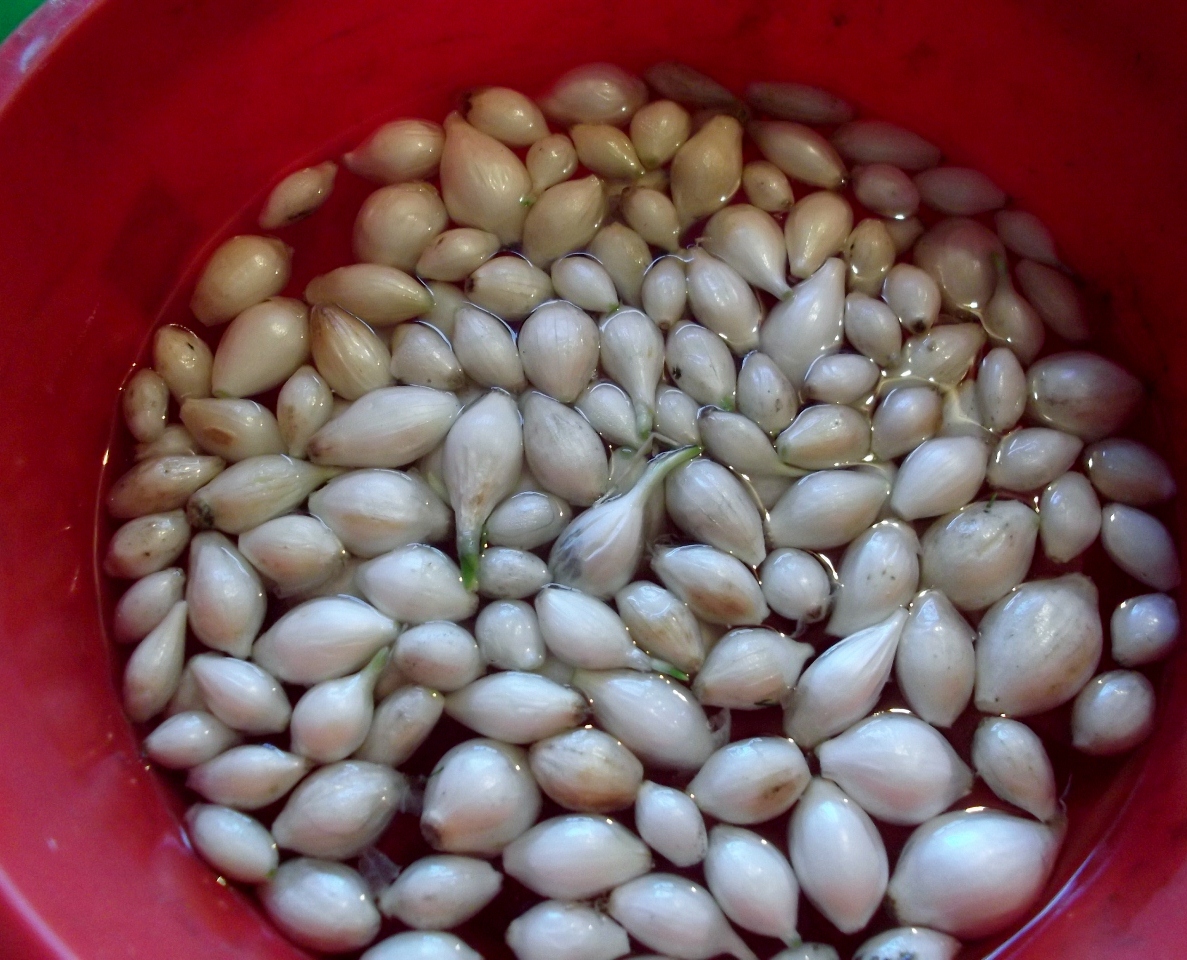
The bulbs of semi-sharp varieties have fewer outer scales and medium-density flesh. They are not well suited for machine harvesting and do not store as well. They yield more than hot varieties, but they also take longer to ripen.
Sweet onions are typically eaten fresh and deserve a place on the summer table. They delight us with high yields, but don't have a long shelf life. Hot and semi-hot varieties are grown in all latitudes. While in central and northern climates they can only be grown from sets, in the south, all onion varieties, including sweet ones, can be grown from seed throughout the season.
Red Baron
A mid-season variety with a ripening period of 92 to 95 days before the leaves begin to turn yellow. Suitable for salads, the Dutch onion has a medium-spicy flavor. It boasts many remarkable properties.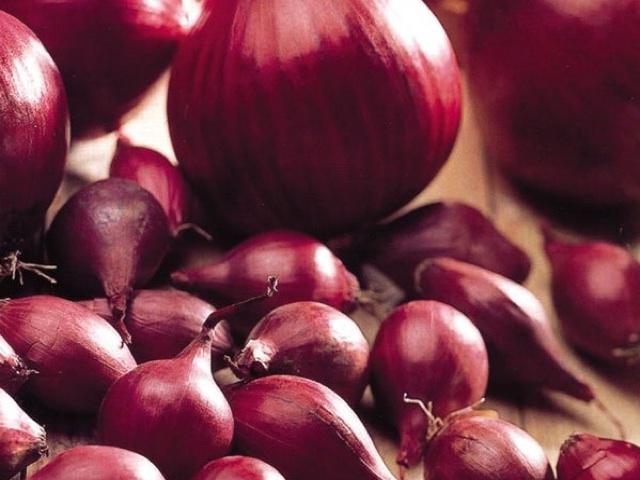
It has a piquant sweet taste, does not require additional bitterness removal in cooking, and is rich in vitamin C. The bulb is juicy, with dark red inner scales and red outer scales. This variety is guaranteed to produce a high yield, is ideal for storage, and is resistant to fungal diseases.
Stuttgarten Risen
The Stuttgarten Riesen variety came to us from Germany. It's perhaps the most famous in Europe. This early-ripening variety takes 66 to 73 days to reach maturity. It's a versatile, pungent onion. The bulb is flattened, medium to large in size, weighing 50 to 94 grams. The flesh is very dense and white inside, with dry scales tightly covering the bulb, allowing it to be stored for up to 6 months.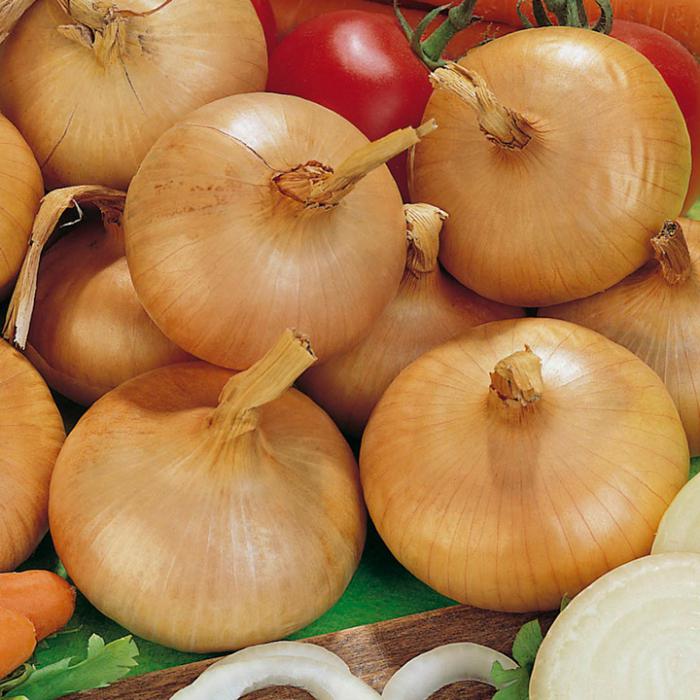
It's very productive and ripens well. It tolerates winter well, so it can be sown in the fall. Its disadvantages include susceptibility to diseases such as neck rot and downy mildew. This requires additional preventative measures and protection.
Centurion
A mid-early variety. It has a large, elongated bulb with brown outer scales. The juicy scales are white and have a pungent flavor. It is rarely used for green bulbs, but is suitable for bulb production. The yield is higher than that of Stuttgarten Riesen. Stored at the correct temperature in a cellar, it can be stored for up to 8 months.
Shetana
This onion is a mid-early variety. It is well suited for growing from seed and sets. Ripening period is 88-98 days (from seed) and 64-87 days (from sets). The bulb is medium-sized, round, and has dry, straw-yellow scales.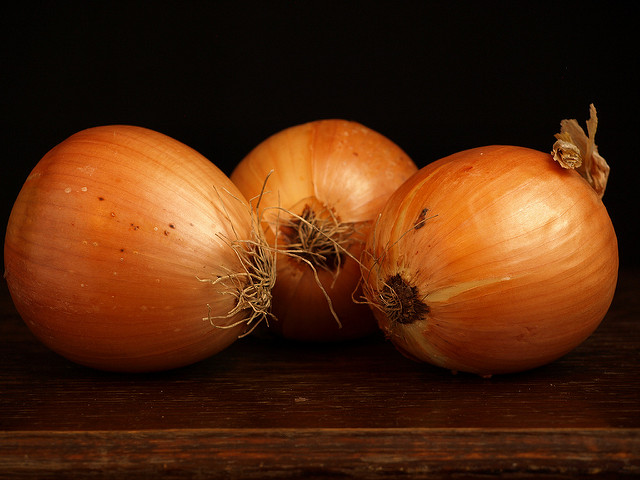
The flesh is white, medium-firm, and semi-sharp. It is used for cooking and canning. This variety produces a typical yield but has excellent storage properties. After ripening, ripening reaches 100%. It is resistant to fusarium rot but can be affected by downy mildew.
Sturon
Grown exclusively for the production of onion sets. This mid-season variety is characterized by a round bulb with a small base and a narrow neck, golden with brown stripes. It has a pungent flavor and is resistant to fungal diseases. This onion stores well. Stored in a cool, dry place, it retains its marketable appearance and flavor for 7-8 months.
Hercules
An early-ripening variety for growing onions in a biennial crop from onion sets. The bulb is medium to large, has a wide elliptical shape, and a medium-thick neck. Dry scales are light golden (3-4 pieces), while juicy scales are white. 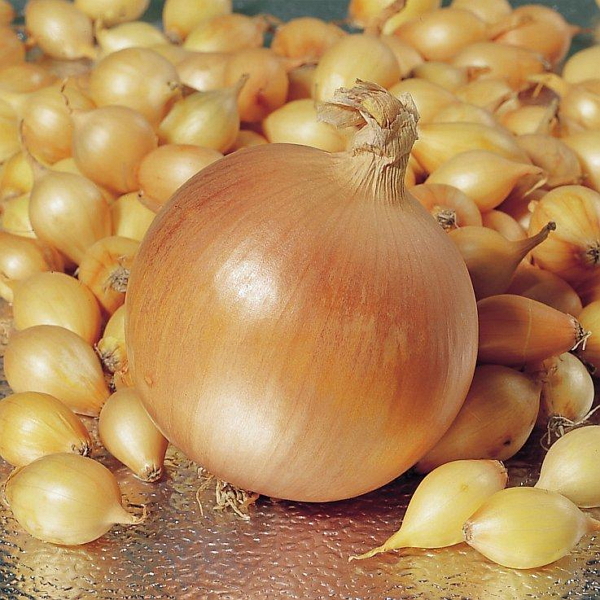 The flesh has a tangy flavor. The variety tolerates drought well due to its well-developed roots. Hercules yields significantly more than Stuttgarten Riesen. It ripens well and stores well.
Snowball
A mid-early salad onion variety. The bulb is round and medium-sized. The scales are white, both inside and out. The flesh is very juicy and semi-sharp, ideal for summer dishes that don't require cooking. Suitable for regions with short summers. Snowball is resistant to bolting and has proven to be a good storage variety.
Bamberger
This mid-early variety is excellent for both salads and canning and has a mildly spicy taste. 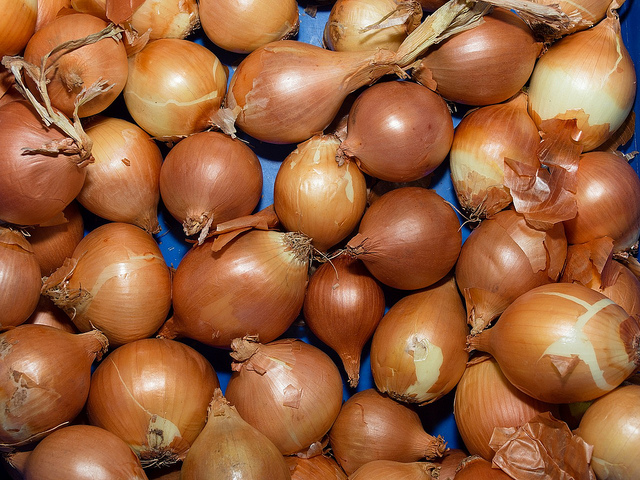 Bamberger bulbs are elongated and medium-sized. This variety thrives in sandy loam soils rich in micronutrients. These onions rarely bolt and store well.
Video "Description of Varieties"
From the video you will learn many new facts about these onion varieties.
Growing
It's important to determine whether you're growing onions for green onions or bulbs. If you're growing green onions, sow the seeds closely, but to grow bulbs, space the seeds 1–1.5 centimeters apart. Otherwise, the bulbs will grow small.
When the seeds germinate, they need to be thinned out, otherwise it will be impossible to obtain large bulbs. To facilitate sowing, dust the seeds with chalk—this allows them to separate easily and become easily visible in the soil.
So, onion cultivation begins like this: early in the spring, sow the seeds of the desired varieties and harvest the small bulblets in August. They are dried and stored until spring. The following spring, these onion sets are planted again, and in the fall, full-sized bulblets are harvested.
The ideal bulb size for planting is 2 centimeters in diameter. Dry or damaged bulbs are discarded. Small bulbs can be planted before winter, as they can dry out during storage. If planting in the spring, small bulbs are planted first, followed by medium-sized bulbs, and large bulbs last. Large bulbs bolt faster. If an onion has bolted, even after removing the bolt, it will not be suitable for use as a marketable bulb. These onions are used primarily for cooking. It is best to plant onions in warm soil, after digging it and removing any remaining weeds.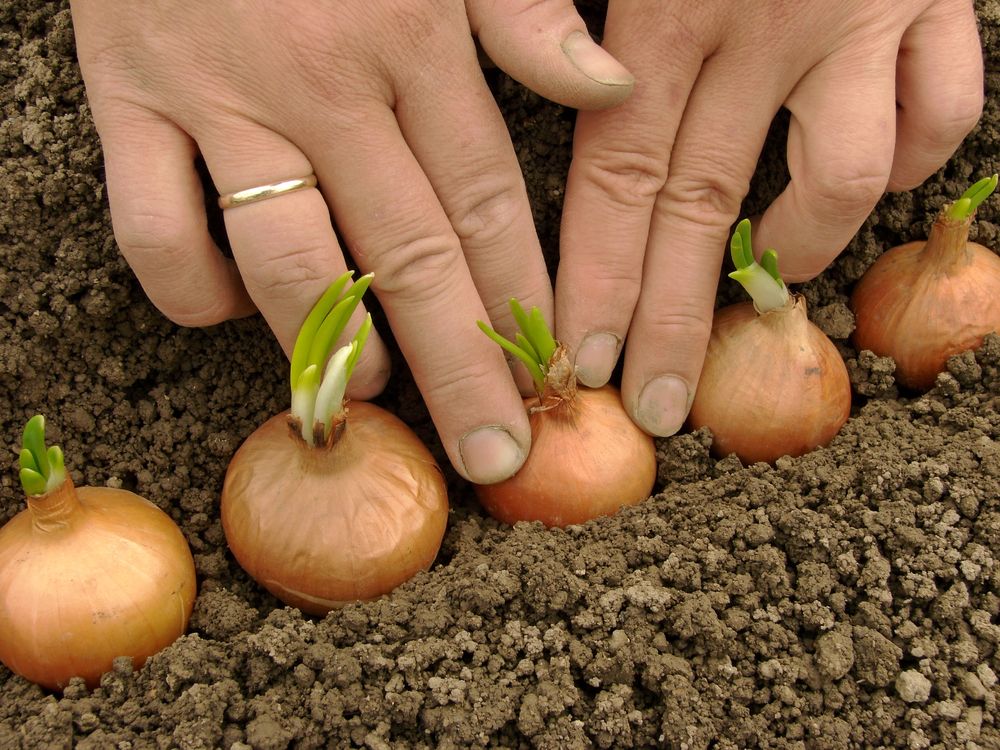
Plant the onion sets 10 centimeters apart, leaving 25 centimeters between rows. Place the onion bulbs in the soil so that the stem remains above the soil surface. Subsequently, the plantings should be loosened regularly, not only after each rain, but also more frequently. Onions appreciate regular watering, but it's important not to overdo it. Watering is most important in the beginning, during seed germination, root formation, and foliage growth. Watering is also necessary later, but less frequently and abundantly. About a month before harvest, watering is stopped. Fertilizing should also be considered. For this purpose, a mullein solution is used.
Harvesting
Onion sets are harvested at the end of summer, when the leaves have turned yellow and the stems have lost their elasticity. It's crucial to harvest the onions before they begin to grow roots again.
In this case, the bulbs store much worse. Choose a sunny, dry day for harvesting. The removed bulbs are left to dry directly in the garden bed.
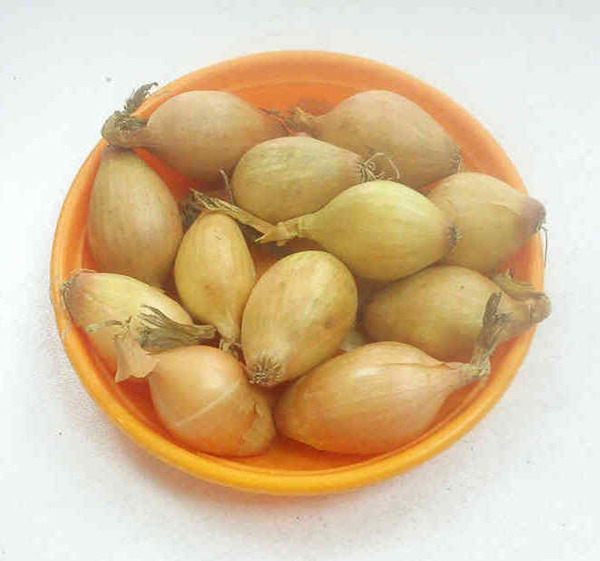
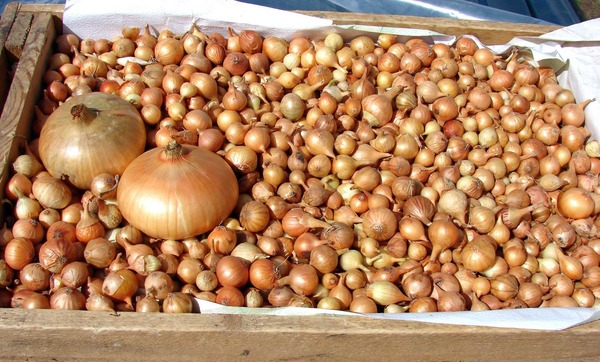
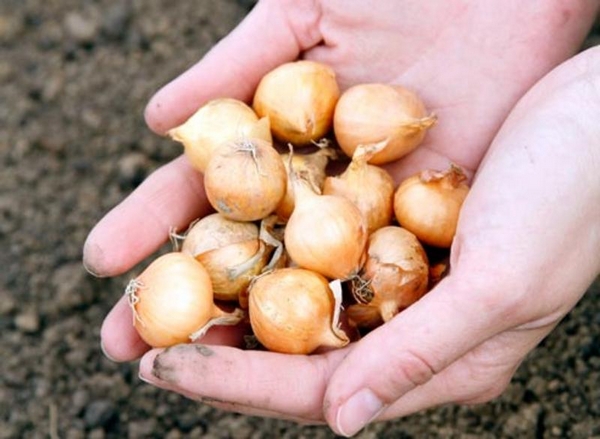
If late summer is rainy and a fine day is unavailable, the harvested onions are brought into a dry room and spread out in a thin layer to dry. After about a week, when the onions have dried, they are sorted, trimming off any remaining roots and dry leaves. After this, the onions are transferred to a heated room for final drying.
Storage
Onion sets are quite difficult to store at home. If stored improperly, they can develop bolts. To prevent this, it's important to maintain proper temperature control. There are three storage methods for onion sets: warm, cold, and a combination of both. Since bolting occurs at temperatures between 0 and 18 degrees Celsius (32 and 64 degrees Fahrenheit), we recommend storing them at temperatures outside this range. For the cold method, even the vegetable drawer in the refrigerator will do if you don't have a cellar or basement.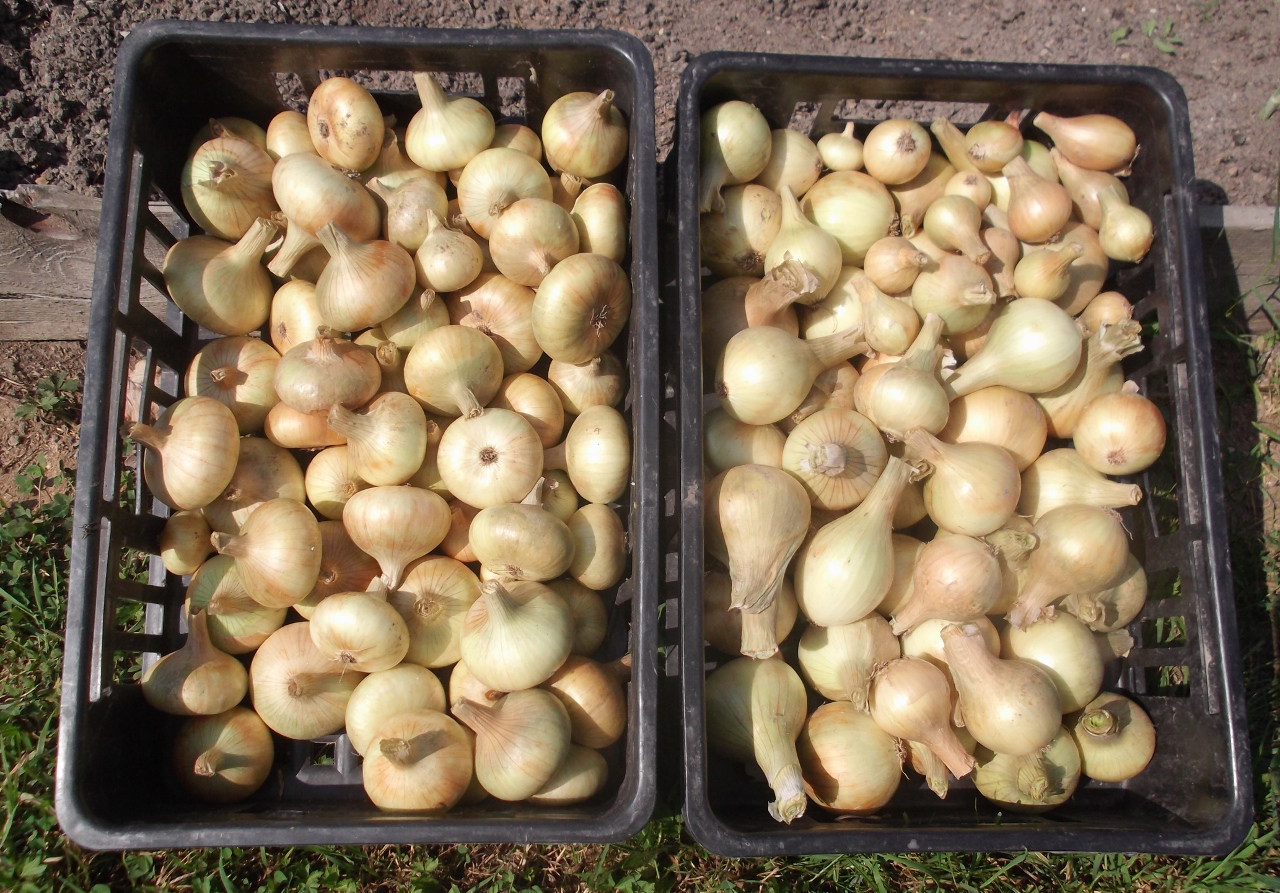
The warm storage method is used if a storage temperature above 18 degrees Celsius can be guaranteed. Even a city apartment will do. With periodic ventilation, onions will overwinter well. The mixed storage method is the most labor-intensive. Before the onset of cold weather, onions are kept warm, then transferred to a cool place with a temperature of one to three degrees below zero. In the spring, the bulbs are thawed, gradually raising the temperature to 25 degrees Celsius. After five days, the temperature is lowered to 20 degrees Celsius and they are left at this temperature until planting.
Besides growing your own onion sets, you can also buy them. Dutch varieties of onion sets are ideal for this purpose. The advantage of these varieties is that the bulbs never bolt, even if they sprout. Dutch varieties also store better.
Video: Growing and Storing Onion Sets
This video will show you how to grow and store onion sets.