
How to determine the maturity and when to dig up onions and other varieties
Content
Peculiarities of harvesting onions
Before discussing when to harvest onions, let's outline the key guidelines every farmer should follow when it comes time to harvest. If you do everything correctly, your harvest will be excellent quality, and there will be very few (if any) spoiled vegetables.
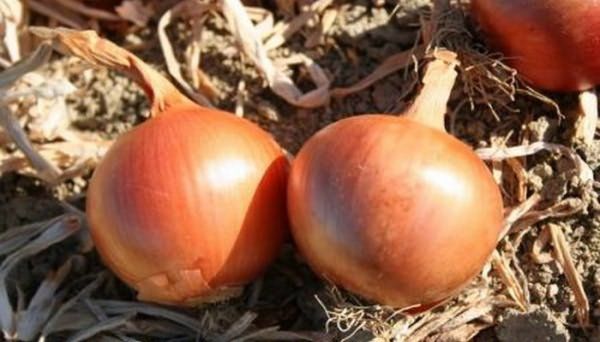
- Stop watering the onions two weeks before harvesting. This will give them time to dry out slightly, which will greatly improve their quality and extend their shelf life.
- It's best to harvest vegetables in the morning, when the sun is just out (or even a little earlier). This will make drying the onions much easier, as you'll be able to dry them in the sun right after you finish harvesting.
- It is not recommended to simply take and pull the vegetable out of the ground.The right method is not to pull out the onions, but to dig them up.You can also lightly dig the soil first and then carefully pull the vegetable out. Digging with a pitchfork (rather than a shovel) will reduce the risk of damage to the vegetable that could occur if you simply pull it out.
- Immediately after digging up the onions, lay them out on a cloth and let them dry in the warm sun. You can dry them in an electric dehydrator or on a balcony or loggia. Also, keep in mind that if the weather is rainy, simply place the onions under a canopy to dry thoroughly. For convenience, you can tie the onions into a braid.
- It's not necessary to harvest the entire crop in one day. However, keep in mind that the harvest itself should last no more than 10 days to prevent the crop from becoming overripe.
What does it depend on and how do you determine the timing?
So, you've planted onions. When to harvest them is a natural question. Harvesting time depends on several factors:
- Variety. This factor is the most important, as some varieties ripen in record time, while others require a long wait before harvesting.
- Weather conditions. The hot or cold summer in your region and the humidity level also play a significant role. For example, if the weather is cold, you'll have to wait longer to harvest onions.
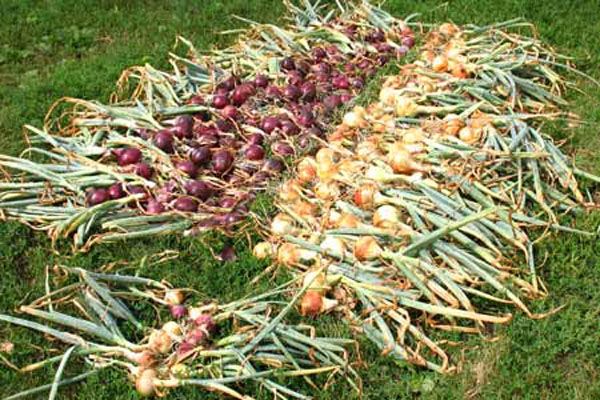
You can determine when to harvest onions based on external indicators, using a mathematical method, or using the lunar calendar. We'll look at all three methods below.
By external signs
You can determine the timing of onion harvesting based on external signs. These include the following:
- The stems, which were still green and juicy in the summer, begin to dry out and turn yellow.
- The neck of the bulb becomes thinner and softer. You may also notice it gradually drying out.
- The previously upright bulbs will now lie flat on the bed. It's worth noting that if the summer is cool, this sign shouldn't be relied upon, as it will appear later than the bulb itself has matured.
- You can also try to determine the onion's ripeness based on the condition of its scales. To do this, dig up one onion and remove a few scales. If they are completely dry and easily removed, this indicates the onion is ripe.
Mathematical method
If you're worried about guessing when to dig up your onions, many farmers recommend using the so-called mathematical method. This involves adding 70 to 80 days to the planting date.
It's important to consider the weather in your region during the summer: if the summer was dry and warm, the onions will ripen slightly faster, but if it was rainy and damp, they will take slightly longer to ripen. It's also important to consider the ripening characteristics of each variety. For example, if you planted a late-ripening variety, you'll need to wait a little longer than 80 days.
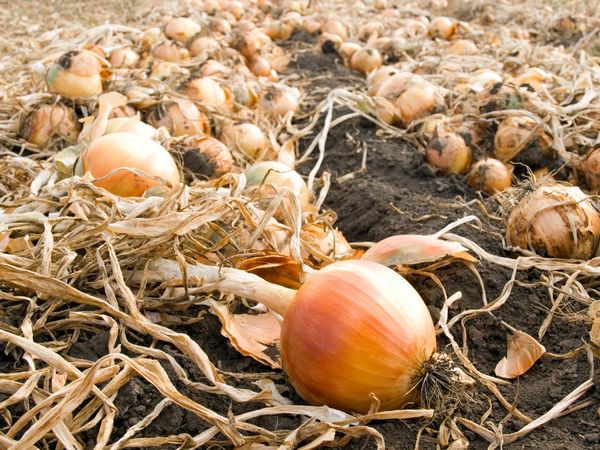
If you purchased onion seeds with a package stating that they should be harvested between 68 and 83 days, you should choose the middle ground (around 70–75 days). And remember to look for the aforementioned external signs of ripeness.
According to the lunar calendar
If you rely on the lunar calendar, you can harvest accordingly. In this case, harvesting occurs from mid-July to the first half of August. The moon must be waning during this time, and if the weather suddenly worsens, it is recommended to harvest without delay.
In fact, the onion harvesting dates according to the lunar calendar are not much different from regular harvesting times. The only difference is that harvesting should be done during the waning moon. Also, keep in mind that the timing will shift slightly from year to year, so for more accurate information, consult the lunar calendar for the current year.
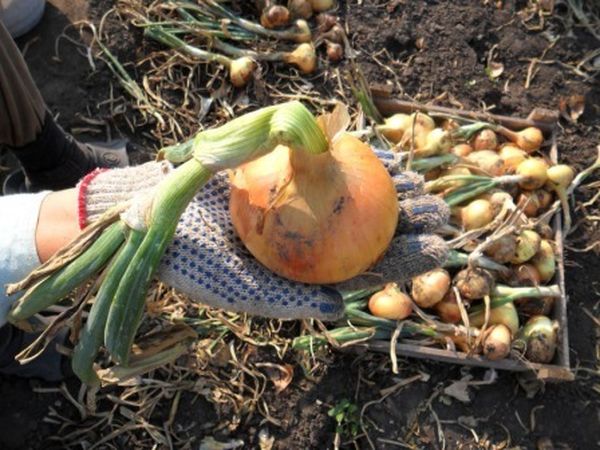
In general, it can be concluded that if you rely on either the lunar calendar or the mathematical method, and at the same time carefully monitor external signs, the collection will take place at the right time.
The dangers of untimely harvesting of onions
Why is it so important to harvest on time and not miss the harvest deadlines? If you rush and harvest too early, your produce will not store well. Its shelf life will be significantly reduced because it will be unripe.
If you delay harvesting for too long, you may encounter the unpleasant phenomenon of bulb rot. Once you dig up the bulbs and store them in the cellar, there's a high chance the rot will continue, ruining the entire harvest.
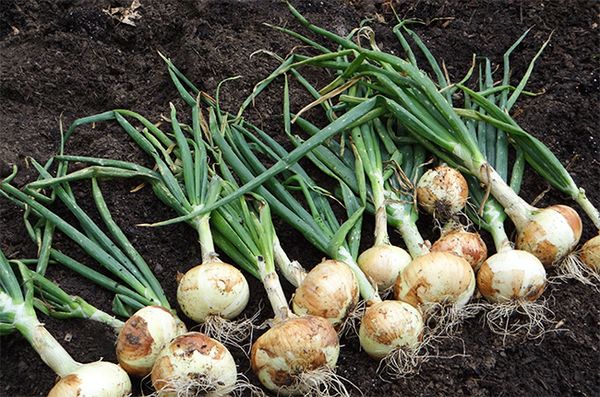
So, don't rush to harvest early, but don't wait until the last minute either. Harvest your onions on time, and they'll keep well in your cellar.
When to trim onions for storage
Where to store onions after harvesting? After the vegetables have been harvested, they are put into storage, but before that, they need to be trimmed to protect the crop from diseases and sprouting. This also makes storing onions much more convenient.
This procedure is usually performed after the onions have completely dried. On average, complete drying takes about two weeks, during which time all pathogens are destroyed. You can periodically check to see if the onions have dried out by using this method: place them in a large pile and insert your hand into it. If your hand fits in, everything is fine.
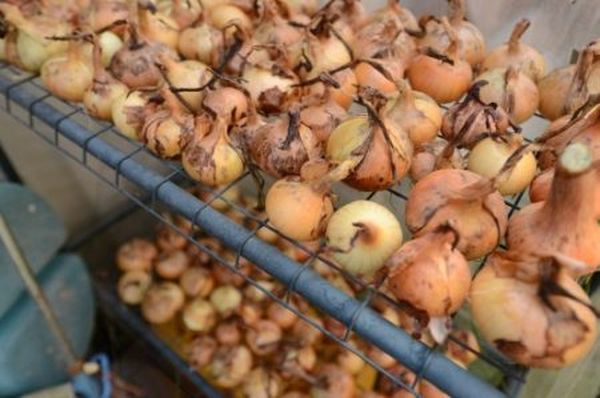
The pruning method depends directly on the method you'll use to store vegetables over the winter. However, in any case, you'll need to trim the roots; anything else can be removed as needed. For example, if you plan to store the harvest in a box, you'll also need to trim the tops of the bulbs, leaving only a small stalk, about 5 cm long.
Video: How to Determine the Ripeness of Onions
This video will tell you when you can start harvesting onions.