
When to harvest and how to store leeks
Content
Leek harvesting diagram
Many people growing leeks in their gardens don't even realize they can be stored indoors throughout the winter. But for this to be possible, they need to be prepared properly.
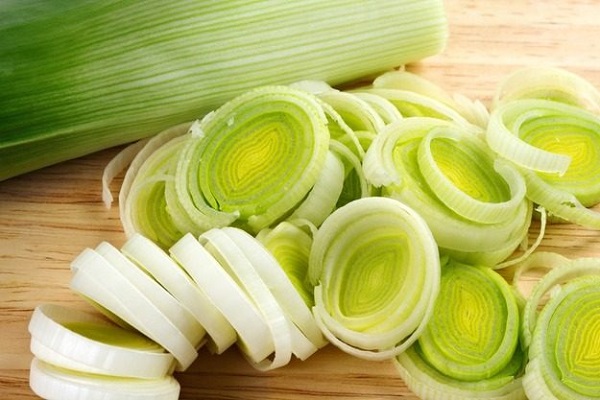
To do this, you need to know the exact time to harvest the leek crop. Please note that the timing of leek harvesting depends on the following factors:
- Climate conditions for growing. Harvesting this onion in Siberia and the Moscow region will naturally occur at different times;
- Summer peculiarities. Leek harvesting times may vary slightly depending on weather conditions, as summers can be hot and sunny, or rainy and cold;
- Variety. The harvest time will depend on the variety planted (early, mid-season, or late-season). When choosing varieties of this crop, remember that some are more suitable for growing in Siberia, while others are more suitable for regions with a milder climate.
Leeks are typically dug up in August. However, this harvesting time is only suitable if the harvest will be processed and used exclusively in the summer. Vegetables dug up in August are not suitable for winter storage. If you intend to use the harvest for storage, it should be harvested only in early or mid-October.
Preparing leeks for winter storage consists of the following steps:
- harvesting from the garden;
- preparing vegetables for storage.
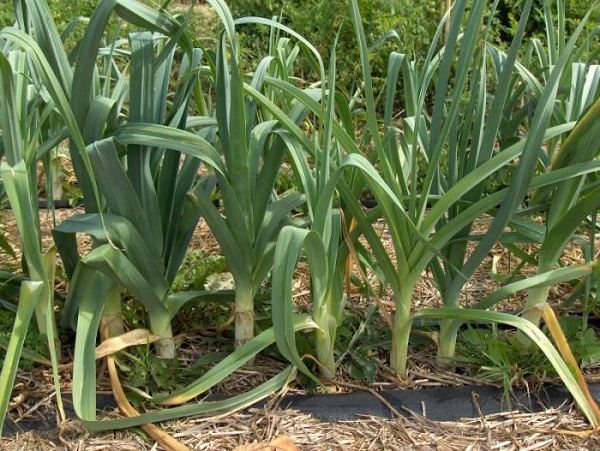
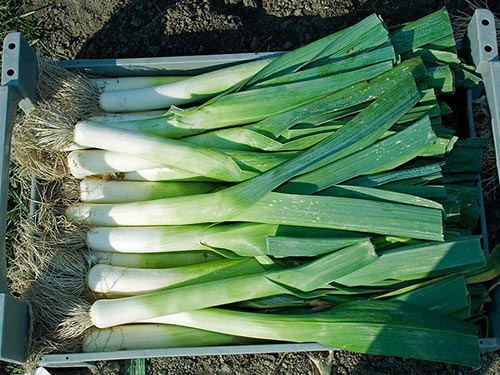
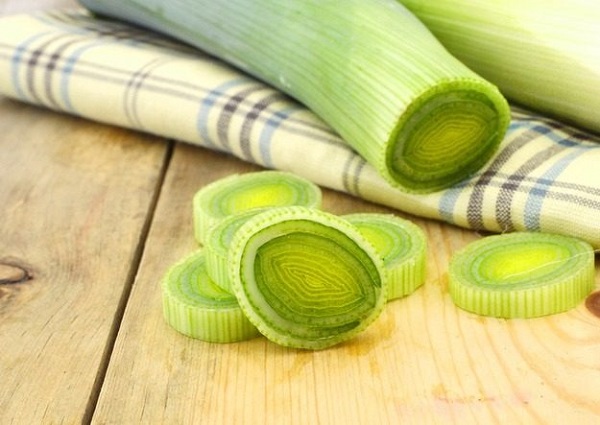
If you want to store the bright white, beautiful stems, cover the soil around the plants with an opaque material a few weeks before harvesting. This simple procedure will ensure the desired result – beautiful, succulent stems.
The process of harvesting leeks is carried out according to the following scheme:
- Determining harvesting times. Each variety has its own timing, which must be adjusted to the weather and climate conditions of the growing region (e.g., Siberia, the Moscow region, etc.);
- Onions must be harvested from the garden in good weather;
- When digging up vegetables, be careful not to get soil between the leaves. Otherwise, long-term storage of such a harvest will be impossible. When digging, be careful not to damage the bulbs with the shovel. Cut vegetables cannot be stored and can only be eaten within a few days.
- After the digging process is complete, the onions do not need to be left in the sun to warm up, as is the case when preparing onions for storage.
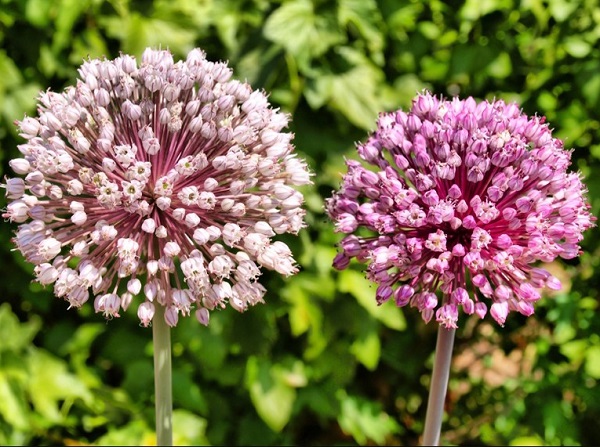
This completes the leek harvest. The harvesting process then consists of the following steps:
- After harvesting, leeks need to be lightly cleaned of soil;
- In addition, partial root trimming is performed. This trimming should be done carefully so as not to damage the base;
- Avoid cutting leaves, as this will accelerate their wilting process. Trimmed leaves also become more susceptible to various diseases. Only those leaves that were damaged during harvesting or are heavily soiled should be trimmed. In this case, shorten them by approximately two-thirds.
As we can see, if you want to preserve leeks, they must be harvested carefully and correctly. Otherwise, your harvest may simply spoil during the first few months of storage.
Video "From Planting to Harvesting"
This video explains in detail how to plant onions and when to harvest them.
How to prepare leeks
Interestingly, you can store not only the entire leek plant, but also the individual leeks. Usually, feathers for storage are cut from those bulbs that, for some reason, cannot be stored (for example, they were cut during digging or have other defects).
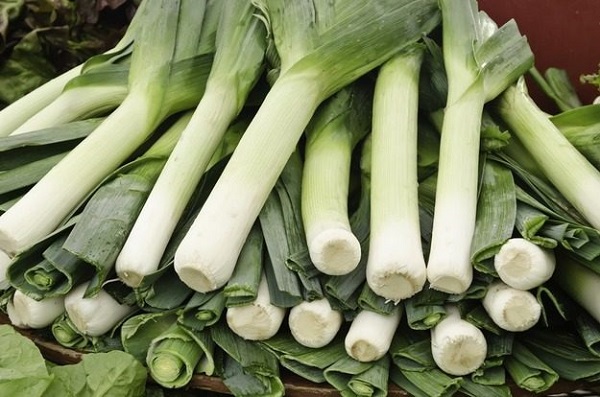
The process of harvesting green leeks can be carried out during the growing season and up until harvest. Some gardeners extend the harvest until the onset of cold weather.
The harvesting of the feathers of this cultivated plant occurs according to the following scheme:
- cutting off a feather from a bad bulb;
- removal of yellowed and dried areas from its surface;
- After this, the feathers should be thoroughly rinsed under running water and allowed to drain. To do this, place the tops on paper or gauze. Make sure the feathers are not exposed to light while drying.
Once the leek tops are completely dry, carefully slice them into rings. You can also cut them into strips. After this, place the sliced greens in the freezer for storage.
Some people prefer to use leek tops as a seasoning for various dishes. In this case, the leek tops should be finely chopped and stored in the freezer. You can also freeze whole leeks without chopping them. However, chopping the tops will save freezer space, significantly increasing your supply of frozen fruits and vegetables for the winter.
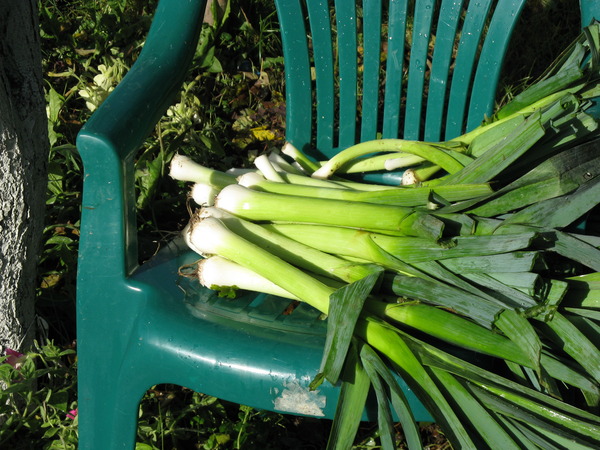
When harvesting leeks, remember that the plant, while growing in the garden, should not be exposed to frost. Otherwise, even the above steps will not allow you to preserve them for a longer period.
Storing onions in winter
Storing leeks in winter, if properly prepared, can be done in the following ways:
- fresh. To keep onions fresh, they should be stored in the refrigerator, after being placed in sand;
- Frozen. Stored this way, the vegetable can be used as an ingredient in various dishes;
- In dried form, leeks are used as a seasoning for dishes.
The most interesting and unusual way to store leeks is to place them in sand. This will keep the vegetable fresh for quite a long time. To ensure the success of this project, follow these guidelines:
- Leeks must be stored immediately after harvesting;
- The optimal conditions for harvesting fresh onions are temperatures ranging from -1 to +1°C and air humidity of 85%.
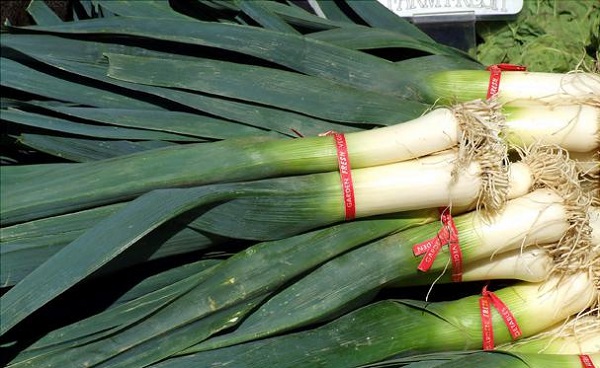
To keep the vegetable fresh, you'll need a storage container. Its size is determined based on the assumption that the leeks will be filled with sand to a depth of approximately 15-20 cm. Prepare the storage container as follows:
- a 5 cm thick layer of sand is poured into the box;
- then leek stems are inserted into it vertically in rows;
- Wet river sand should be added between the rows. The layer should be 10-15 cm thick.
Onions stored this way will stay fresh for 5-6 months. This method helps keep the stems straight.
Leeks can be stored on the balcony. However, they need to be well covered. This will allow them to easily withstand temperatures as low as -7 to -10 degrees Celsius. Leeks stored this way should be checked periodically, as they may become diseased or simply dry out. To prevent further damage to the crop, such plants should be removed immediately.
Many gardeners prefer to store leeks in the refrigerator. To do this, they need to sort through the entire harvest and find the best-quality ones. Then, they need to be treated as follows:
- clean well;
- trim the roots;
- Cool the leaves. This procedure should be carried out at a temperature of -2 to +2°C. The stems do not need to be packaged during this process. This is simply an intermediate step in preparing the plant for storage.

After cooling, the stems should be placed in perforated plastic bags. No more than 8 stems should be placed in each bag. In this form, the onion can be stored in the refrigerator for 4-5 months, but only if it was prepared correctly. It's important to keep the refrigerator temperature above -5°C. If you have a modern refrigerator, you don't have to worry about any temperature surprises.
Leeks can also be stored for quite a long time when dried. To do this, the roots need to be preserved. They simply need to be trimmed. To dry them thoroughly, use an electric dehydrator or oven. This method preserves the maximum amount of nutrients in the plant. The recommended drying temperature is 50°C. However, some people dry leeks at 140-160°C for 20 minutes.
Once dried, the stems will keep for 2-3 months. However, to do this, they need to be placed in a refrigerator at 0°C. If your basement or cellar maintains 0°C, you can store the onions there instead of stuffing them in the refrigerator. Leeks can also be planted in damp sand after drying. In this way, they will keep until spring.
The dried stems can also be finely chopped and packaged in bags. This makes a great seasoning for any occasion.
The storage method you choose depends entirely on your personal preference. You can try all the options simultaneously to determine which produces the leeks with the best flavor or the longest shelf life.
It's worth noting that not all leek varieties can be stored for long periods using the methods described above. The key to long-term storage of these onions over the winter is to properly follow these steps:
- determining the optimal timing for harvesting;
- carefully digging it out of the ground;
- correct preparation of plants;
- creation of optimal storage conditions.
Any deviation from the production process at any of these stages can lead to a fatal outcome. Therefore, it's essential to be extremely careful and always strictly follow the instructions for each individual step. Only then will you be able to preserve leeks fresh, dried, or frozen throughout the winter and enjoy this healthy vegetable even during the holidays.
Video "Six Hundredths of a Hectare About Onions"
The video talks about growing onions.