
How to properly plant onion sets in open ground
Content
Preparation of soil and material
In addition to their nutritional properties, onion sets are an excellent preventative for various infectious diseases. Before planting them in the soil, it's advisable to do some preparatory work.
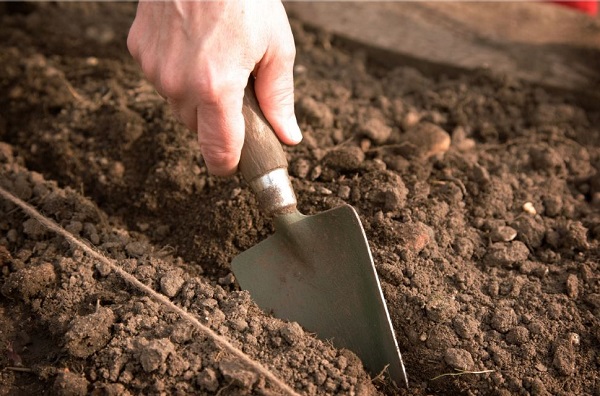
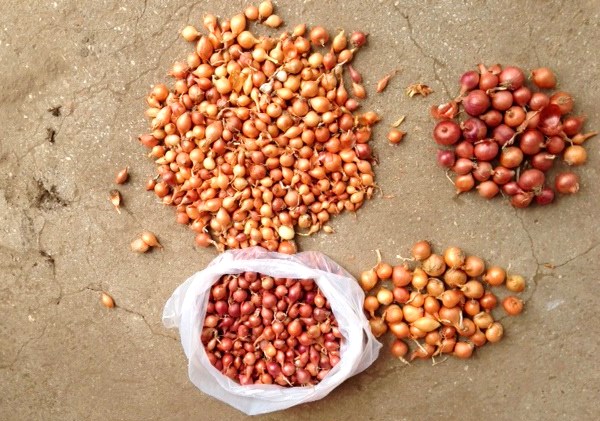
First, you need to sort through the onion sets to select the highest-quality material for planting. The onions should be free of damage, rot, or signs of disease. Only healthy onions will grow normally and produce a good harvest. Large onions should be discarded and replaced with small or medium-sized ones. It's best to start planting with small onions. If there's still space in the garden, larger onions can be planted.
When sorting onions, remove any dried berries, as they won't take root. Onions without the peels also shouldn't be planted, as they will begin to rot in the soil after a while. Sprouted onions can be placed in water to remove the green tips, but they are not suitable for planting.
Before planting, trim a small piece of the root neck. Be careful not to cut too much, as this could damage the planting material and prevent germination. The onion bulbs will need to be thoroughly warmed. This can be done near a stove or other heating element. Keeping them warm for a while is sufficient. This will stimulate the flow of juices through the root, and they will thrive in open ground. If you don't have time to warm the onion bulbs, you can soak them in warm water (no hotter than 70 degrees Celsius) for 10-15 minutes.
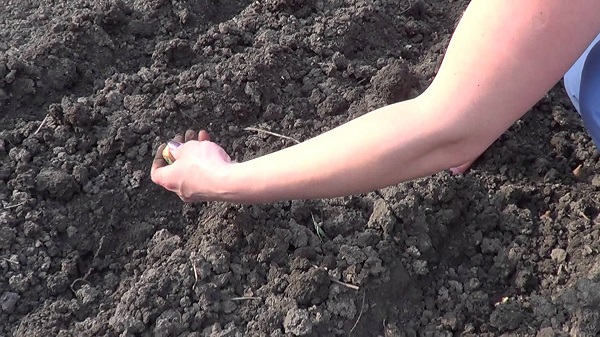
After preparing the planting material for open ground, take some time to condition the soil. First of all, experienced gardeners do not recommend growing onion sets in the same area where they grew last season. To ensure a good harvest, you'll need to change the planting location. Locations previously used for squash, legumes, tomatoes, or cabbage are good choices. They can also be planted after potatoes.
It is strongly recommended not to grow onion sets in areas where cucumbers, garlic, or carrots were grown last season. These vegetables actively draw nutrients and minerals from the soil, which are essential for normal onion growth. Choosing a suitable site can significantly increase your harvest at the end of the season.
The planting site should receive good sunlight. Before placing the seedlings in the open ground, the soil should be thoroughly loosened. Organic fertilizer should also be added during the preparation stage. Wait at least one week after applying the fertilizer. Do not add chicken manure or poultry manure to the open ground immediately before planting.
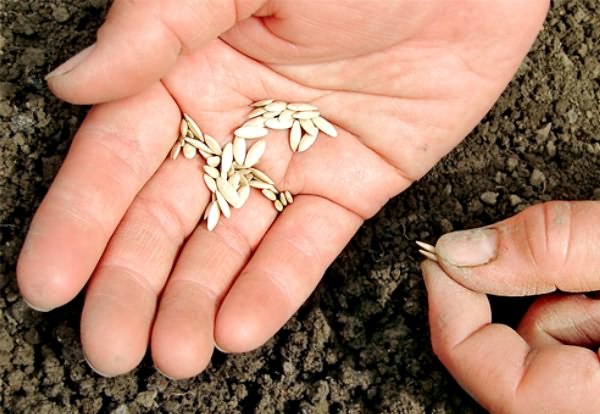
If the soil is too acidic, add a little limestone. Lime will reduce soil acidity, and you can start planting onion sets within a week.
The optimal time for sowing sets in open ground is late April or before winter. Caring for sets in spring requires a more thorough approach, including fertilizing, watering, and cultivating. Caring for sets planted before winter doesn't require much time. Depending on regional weather conditions, gardeners can quickly determine the time for planting.
Video: Planting Onions Yourself
The rules for planting onions are described in detail in the video.
Planting in spring
The best time to sow onions is spring. Suitable weather conditions will not hinder or slow the growth of this vegetable crop.
During this time, ensure the soil is loose. Growing onions in the shade is not recommended, as they will lose their juiciness and take longer to ripen.
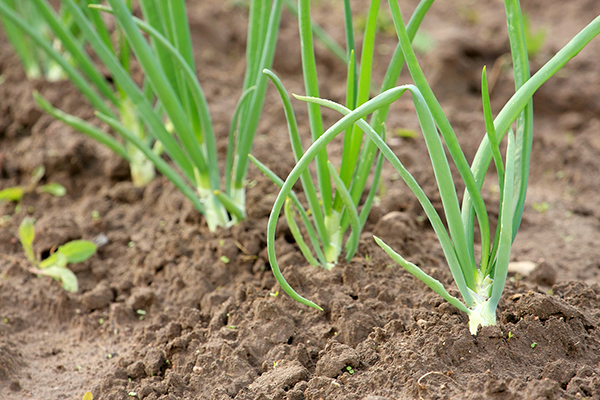
In spring, the feathers begin to elongate much earlier. This will occur even before the bulbs have formed.
If gardeners are growing onions, they should maintain optimal spacing between seedlings and rows. Rows are typically spaced up to 20 centimeters apart, and between seedlings, about 5 centimeters.
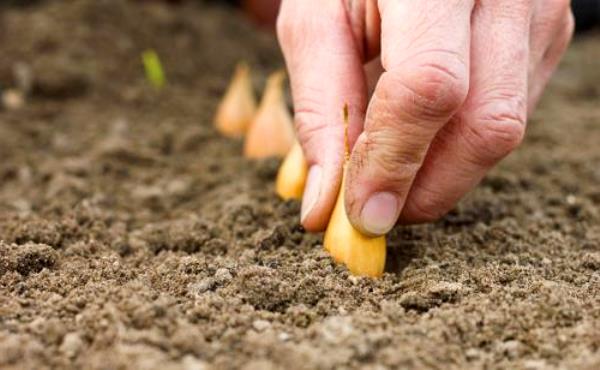
The onion sets should always be planted bottom down, burying them to the height of the bulb. Then, you can sprinkle a couple of centimeters of compost on top. The onions usually adapt quickly to the new conditions after sowing in open ground. Green shoots will be visible within 10 days. After 20 days, the seedlings should be fed. Nettle infusion or mullein can be used for additional feeding. As the bulb gains weight, it will begin to peek out of the soil. Therefore, gardeners will need to rake away excess soil during loosening. If carrots are planted nearby, the excess can be used for hilling.
The beds should be watered a couple of times a week if rainfall is infrequent. In July, when the onion sets are already actively ripening, you can water them less frequently. This will help the bulbs store better. Be sure to keep the bulbs above ground during the ripening period.
Gardeners who grow onions should be aware that the root system of this vegetable crop develops significantly better if planted in early spring. In the southern regions of Ukraine, for example, onion sowing can begin in late March after the cold weather has subsided. Caring for a spring-planted crop requires more time and attention than one planted in the fall.
Planting before winter
Experienced onion farmers have noted that the vegetable can be planted before winter. This method is currently gaining some interest among hobbyists, but it's not universally used. There's nothing complicated about the process.
Since spring onion planting requires good, high-quality planting material, many gardeners strive to ensure favorable conditions for the bulbs' preservation. Since this is no easy task, many have begun to cultivate winter onions, which don't require pre-storage. Another advantage of winter onion planting is that the cost of harvesting onions at this time is significantly lower than in spring. Furthermore, the garden is less crowded in the fall, allowing for planting almost anywhere.
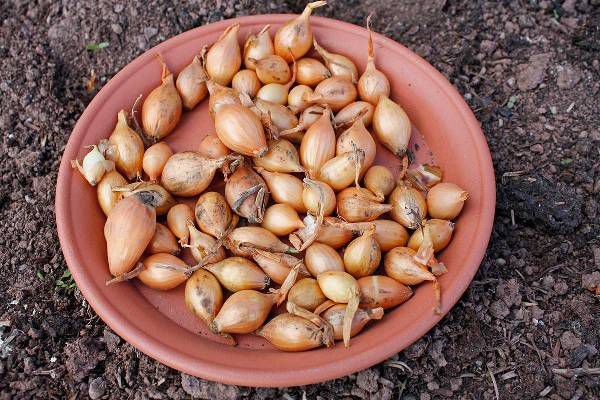
Experts have noted that the yield of onions planted in the fall may be higher than in the spring.
In autumn, onions are usually larger and more even. Onions won't shoot at this time, but the fruit is still ripening well. Seedlings emerge significantly earlier than spring seedlings, almost a month earlier. During this time, the seedlings are less susceptible to onion fly. With frequent rainfall, there's virtually no time spent tending the crop.
How to increase crop yields
To increase the yield of onion sets, follow proper seedling care guidelines. Onion sets thrive in moisture, but avoid overwatering. Overwatering significantly reduces the vegetable's flavor. Therefore, remember to water the onion sets no more than twice a week.
There is another rule for caring for vegetables: you should not water the plant three weeks before harvesting.
Dry mineral fertilizers can be applied to the soil once per season. This type of care for the onion sets will increase the yield. It is also highly recommended to pull out weeds near the vegetable, as their presence can lead to moisture accumulation in the soil. Ignoring this care can lead to fungus developing on the onion sets.
Video: Planting Onions in Winter
The video explains when and how to plant onions for the winter.