
Growing and caring for gooseberry bushes
Content
Landing
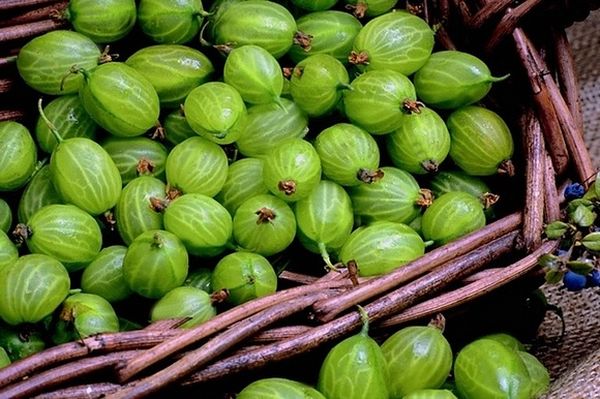
Gooseberries grow wild in northern Africa, southern Europe, North America, and the Caucasus. The French began cultivating them in the European part of our continent as early as the 17th century, but by the end of the century, the English were teaching everyone how to grow gooseberries, rushing to develop large-fruited varieties.
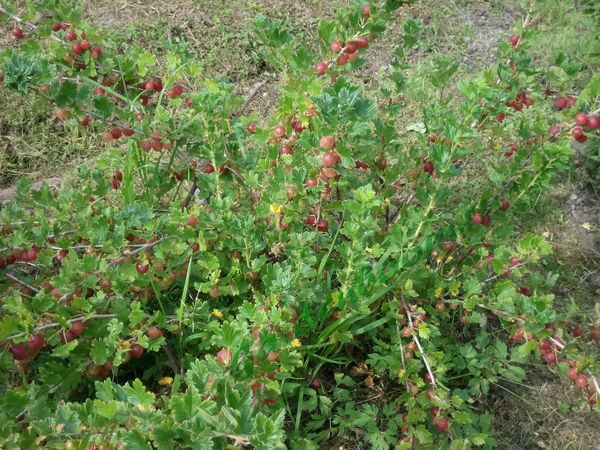
American breeders then began crossing European varieties with their own wild gooseberries. They traditionally sought to develop varieties that would be easy to care for in open ground. Today, these are two distinct areas of breeding, with a third branch of Russian breeding now allowing gooseberries to be grown in gardens throughout virtually the entire country, despite cold winters or short summers.
Growing gooseberries in your garden begins with finding a suitable location and selecting or preparing the optimal soil. It will grow in almost any soil, and will withstand cold springs and dry summers, but all these inconveniences will affect the yield of gooseberries.
This crop should be planted in an open, sunny, level or elevated location, preferably protected from northerly winds. It's best to select or prepare moderately light, nutritious, and non-acidic soil. The groundwater level in the area chosen for this berry bush should be at least one and a half meters below the surface.
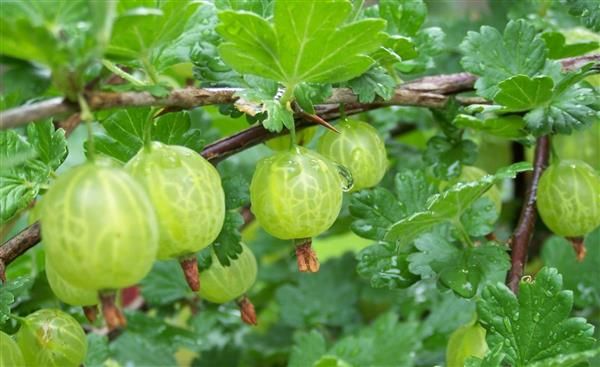
At the end of summer, prepare the area by completely removing all weeds, paying particular attention to perennials such as sow thistle, horse sorrel, bindweed, and couch grass. Care should be taken to remove all the roots of perennial grasses to prevent them from growing inside the bush; keeping it clean among thorny branches will be difficult. If the soil is too acidic, add lime or dolomite flour. You can evenly distribute fertilizer throughout the area where you plan to plant gooseberries, as their cultivation methods are designed to maintain soil fertility.
A planting hole should be dug at least 50 cm deep and in diameter. Fill it with fertile soil of the desired acidity and texture, mixed with a bucket of humus or compost, 50 g of superphosphate, 20 g of potassium sulfate, and a cup of wood ash. If the soil is sandy, add some clay to the bottom of the hole. If the soil is too heavy, add a little sand mixed with compost.
Like all garden plants, gooseberries can be planted in both spring and fall. Given the specific characteristics of this particular crop, the second half of September is best.
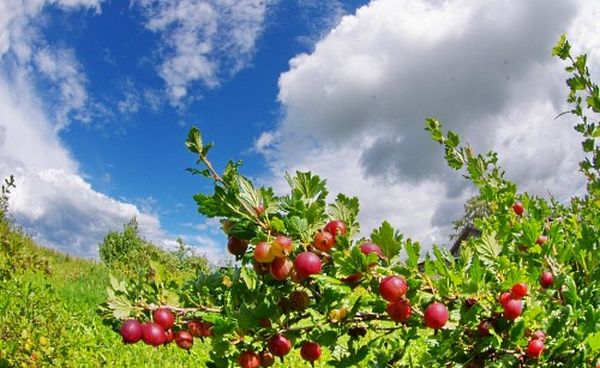
The fact is that gooseberries grow very quickly above ground, which the roots can't keep up with if they have yet to adapt to the new soil. In spring, gooseberries awaken and begin growing earlier than almost all other plants; an air temperature of 5 degrees Celsius is enough for them to initiate sap flow.
This means that immediately after planting (as soon as the ground thaws), the buds will open and demand nourishment from the roots. The roots, which haven't yet sprouted, won't be able to provide it, and the plant may die. This often happens. In the fall, however, the above-ground part of the plant is already prepared for winter and doesn't show much activity, but the air and soil temperatures allow the roots to grow undisturbed. They will greet spring fully prepared.
It's best to choose a two-year-old seedling with two or three shoots up to 25 cm long, with woody roots of approximately the same length. Inspect it carefully before purchasing, choosing one that is free of mechanical damage, roots that are not overdried or rotted, and leaves should be only at the tips of the shoots, but the buds should be well-developed. If the seedling has a closed root system, check that it is firmly seated in the soil and that no overgrown, and therefore overdried, roots are protruding.
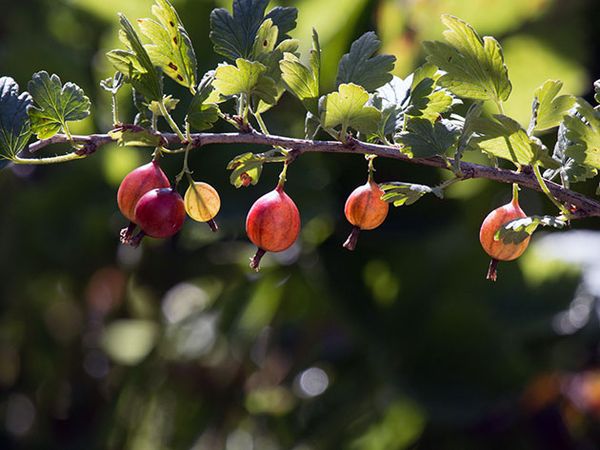
Two-year-old container-grown plants should have long, 40-cm leafy shoots and numerous white roots that tightly envelop the root ball. Container-grown seedlings can be planted slowly, but bare-root plants should be wrapped and transported carefully. Before planting, they should be soaked in water, possibly with added fertilizer or growth stimulants. Soaking time depends on the condition of the roots and can last anywhere from a few hours to a day.
The roots are lowered into the prepared hole, carefully spread out, and gradually covered with the prepared soil. Each layer is compacted to ensure there are no air pockets and the soil adheres tightly to the roots. After planting and compaction, the root collar should be a few centimeters (3 to 5 cm) below the surface.
Then the bush is watered generously, slowly pouring at least a bucket of water under the roots. Gardeners often plant seedlings at an angle to allow more small additional roots to form, and the bush will gradually straighten out.
After planting, shoots are usually shortened by a third, and the surrounding soil is mulched with shredded bark, peat, or hay. The distance between bushes depends on the variety: compact, low bushes are planted 1 meter or 1.2 meters apart, while large, spreading bushes are spaced at least 1.5 meters apart, with the same distance between bushes and fences. Up to 2 meters are left between rows of bushes.
Care
Gooseberry care involves regular pruning, weeding, loosening the soil, watering, and fertilizing. Growing cultivated gooseberries is simple and similar to caring for their relatives, currants and jostaberries. However, it's still best to learn how to properly and easily care for gooseberries.
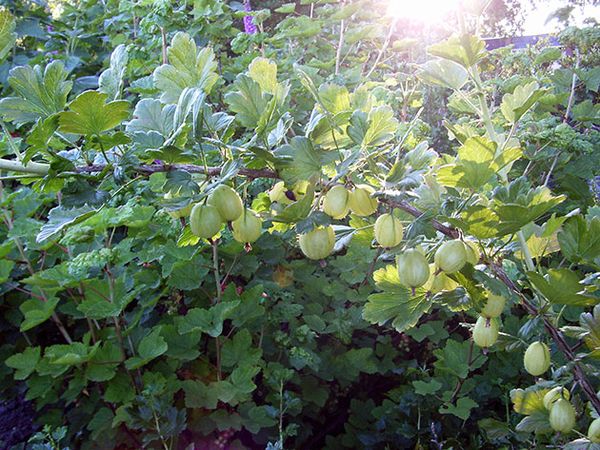
This self-fertile berry is one of the first to emerge in the garden, beginning to bear fruit, depending on the variety, 2–4 years after planting. The most productive years are the 10th–12th. Fruiting lasts for 20 years, and with proper care, even 40 years. A single bush yields an average of 10 kg of incredibly healthy berries, the size and color of which vary depending on the variety.
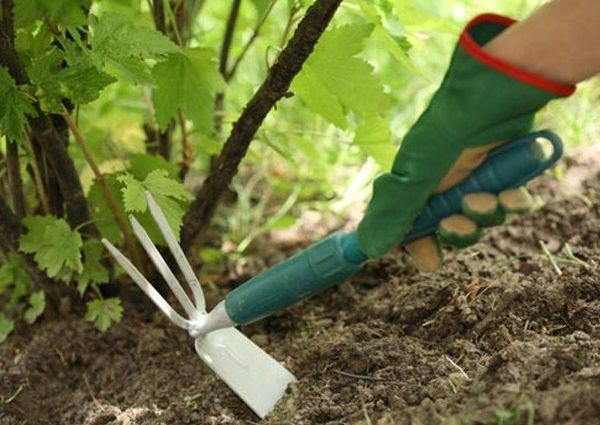
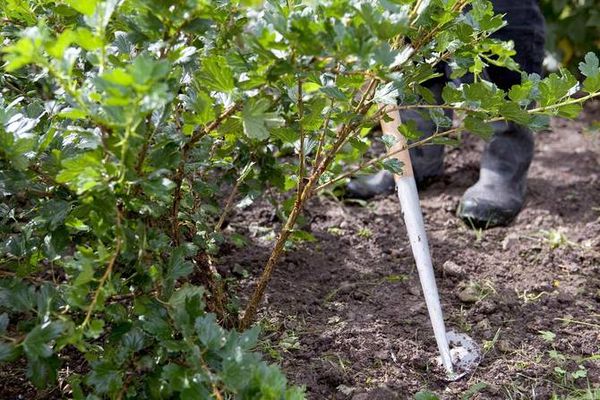
It's essential to weed the soil around and beneath the bush, preventing weed growth. Otherwise, they can create excessive shade and dampness under the bush, which can lead to disease. You'll need to loosen the soil several times during the summer, and this procedure is especially important in the spring and fall. In the spring, the soil between the rows should be loosened to a depth of 12 cm, and under the bush, remove the hilling and carefully loosen the soil to a depth of 8 cm to prevent root damage.
In the fall, it's necessary to dig the soil deeper—to a depth of 10–12 cm under the bush and up to 15 cm between rows. In the fall, be sure to remove all leaves from under the bush and hill it up to a height of 20 cm. Loosening the soil is often combined with fertilizing.
Watering
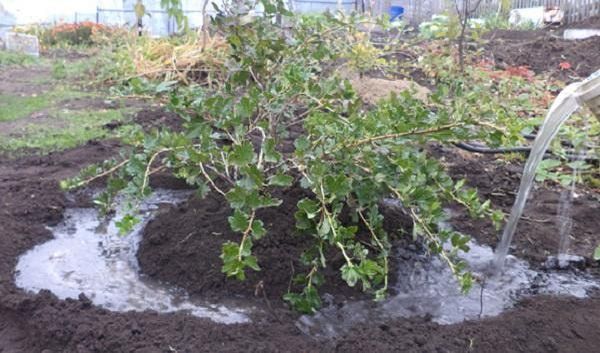
Gooseberry care should not be neglected without watering. It can withstand drought, and the plant will not die even if not watered at all, but this will affect the size and quality of the berries. A lack of water can cause the leaves to curl and dry out, leading to an early dormancy period. In the spring, the bush begins to grow while the soil is saturated with melted snow, and then it is advisable to water it as needed. When the bush is growing most vigorously, ovaries are forming, and the fruit is ripening, gooseberries especially need watering during these periods.
If the summer is dry, you'll need to water regularly to maintain the proper soil moisture. Water at the roots; avoid wetting the leaves, especially with cold water.
Fertilizers
Gooseberries, whose cultivation and care require regular fertilization, draw a wealth of nutrients from the soil thanks to their abundant yields. Therefore, it's important to thoroughly fertilize the soil before planting, and then apply more as needed. If the soil is fertile, this can be done every three years; in poor soils, annual fertilization is recommended. Additionally, several applications are recommended throughout the growing season.
Nitrogen fertilizers are applied in the spring; 15 grams is sufficient in the first year, and at least 20–25 grams in all subsequent years. Fertilizers are applied simultaneously with loosening the soil around the tree trunk. Phosphorus and potassium are applied twice: in the spring and in the fall after harvest.
Gooseberries are very sensitive to potassium deficiency, and a disease called "leaf burn" can develop. Potassium is also essential for fruit formation.
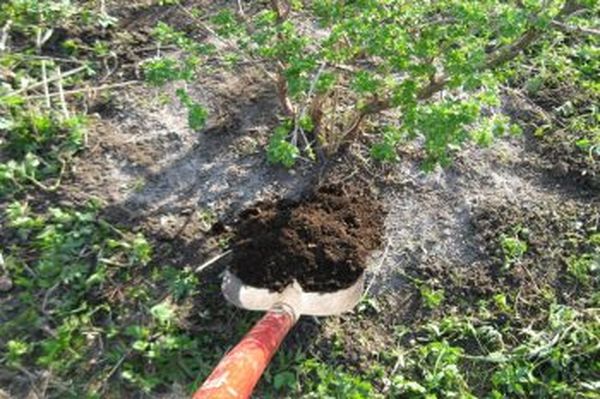
Therefore, twice a year, add up to 30 g of potassium (preferably potassium sulfate, not potassium chloride) and up to 80 g of superphosphate to the trunk circle of each bush. Throughout the season, be generous with wood ash, which will provide potassium to the bushes and simultaneously protect against pests and certain diseases.
After flowering and harvest, make shallow furrows around the bushes (or between rows) and pour a solution of mullein or chicken manure infusion into them. This organic fertilizer is prepared as follows: take a large container, fill a quarter of the container with manure or manure, add water, stir, and let it steep for several days. Then, before applying, dilute this infusion four times with manure and 12 times with manure. Gooseberries respond very well to this fertilizer; it is recommended to pour at least a bucket of it into the perimeter of each bush.
Trimming
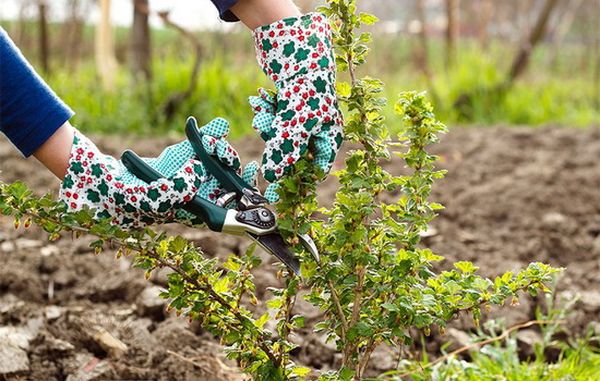
The main pruning of gooseberries is best done in the fall after the leaves have fallen. Remove lower shoots that tend to fall to the ground, branches that crowd the bush, shading fruiting shoots, and those that are damaged or affected by disease or pests. During the first few years, pruning is formative and is done based on the desired shape of the bush. Most often, gardeners choose the classic form.
During the first year, several new shoots grow, from which 5 or 6 of the healthiest and strongest should be selected, and the rest cut off at ground level. This process is repeated every year, choosing shoots that grow comfortably to form a large bush, that point in different directions, and that don't interfere with others. By the fifth year, the year fruiting begins, the bush should consist of 20 shoots of varying ages. After the seventh year, older branches that produce little fruit will need to be removed. Each year, 3-4 older shoots are removed, leaving the same number of young shoots.
Almost all branches are shortened - the upper parts of young trees are cut off before they have time to become woody, so that they do not freeze in the winter, and mature skeletal branches are shortened to stimulate the growth of new shoots.
Prevention of diseases and pests
Gooseberries can suffer from diseases such as powdery mildew, anthracnose, and rust; treatment with specialized products can help combat these. If the plant is infected with mosaic, it will have to be destroyed. To protect plants from infection, remove fallen leaves in the fall, loosen the soil, and prevent overcrowding and stagnant water.
Gooseberry aphids and the gooseberry moth can be a real nuisance. There are special insecticides for controlling them, but to keep them out of your plants, remove fallen leaves and earth up the bushes in the fall. In the spring, before the sap begins to flow, treat the bushes with very hot water, and during the growing season, spray the plants several times with a solution of wood ash and soap. To protect against the moth in the spring, cover the soil under and around the bush with roofing felt while the moths are flying.
Video: Pruning and Caring for Gooseberries
This video will show you how to properly prune and care for gooseberries.