
The secret to a good harvest is in fertilizing gooseberry bushes.
Content
Mineral fertilizers
If the soil isn't enriched with minerals, especially the essential ones—nitrogen, potassium, and phosphorus—it becomes depleted over time. The yield declines, and its quality deteriorates. Therefore, fertilization is absolutely essential. The only question is which fertilizers to choose—mineral or organic. Each has its own advantages and disadvantages.
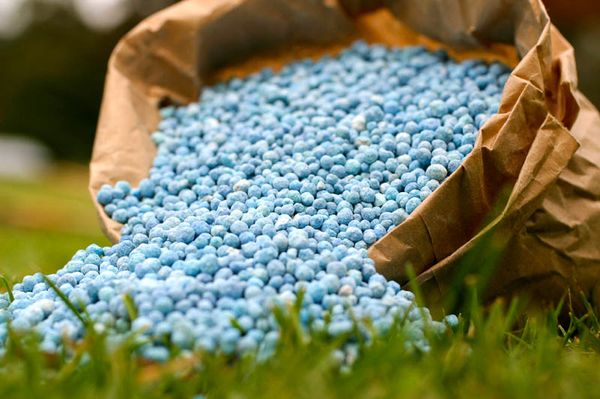
Mineral fertilizers contain high concentrations of nutrients and are easier to apply than organophytic fertilizers. The key is to maintain the correct dosage, as too much is detrimental not only to the crop but also to the plant itself.
Spring feeding of gooseberries is especially important, as it is at this time that the plant needs a lot of nutrients to grow leaves, buds, and flower clusters. First, it is fed with nitrogen fertilizers—urea, ammonium nitrate, ammonium chloride, or other preparations. Two tablespoons of granules are scattered under each bush in a ring, the inner radius of which is 0.5 meters from the base of the bush and the outer radius is 1 meter. For young plants, the dosage is reduced by half. Dry fertilizer is applied when the snow has not yet completely melted and the soil is saturated with moisture.
Gooseberries are fertilized a second time before flowering, which in the Urals is in late April. At this time, potassium (potassium sulfate, potassium chloride, and potash) and phosphorus (superphosphate, rock phosphate, and, for acidic soils, Thomas slag) fertilizers are applied. Dissolve 50 g of each fertilizer in 10 liters of water. This solution is suitable for one mature bush or two young ones. Before applying, loosen the soil around the gooseberries to a depth of 10 cm and water thoroughly to avoid burning the roots.
Organic fertilizers
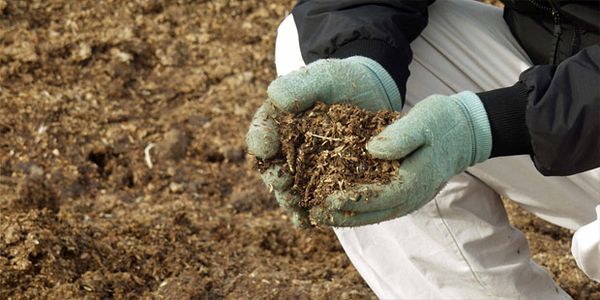
Organic fertilizers offer many advantages. Firstly, they contain a much wider range of macro- and microelements than any complex fertilizer. Secondly, they improve the soil structure, making it looser, which promotes air exchange and better penetration of moisture and heat. This is especially important for gooseberries, as the bulk of the nutrient-absorbing fibrous roots are located in the top 35-centimeter soil layer. However, there are also disadvantages:
- poorly rotted manure contains a lot of weed seeds;
- It is impossible to determine the exact amount of elements introduced, since their content in different types of organic matter varies and all information about them is approximate.
In early spring, nitrogen-based mineral fertilizers for gooseberries are a successful substitute for rotted manure or compost. A bucket of organic matter is evenly distributed around the trunk, equal to the projection of the crown. This is the distance the gooseberry roots spread. After this, loosen the soil or dig shallowly, ensuring that the applied fertilizer is covered with a layer of soil to prevent nitrogen evaporation.
During the summer, gooseberries are fed with slurry: add 2 kg of mullein or 1 kg of bird droppings to 10 liters of water and let it sit for 24 hours. Before applying this mixture, the gooseberries are watered generously.
Wood ash contains readily available forms of potassium and phosphorus. Before flowering, 150 grams of sifted ash is poured into a bucket of hot water, left for 1-3 days, and then poured under the bush after watering. Ash can also be applied dry. You'll need 1.5-2 cups per plant. After scattering the ash around the trunk, loosen the soil and water.
Unusual fertilizers
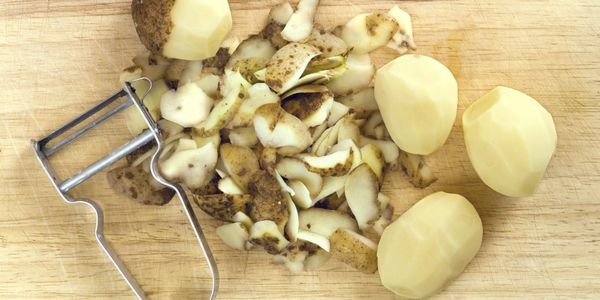
You can feed gooseberries in the spring using potato peelings. We all love potatoes, so a lot of this waste can accumulate over the winter. The peelings are frozen or dried, and in spring, they are placed in a barrel and filled with hot water. It will be ready in 3-4 days, stirring occasionally. This fertilizer contains potassium, starch, and a wide range of vitamins and microelements. Potato peelings can be simply dug in around the bush in the spring or late fall. This type of feeding improves the flavor of the berries.
Wood sawdust and bird droppings can make excellent fertilizer rich in phosphorus and potassium if composted properly. The container must be filled and compacted, alternating layers of fresh sawdust and chicken manure, cleaned of debris. A thick layer of straw is placed on top to eliminate odor, and the entire compost is weighed down with something heavy. The compost will be ready in 1.5–2 months. To fertilize, mix 1 kg of the prepared mixture with 10 liters of water and apply after watering.
Video: "Secrets of Growing a Rich Gooseberry Harvest"
In this video, a specialist will share the secrets of growing gooseberries.