
Description of the hardy gooseberry variety Prune
Content
Varietal characteristics
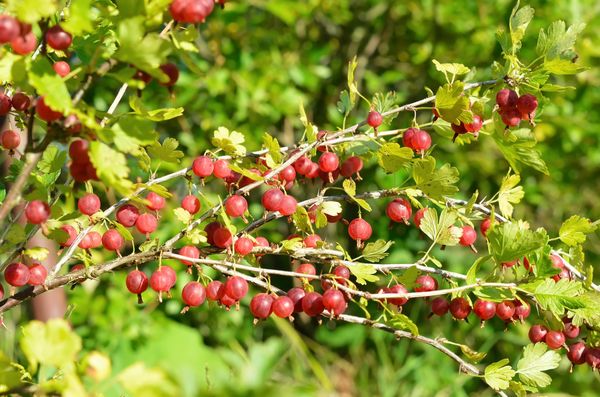
"Prunus" is a thornless variety, which is undoubtedly its greatest advantage. The bush is low (no more than 1.4 m) and medium-dense. The shoots are vertical, but during the fruiting season, they bend toward the ground under the weight of the berries. The lower parts of the branches are slightly thornless, while the tops are thornless, making harvesting much easier. In terms of ripening time, it is considered a mid-season variety, reaching full maturity in the second half of July.
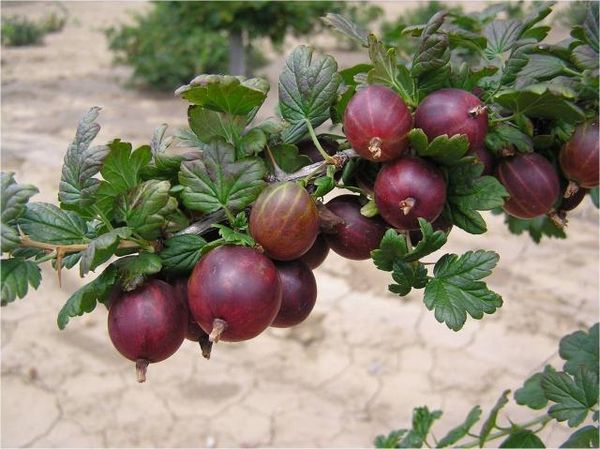
The berries are medium-sized (4–5 g), oval, sometimes pear-shaped. The skin is thick, a rich purple-violet hue with a subtle bluish bloom, and the flesh is dark red. The berries' flavor is a distinctive feature of this variety—it's quite sweet (8.6–10.6% sugars), yet very unique, with a distinctive plum-like flavor and aroma. Their recognized health benefits are also noteworthy. Gooseberries are popularly used to treat anemia, vitamin deficiencies, digestive disorders, and many other ailments.
Thanks to their thick skin, gooseberries retain their shelf life for a long time and are easy to transport. Their uses are versatile—in addition to being incredibly healthy fresh, they impart a unique flavor to jams, juices, fruit drinks, and especially wines and liqueurs.
Among the variety's advantages are its phenomenal winter hardiness (easily withstanding temperatures down to -34°C), good resistance to powdery mildew, and the ability to self-pollinate. The only drawback of the "Prunus" variety is its unstable yield—one year it can be 4-5 kg per bush, and the next, no more than 1.5 kg, for no apparent reason.
Landing rules
'Prunus' is a light-loving variety. It absolutely cannot tolerate even light shade, so planting it between trees in the garden is not suitable. If an open, sunny spot isn't possible, a space along a small hedge, 1–1.5 meters away, will do. Gooseberries are sensitive to excessive soil moisture—they often get sick in such conditions, so low-lying areas with close groundwater levels should also be avoided.
It's best to plant young seedlings in the fall, around the end of September. This period is favorable because the plants are guaranteed to have time to take root before the onset of frost, and they will begin full vegetative growth the following spring. Gooseberry soil should be well-drained and reasonably fertile, preferably neutral in pH. If the soil is clayey, add peat and coarse sand. Just before planting, add organic matter (0.5 buckets of humus or compost) to the planting hole, along with a handful of ash or 20 grams of any potassium-rich mixture.
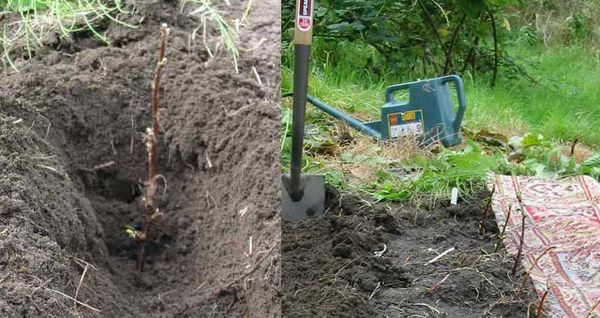
Planting holes for the "Prunus" gooseberry are standard—approximately 50 cm deep and 40–45 cm wide. Fertilizer should be mixed with some of the soil, then backfilled into the hole to form a mound. The seedling is placed horizontally on this mound, so that after filling with soil, the root collar is 6–7 cm below the surface. The roots are then spread out and covered with soil.
To prevent voids from forming in the soil, water each layer. The final stage of planting is pruning the shoots to 4-5 buds. When planting in the fall, the seedling is earthed up, and the area around the trunk is covered with a thick layer of organic mulch (peat, sawdust, dry humus).
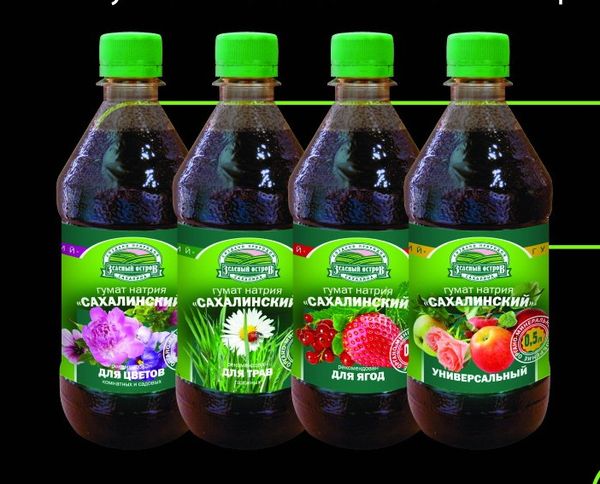
To improve seedling survival, soak the roots in a stimulating agent (Ideal, Barrier, Sodium Humate) a day before planting, according to the instructions. The success and subsequent development of the bushes can also be affected by the previous plants. Avoid planting gooseberries after raspberries and currants. These crops significantly deplete the soil, and they share pests and diseases, which can lead to illness and even death of the young plant.
Care Features
Further care for gooseberries consists of the following activities:
- You need to regularly remove weeds near the bush and loosen the soil - if organic mulch is used, it should be periodically renewed;
- Water mature bushes 3-4 times during the warm season: be sure to do this at the end of flowering, during fruit filling, and in the fall, before wintering - in hot summers, the need for watering may increase; if it rains, there is no need to water at all;
- Fertilizers are applied 2 years after planting (the bush begins to bear fruit around this time) - in the spring, a mineral complex with nitrogen is applied (humus or liquid manure is possible), during the formation of ovaries - potassium and phosphorus fertilizer (can be replaced with ash), in the fall - double superphosphate and humus or peat as a mulch cover;
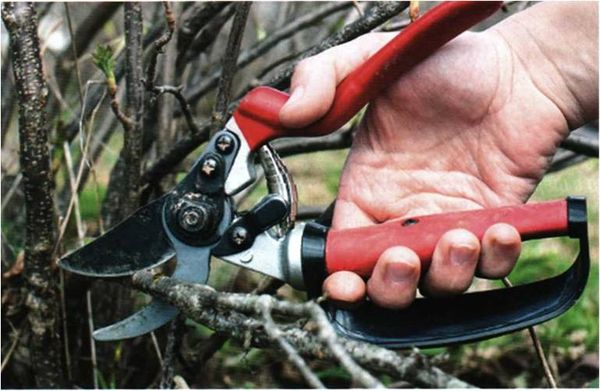
- Since the "Prunus" gooseberry bush is not very dense, formative spring pruning is carried out only on young, fruit-bearing bushes - it is sufficient to annually cut out damaged shoots and old ones that are more than 6-7 years old.
Pest and disease control
While this variety has good immunity to powdery mildew, it is susceptible to diseases such as cup rust and anthracnose. The former manifests as orange-brown, swollen pads on the leaves, while the latter causes multiple, small, but gradually enlarging, brown spots.
Both diseases are fungal in origin, so at the first sign of infection, gooseberries should be treated with copper-containing insecticides, such as Bordeaux mixture or copper sulfate. In severe cases, diseased branches should be removed.
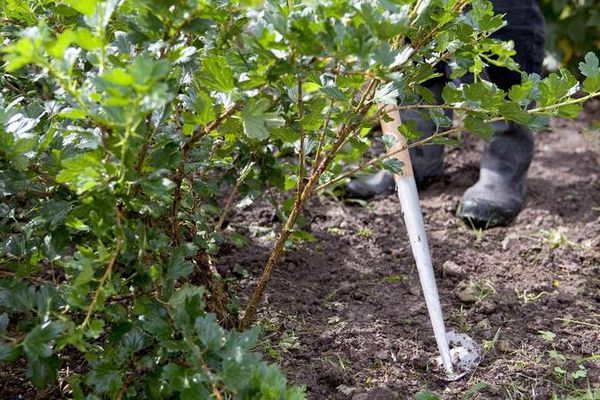
To prevent the bushes from becoming diseased, it's essential to keep the bed and the area around the trunks clean at all times. This area should be free of any plant debris or weeds. In the fall, after the leaves have fallen, all dry leaves should be collected and burned, and the soil treated with insecticides. Watering gooseberries with boiling water (80–90°C) in early spring, before the buds open, is very effective. This procedure destroys not only fungal spores but also pest larvae that overwinter in the soil and on the plant.
After pouring boiling water over the bush, it is recommended to cover the area around the trunk with oilcloth or roofing felt and leave it there until mid-June. This will delay the emergence of moths, gooseberry sawflies, and geometrid moths that live in the soil. If aphids, currant borers, or glassworms appear on the shoots, they can be eliminated with a solution of ash and laundry soap. In severe cases, insecticide treatment is required according to the instructions.
Video: "Beneficial Properties of Gooseberries"
In this video, experts will tell you about all the beneficial properties of gooseberries.