
Description and characteristics of the Olavi gooseberry variety
Content
Characteristics of the variety
The Olavi gooseberry variety also has a name: Hinnonomainen Punainen. It was bred in Finland and combines frost resistance with high yield.
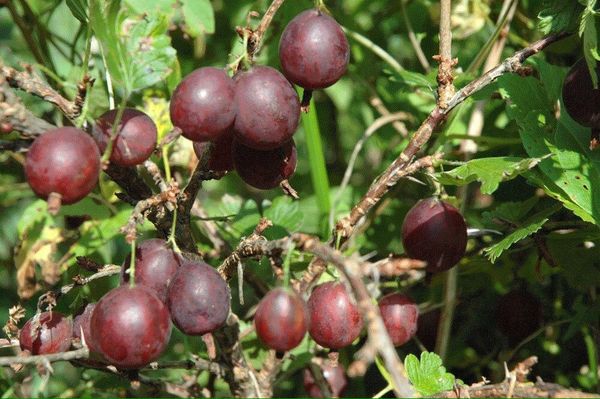
This cultivar is rightfully considered a versatile one. Its fruits have a distinctive, pleasant flavor, and the plant itself is highly resistant to frost and pests. Olavi is a mid-season plant with branches abundantly covered in thorns. The bush is medium-sized with densely spaced branches. A large number of thorns accumulate at the base of the bush.
Gooseberries begin to bear fruit in mid-August. When ripe, its berries are dark red, thin-skinned, and have juicy flesh with a sweet-tart flavor. Their surface has a slight, distinctive bloom. The fruits have virtually no aroma, but their flavor is refreshing. The berries remain on the branches until frost sets in, maintaining their flavor.
Strengths
The Olavi gooseberry variety has a number of advantages over its peers:
- the plant tolerates temperature drops well;
- with each season the gooseberry harvest increases;
- the fruits of the crop are universal and can be used for different purposes;
- the variety is able to resist pests and is resistant to powdery mildew;
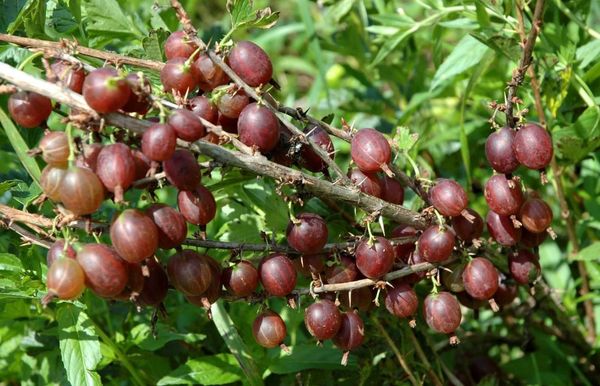
- The berries can be stored for a long time without losing their flavor;
- The plant forms a bush very quickly, and the berries do not fall from its branches.
And the main advantage of the plant for all gardeners is the rapid and almost complete survival of the planting material.
Fundamentals of agricultural technology
Choosing the right location for planting gooseberries determines their future success. They should be planted in sunny, open areas, well protected from the wind. Fertile soil is ideal. Areas with standing water for long periods are far from ideal for growing gooseberries. They do not tolerate overwatering; short-term droughts are much more tolerant.
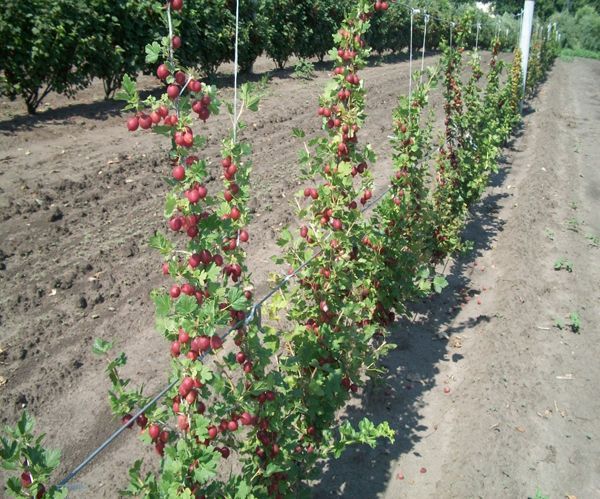
Gooseberries can be planted in the spring (before bud break) or in the fall, at the end of September. The distance between plants is determined by the characteristics of the particular variety.
Before planting, soak the roots for a day in a solution of "Barrier" or sodium humate. This soaking process helps the gooseberries establish themselves more quickly in their new location. The seedlings should be planted at a right angle, 0.08 meters deep. During planting, gently straighten the roots, and add soil in small amounts and compact it. Water the soil sparingly throughout the planting process.
After planting, remove all shoots from the plant, leaving no more than six buds. After this, water the young plants and mulch them with peat or humus to a depth of 0.05 meters. During fruiting, water the gooseberry regularly, loosen the soil around it, and remove weeds. Regularly inspect the plant. If signs of disease or pest attacks appear, take immediate action.
Rules for caring for the variety
As soon as the first leaves appear on the crop, it must be fed with a solution of urea and nitrophoska.
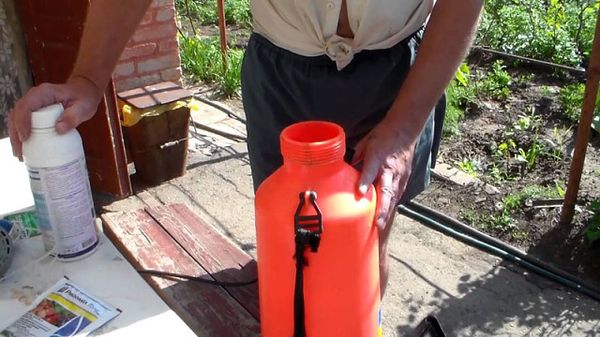
The next time you apply nutrients is as soon as the plant begins to bloom. Dissolve potassium sulfate and "Yagodka" fertilizer in a bucket of water (1:2 ratio). Before fertilizing, evenly sprinkle wood ash around the plant.
The third application of plant nutrients is done during the fruit setting period. Simply dilute nitrophoska and potassium humate in a bucket of water (1:2 ratio) and water the gooseberries with this solution.
During the summer, caring for the berry consists of deep soil loosening and regular watering. The Olavi bush should be watered at the roots. Sprinkler irrigation promotes the spread of diseases and should therefore be avoided. Water should be warm.
The berry is sensitive to soil fertility, so it needs additional feeding with humus and wood ash.
In late autumn, the soil under fruiting bushes should be covered with a layer of peat or sawdust, earthed up, and left in this condition for the winter. With the arrival of spring, the mulch layer is removed and the soil is loosened to a depth of 0.15 meters, which accelerates root warming.
The Olavi gooseberry variety is not very well known among gardeners today. However, its ease of care, high yields, and other advantages undoubtedly speak in its favor.
Video "Gooseberry Olavi"
In this video, you'll learn more about the Olavi gooseberry variety and what it looks like.