
Gardener's tips for pruning gooseberries in the fall for beginners
Content
What tools will you need?
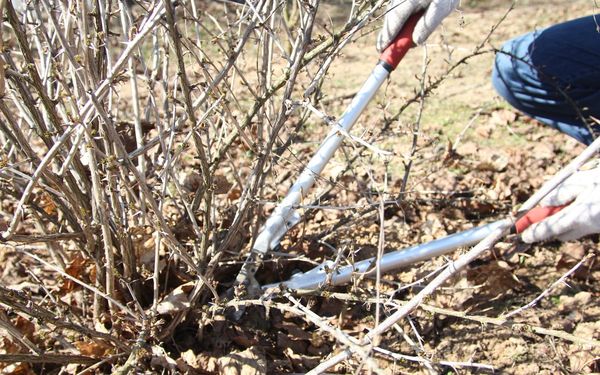
Most gooseberry varieties have long, very sharp thorns, so first and foremost, you'll need protective gear: thick mittens or gloves, long-sleeved outerwear (a jacket or sweater), and sturdy shoes. Regular pruning shears are all you need for pruning, but if the plant is old and very dense, you'll also need a saw and long-handled garden shears.
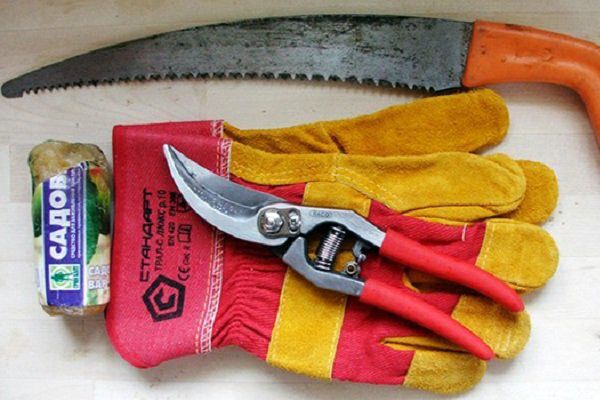
You'll also need some pruning aids, which you should prepare before you start pruning your gooseberries in the fall. These include garden varnish for treating cuts, paint or chalk for markings, and a wheelbarrow or other means for transporting plant debris. If the plant was attacked by pests or has fungal diseases in the summer, it's a good idea to immediately prepare a soil disinfectant.
When to prune
Gooseberries are the first of all berry bushes to awaken from hibernation, and it is not always possible to carry out a full pruning in the spring, so autumn is the best time for this procedure. Scheduled autumn pruning of gooseberries is carried out at the end of leaf fall, when the leaves have completely yellowed and fallen. The exact timing depends on the climate of a particular region, but novice gardeners should know that pruning should be done no later than a month before the onset of frost. This time allows the cuts to heal and the plant to strengthen before winter.
Step-by-step instructions
The formation scheme for the gooseberry crown depends on the method used to grow the crop:
- standard (the plant is formed into a small tree);
- trellis (used for varieties with creeping shoots);
- classic (the plant is formed in the form of a regular bush).
The classic method is the most common in gardening, and the actual pruning process for gooseberry bushes in the fall is straightforward. Where do you begin? First, understand that during the summer, a gooseberry bush produces a large amount of growth, 50-70% of which is non-fruiting shoots and should be removed. Now let's look at the proper step-by-step pruning process for gooseberries in the fall:
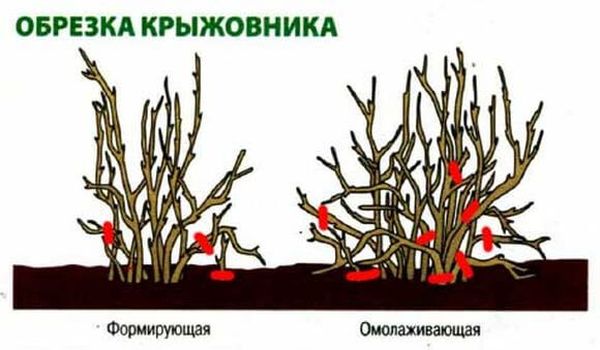
- Carefully inspect the bush, find damaged, diseased and old (more than 5 years) branches, mark them.
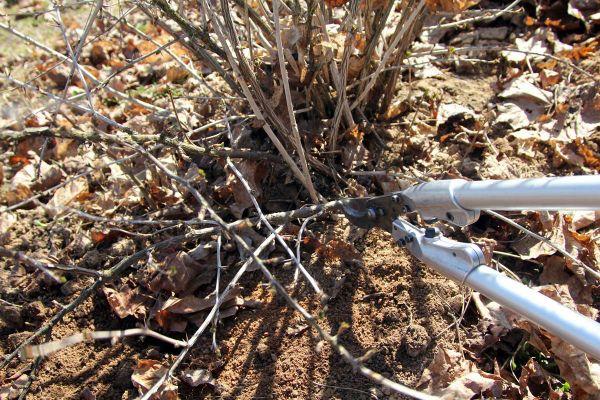
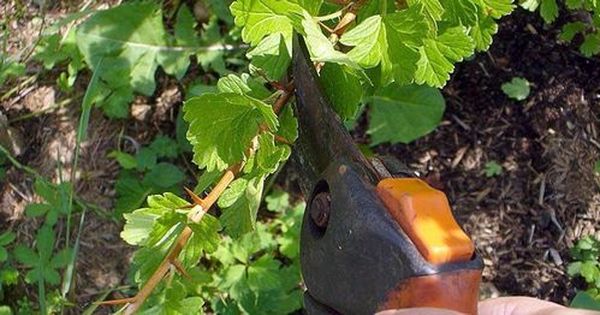
- We begin working from the base of the bush (from the growing point). First, prune all branches lying on the ground—they are more susceptible to disease and shade, so they rarely bear fruit.
- Next, we cut out all damaged and old shoots, as well as “zero” shoots that formed during the summer (not to be confused with mature one-year-old shoots).
- Now identify young and promising shoots, marking branches with few buds and competing with each other. Keep 5-6 of the strongest ones, and cut the rest off at the base.
- Also, remove small branches that prevent proper ventilation of the shrub. This rejuvenation will increase its resistance to fungal diseases, and the fruit will receive more sunlight.
- We shorten the remaining promising shoots by about a third (the tops won't survive the winter and will freeze). The cut is made 1.5–2 cm above the bud.
The result of your work should be a compact bush, reduced in volume by approximately 3 times.
The main shoots are parallel and directed upward, with small lateral branches that do not cross or touch. The pruning and rejuvenation plan for an old gooseberry bush in the fall may vary slightly. An old bush produces a lot of "zero" shoots, but few promising shoots that can bear fruit. Therefore, when pruning such a plant, it's best not to remove more than a third of the shoots in a single season.
Next steps
During fall pruning of gooseberry bushes, most of the shoots are removed, which is quite stressful for the plant. To speed up its recovery, several restoration steps are necessary:
- properly treat the cuts, carefully covering them with garden pitch - crushed activated carbon or a 7% urea solution can also be used as a disinfectant for cuts;
- To help the bush survive the winter more easily, it is necessary to fertilize it - in the autumn, a mineral-organic complex consisting of humus (10-15 kg), superphosphate (150-200 g) and potassium (40 g) is suitable;
- at the same time, abundant watering is carried out (1.5–2 buckets), which promotes better absorption of fertilizers;
- If pests or diseases are noticed on the plant, the soil around the bush should be thoroughly watered with a disinfectant solution - for healthy gooseberries, preventative treatment of shoots and soil with Bordeaux mixture is useful;
- After completing all these works, the tree trunk area within a radius of 50 cm is covered with organic mulch (peat, leaf compost).
All plant debris must be removed from the site and burned.
The only exception might be young "zero" shoots—they almost always remain healthy and are suitable for composting. Don't be stingy with the bush; feel free to prune it back by a third or even half. Then, in the spring, you'll only need to remove the frozen shoots, and the plant will be ready to grow and bear fruit again.
Video: Planting Gooseberries in Autumn
This video will tell you why it's best to plant gooseberries in the fall.