
The best-yielding gooseberry varieties for the Moscow region
Content
Thornless varieties
Today, breeders have developed a wide variety of gooseberry varieties suitable for growing in the Moscow region. However, many gardeners prefer thornless varieties.
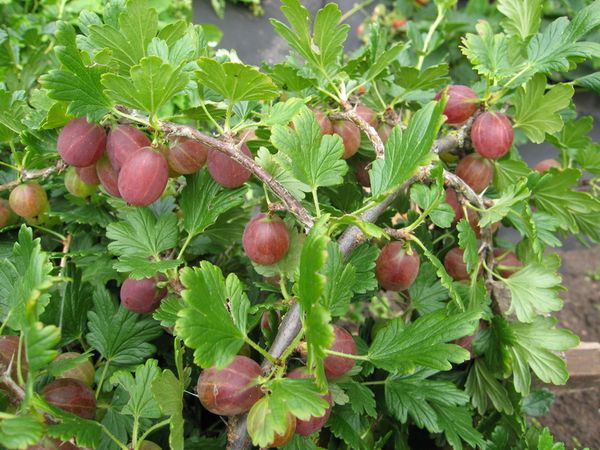
Gooseberry is a low bush, the branches of which often have sharp thorns. They significantly complicate harvesting, causing cuts and scratches to careless gardeners. Therefore, many prefer to grow thornless varieties. These gooseberry varieties are completely thornless. Even children can pick berries from these bushes without fear of getting scratched. Consequently, the popularity of these varieties among gardeners is growing every year.
Let's look at a list of the best gooseberry varieties for the Moscow region, which are almost completely thornless.
Sirius
A distinctive feature of Sirius, making it easily recognizable, are its clusters of berries. A cluster can contain several berries (usually two). The berries themselves are small. The gooseberries here are round in shape and have a sweet and sour taste. They are suitable for canning or eating fresh.
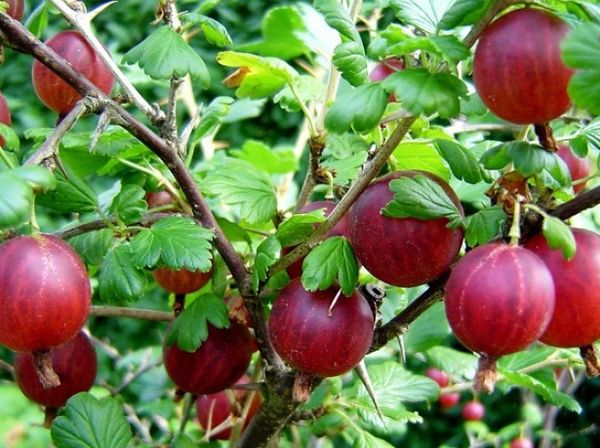
The advantages of Sirius include the following points:
- good frost resistance;
- the shrub is rarely attacked by insect pests and also has good resistance to fungal pathogens;
- excellent taste of fruits.
The harvest is characterized by a medium ripening period. The berries have a burgundy skin color.
Grushenka
An unusual gooseberry variety found in the Moscow region is the Grushenka. It gets its name from the unusual appearance of its berries, which are pear-shaped. The berries are also gathered in clusters, typically containing two berries per cluster. Their skin is a rich, dark purple. This color is acquired after the fruits reach technical ripeness. Initially, the skin is pale red.
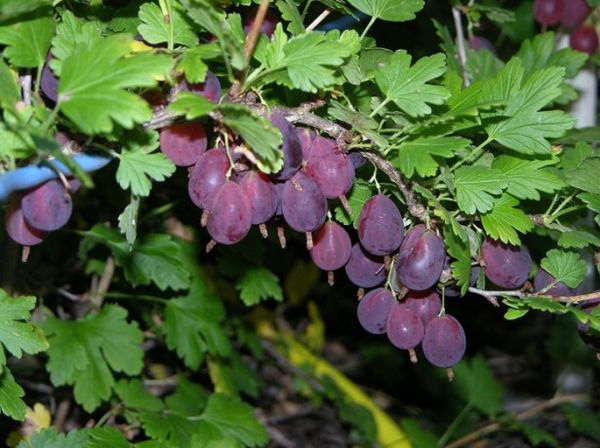
The berries are small, averaging around 5 grams in weight. The pulp contains few seeds. Furthermore, Grushenka is rich in pectin and has a sweet taste. Therefore, its fruits are often used to make summer infusions and preserves. They are also often eaten fresh without any additional processing.
Grushenka is a medium-sized, small shrub with drooping branches. Although considered thornless, the shrub's branches do develop inconspicuous thorns. However, these are extremely rare.
Among the advantages of this variety, the following parameters should be noted:
- excellent frost resistance;
- the shrub tolerates drought well;
- Good immunity. Plants rarely suffer from diseases typical for this crop;
- pleasant taste of fruits;
- large amount of pectin in the pulp.
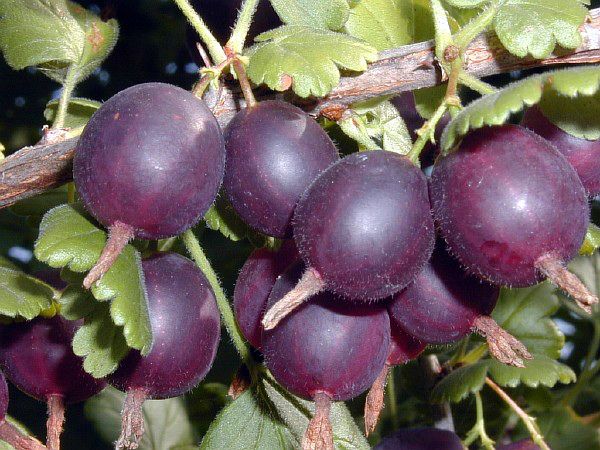
It is grown in many regions of Russia, including the Moscow region.
Northern Captain
Another well-known variety of thornless gooseberry is the "Northern Captain" cultivar. Its berries don't have a distinctive flavor, but they are excellent for winemaking.
This is a fairly tall plant that forms a neat, narrow crown. Its distinctive feature is that its branches grow straight upward. Small, sparse thorns form on the branches.
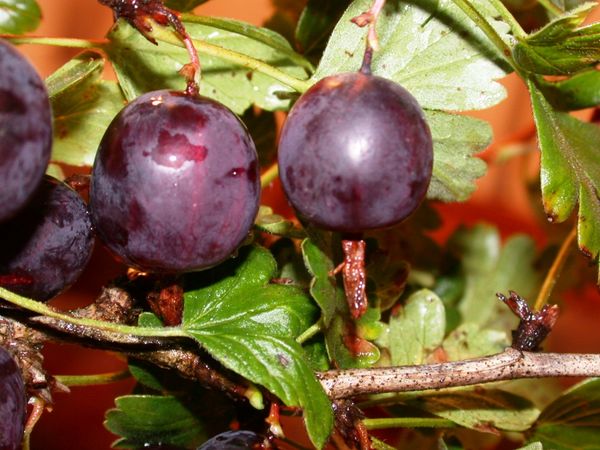
The Northern Captain produces oval-shaped fruits. The skin is almost black, but may have a burgundy tint or stripes. A characteristic feature of this variety is the presence of a slight waxy coating on the fruit's surface.
The berries are collected in clusters, usually containing three berries. The average gooseberry weight is 4 grams. They have a pleasant, slightly tart flavor.
The advantages of the Northern Captain include the following parameters:
- very high yield;
- Plants are able to quickly acclimate to changing weather conditions. This means that the shrubs tolerate drought and frost equally well;
- The bushes are resistant to fungal varieties.
These characteristics have made this variety very popular among gardeners, who often make delicious wine from their harvest. However, despite its average flavor, Severny Kapitan can be eaten fresh or used for preserving. Its tartness adds a refreshing taste to compotes and preserves.
Large-fruited varieties
In addition to thornless varieties, gardeners in the Moscow region often grow large-fruited varieties. The main advantage of these gooseberry varieties is that their descriptions include the term "large fruit." The berries themselves have a rather pleasant flavor.
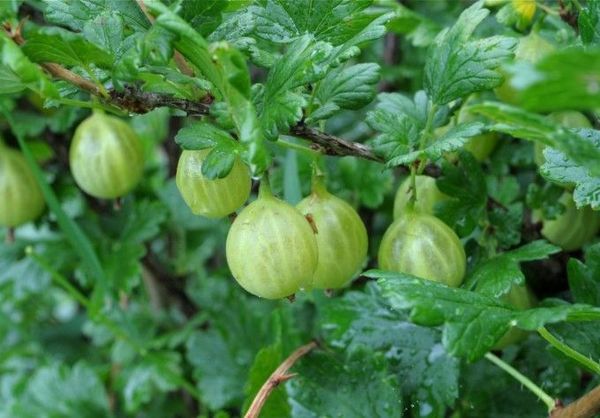
Larger crops are much easier to harvest, making these varieties very popular among gardeners. Their popularity is also based on their superior frost resistance and resistance to a wide variety of pests and diseases. It's worth noting that large-fruited varieties are better adapted to the weather conditions of their growing location. Therefore, they are more common than other varieties of this crop in the northern regions of our country.
Let's take a closer look at the best varieties of large-fruited gooseberries that are suitable for growing in the Moscow region.
Russian yellow
A well-known and popular gooseberry variety that produces a large harvest is the "Russian Yellow." It grows as a medium-sized shrub. The bush is not particularly dense. Small, thin thorns form on the branches, which are covered in them.
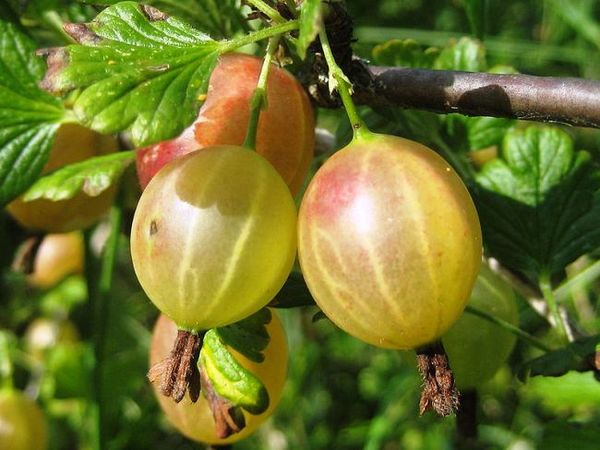
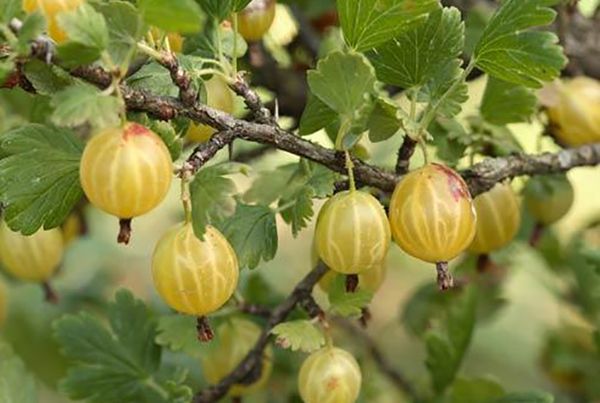
This variety is distinguished by its high yield. Large berries, weighing approximately 6 grams, ripen on the branches. Their skin is yellow or burgundy. The berries are shaped like pears. The surface of the fruit is covered with a slight waxy coating, which forms a fairly thin layer. The flavor of Russian Yellow is sweet and slightly tart. A slight tartness is also characteristic.
The advantages of this variety include the following parameters:
- good yield;
- excellent taste;
- Easy to care for. The only thing the bush requires is crown shaping. It should be pruned during the first few years after planting.
- The bushes tolerate sudden temperature changes well. Furthermore, the plant is resistant to prolonged drought and frost;
- self-fertility;
- Good immunity. The bushes are rarely infected with pathogenic microflora, which causes the most common diseases of this crop.
Thanks to these characteristics, Russian Yellow is often grown in our country. It is preferred in regions with harsh climates, where it produces a bountiful and delicious harvest.
Invicta
Among the large-fruited gooseberry varieties grown in Russia, there are some developed by foreign breeders. These include Invicta, developed by British breeders. This variety was created by crossing several varieties: Resistantna, Kipsake, and Winhams Industry. The resulting plant is a spreading bush. It is characterized by vigorous growth and can reach a height of up to 1.6 meters.
The shrub produces numerous shoots. These shoots bear thorns, hidden among small, light-green leaves. The thorn density is moderate. Therefore, to avoid scratching your hands when picking the berries, wear protective gloves.
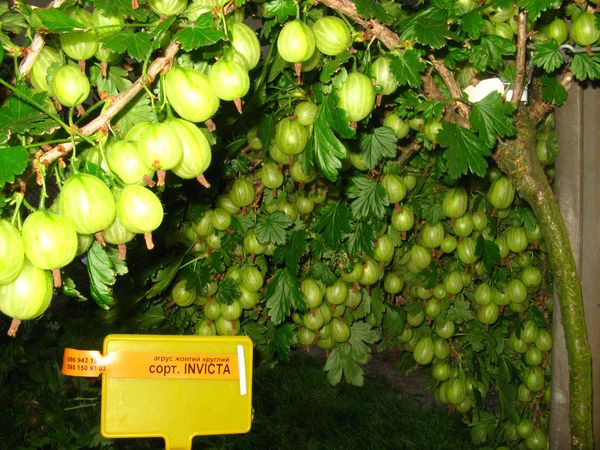
Invicta produces medium-sized berries. If improperly cared for, they can become smaller. It's worth noting that a single cluster can produce berries of varying sizes. Once ripe, the berries turn yellowish-green. Unripe berries are yellow with a green tint.
The harvest can begin in mid-July. Fruiting is fairly long, with berries forming until early September.
Ripe gooseberries weigh about 8 grams. They have sweet and very juicy flesh. The berries are very aromatic and are eaten fresh. These gooseberries are often frozen and used to make compotes during cold weather.
Invicta has the following benefits:
- High yield. With proper care, a single bush can yield up to 6 kilograms of fruit. This variety is capable of producing a bountiful harvest in the second year after planting. Moreover, abundant fruiting is maintained for quite a long time;
- large-fruited;
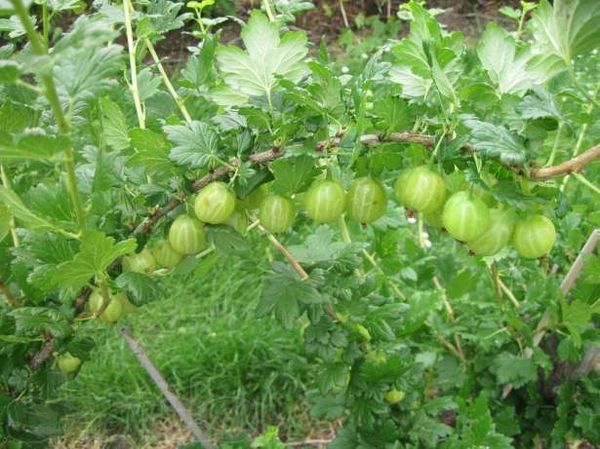
- excellent immunity to fungal diseases;
- Excellent frost resistance. The bushes tolerate significant temperature fluctuations well;
- berries have a universal purpose;
- The fruits are characterized by excellent transportability. They do not crack or spoil during transportation.
This variety is similar to Russian Yellow in many respects.
Kolobok
The best representative of the large-fruited gooseberry species, capable of growing in the climatic conditions of the Moscow region, is the Kolobok variety.
The bushes of this variety differ from other cultivars in their size and growth rate. The bush can grow to a considerable height. Thin, small thorns form on the shoots, but they can still cause problems during harvesting. They grow singly, with the greatest number of them located on the lower portions of the shoots.
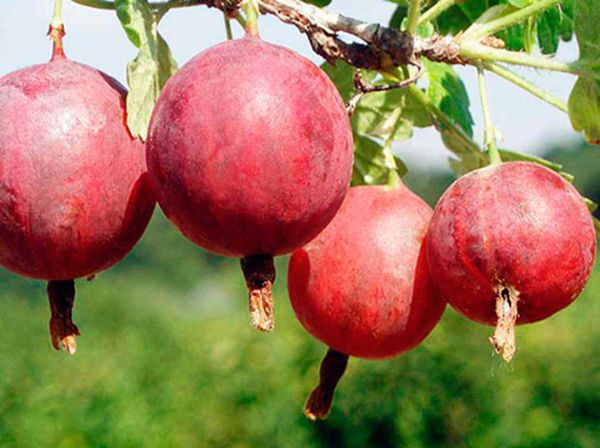
Kolob produces excellent fruit. The berries produced on the bush are large and rounded. They are burgundy-pink in color. Each berry averages 8-9 grams. Therefore, it is considered the largest-fruited gooseberry variety.
The berries have juicy, dark cherry flesh with a pleasant flavor. The skin, however, has a tart taste.
Among the advantages of this variety, the following points should be noted:
- high yield;
- large-fruited;
- good taste of fruits;
- Shrub resistance to fungal pathogens. The variety is particularly resistant to diseases such as powdery mildew and anthracnose;
- The plant tolerates temperature fluctuations well. However, it's important to note that weakened plants are much less able to withstand temperature fluctuations.
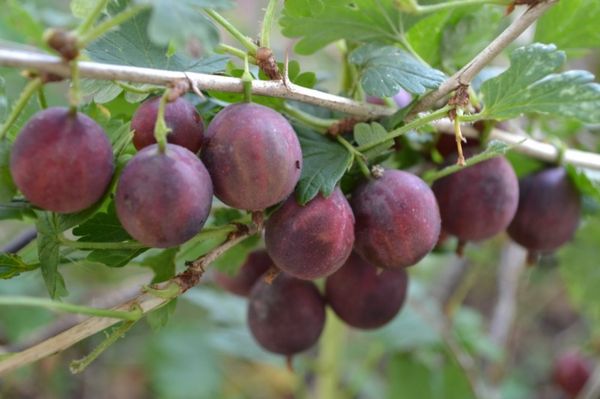
One of the disadvantages is that the plants require constant pruning to increase yield. This is necessary due to the bush's rapid growth rate.
As a result, shoots grow rapidly, leading to a dense crown. This leads to a decrease in yield. Therefore, the shrubs should be monitored and the degree of crown growth controlled. Otherwise, abundant fruiting can be a thing of the past.
As we can see, Kolob is an excellent gooseberry variety that, in the Moscow region, produces an excellent harvest, requiring only periodic and timely pruning.
Roland
Another gooseberry variety capable of producing large berries and growing in the Moscow region is the Rolanda cultivar. This variety was developed by German breeders.
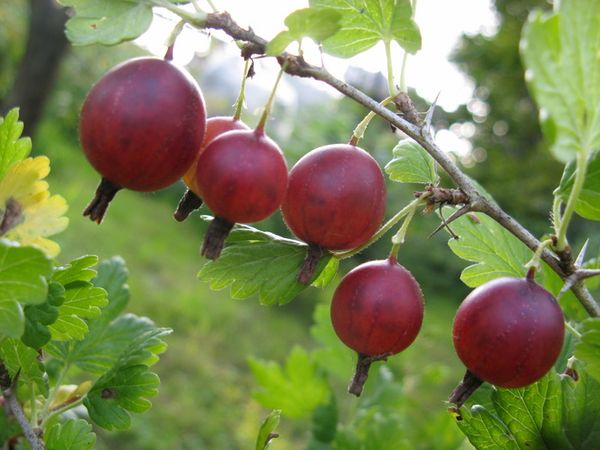
The bush is medium-sized. The plant can grow up to 1.5 m in height. It consists of long but slender shoots. The crown is characterized by moderate density. The branches produce berries, averaging about 5 grams in weight. The fruits are oval in shape and firm in texture. Their skin is dark red. Its surface is matte and glabrous. The berry pulp has a sweet and sour taste. They have a pleasant aroma. Fruiting is mid-late.
Roland has the following advantages:
- stable and high yield;
- average frost resistance of plants;
- the bushes are not susceptible to powdery mildew attack;
- excellent taste;
- fruits for general use. They are suitable for processing.
When choosing a gooseberry variety for cultivation, it's important to pay attention to its description and growing conditions. For planting in the Moscow region, choose frost-hardy varieties characterized by abundant fruiting and large berries. The best of these varieties have been described above. All that remains is to choose the ones that best suit your needs.
Video: "Gooseberry Varieties, Planting, and Care"
This video will teach you how to properly plant, care for, and choose the right gooseberry variety.