
When and how to transplant gooseberries
Content
Benefits of transplantation
When it comes to replanting gooseberries, many gardeners worry about whether this process is harmful or beneficial to the bush. If the plant is old and overgrown, dividing and replanting it will undoubtedly be very beneficial, as it promotes its rejuvenation.
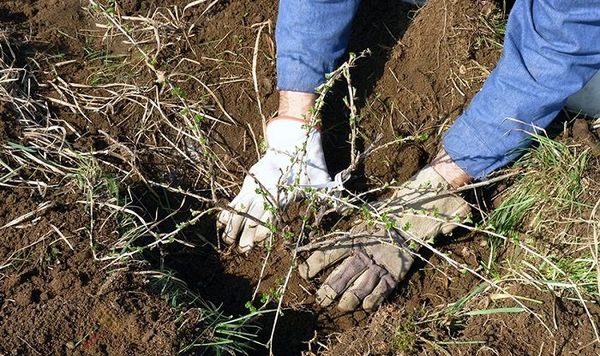
Gooseberry bushes can live for quite a long time, but abundant fruiting is only observed during the first 9–12 years. Then, the bush begins to age, and the yield declines. In this case, timely replanting will not only help preserve the bush but also prolong its fruiting.
As for young fruiting bushes, replanting can also be beneficial if the location and timing are chosen correctly. Mature gooseberry bushes can be replanted in spring or fall, but autumn—from mid-September to late October—is considered the most suitable time. During this period, the bushes complete their growing cycle and enter a dormant period. After replanting, such a plant will not grow and will be able to establish itself well before the onset of permanent cold weather.
Transplanting gooseberries in the spring is more difficult because the plant is characterized by very early sap flow. Gooseberry bushes develop buds first, then flower clusters, and by the end of May, small green fruits can already be seen. Due to this rapid growth process, it is very difficult to accurately determine when the sap flow begins.
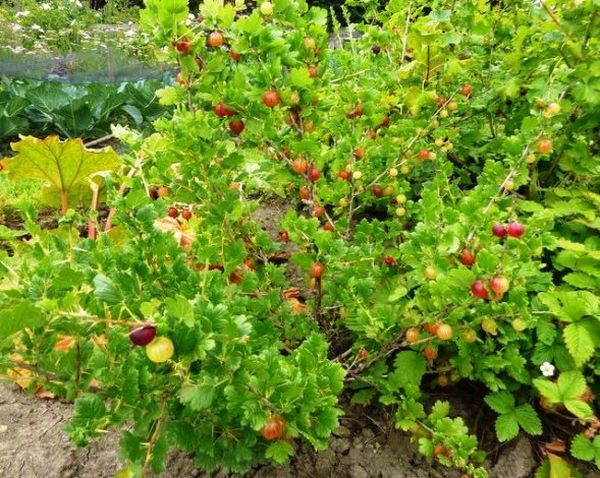
The only time when you can transplant gooseberries in the spring is the end of March - beginning of April, as soon as the snow melts, but at this time, as a rule, the soil is still frozen, so autumn transplantation is considered more promising and beneficial for gooseberries.
Choosing a new location
Location is crucial for the growth and fruiting of gooseberries, so site selection should be approached with the utmost care. It must meet the following requirements:
- be located in a sunny place, protected from strong winds and drafts;
- You shouldn't plant gooseberries after currants or raspberries - these crops share common pests and diseases, so the transplanted bush will most likely get sick in the new location;
- Gooseberries love moisture, but excessive soil moisture caused by the close location of groundwater is harmful to them, since most varieties are not immune to fungal diseases, in particular powdery mildew;
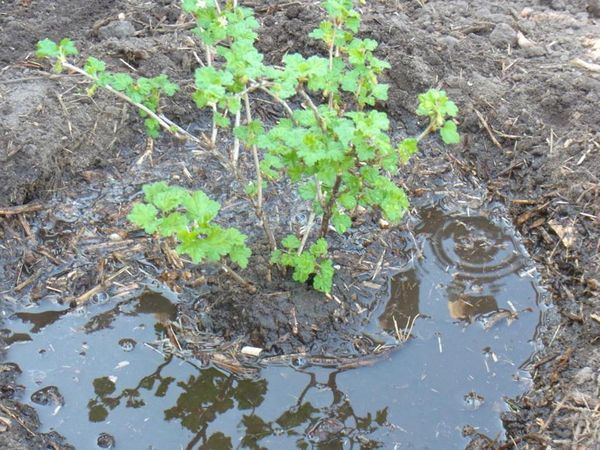
- The ideal soil for planting is considered to be fertile loam of medium density - if your soil is loamy, but it does not have enough humus, you can correct the situation by adding a small amount of humus or compost; overly dense clay soil can be made looser with the help of sand and peat;
- The soil acidity for gooseberries should be neutral (this is fundamentally important) - in acidic soil, plants immediately become ill, so increased acidity must be balanced with lime.
How do you determine soil acidity? There's a very original, folk method many gardeners use to check their pH levels.
It involves placing a handful of fresh cherry or currant leaves in a glass container, pouring boiling water over them, and covering with a lid. When the water cools, add a lump of soil and observe the color change. If the color remains green, the acidity is normal; red indicates high acidity; and blue indicates low acidity.
Preparing the tools
The tools and equipment needed for replanting plants should be prepared in advance to avoid the hassle of searching for them later. What might you need for the job?
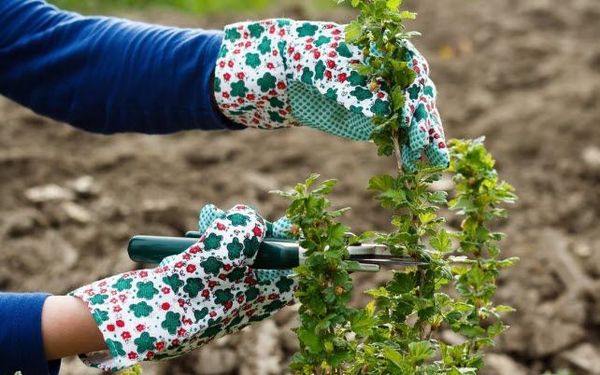
- garden shears (pruning shears) – for trimming the bush before moving it to a new location;
- shovel – for digging and filling the planting hole;
- a crowbar or a garden pitchfork – may be needed if the bush is old and has grown deep (in this case, it will not be possible to dig it up with just a shovel);
- an axe - with its help you can cut off old dry roots;
- bucket for watering.
Rules for carrying out a transplant
The transplant process itself will not take much time, but first it is necessary to carry out all the preparatory work.
First, you should thoroughly prune the bush, removing about half of its crown. Gooseberry shoots are thorny and difficult to manage, so you can remove branches in sections. Leave no more than 7-8 young shoots on the bush, shortening them by a third.
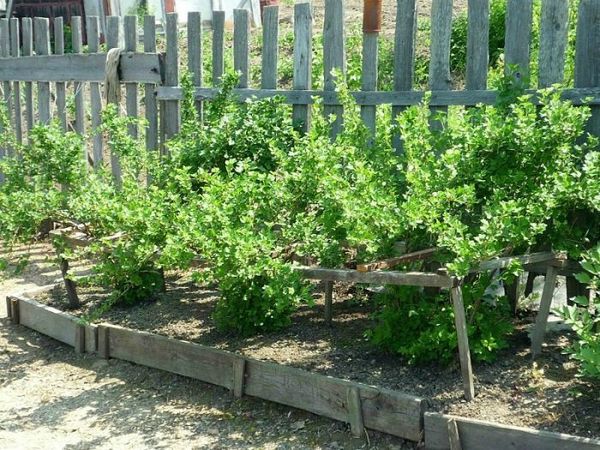
It's recommended to dig planting holes 1-2 weeks before replanting, allowing the soil to settle and the fertilizer to react with the soil. The hole should be at least 50 cm deep, with the width depending on the size of the rhizome. The day before planting, thoroughly moisten the holes, adding 3-4 buckets of water to each. If the soil is not fertile enough, before watering, add 0.5 buckets of humus or compost, mixing the fertilizer with some of the soil dug from the hole, and then backfill.
The transplant process itself consists of the following stages:
- The trimmed bush is dug around in a radius of 35–40 cm, trying not to damage the main roots; small lateral roots can be cut off with a shovel.
- Next, using a shovel and a crowbar, you need to try to remove the bush from the ground, place it on a piece of film and move it to the planting site.
- Excessively large lateral roots can be cut off with a shovel or axe. Don't worry about this harming the plant—gooseberries are very resilient, and their root system quickly recovers.
- Next, we lower the bush into the planting hole so that it is buried approximately 5 cm lower than before, in the old place.
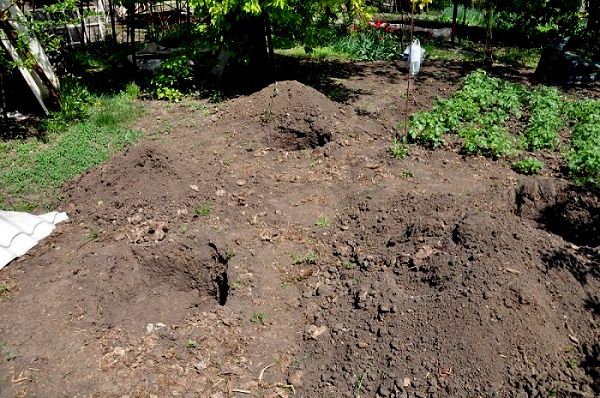
- We straighten the roots and fill them with soil, compacting and watering each layer so that no voids form.
- After planting, the tree trunk circle is mulched with organic matter, preferably peat chips.
Before each watering, remove the mulch and then replace it. It's also a good idea to cover the soil around the bush with a thick material, such as roofing felt, until the plant is established.
When transplanting gooseberry bushes en masse, it's essential to dig the required number of planting holes immediately, adhering to a 1.5 x 1.5 m spacing. This is the most appropriate spacing between plants and between rows for any gooseberry variety, taking into account regular pruning. Gooseberries have a very high survival rate, so if you transplant them in the fall, you can expect a good harvest the following spring.
Video: "How to Properly Transplant Gooseberries"
This video will show you how to properly transplant gooseberries.