
Sweet black gooseberry variety Chernomor
Content
Description
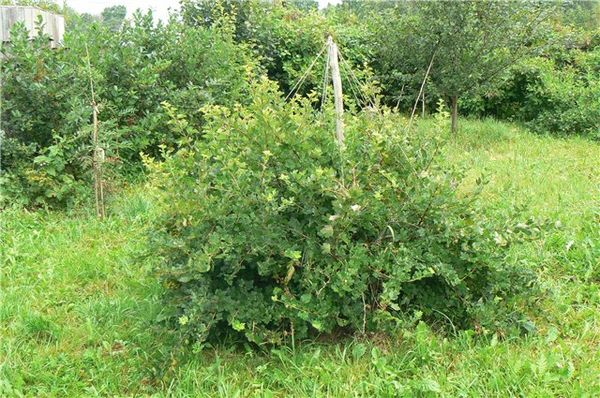
Chernomor is a mid-season gooseberry variety. It forms a vigorous bush with little tendency to spread, a dense crown, and upright branches. Developing shoots are straight or have slightly pendulous tips, light green in color, and pubescent. As the shoots become woody, their color changes to a lighter shade.
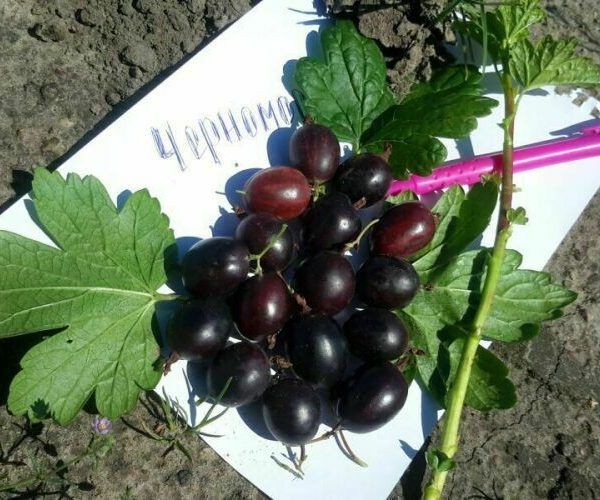
The undoubted advantage of this variety is its low thorniness – the shoots are covered with sparse, single thorns directed downwards. On the branches of the bush, oblong buds of medium size, light and glabrous, are formed.
The shrub's branches are covered with small, smooth, dark-green foliage. Each leaflet is divided into five deeply notched lobes. The flowering period is characterized by the appearance of elongated, medium-sized flowers of vibrant color. Typically, the inflorescences are single- or bicolor.
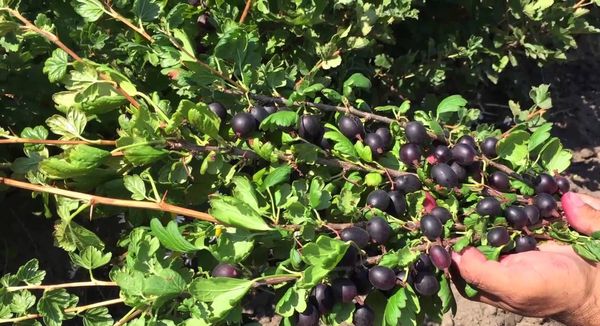
This variety produces medium-sized berries (each weighing an average of 3g) that are dark red when ripe, turning black as they ripen. Each berry contains a medium number of seeds, and the berries themselves are covered with a dense skin. The fruits have a harmonious sweet and sour flavor.
Agricultural technology of the variety
Because gooseberry roots grow much deeper than other shrubs, it's considered drought-resistant. It also tolerates shade well. What the gooseberry doesn't like is high humidity—it shouldn't be planted in low-lying areas, as this increases the risk of fungal diseases. When choosing a location for this gooseberry, it's best to choose areas with ample sunlight and protection from cold north winds.
Like many fruit bushes, the Chernomor gooseberry can be planted in either fall or spring, but fall planting is considered preferable: this way, the seedling has time to establish itself before the cold weather sets in. Remember that the bush is thorny, so try to keep the area around it clear to facilitate weeding. Immediately before planting, remove any damaged or dried roots from the seedling and prune the above-ground portion of the plant, shortening the branches by about one-third.
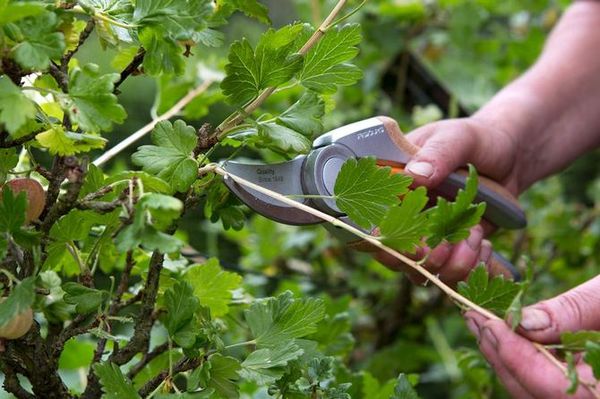
Bush care will include regular pruning (in fall or spring), weed removal, regular fertilizing, and disease prevention. Fertilizers include nitrogen and potassium mixtures, or organic compounds such as a diluted manure infusion, which is poured onto the soil around the bushes.
If dry weather sets in, remember to water your gooseberry bushes. This should be done at the base of the plant to minimize the risk of fungal infections. Never use sprinklers or cold water.
To increase yield, some gardeners resort to summer pruning: removing young, soft shoots that are of no use for normal development. This technique increases the size of each berry.
Advantages and disadvantages
Black gooseberry Chernomor has a number of undeniable advantages:
- high winter hardiness – the crop tolerates winter frosts well;
- drought resistance – the shrub survives short dry periods well;
- a small number of thorns – harvesting is quite easy, since there are few thorns on the bushes, and they are located mainly in the lower part of the shoots;
- simple propagation procedure – the crop is easily propagated by cuttings or layering;
- taste qualities of the fruits – the berries are tasty and juicy, retaining their marketable appearance for a long time.
The only drawback of the crop is its small berries.
Disease resistance
The Chernomor variety is considered resistant to powdery mildew. However, the risk of fungal diseases is still quite high for this crop. To prevent potential diseases, gooseberry bushes require regular treatment with special protective compounds designed to prevent the spread of infections. As a preventative measure, many resort to pouring boiling water into the planting hole—this disinfects the soil from most pathogens.

If signs of disease are detected, almost any problem can be solved by treating the shrub with an appropriate product. Everything you need can be easily found at your local gardening store, and the treatment itself won't take much time or effort.
We're confident you'll grow not only beautiful but also incredibly delicious gooseberries. And by making jam from these fragrant berries, you'll be able to savor their divine flavor all winter long, hosting boisterous and joyful family tea parties.
Video: "Correct Planting of Gooseberries"
This video shows how to properly plant gooseberry bushes.