
Control of gooseberry diseases and pests
Content
Diseases
Gooseberry diseases are primarily caused by fungi. They trigger root and basal rot, leaf spotting, and fruit rot, as well as bush decay and drying. In addition, aphids, glassworms, and bud mites also damage gooseberries. In addition to mechanical damage to the plant, insects also transmit certain viral and bacterial diseases. Therefore, a comprehensive approach to gooseberry disease management should be adopted, including appropriate control measures and disease prevention.
White plaque
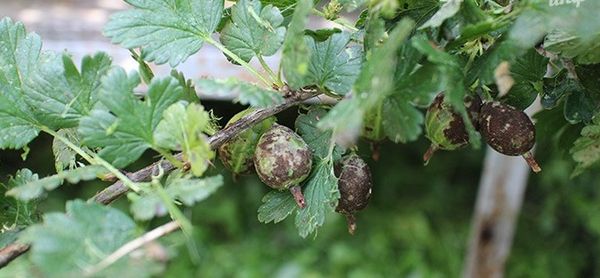
The most common symptom of the plant disease is a white coating on the leaves, as well as on the gooseberries. Sometimes it resembles a web, and when you try to remove it, it's easily rubbed off with your fingers. As the disease progresses, the coating spreads to the ovary, thickening and darkening. Affected plants become twisted and withered, the leaves bunch up, become brittle, and quickly fall off. All these symptoms are signs of a dangerous disease: powdery mildew.
Powdery mildew
Powdery mildew, also known as sphaerotheca, is a fungal disease caused by the fungus Sphaerotheca morsuvae. This pathogen is harmful because it prevents plants from properly exchanging water and heat, causing the characteristic symptoms.
Spheroteka overwinters on fallen leaves and infects plants in the spring. In our latitudes, two varieties of this fungus are common—American and European. However, since the treatments for gooseberries in these cases are very similar, we will not delve into the intricacies of these fungi.
How to cure gooseberries? As early as the eighteenth century, "Bordeau mixture" became an effective remedy against powdery mildew. This is a mixture of copper sulfate and soda ash. It can be applied to shoots and leaves.
A good means of protection is also treatment with an infusion of wood ash and adding it to the soil around the trunk itself.
In the fight against this disease, it is important to completely remove fallen leaves, as well as all affected parts of the plant.
Anthracnose
If small brown spots appear on gooseberries, immediately check for necrotic lesions—it could be anthracnose. Anthracnose is another fungal disease that is difficult for gardeners to control. After infection, dark spots with fuzzy edges appear on the leaves, but as the disease progresses, they grow larger and eventually merge, causing the leaves to dry out prematurely. Shoot growth and berry sugar content are noticeably reduced, requiring significant effort to avoid losing the plant.
The fungus overwinters in fallen leaves and on mummified fruit. Therefore, the key to controlling the disease is to completely eliminate the source of new spores. At the first signs of the disease, it is recommended to treat green parts of the plant with a copper sulfate solution or Bordeaux mixture. Preventive measures are recommended before and immediately after flowering.
Rust
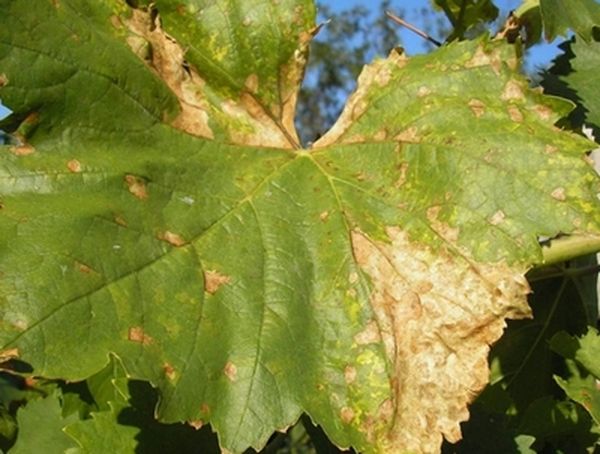
Fungi of the genus Puccinia cause rust in plants. Gooseberries are susceptible to goblet and columnar rust. This disease is easily recognized by the rusty spots, spores, and leaf undersides. The disease spreads from other infected plants, primarily infecting leaves and occasionally stems. Severe rust infections can cause deformation of vegetative organs and berries, or even leaf fall.
Scab
True scab, caused by members of the genus Venturia, a fungus, is often confused with powdery mildew on gooseberries. This disease is more common on apples, pears, and potatoes. It does not occur on berries.
Pests
In addition to common fungal diseases, various insects also cause gooseberry problems. These insects consume leaves, stems, and berries, affecting the plant's nutritional quality and overall appearance. Among the most damaging insects, currant glassworms, aphids, and bud mites are parasitic on gooseberries.
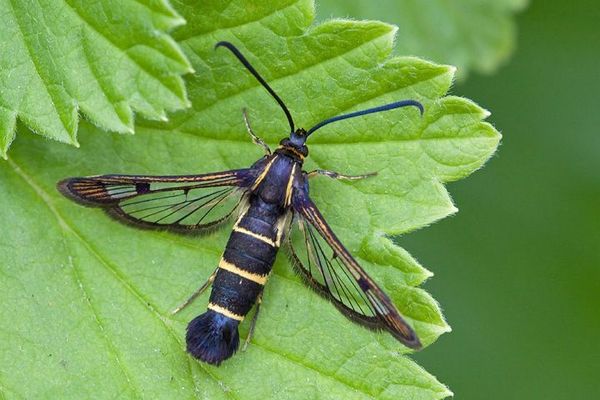
Currant glasshouse
The currant aphid is a small butterfly. Its damage lies in the fact that by laying large numbers of eggs in bark crevices, it inhibits the upward and downward flow of nutrients and sap. The caterpillars that hatch from the eggs feed on the gooseberry sap, gnawing through the branches from the top to the base. This causes the branches to wilt, and the leaves to droop and dry out.
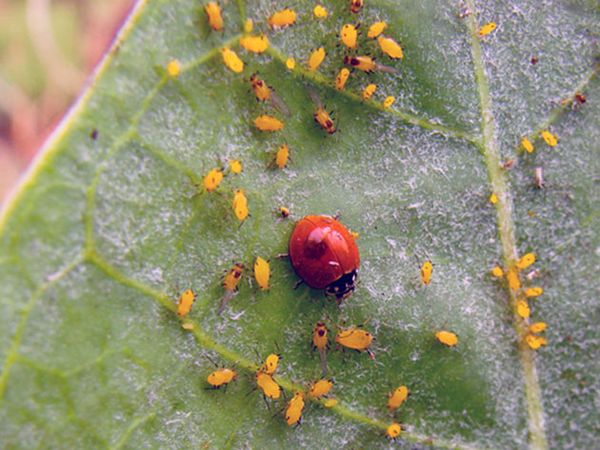
Aphid
This insect eats leaves and shoots that haven't yet become woody, feeding on the sap. Gooseberry shoot aphids reproduce quickly and are small, yellowish, and almost invisible to the naked eye. Diseased leaves curl and dry out, and shoots stop growing. It's crucial to detect aphids early, otherwise you could lose your entire crop. It's important to note that aphids and ants form a wonderful symbiotic relationship, so avoid planting gooseberries near anthills.
Kidney mite
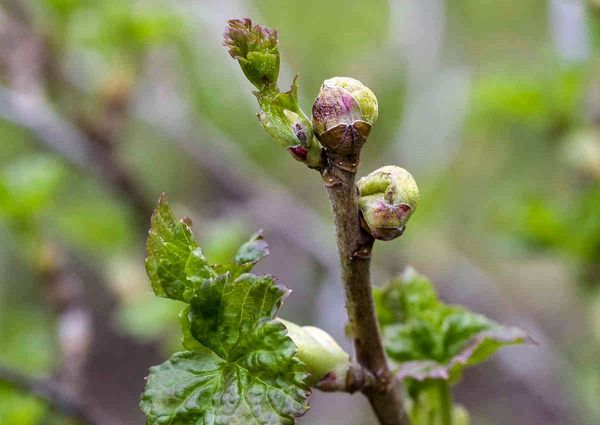
The bud mite is a small arthropod that feeds on the sap of young leaves. As its name suggests, it lives in leaf buds, thereby damaging the openings. But the mite's damage doesn't end with disrupting leaf emergence—it transmits the terry leaf virus, which is dangerous not only to gooseberries but also to currants.
Processing
The list of gooseberry diseases is quite long. What can you do to prevent gooseberry diseases? It's quite simple: we save a sick gooseberry plant by treating it with various products. It's crucial not only to treat but also to actively use preventative measures to keep your plant disease-free.
From diseases
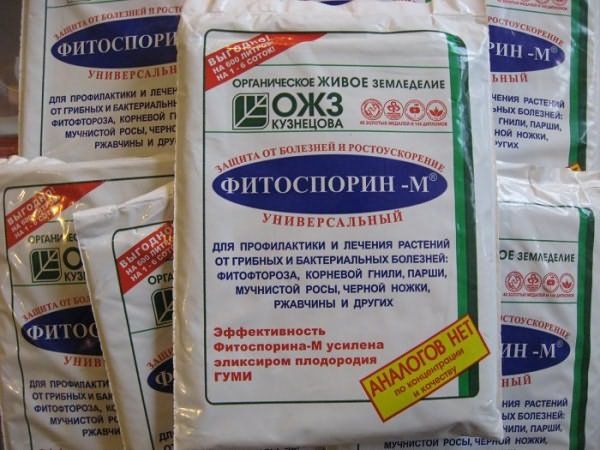
Treatments for diseases primarily target fungi. These are fungicides of various classes of chemical compounds. The simplest and most readily available of these is the "Bordeaux mixture," invented to combat grape mildew. It consists of a solution of copper sulfate and soda ash. Bleach and mustard powder are folk remedies for combating fungal diseases. Treatment with phytosporin also helps affected plants.
Gooseberries should be treated at least four times: before flowering, immediately after, a few weeks later, and at the end of the growing season. Fallen leaves should be removed to prevent disease. Mulching should be used to protect the trunk and root system.
From pests
There are numerous insecticidal products on the modern pesticide market. For overwintering mites and aphids, experts recommend Profilaktin, which is sprayed on plants in early spring. For mites, geometer moths, and leaf rollers, use Aliot, Kleschevit, and Fitoverm. Biotlin and Tanrek have proven themselves to be effective against aphids.
As a preventative measure, it is recommended to remove a bush infected with arthropods at the root to eliminate a possible source of disease recurrence.
For prevention
Prevention is better than cure. To prevent any kind of disease, it's recommended to periodically remove diseased or weakened shoots and remove leaves from under the bush. Soil fumigation is also recommended to ensure healthy planting material.
Treatment with copper-containing preparations (such as copper sulfate or Bordeaux mixture) is never a bad idea – the phytotoxic effect, compared to the positive preventative effect on gooseberries, is extremely minimal. Furthermore, don't forget about seasonal and vegetation treatments – at the beginning of bud break, before flowering, and after flowering.
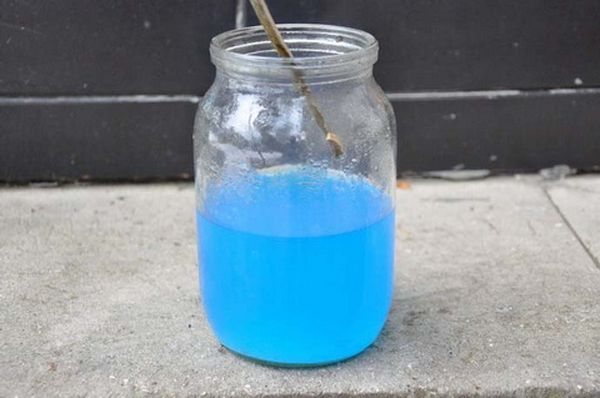
In summer, it is recommended to treat gooseberries several times with washing soda and soap - this will help prevent the occurrence of powdery mildew and anthracnose.
To prevent pests, we recommend using Karbofos or Rovikur. A sulfur solution is effective against bud mites.
In the fall, the soil, devoid of leaves, is treated with nitrofen, and the gooseberries are fed, preparing them for winter.
Video: "Controlling Gooseberry Diseases and Pests"
This video will teach you how to control gooseberry pests and diseases.