
How to make delicious homemade jam
Content
Choosing Cookware
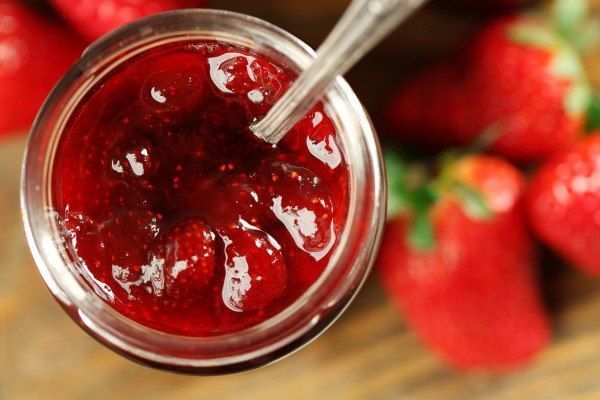
The jar used for making jam is largely responsible for its taste and nutritional value. The material is crucial:
- Stainless steel. The optimal choice. This type of cookware is chemically inert, meaning it doesn't affect the flavor of food or deteriorate due to fruit acids. It's durable and easy to clean. Many modern pots have a multi-layered capsule bottom, ensuring even heating and prevents burning. Stainless steel can impart a metallic taste, but this only applies to low-quality products with poor alloy composition. The best choice is 18/10 steel, also known as AISI 304.
- Enameled metal. Enamel is also chemically inert, so you can use this type of cookware for both boiling and storing jam between cooking sessions. It's important to ensure the enamel is free of any chips, otherwise the iron will come into contact with acids, destroying the vitamin C and causing the jam to burn.
- Copper. Copper cookware was once considered the best for jam making due to its even heating and non-stick properties, but scientists have proven that its ions destroy vitamin C, and the salts that improve the external preservation of the product are harmful to health. Copper also regularly forms a film on its surface, which is a dangerous oxide. If you still intend to use this type of cookware, it should be thoroughly washed after each cooking session. You should not store preserves in it. Brass cookware is even more dangerous – it releases cadmium, which is similar in hazard to mercury.
- Aluminum. The worst case scenario is that the oxide film covering the container's surface dissolves upon contact with acid, allowing metal molecules to enter the food. It's best to avoid using aluminum cookware altogether.
- Teflon. It can be used, but only for small amounts of jam. This type of cookware doesn't like overheating.
- Ceramics. They offer advantages due to their chemical inertness, uniform heating, and excellent non-stick properties. Expensive products are resistant to temperature fluctuations, while cheaper ones can suffer from them. Ceramics cool slowly, so if you need to cool the workpiece quickly, it's best to transfer it to another container.
The shape of the container is also important. A wide, shallow bowl is best: the thinner the layer of food, the more even the heating. It's best to have a flat, non-ribbed bottom, otherwise it will be difficult to clean.
Video: "How to Make Honeysuckle Jam for the Winter"
This video will show you how to make delicious honeysuckle jam for the winter.
Selection of berries and fruits
To ensure jam is tasty and healthy, it should be made from fresh, undamaged fruits and berries. The time between harvesting and cooking should be as short as possible. If you don't have your own garden, buy only local produce. Choose the most aromatic fruits—this will determine the flavor of the finished product.
Before preparing, fruits and berries should be washed thoroughly. Then, they should be sorted, removing stems and any spoiled fruit.
After this, you can remove the seeds and cores. If you want to use whole fruit, you can cut or prick them to allow the syrup to soak in better.
Before starting to cook the fruit, you can blanch it, that is, scald it with boiling water.
Cooking Features
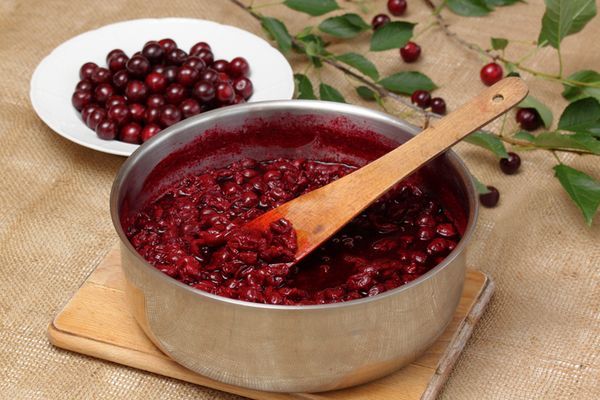
Most recipes call for the weight of sugar to be equal to the weight of the fruit. This proportion can be adjusted slightly depending on personal preference and the sweetness of the fruit itself.
There are two types of preparation for the main cooking process:
- Cut the fruit, mix with sugar and leave for a while to release the juice.
- Make the sugar syrup. Place the desired amount of sugar in a saucepan, add water (200 ml per 1 kg), and set over medium heat. Once the liquid boils, reduce the heat and simmer for another 1–2 minutes, stirring constantly. The mixture should be thick and run off a spoon in a thick stream. Do not overcook it, or the sugar will caramelize. Add berries or fruit slices to the syrup. The liquid should completely cover them.
The amount of time the prep time takes depends on the recipe: for example, "Five-Minute" jam requires the fruit mixed with sugar to be left to soak overnight.
Then place the ingredients over medium heat until they boil, and then reduce heat to low. Stir frequently to prevent burning.
When the jam is ready, the foam collects in the center, and the berries or fruit slices sink to the bottom. The syrup becomes more viscous, and drops of it don't spread onto the saucer. It's important to catch this moment as precisely as possible. Undercooked jam will turn sour, and overcooked jam will become candied and less flavorful.
Inexperienced cooks sometimes wonder why they skim the foam off their food. The reason is that it contains rapidly fermenting proteins, essential oils, and residual particles. It should be removed at the end of cooking.
The flavor of many types of preserves can be enhanced by adding spices, zest, lemon, nuts, or honey. Some recipes also call for a small amount of alcohol, usually cognac.
If the syrup is too runny, it can be thickened using gelatin or products containing pectin.
Some fruits, such as cherries or strawberries, can be made into fried jam. To do this, mix the chopped fruit with sugar and place in a deep pan, such as a wok. Heat the mixture on high until it boils, then reduce it to low. Stir the mixture with a wooden spatula, skimming off any foam regularly. Once the jam has thickened, you can begin making the preserves.
Pouring into cans
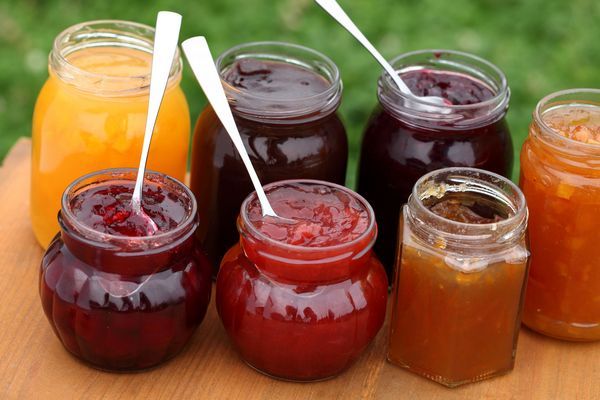
Jam jars need to be sterilized. There are several ways to do this at home:
- Steam. Pour water into a saucepan, then place a rack or grate on it and place the jar upside down. Steaming time depends on the container's capacity: 0.5–0.7 liters – 10 minutes, 1 liter – 15 minutes, 2 liters – 20 minutes, 3 liters – 25 minutes. Do not place the jar over boiling liquid, otherwise it may crack. Use oven mitts to avoid burning yourself.
- Boiling. Place a towel on the bottom of the pan and place the jars on it. Place a towel between them to prevent them from colliding. Cover with cold water and boil for 10–25 minutes, depending on the volume.
- In the microwave. Pour about 2 cm of water into the jar and place it in the microwave. Set the microwave to a 3-minute cycle to bring the water to a boil. If your microwave is low-wattage, it may take longer.
- In an autoclave. In this case, jam making and sterilization occur simultaneously. Sealed jars are placed inside, filled with water, and the device is turned on to 120°C for about 30 minutes. Then the heat is turned off and the jars are allowed to cool. Air is released through the valve and the device is opened.
Sterilize the lids by boiling for 5 minutes, then remove with a fork and let them dry on a clean towel. Pour the jam into completely dry, warmed jars and seal them using a special tool. Twist-type lids can also be used.
Storage specifics
A dark place with a temperature no higher than 20°C is ideal for storing jam. Storing jars in a cellar is not recommended, as they may burst due to temperature fluctuations. Jam with pits should be stored for no more than six months, otherwise it will begin to release prussic poison, which will become dangerous after 7–8 months. Seedless jam, prepared according to all the rules, can be stored for several years.
Making delicious jam requires a certain amount of time and effort, but in winter you can treat yourself to a delicious dessert.