
How did the Kupchikha strawberry appear and what makes it unique?
Content
What kind of fruit is the Kupchikha strawberry?
Until recently, no one knew anything about the name "zemklubnika." Thanks to domestic breeders, this fruit and berry crop has become known throughout the former CIS. So what exactly is this fruit? Below, we present a detailed description and characteristics of the hybrid.
Origin of the variety
Soviet breeders began developing the new variety as early as the 1980s. Three decades later, the first variety trials were conducted, and only a couple of years ago, Kupchikha was awarded a place in the State Register of Varietal Achievements of the Russian Federation. This unusual hybrid has three authors: S.D. Aitzhanova, N.V. Andronova, and V.I. Andronov. They are employees of the All-Russian Institute of Horticulture Selection and Technology and the Bryansk State Agrarian University.
The Zemklunika was created by crossing the garden pineapple strawberry with the European muscat strawberry. From both varieties, the crop inherited the best flavor and marketability qualities. What makes Kupchikha unique is that it is the only representative of its kind to have been awarded a place in the State Register of the Russian Federation.
Description of the vegetative form
Kupchikha is a medium-sized, compact variety with densely foliated, spherical rosettes. The leaf blades are medium-sized and highly textured. Their surface is glossy and sparsely hairy. The leaves themselves are rounded, serrated, and smooth-edged, borne on a long, fluffy petiole. The stipules are greatly shortened and lanceolate.
As it grows, strawberry plants produce long, hairy shoots, which produce semi-spreading, lush inflorescences composed of snow-white flowers of both sexes. They are positioned high, flush with the leaf blades. The tendrils are sparse, not very long, and burgundy in color.
Commercial qualities of berries
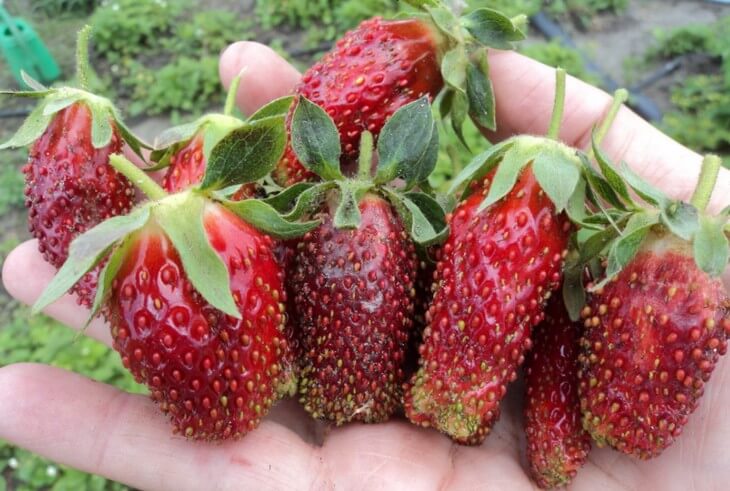
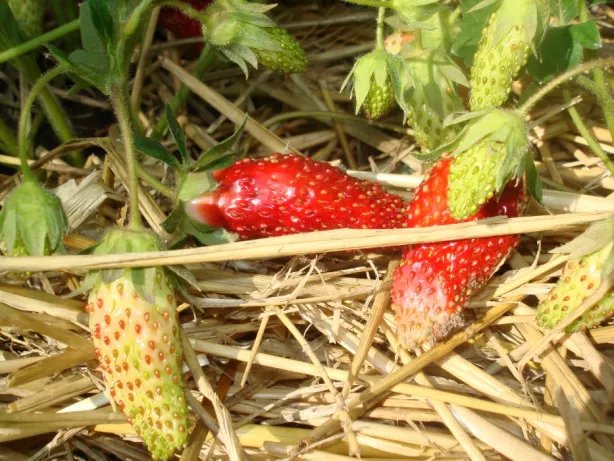
Kupchikha fruits are characterized by an elongated shape and a long neck. When fully ripe, the strawberry's color is uniform, carmine or burgundy. The flesh is uniform, medium juicy, dark scarlet in color, and has a firm texture.
The average berry weight, as stated in the patent, is 3.5-4 g. However, depending on the growing region, the figure may be higher.
Taste characteristics and application
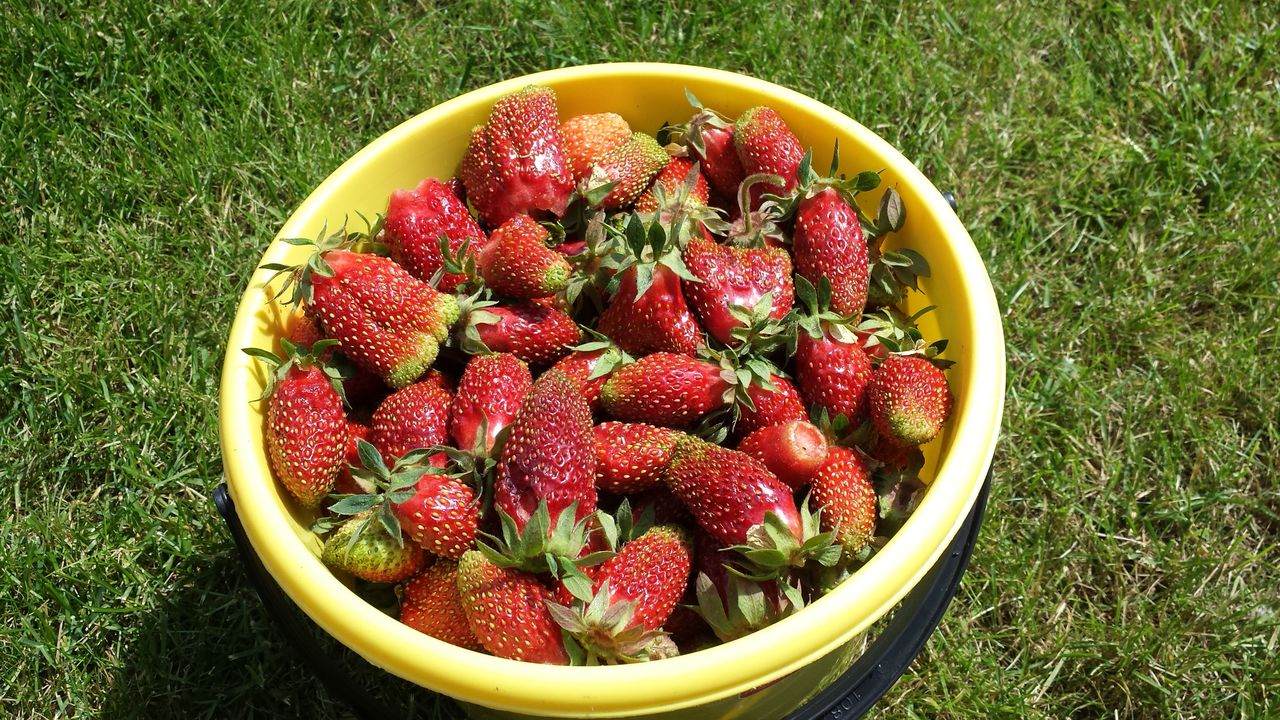
Strawberry fruits are rich in vitamin C and low in sugar. Despite this, Kupchikha is a dessert variety with a harmonious sweet and sour flavor and a distinct strawberry aroma.
This variety is versatile in its uses. The harvested fruits can be eaten fresh or used for preserves. Strawberries are especially delicious when used to make berry drinks, preserves, and jams.
Productivity
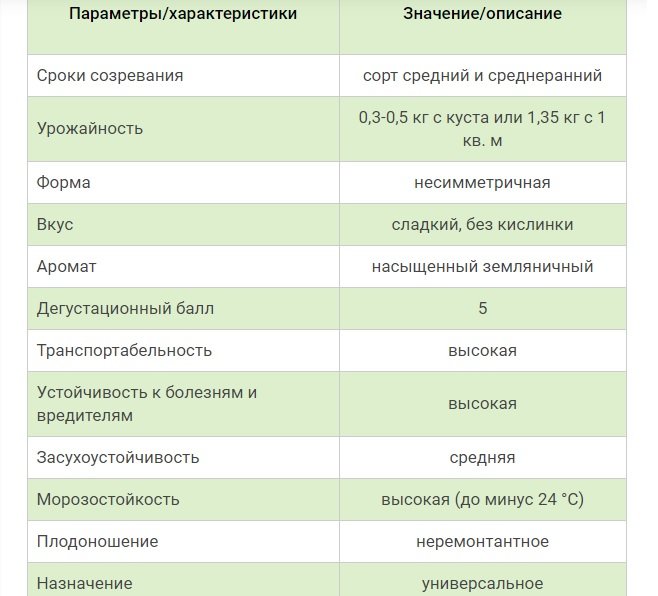
According to the State Register, one hectare of strawberry can yield 135 centners of berries. However, reviews from gardeners who grow the hybrid in their own plots show slightly different figures. For example, the average yield of Kupchikha is 0.3 to 0.5 kg per bush.
At higher temperatures and sufficient humidity, yields may exceed the stated figures.
Video "Botanical Portrait of the Kupchikha Strawberry"
This video presents a description and characteristics of the fruit and berry crop.
The pros and cons of the Kupchikha strawberry
The breeders tried to incorporate all the positive qualities of the parent pair into their hybrid.
- high performance;
- harmonious taste;
- increased immunity to fungal diseases and parasites;
- frost resistance;
- The crop tolerates transportation well.
- small number of antennae;
- uneven size and shape of berries.
Features of agricultural technology
Growing Kupchikha isn't particularly difficult if you follow all the necessary agricultural practices. We'll share more details on the secrets of caring for this plant below.
Planting recommendations
The hybrid prefers a nutrient-rich, neutral environment, so it thrives best in fertile, loose, well-drained soil. It can be planted twice per season:
- May-June;
- August-September.
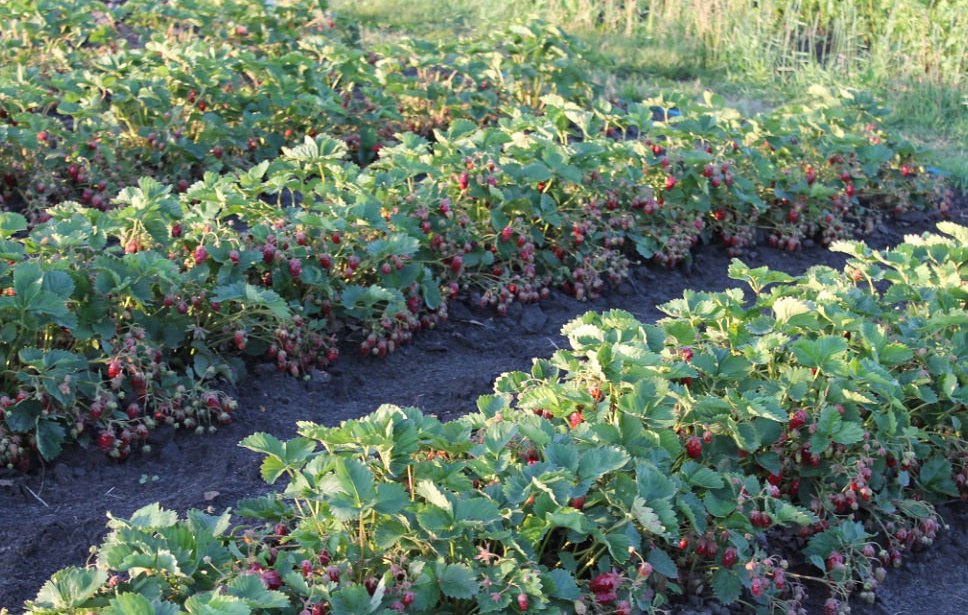
The site can be any size—strawberries can even bear fruit in the shade of trees. Light levels don't affect the taste of the harvest. One and a half hours before planting, the seedlings are placed in water to moisten the root system. During this time, 5-7 cm deep furrows are dug in the bed. The "rosettes" are planted in a staggered pattern, spaced 0.4-0.5 m apart. After planting, 500 ml of water is added under each bush, then the soil is gently loosened and mulched with pine needles.
General care rules
Despite its ability to adapt to any conditions, Kupchikha requires adherence to a number of rules when breeding it:
- irrigation is carried out using the drip method;
- during the formation of ovaries and ripening of fruits, the procedure is carried out every 4 days;
- After harvesting, watering is carried out twice a month;
- change the mulch layer regularly;
- prevent the soil from becoming overgrown with weeds;
- every 6 years they change the landing site;
- adhere to the feeding schedule, excluding nitrogen-containing compounds;
- remove the antennae in time;
- Inspect the bushes periodically to detect diseases or parasites in a timely manner.
-
- Mulching
-

- Fertilization
-
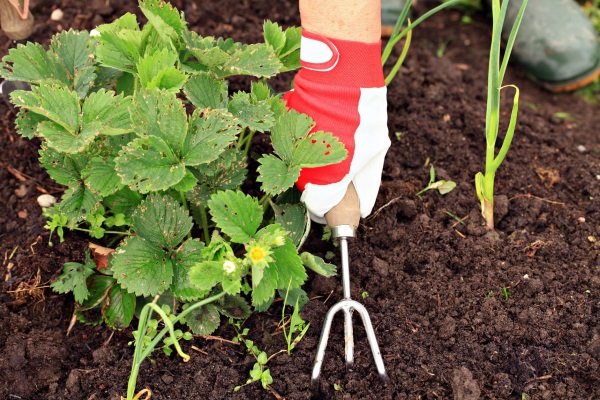
- Loosening the soil after watering
Prevention and control of pests and diseases
The Kupchikha hybrid is fairly resistant to various infections. However, if improperly cared for, the plant can be affected by white or brown spot, as well as gray mold. When the first symptoms appear, remove the damaged areas, and treat the remaining "rosettes" with copper sulfate, Bordeaux mixture, or any copper-containing fungicide.
Strawberry bushes can also be attacked by raspberry weevils and strawberry mites. Timely treatment of the bushes with insecticides and acaricides, as well as regular weeding, will help prevent these pests.
Reviews from gardeners
I bought seedlings at the market two years ago. The saleswoman convinced me to buy Kupchikha, enticing me with the fact that it was a new variety. I planted them like regular strawberries, without any special care. When it was time to harvest, I was pleasantly surprised by the number of berries, as well as their incredible flavor. This is the second year I've been planting exclusively this hybrid.
I'm an experienced gardener. I grow strawberries for sale and always try to keep an eye out for new varieties. I was initially skeptical about wild strawberries, but when I saw they were selling better than all the others, my attitude changed for the better. The buyer won't lie.
This new variety, which hit the market just two years ago, has already become popular among gardeners and homesteaders. Besides being easy to grow, this hybrid boasts excellent flavor, which received top marks from the tasting panel.