
Growing strawberries in pipes: features of the method
Content
Advantages and disadvantages of the method
Growing strawberries in pipes offers many advantages over traditional planting methods, but it also has one significant drawback: the cost. To plant strawberries in these structures, you need to purchase PVC pipes and the necessary supplies. It's a good idea to have scraps left over from construction or renovations that can be used to create the bed; this will significantly reduce costs.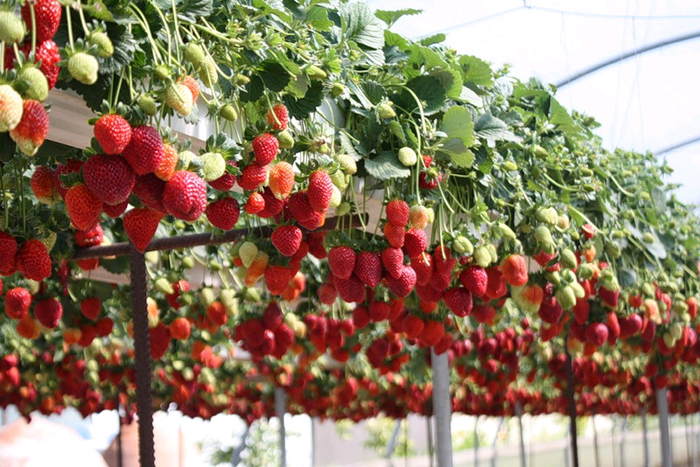
The following advantages can be noted:
- economical use of planting areas - with proper placement of structures (in layers, tiers, vertically), the yield from 1 m² of area can be equal to the amount of crop grown on 100 square meters of a regular garden bed;
- mobility – if desired, such a bed can be easily and quickly moved to another location or storage room;
- no need for soil cultivation: removing weeds, loosening, mulching;
- always clean and healthy berries, since they have virtually no contact with the ground;
- The opportunity to decorate the landscape space of the site - unusual beds with hanging fragrant berries can become a garden decoration, a hedge.
Video "Vertical Growing"
This video will show you how to grow strawberries vertically.
Necessary materials
To set up strawberry beds you will need the following materials:
- pieces or cuttings of pipes with a diameter of 15-20 cm for the external structure - their quantity depends on the desired size of the beds;
- thin pipes (2-5 cm in diameter) for supplying water to the beds;
- plugs corresponding to the pipe diameter;
- covering material (burlap, geotextile);
- tool for cutting holes (drill, knife);
- drainage material (expanded clay, small gravel);
- fastening material (rope, tape, pipe fasteners).
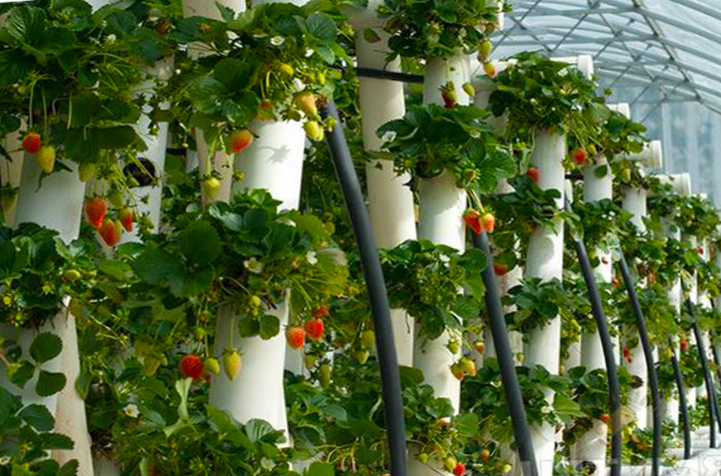
You should also think about the soil mix in advance. Of course, you can use soil from your garden, cultivate it, and fertilize it, which is perfectly acceptable for such beds. However, if you plan to purchase ready-made soil or hydroponic material, this will incur additional costs.
Manufacturing of a vertical structure
A bed where strawberries are placed vertically in a pipe is made using the following technology:
- Wide pipes are cut to the required length, and thin ones are cut 10-15 cm longer than wide ones.
- Holes 8-10 cm in diameter are cut into the wide pipes at intervals of 20 cm—these are where the strawberry seedlings will be planted. In the section of the pipe that will be located at the bottom, the bottom hole is cut at a height of at least 25 cm to avoid contact with soil-dwelling pests.
- In the inner pipes (thin ones), holes of smaller diameter (1-3 cm) are made along the entire length at a distance of approximately 10 cm - through them water will flow to the plants.
- To prevent the holes from becoming clogged with soil, thin pipes are wrapped in burlap, which is secured with rope or tape.
- The narrow pipe is placed in the middle of the large one, and the end that will be at the bottom is closed with a plug.
- Expanded clay is poured into the bottom of the pipe to provide drainage and stability. The space between the pipes is filled with soil mixture, while seedlings are planted.
- The end of the narrow pipe is connected to the water supply.
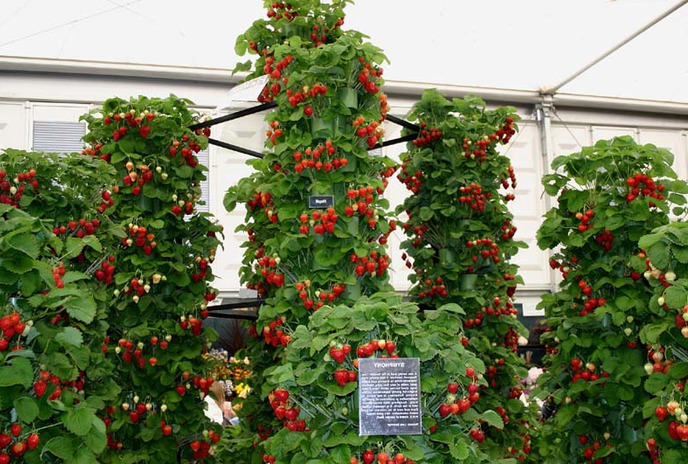
At this point the work can be considered complete.
It is important to know that strawberries in a vertical pipe can only produce a harvest if the bed is positioned correctly. It is recommended to install the structure so that the holes with seedlings are located as far as possible on the south side.
Making a horizontal bed
In general, a horizontal bed is made in the same way as a vertical one, but the process itself has some differences:
- plugs are installed on both sides of the outer pipe;
- holes for seedlings are cut along the entire length of the profile, but only on the top side;
- the water supply can be installed anywhere, either at the edge or in the middle of the structure;
- drainage made of expanded clay is poured into the lower part of the pipe, and soil is poured on top of it;
- It is advisable to make a small hole in the center of the structure to remove excess moisture.
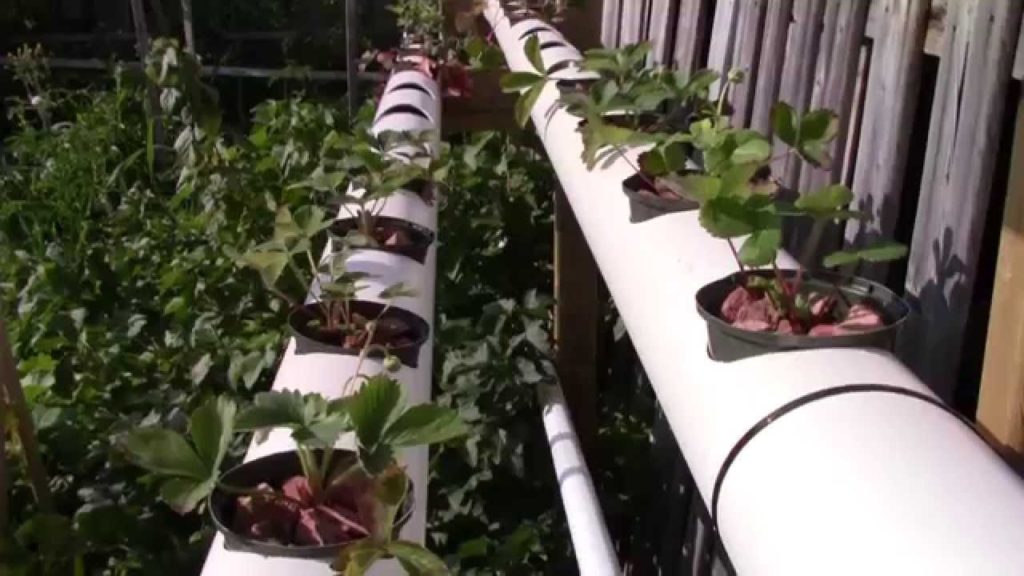
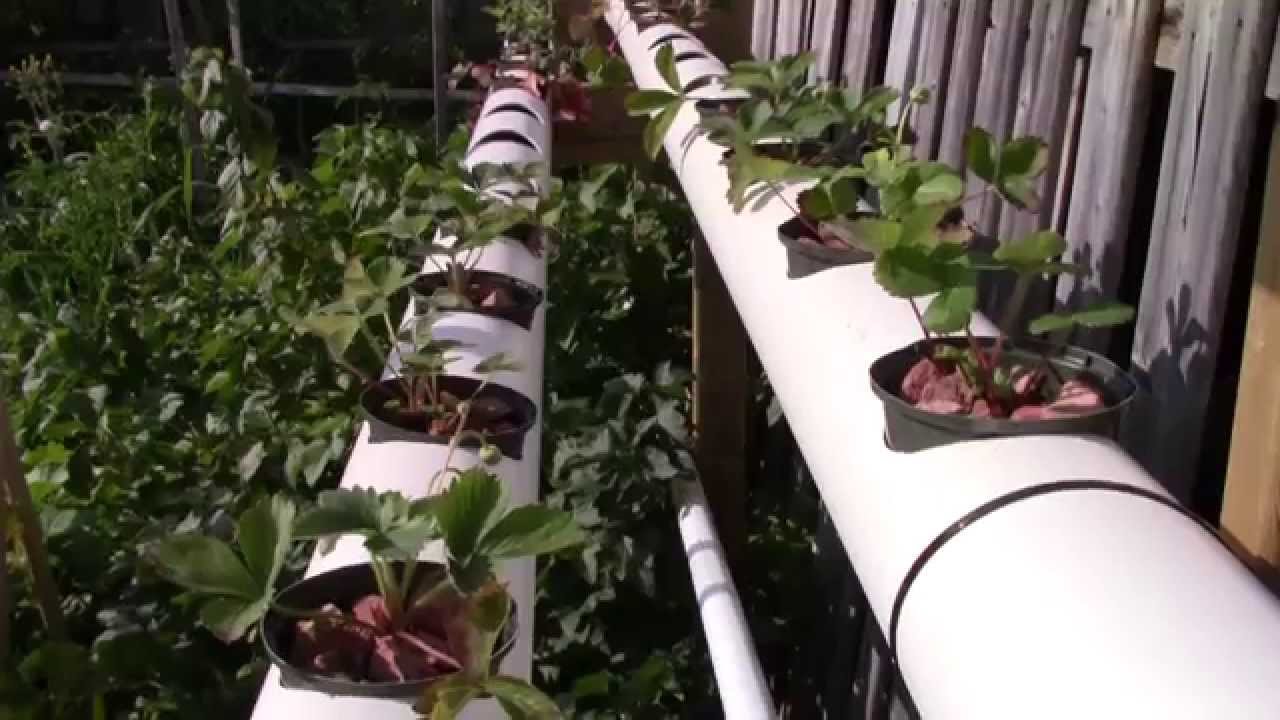
Horizontally placed garden beds increase the risk of rotting. To prevent this, it's recommended to add more drainage materials (coarse sand, sawdust) to the soil, as well as wood ash, which disinfects the soil and prevents rotting.
Landing features
Growing strawberries in a pipe is much easier if you use everbearing varieties. Their advantage is that they bear fruit in waves throughout the warm season, and their lush growth will become a true highlight of the landscape. Planting strawberries in horizontal pipes is done using the traditional method (just like in regular soil).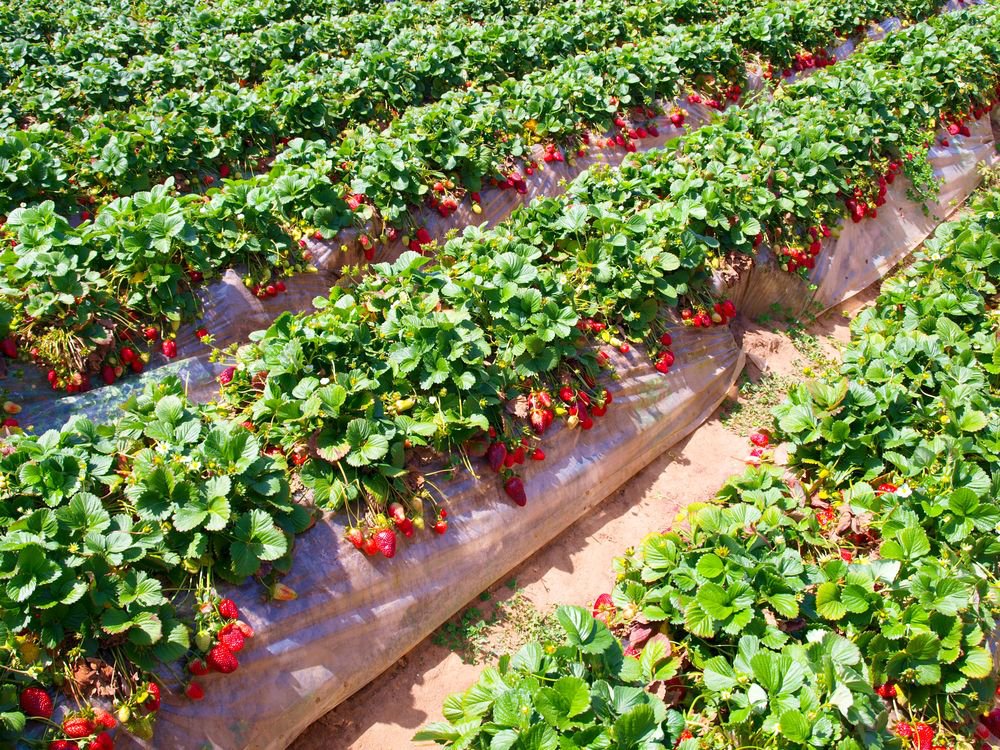
In a vertical garden, seedlings should be planted as the soil fills the tube. Otherwise, if you fill the tube with soil first, it will start to spill out through the holes. When planting vertical beds, it's recommended to plant calendula, marigolds, or other strongly scented flowers at the bottom—this will help repel harmful insects from the strawberries.
Care Features
Further care of the strawberry bed won't take much time or effort. If all recommendations were followed during planting, the plants will be disease-free and insect-free, so preventative treatments are unnecessary. All that remains to be done throughout the season is watering and fertilizing the strawberries, but these can be combined. Watering and fertilizing have their own specific considerations in this case:
- since the plants are somewhat cramped in conditions, for normal fruiting they need to be fed more often than usual - about once a week;
- The bed also needs to be watered frequently because soil dries out more quickly in a small volume. The need for watering can be easily determined by touching the soil with your hand. As a rule, garden strawberries need watering about once a week.
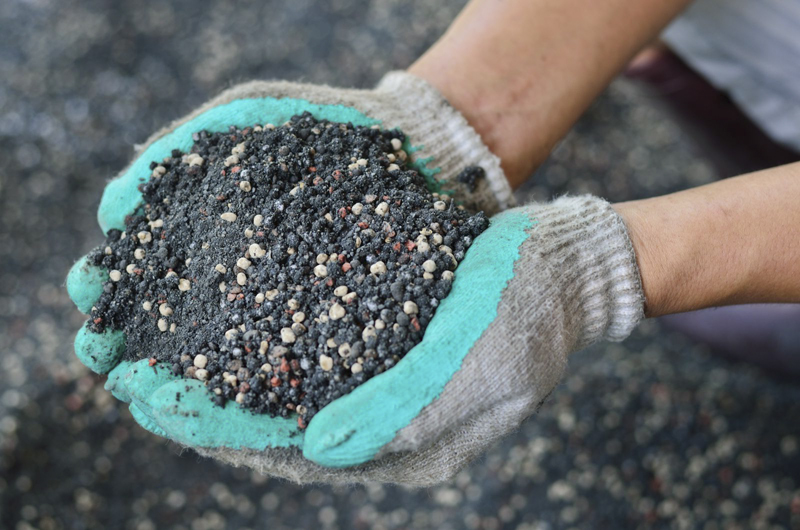
When combining fertilizing with watering, the nutrient solution is supplied through pipes. To prepare it, you can use ready-made complex fertilizers for garden strawberries or dilute the organic matter with water in a ratio of 1:10.
Preparing for winter
It's important to understand that there's very little soil in these structures, and the plastic profile doesn't retain heat, so strawberries in PVC pipes will simply freeze in winter.
The ideal way to preserve a strawberry bed is to move it indoors for the winter. If this is not possible for some reason, the pipes containing the overwintering plants should be tightly wrapped in spruce branches, then secured with wire or strong rope.
It is not recommended to use straw and hay for shelter, as mice often breed in these materials.
Video "Wintering"
From the video you will learn what to do with strawberries in winter.