
Growing strawberries at home all year round: varieties and methods
Content
Technology for breeding
Growing strawberries in greenhouses and indoors year-round can be a profitable business if you establish a continuous process and increase production. Several new commercial strawberry growing methods have emerged in recent years, but for home use, the Dutch method, based on growing strawberries exclusively indoors and efficiently using small spaces, remains the most suitable.
For those unfamiliar with this technology and unsure how to grow strawberries in a small space while maximizing their yield, it's important to know that the method is quite simple. It involves regularly planting new seedlings, which ensures a continuous harvest even during the cold winter. Of course, this can only be achieved by creating favorable conditions for active growth, flowering, and fruiting.
Commercial berry cultivation using Dutch technology involves the use of a permanent greenhouse with a full set of equipment, providing supplemental lighting, drip irrigation, and humidity and temperature regulation. Additionally, a sufficient number of seedlings must always be available, which are planted to replace old bushes (after fruiting ends, the bush is simply discarded). This type of venture requires financial investment, but its profitability is so high that all costs are recouped within the first few months.
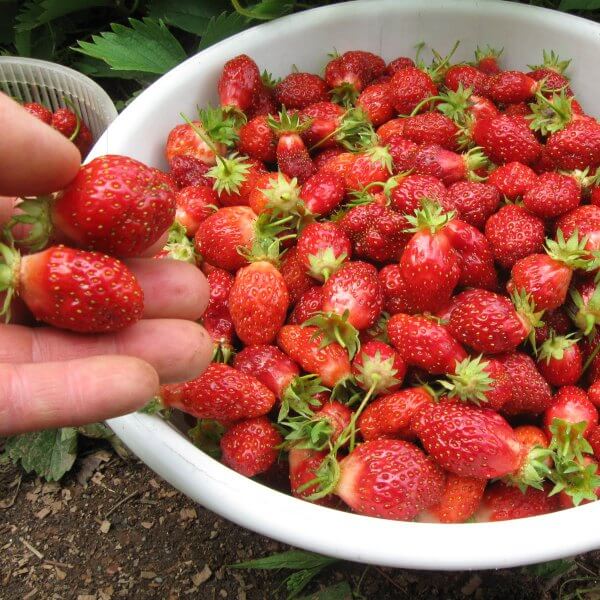
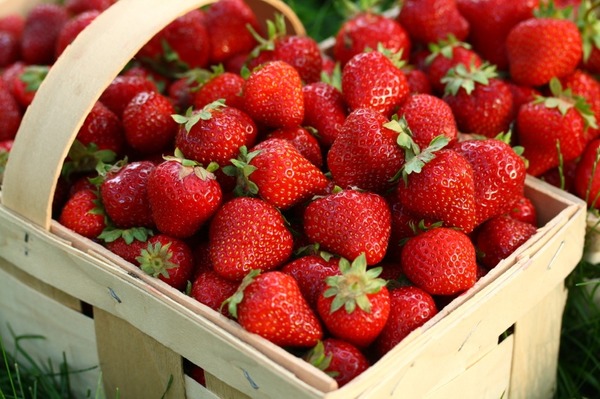
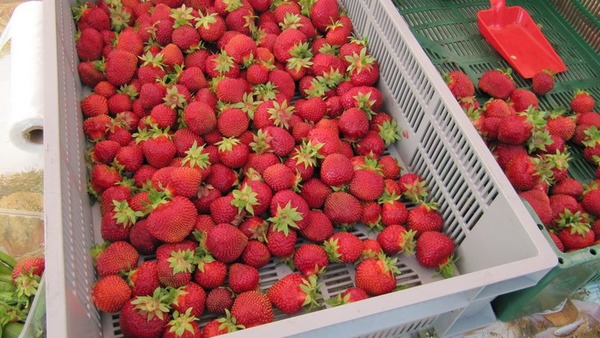
If you're not planning to plant strawberries in large quantities, but rather just want to grow a few pots on your windowsill for personal use, the Dutch method can also be useful. Growing strawberries at home in small containers requires no additional investment other than purchasing seedlings or seeds, as well as the growing medium and pots. Assess the usable space you plan to grow year-round and decide on the layout of the containers. The Dutch method allows for planting seedlings in any container, even plastic bags, which are easy to hang vertically.
Video "Growing at Home"
This video will show you how to grow strawberries at home and get a good harvest.
Selection of seedlings
To harvest strawberries continuously, you need to plant new seedlings regularly (once every 1.5-2 months), so you have to buy them or grow them yourself. While growing your own seedlings is certainly more cost-effective, as they're much cheaper than store-bought ones, it also requires a fair amount of effort. You can grow seedlings from seeds or prepare them during the summer if you have a garden bed.
The simplest method is to root the rosettes that form in summer on the runners of the mother plants. In the fall, the young plants are dug up from the main planting and placed in a cool place (0 to +2°C). Under these conditions, the seedlings can be stored for up to nine months, allowing for continuous planting. If you don't have a planting site, seedlings can be grown from seeds, but this process takes longer and requires a lot of attention.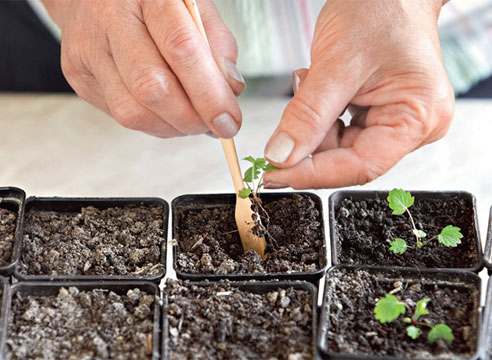
Another popular method for producing high-quality seedlings is cassette growing. This involves placing already cooled seedlings in plastic containers filled with a nutrient solution. With the cassette method, roots grow very rapidly, literally by the hour, and within 4-5 weeks the container is completely filled with roots. Without a doubt, such seedlings are very strong and therefore produce a good harvest.
Varieties for greenhouses
For year-round greenhouse cultivation, choose everbearing varieties that set fruit under neutral daylight conditions. This characteristic ensures intermittent flowering and fruiting throughout the season, which, with regular planting of seedlings, ensures continuous fruiting. For indoor cultivation, everbearing trailing varieties are more suitable; they will not only yield a bountiful and continuous harvest but also add a decorative touch. Most trailing varieties spread beautifully and can also be planted in hanging baskets.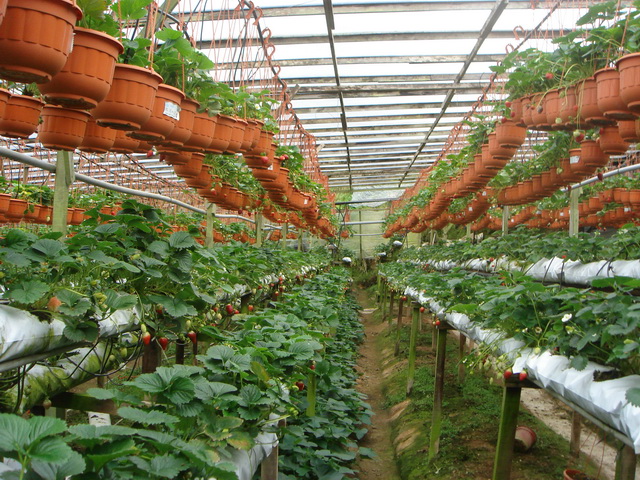
Whatever variety you choose, it must meet the following characteristics:
- be self-pollinating, otherwise you will have to do this procedure manually;
- have high immunity to diseases and temperature changes;
- have a short growing season (ripen early);
- be large-fruited (the larger the berries, the higher the yield).
There are many varieties that simultaneously possess all of these qualities: Ananasovaya, Selva, Honey, Queen Elizabeth, Geneva, Darselect, Arapaho, Tribute, and from domestic ones: Moskovsky Delikates, Sakhalinskaya and others.
Preparing plants for planting
Before planting seedlings in a greenhouse or pots, they need to be grown and develop a good root system. To do this, young bushes are transplanted into boxes or pots filled with a substrate, where they are forced. For more vigorous growth, the top layer of soil should be fertile and always moist. In open ground, young rosettes can be transplanted to another area, a so-called nursery, where the plants will develop foliage and a root system.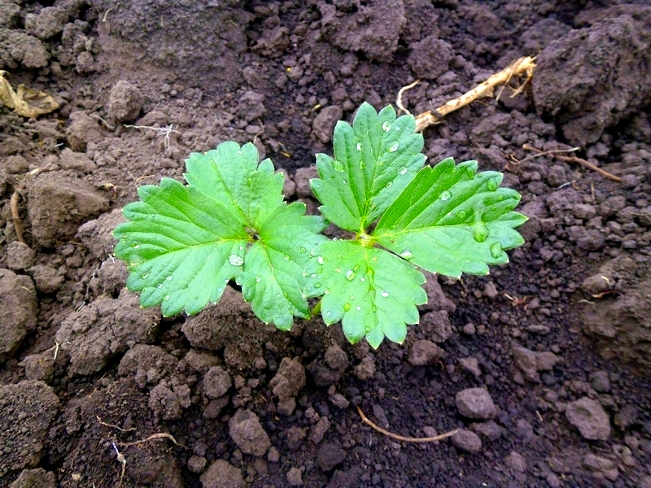
When the temperature drops to 0°C, the seedlings are dug up, the leaves removed, and the roots placed in a nutrient-rich substrate and stored in a cool place (cellar or refrigerator). They remain dormant for several months before being planted in a greenhouse. Cold storage of seedlings is a key requirement for successfully growing strawberries using the Dutch method. Its effectiveness lies in the fact that when placed in warm conditions (a greenhouse), the seedlings quickly awaken and begin to grow vigorously, leading to early flowering and ripening of the berries.
Growing vertically
Vertical gardening significantly saves space and is therefore considered the most efficient. This method involves arranging the beds vertically: in layers, tiers, pyramids, or by hanging them. Various materials can be used as planting containers: pieces of PVC pipe, polyethylene bags, plastic containers, and wooden crates. 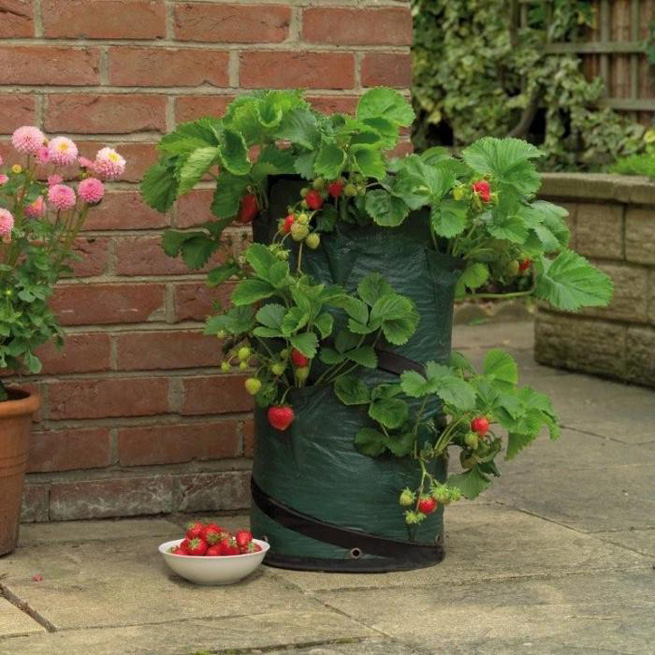 There is nothing complicated about adapting all these containers for growing strawberries:
- bags or packages need to be filled with substrate, holes should be made at a distance of 20-25 cm in a checkerboard pattern, seedlings should be planted in them and hung up;
- Containers and boxes can be arranged in tiers or pyramids, and the protruding parts can be filled with substrate and bushes can be planted.
A vertical garden bed made from PVC pipes is a separate project. Building it requires materials, and the process itself is time-consuming and labor-intensive. You'll need pipes: large (15-20 cm in diameter) and thin (about 5 cm), as well as fasteners, plugs, and other small items. Holes at least 10 cm in diameter are drilled in the large pipe at intervals of 20 cm—these are where the seedlings will be planted. Small holes (2-4 cm) are drilled in the thin pipe; the thin pipe is placed inside the wider pipe and used to ensure uniform watering along the entire length of the structure.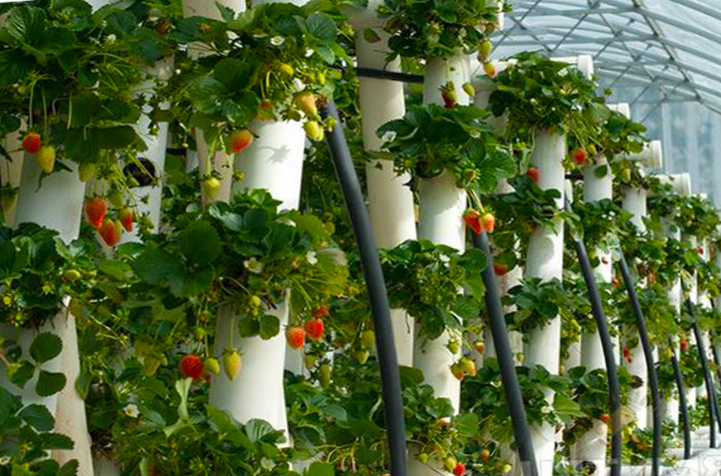
Next, drainage and soil are poured into the space between the pipes, after which seedlings are planted in the holes. The bottom of the pipe is capped, and water is supplied to the thin (inner) pipe at the top. This ensures even watering of the strawberries and produces a bountiful harvest. Besides taking up little space, the pipe beds are also very decorative.
Growing at home
Strawberry cultivation can be done year-round indoors on a balcony or windowsill. Any unused containers can be used for planting seedlings, but flower pots, of course, look the most impressive. Choose a pot with 3 liters of soil per plant. Place drainage at the bottom of the pot, then add a soil mixture consisting of 5 parts compost and 3 parts leaf mold. Hydroponics is convenient for indoor growing. Coconut fiber is the best substrate, but mineral wool and perlite are also suitable.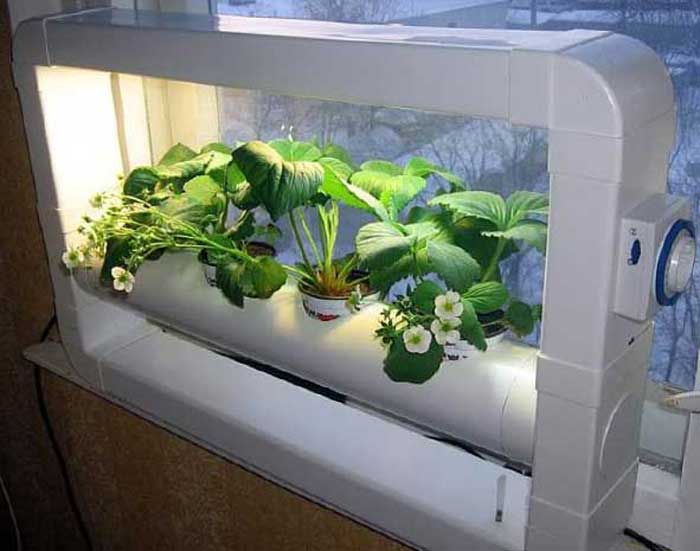
When planting in a large container, no more than three bushes should be planted. It's also important that all the bushes be of the same variety—mixed varieties will negatively impact the quality of the harvest.
Seedlings are not replaced as often as in greenhouses: regular remontant bushes require renewal once every six months, and trailing varieties - once a year.
Plant care is standard, but strawberries should be watered exclusively using a drip system (used in medical applications). Trailing varieties require supports and tying, as their long vines grow very quickly. So, with a minimal investment of time and effort, you can grow a veritable garden of fragrant berries on your windowsill.
Video: "Year-Round Growing"
This video will show you how to grow strawberries all year round.