
Proper strawberry care in spring is the secret to a good harvest.
Content
Preparing garden beds in spring
Spring strawberry care at the dacha begins immediately after the snow melts and the soil dries. The fall coverings are removed first in the spring. After this, all debris is cleared from the plot, and the crops are cleared of last year's leaves. Old runners and dried flower heads are trimmed. Spring strawberry care also includes removing dead vines. Only then can the seedlings be planted in unprotected soil.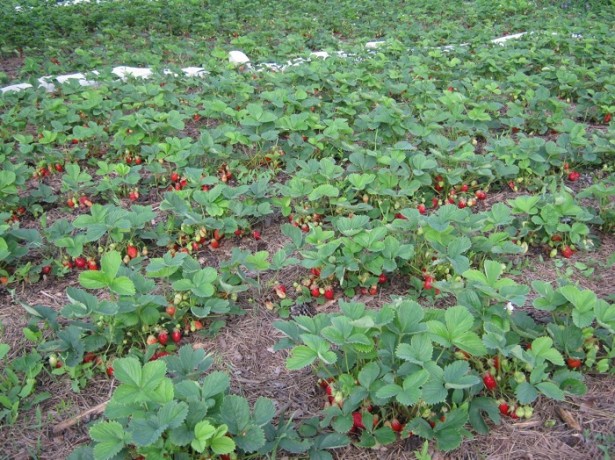
Dead plants should be removed from the beds. New ones should be planted in their place. Planting should be done as quickly as possible to allow the new plants time to establish themselves before the hot weather sets in. The strawberry patch needs to be loosened, but not so as to damage the roots. Spring strawberry care also includes renewing the mulch, if any. Mulch can be made from pine needles, sawdust, or wood ash. This procedure will help prevent certain pests, such as slugs, from settling in the area.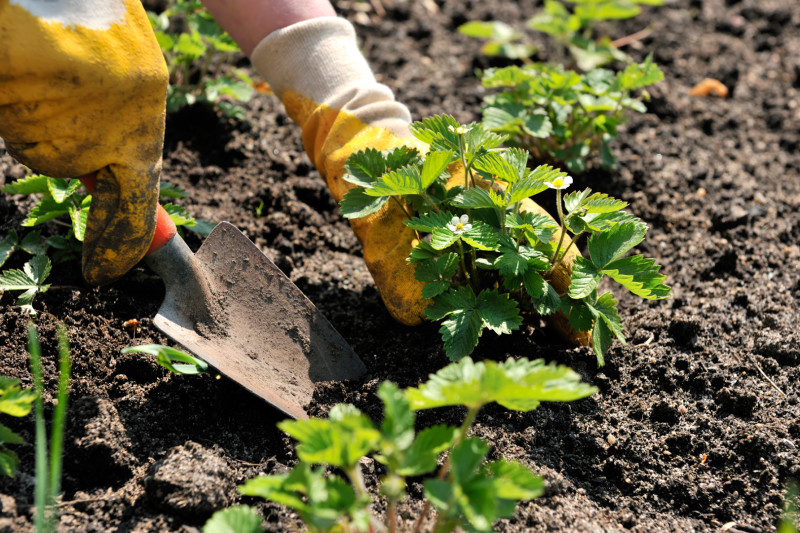
Cut leaves and dried grass should be burned, as this is the best way to combat last year's diseases and drive out pests. Clean bushes should be treated as a preventative measure. Spraying with Bordeaux mixture or another copper-containing solution is best. This treatment is repeated twice in the spring.
Video "Spring Fertilization"
This video will show you how to properly fertilize berry beds in the spring.
Spring feeding
Growing and caring for strawberries are inseparable. Only with proper watering and fertilizing can you reap a bountiful harvest. Spring is the time when fertilizer is especially necessary for the berries. It will help them recover more quickly from the winter and produce new buds. However, fertilizing will only be beneficial if applied at the right time and in the right amount. An excess of nutrients will make the plant grow to a gigantic size, but such plants will bloom significantly later and produce less fruit.
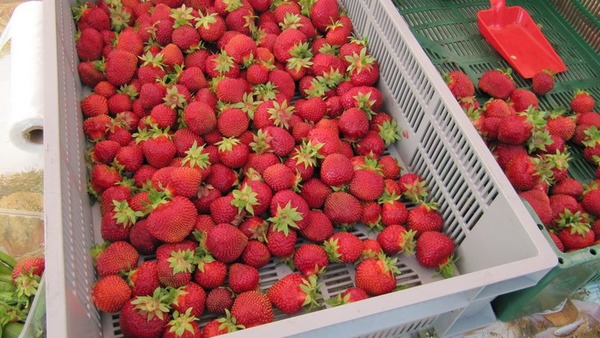
Fertilizing young bushes
Young strawberries planted last year can be fertilized without any fertilizer in the spring, or they can be fed with a solution of a bucket of water, half a liter of chicken manure or cow dung, and a tablespoon of sodium sulfate. Water each bush with this mixture, 1 liter at a time.
Fertilizing mature bushes
After 2-3 years, the soil loses fertility, and the plant experiences nutrient deficiencies. Therefore, to reap a bountiful harvest, you need to know how, when, and with what to treat strawberries. In the spring, the crop needs to be treated three times:
- after the formation of a couple of leaves;
- before flowering;
- during the period of active fruit formation.
The first time to apply nutrients is at the end of April. Depending on the region and climate, the timing may vary. At this time, it's best to apply organic matter, such as cow manure or chicken manure. Sprinkle it under the roots of each bush and cover it with soil (2-3 centimeters). Alternatively, you can prepare a liquid solution. To do this, dilute a liter of manure in a bucket of water. Water each plant with this solution.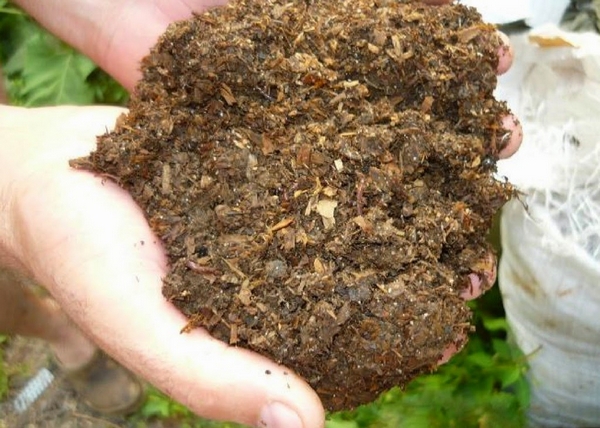
Yeast is a good option for fertilizing. It typically contains a variety of beneficial substances, including proteins, amino acids, and micro- and macronutrients. Yeast, when used as a fertilizer, will help the plant grow and the roots firmly establish themselves in the soil. Dissolve 0.2 kilograms of baking yeast in half a liter of water and let it sit for 20 minutes. Then, pour the mixture into a container with 9 liters of water. Water each plant generously with the mixture.
Growing and caring for large-fruited strawberries in spring involves fertilizing during flowering. During this period, it's a good idea to provide the plant with minerals.
These substances have a significant positive effect on the taste and size of the berries. As a result, the strawberries will be sweet and large.
The next application of fertilizer is best done after flowering has finished. During this period, the plant is watered with a solution consisting of 2 tablespoons of nitrophosphate, 1 tablespoon of potassium, and a bucket of water. Each bush is watered with this solution at the root. Only half a liter of the mixture is needed for each plant.
Today, the market offers a wide range of mineral fertilizers, easily purchased at specialized retailers. However, they should only be used according to the instructions on the packaging. Any failure to follow these instructions can damage the plant or make its fruit unusable. Particular attention should be paid to the fertilizer dosage and never exceed it.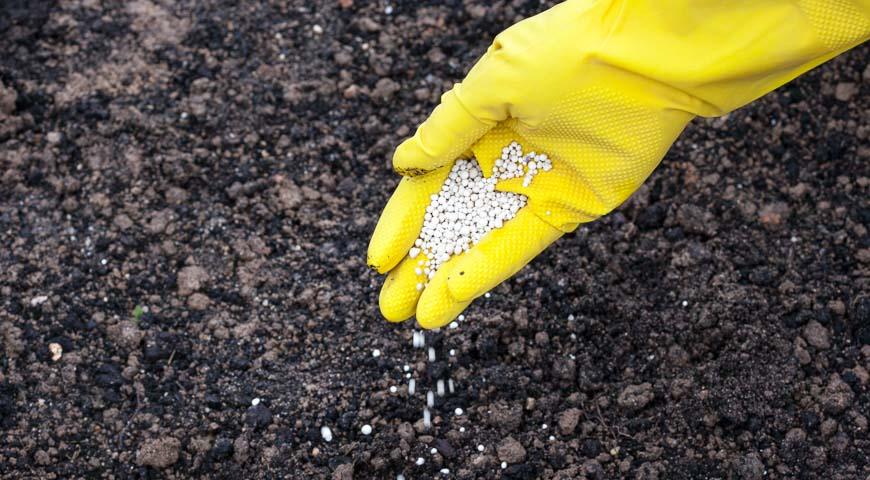
Early spring strawberry care involves a third feeding with a weed infusion. After weeding, the weeds are collected, crushed, and soaked in water. This solution should be left to steep in a warm place for at least a week, after which the berries should be watered with this prepared solution. Every experienced gardener knows that this fertilizer is completely harmless to both the crop and humans. This fertilizer will help increase the yield and improve the taste of the fruit. Weed infusion can reliably protect strawberries from certain pests. Nettle infusion is an excellent alternative to weed infusion.
Foliar feeding
Strawberry care in spring: advice from experienced gardeners suggests that in spring you can fertilize not only the strawberry root but also the berry bush itself.
Growing strawberries involves spraying the plants with a nitrogen-containing solution or organic matter. This fertilization positively impacts crop growth and increases fruit set. Spraying helps the beneficial solutions be absorbed directly into the leaves, accelerating the beneficial effects.
It is best to spray the bush in the evening, when there is no wind or precipitation.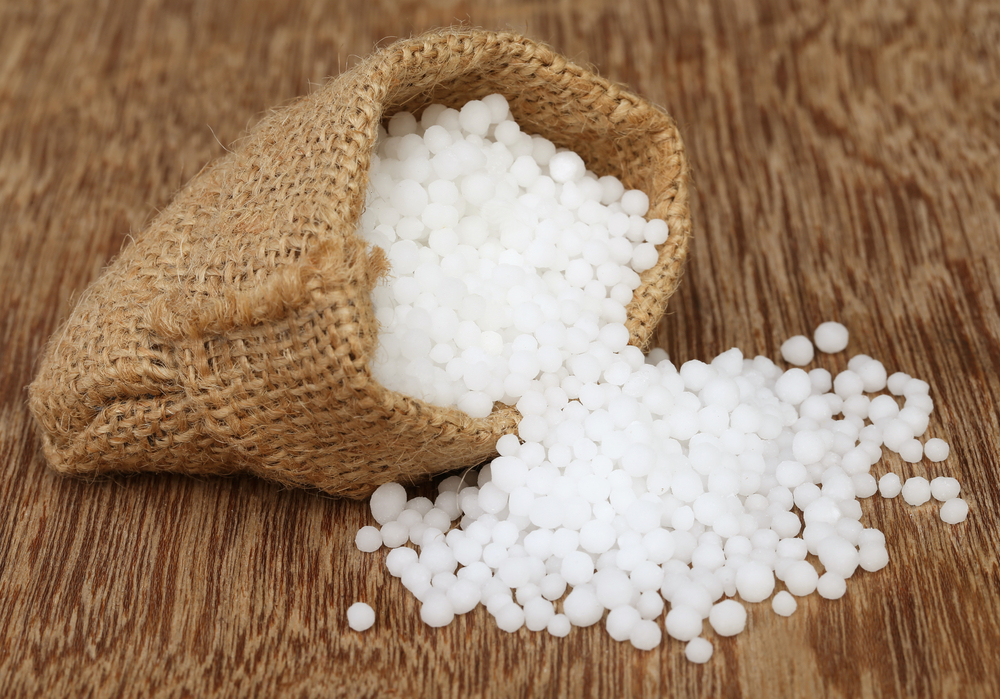
Mineral fertilizers come in two types: highly mobile and low-mobility. The first group typically includes phosphorus, potassium, magnesium, and nitrogen. They are readily absorbed and reach the plant's roots, leaves, and buds. The second group includes iron, boron, copper, and manganese. These substances are absorbed more slowly and don't produce results as quickly. Therefore, spraying must be done carefully to ensure the nutrients reach their intended destination.
So, a summer cottage is an excellent option for growing strawberries. But only if the gardener knows what to do with strawberries in the spring. Growing strawberries has its own peculiarities, which anyone who decides to grow them should be aware of.
Video "Leaving"
From the video you will learn how to care for strawberries.