
The best varieties of everbearing strawberries
Content
Features of cultivation
It's worth clarifying right away what does "everbearing" strawberry mean? Literally translated from French, the term "everbearing" means "repetition" (of flowering or fruiting). In this context, it can refer to multiple fruiting of a crop. A single strawberry bush can produce several harvests during the growing season, regardless of daylight hours.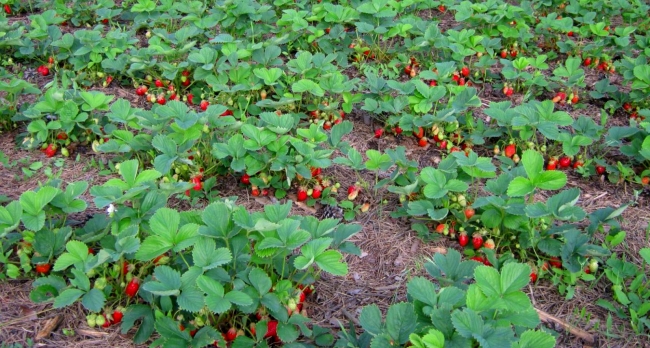
Strawberries are sometimes called garden strawberries, but the everbearing varieties are slightly different. What is an everbearing strawberry? It's almost identical in appearance to strawberries, except for the small size of the fruit and its distinctive strawberry flavor. These plants can be planted anywhere: in greenhouses, in garden beds, or as potted plants indoors.
Technically, the cultivation of everbearing strawberries is similar to that of regular strawberries, but there are distinctive features that are of great importance for the successful cultivation of the crop:
- Depending on the variety, everbearing strawberries bear fruit in waves (2-4 times/season) or all year round. It is important to understand that any plant needs a dormant period, so even indoor bushes need to be prepared for winter and given the opportunity to rest for at least a few months;
- The main formation of strawberry fruit buds does not occur during short daylight hours, as with conventional varieties, but during long, neutral days, so you need to be prepared for late harvests, which cannot always be preserved due to winter cold snaps;
- For better fruiting next year on a remontant bush, it is recommended to remove flowers from the last (autumn) flowering;
- A higher yield can be achieved by growing the crop in a greenhouse, since under favorable conditions the bush can bear fruit almost continuously;
- An excessively abundant harvest can lead to the death of the bush (the plants may simply become depleted), to prevent this from happening, it is recommended to pick off some of the inflorescences;
- Almost all remontant varieties are grown from seedlings, and the ideal option for obtaining seedlings is shoots from the mother bush.
-
Video "Best Varieties"
From this video you will learn about the best strawberry varieties.
Planting and care
Everbearing varieties tend to grow vigorously and branch, so space for planting young plants is essential. The optimal planting pattern is 3-4 plants per square meter.
New seedlings are planted in the ground at the end of summer, by which time they are already fully formed. Strawberry care is standard: watering, weeding, and fertilizing. Fertilizers are applied as for regular strawberries—mineral mixtures or organic matter between the rows or during watering.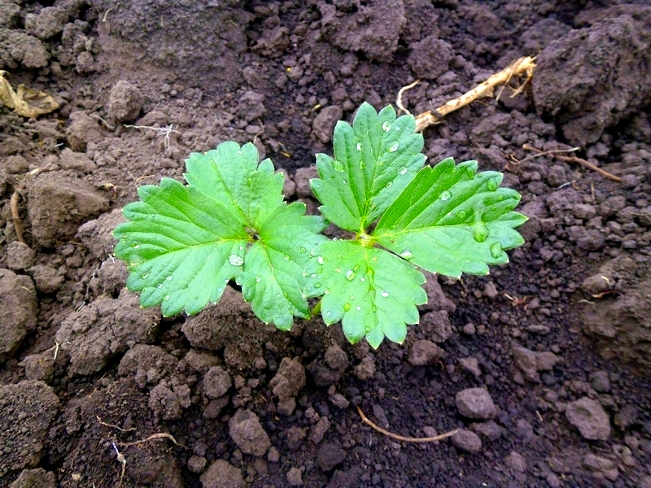
Everbearing varieties are usually mulched. Mulch not only retains moisture but also prevents contamination of the berries, which usually lie in clusters on the ground. The bushes should be removed for the winter; with the arrival of spring, they will quickly grow back and produce flower stalks. In cold and temperate climates, the bed is covered with organic mulch before wintering: sawdust, leaves, or straw. Indoor strawberry plants should be pruned during dormancy.
Reproduction
Strawberries or everbearing strawberries are propagated in two ways: vegetatively and by seeds.
Growing a full-fledged bush from seed is a painstaking process and not always successful, but the advantage is that if successful, you get perfectly healthy young plants. The easiest way to propagate is by runners, which continually form on the mother bush.
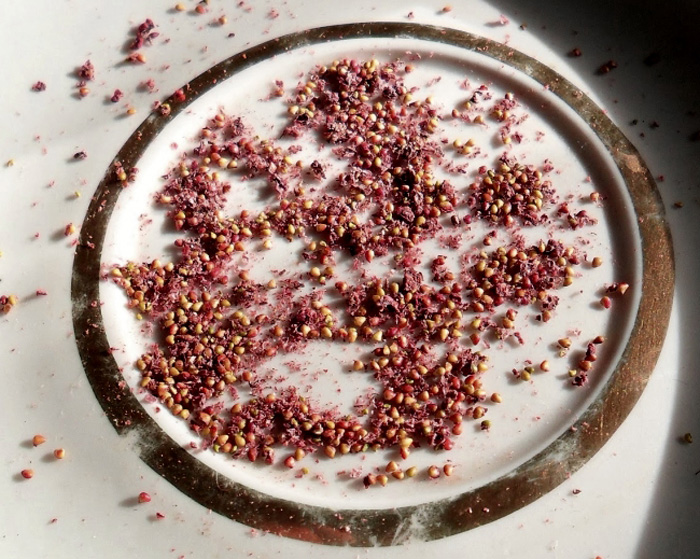 The advantage of this method is that it preserves the valuable varietal qualities and external characteristics of the fruit. However, among everbearing varieties, there are those that do not form runners. For these, propagation by seed and division is an acceptable method.
Transfer
Everbearing strawberry varieties are best replanted in late summer or early September. This is the optimal time for the young plants to establish themselves before the cold weather sets in. Replanting is done by separating the runners from the mother plant and then transplanting them to their permanent location.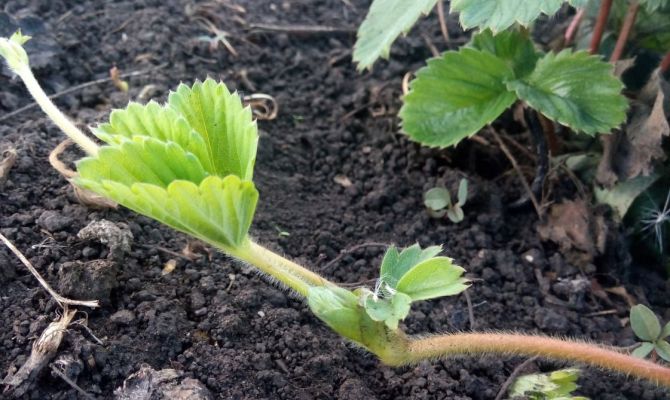
All flowers on a transplanted plant should be removed before frost sets in. When replanting strawberries grown indoors, the same rules and timing should be followed.
Strawberry varieties
Today, everbearing strawberries are represented by a large number of cultivars and hybrid forms, differing in their external varietal characteristics (whipping or runnerless), fruit characteristics (large-fruited or small-fruited), resistance to external factors, and other attributes. However, among this diversity, the most sought-after are the high-yielding varieties, which not only produce abundant fruit but are also renowned for their excellent berry flavor.
Albion
A unique, relatively new (2006) American-bred variety, designed for year-round fruiting. Peak ripening occurs in late May, early July, and August, and then in late September. Albion strawberries are large (up to 60 g), oblong-conical in shape, and dark red with a glossy surface. Originally intended for commercial cultivation in its native land, the Albion variety produces firm, dense berries that are easy to transport.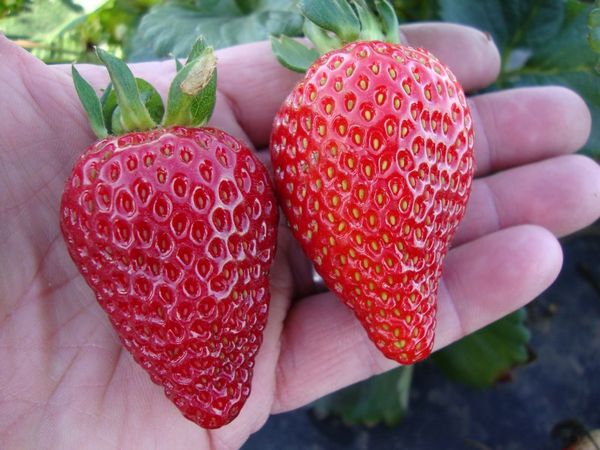
Albion strawberry plants are extremely resilient to temperature fluctuations and drought, producing excellent yields in any conditions. In our climate, the flavor of these strawberries differs slightly from the original, but the berries remain firm and sweet, making the Albion variety ideal for jam and other preserves.
Queen Elizabeth
One of the most common everbearing varieties both in our country and abroad. Everything about this strawberry is excellent: yield (up to 1.5 kg/plant), berry size (60-100 g), excellent transportability, year-round fruiting, and maximum resistance to disease, cold, and pests.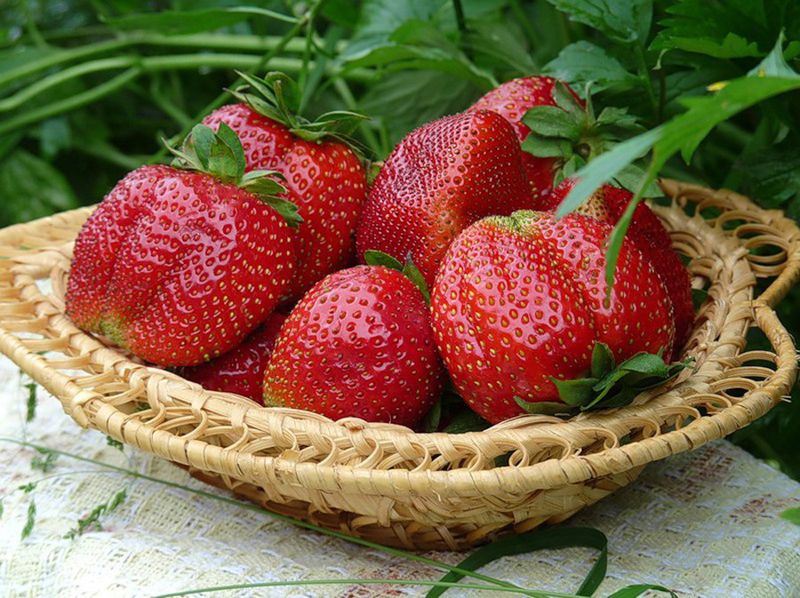
The plants are vigorous, with few tendrils. The berries are attractive and have a delightful flavor: dark crimson, shiny, juicy, and very sweet.
Lyubava
A worthy competitor to the previous variety, the Lyubava strawberry is also undemanding and just as productive and delicious. The berries are small (30-40 g), but due to the large number of them per bush, the yield always remains high. The flesh is a rich red, the texture is firm, and the flavor is delicious, like a dessert.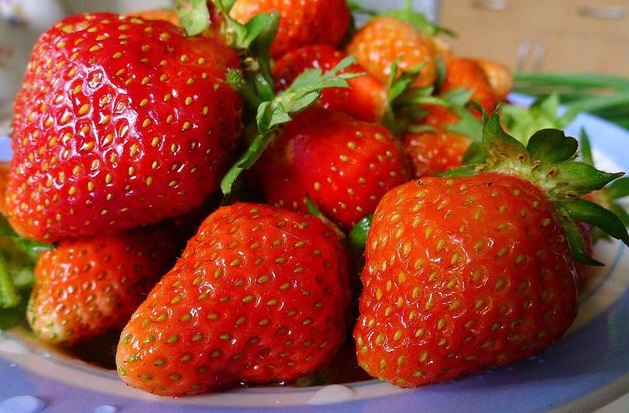
Above, we presented three of the most famous and productive varieties, but we shouldn’t ignore other equally productive and interesting hybrids:
- hybrid strawberry Kapelka Leta F1, a variety that easily propagates by runners, bushes are compact (up to 30 cm high), fruiting is year-round, berries are bright red, weighing up to 35 g, can be grown in pots;
- Irishka F1 is an early-ripening, surprisingly winter-hardy hybrid with year-round fruiting. Plants are up to 30 cm tall, without runners, the berries are dark red (up to 25 g), yield is up to 2 kg/1 bush;
- Sladkoezhka F1 is a large-fruited variety with deliciously sweet-tasting berries, resistant to diseases, compact plants, and can be grown as a potted plant;
- Grandian strawberry is a unique strawberry hybrid, bred in Holland, with continuous fruiting, hanging plants, can be grown in pots and planters, berries up to 25 g, deep red, very fragrant and sweet;
- Durban is another strawberry hybrid that bears fruit all year round. The berries are wide, conical, bright red, very sweet, transportable, and can be grown indoors;
- Zolotinka is a small-fruited variety, but its uniqueness lies in its incredibly sweet and aromatic berries of a yellow-cream color. The plants of this hybrid do not form runners at all and bear fruit continuously from the beginning of June until the first frosts;
- Koketka is an early strawberry hybrid for general use (preserving, commercial, fresh consumption). The berries are conical, weighing up to 25 g, juicy, with a slight sourness;
- Lyubasha is a remontant strawberry hybrid, included in the State Register of the Russian Federation, the fruits are small (10-20 g), conical in shape, very sweet (sugar 12-15%), the plants are runnerless, easily tolerate hot climates;
- Zarya is an early strawberry of domestic selection, the bushes are tall, the inflorescences are multi-flowered, the berries are 6-15 g, oblong in shape, light red, sweet and sour;
- Slastena is an early ripening, large-fruited (15-20 g) strawberry hybrid. The berries are dense, red, very sweet, plants up to 30 cm tall, resistant to weather conditions, but demanding of soil composition – they love organic matter;
- Hybrid strawberry Dream is an early, high-yielding variety that bears fruit year-round and has the highest resistance to external factors. The fruits have an original sweet taste and aroma, like a wild berry;
- Pink Dream strawberry is a variety of garden strawberry of Ukrainian selection, the bushes are tall (up to 45 cm), the berries are small (5-10 g), pinkish in color and incredibly sweet in taste;
- Renaissance is an early and most unpretentious small-fruited (up to 4 g) strawberry, bearing fruit from June to the end of September, the berries are intensely red, round in shape, very aromatic and sweet;
- Strawberry Nastenka F1 is an early-ripening hybrid for universal cultivation (soil, greenhouses, pots), plants are compact, bloom profusely, berries are medium-sized (about 25 g), very aromatic, sweet and sour;
- The Moskovskie Zori strawberry is a large-fruited, high-yielding garden variety with low bushes (up to 25 cm) and bright red, shiny, sweet and sour berries grown from seedlings.
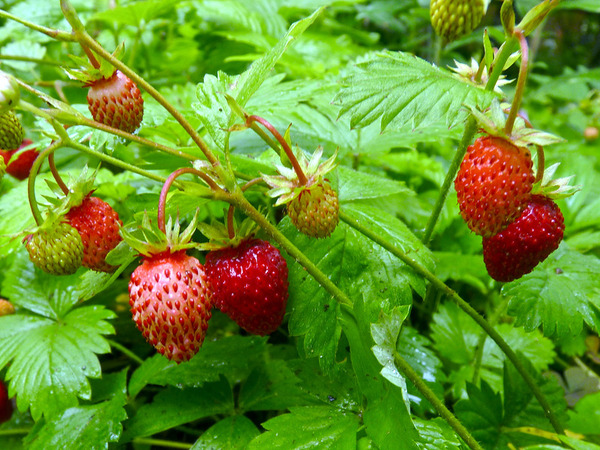
In conclusion, we can conclude that by growing everbearing strawberry varieties, you get not only a healthy and delicious product, but also the opportunity to decorate your home and garden, as these plants are unusually decorative.
Video "Growing"
From this video you will learn how to grow a good strawberry harvest.