
Planting strawberries in spring: choosing soil and site
Content
Selecting a site and soil
It is recommended to select beds facing north to south. The site should be protected, if possible, from northerly winds. In winter, the snow cover should normally be more than 20 cm.
Large-fruited varieties require ample sunlight. Small-fruited varieties can tolerate partial shade. Ideally, the site should have a southwest-facing slope. Avoid planting strawberries in low-lying areas where cold air tends to stagnate. Excellent predecessors to strawberries include cucumbers, cabbage, and nightshades. Strawberries can be returned to their original location after three years.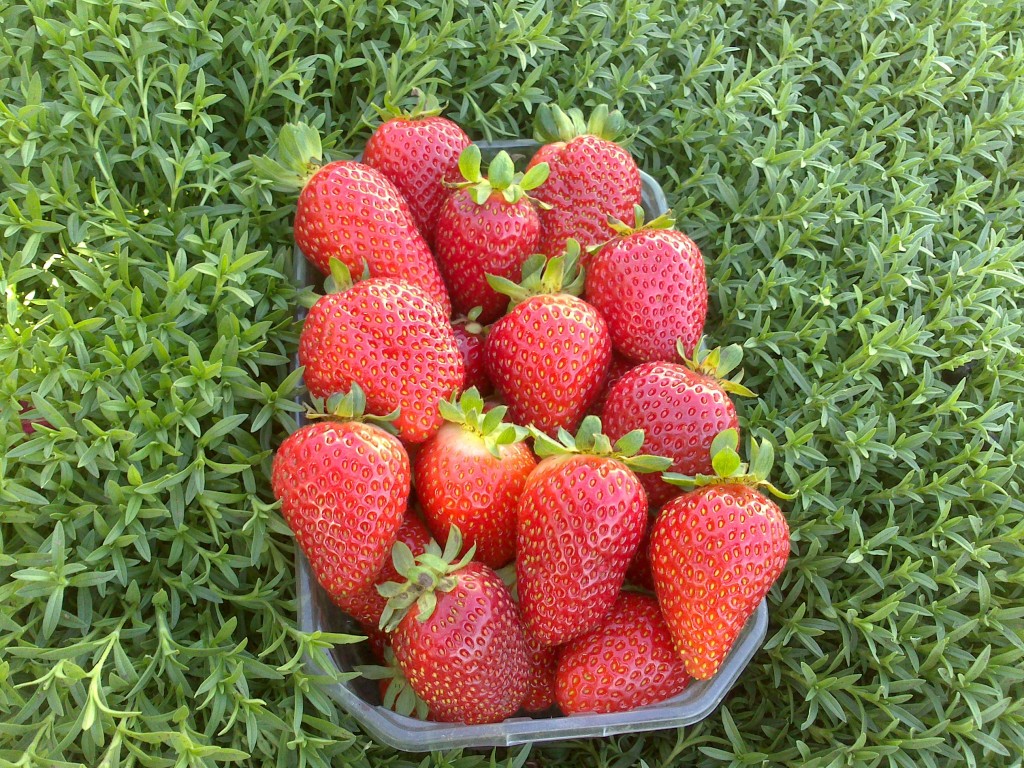
Groundwater should be no closer than 1 meter below the soil surface. Almost any soil will do. However, a site with moist, loose, organic-rich soil with a pH of 5.5 to 6.5 is preferred. If you plan to replant your strawberry planting in the spring, it's recommended to plant lupine, phacelia, or beans in the chosen spot in the fall. After frost, the green manure will become excellent biomass; it will rot, and the soil will release essential nutrients during digging. Dig holes and mix the soil with manure and compost in a bucket-size amount. Create mounds of the substrate into which the strawberries will be planted in the spring.
Video "Planting Strawberries"
This video will show you how to plant strawberries correctly.
Correct fit
Experienced gardeners and beginners alike always want to know how to plant strawberries correctly in the spring. It's best to plan this work on a day with overcast or cloudy weather, preferably in the evening.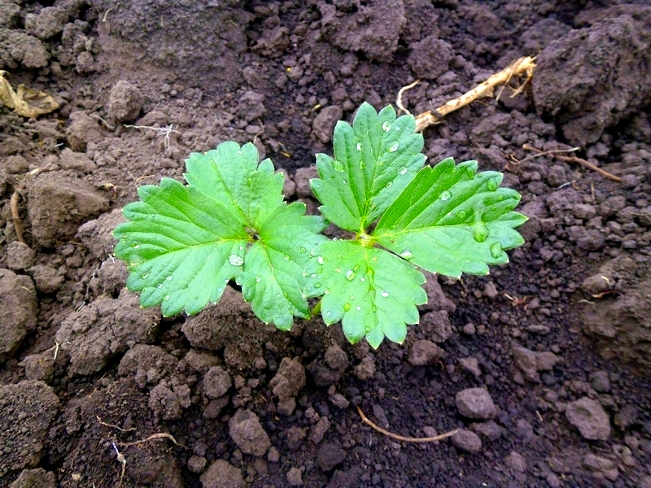
Before planting the seedlings, 70-90 grams of nitrogen fertilizers, the same amount of magnesium, 50-60 grams of potassium salts, and 40-60 grams of superphosphate are added to the soil per square meter. The roots of the seedlings must be treated with a saline solution. This solution is prepared from 30-40 grams of salt with up to 7 grams of copper sulfate added. Dissolve the solution in 10 liters of water. The roots should be soaked for 20-25 minutes. Then, rinse them with water, trim them to 5-8 cm, and plant them vertically in the holes. The root collar should remain at ground level. Firm the root collar by hand, water, and mulch the area using pine needles, sawdust, compost, and rotted leaves.
There are several methods for planting strawberries in the spring. These include planting in a dense layer without removing the runners, which will help the crop develop, and planting individual plants, where each fragile seedling should be placed in its own hole, ideally spaced about 50 cm apart. Remember to trim the runners periodically.
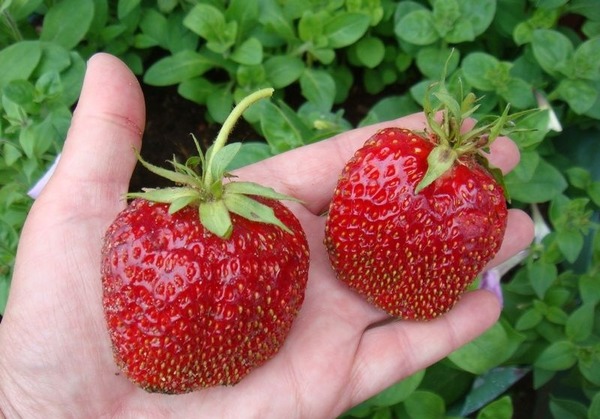
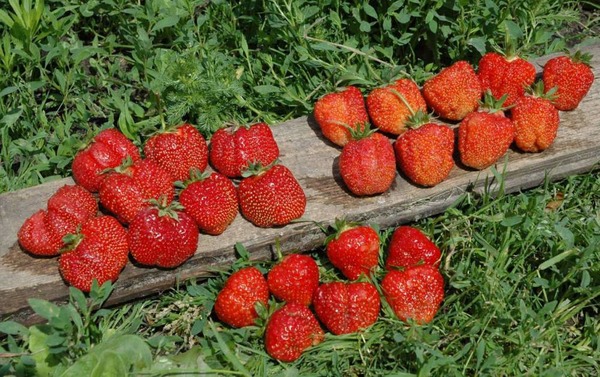
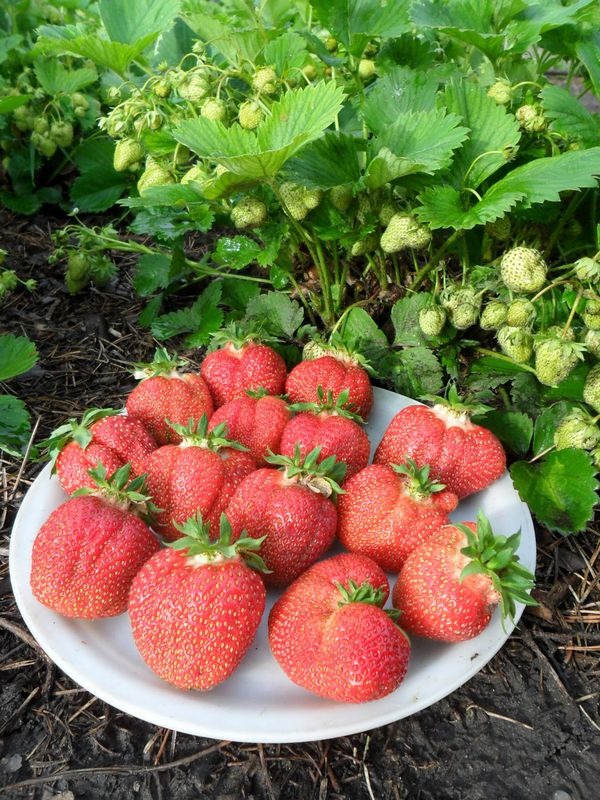
You can also grow strawberry plants in rows. The distance between rows should be approximately 40 cm, and between plants, up to 15 cm. Another option is nest planting. With this method, seedlings are placed in the soil in a hexagonal pattern, with one hole in the center and the others around it, spaced up to 10 cm apart. Today, the best method for planting strawberries is considered to be the double-row method. This method allows for up to 70 cm between rows and up to 25 cm within a row. With the single-row method, the distance within a row is the same, and up to 55 cm is typically left between rows.
Caring for strawberries
Now you know how to plant strawberries in the spring. When caring for this beloved crop in your garden, you need to remove runners and buds throughout the growing season. This will help the seedlings root properly, develop sufficient healthy foliage, set flower buds for next year, and prepare them for winter. 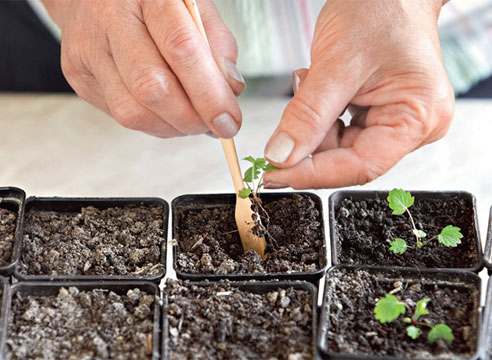 In the fall, it's recommended to use fallen leaves to insulate garden beds. To ensure more snow accumulates in the area, it's recommended to spread tomato or pepper tops. With the arrival of spring, all protective coverings are removed. Once the soil has dried and warmed, remove damaged and dried leaves, apply a complete fertilizer, and loosen the soil. Treatment with pest and disease control products is essential. To speed up flowering, experienced gardeners often cover plantings with a thin, light-blocking material. Mulch made from straw, sawdust, or peat is recommended under emerging buds.
Proper watering
Watering is essential for proper strawberry care. The plant's root system is located in the surface layer of the soil.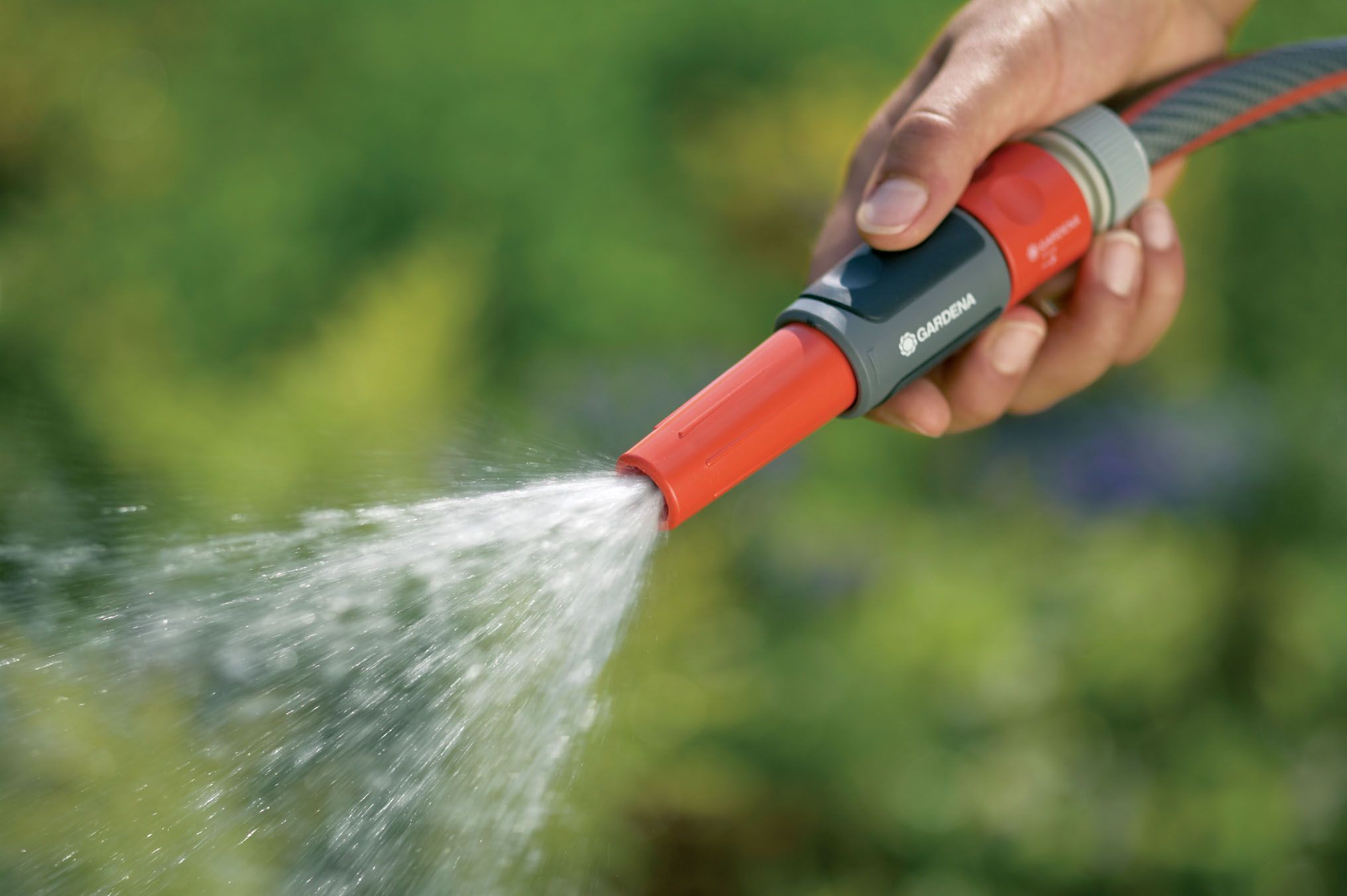
If the bushes are growing in loamy soil, they require more watering. Early morning is best. Sprinkler irrigation is recommended before flowering. Soil moisture is especially important after planting and transplanting strawberries in the fall and spring.
From flowering until fruiting, water only the soil surface, avoiding the foliage. During a dry spring, watering can begin in late April. In May, June, and July, three waterings per month are usually sufficient. In August and September, two waterings are needed. In October, the amount of water needed is determined by the soil composition. The approximate rate is 10 to 12 liters per square meter. Watering is especially important during flowering. The recommended watering rate during flowering and fruiting is 20 to 25 liters per square meter.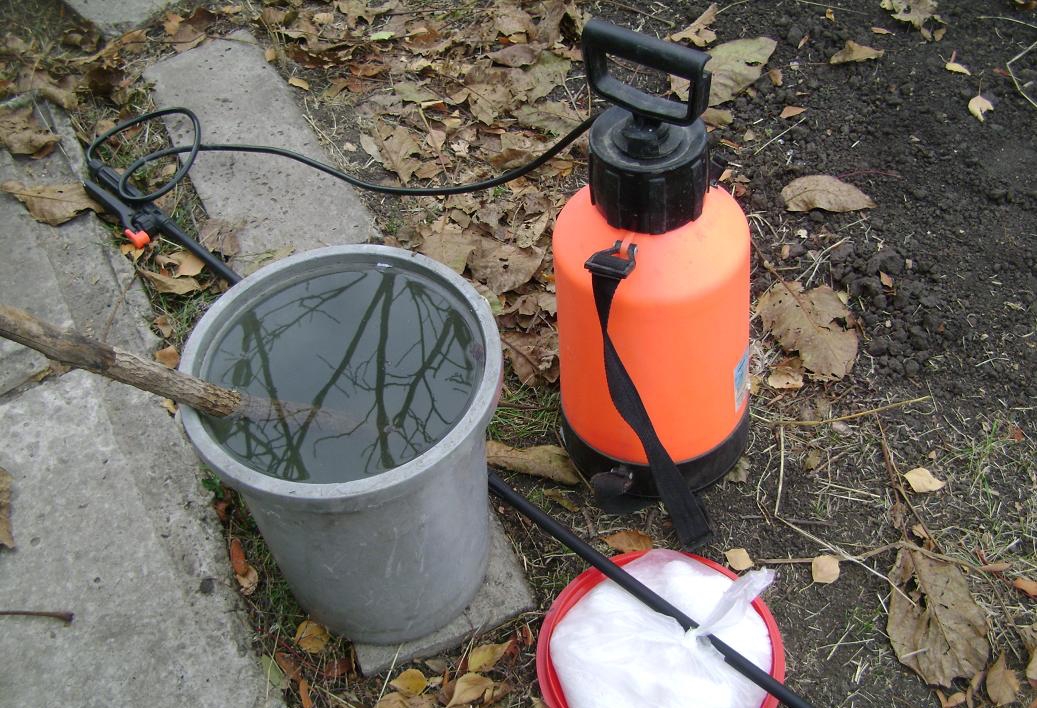
To summarize, we emphasize that for normal crop growth and development, watering the beds is recommended almost all year round. Specifically, in the spring when the foliage is growing, during flowering, when the juicy and aromatic berries are ripening, after harvest, and in the fall (if the weather is dry).
Video: "How to Properly Care for Berries"
From the video you will learn how to properly care for strawberries.