
Kimberly Strawberry: How to Grow a Sweet Berry in Your Garden?
Content
Characteristic
The Kimberly garden strawberry, whose full name is "Vima Kimberly," is of Dutch origin. It was created by crossing two equally popular dessert varieties, Chandler and Gorella. Perhaps the best way to describe this strawberry variety is to note that it is a large-fruited berry, with an average weight of up to 50 g. 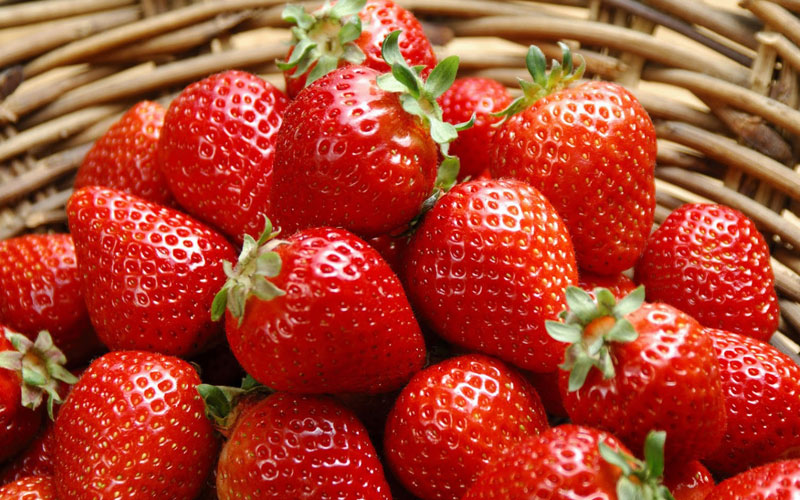 The fruits are uniform, cone-shaped, and glossy, with a rich red skin and flesh. The variety's true highlight is its pleasant caramel flavor and accompanying aroma.
Strawberry bushes are squat but quite vigorous, with a dense rosette of leaves. The leaves themselves are rounded, with a slightly oily surface. The inflorescences are located below the leaf level, causing the berries to frequently touch the ground and spoil. However, despite this, the plants have good immunity to many fungal diseases, including powdery mildew. This variety is frost- and drought-resistant, so it produces well in temperate continental climates.
The description of the Kimberly strawberry indicates it's a dessert variety. It contains a high amount of natural sugars, which accounts for its wonderful caramel flavor. 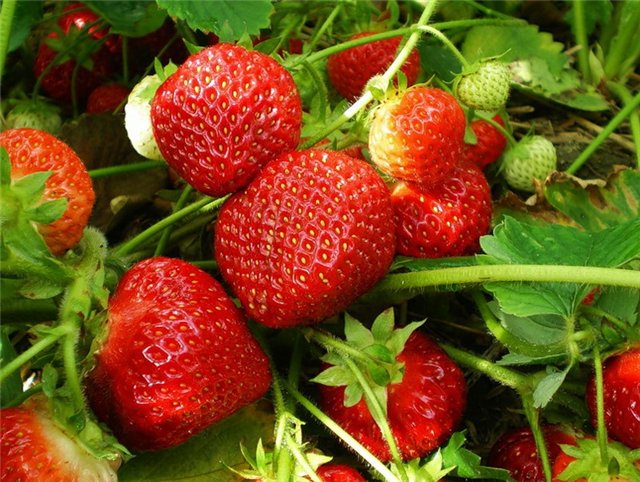 Of course, these berries are healthiest eaten fresh, but they also make excellent jam. The only drawback of this variety is that it's not everbearing, which is especially tempting when you want to pick this sweet berry several times a season.
Video: "Description of the Kimberly Strawberry Variety"
From the video you will learn many new facts about this strawberry variety.
Growing
The Vima Kimberly strawberry variety isn't particularly demanding, but there are a number of conditions that determine its yield. This primarily concerns the placement of the bed. The site for planting strawberries should have the following qualities:
- have a flat or slightly sloping surface towards the south or south-east;
- be well exposed to the sun for more than half the day;
- be protected from the winds;
- the soil should be loose and fertile, with a high organic content;
- The area must be completely cleared of weeds, including roots, which is achieved through deep digging.
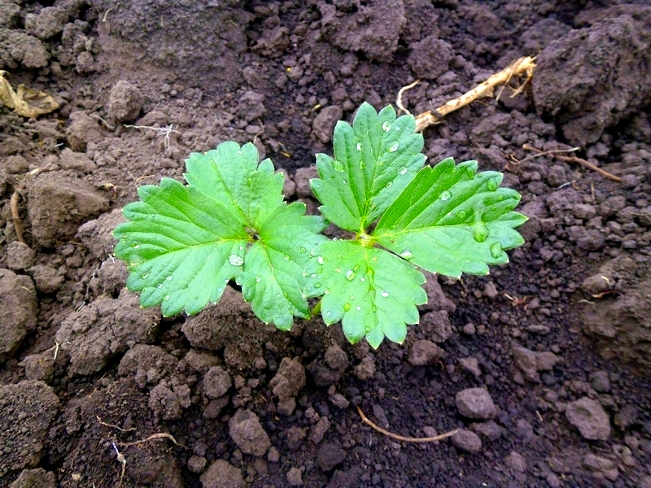
Strawberries can be planted in spring or fall, but it's important to understand that in both cases, the first harvest won't be until the following year. Only mature seedlings with well-developed root systems should be planted, and the bed should be prepared 1-2 weeks before planting.
Reproduction
The large Kimberly strawberry variety produces good yields for 3-4 years after planting, but then the yield begins to rapidly decline, so the strawberry bed needs to be replenished every 4 years. Where to get planting material? The easiest way to plant is to use rosettes formed from the runners of the mother plant. The first two rosettes produce the most abundant crop; the remaining ones are weaker, which affects future fruiting and also has a harder time establishing themselves.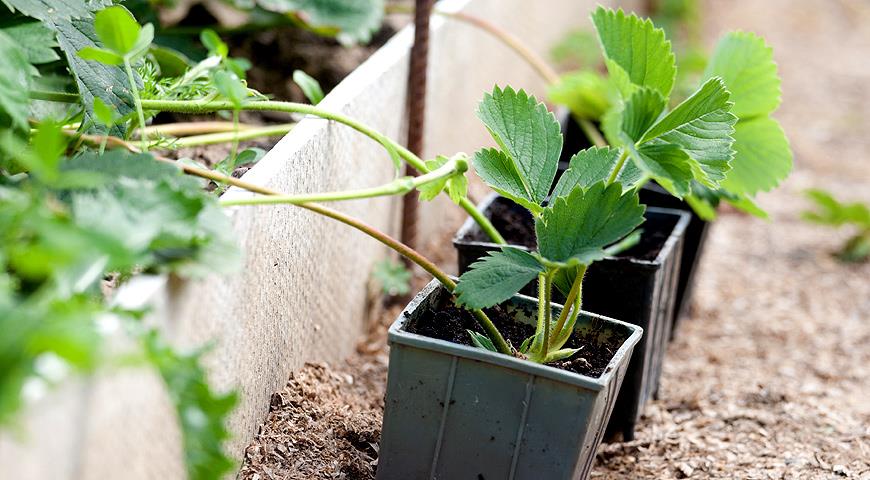
To grow your own seedlings, pin the rosettes to the ground, and once they have formed roots, transplant them to a pot or another bed. Alternatively, you can cut off the rosette immediately and plant it in a separate container, then transplant it to a permanent location after the roots have sprouted. When propagating strawberries from rosettes, plant them in the fall.
The Kimberly strawberry can also be propagated by seed and division, but since the plants produce few rosettes, division is rarely used in practice. Seed propagation is quite labor-intensive, but it allows you to grow many good seedlings with minimal effort.
To do this, seeds are sown in containers with moist, lightweight soil in late March or April. It's recommended to keep the containers cool until germination—this will ensure stronger seedlings. When the seedlings have 3-4 leaves, they are transplanted into individual pots.
Care
Standard strawberry care consists of watering and fertilizing. The watering schedule depends on the growing season:
- Immediately after planting, the seedlings are watered daily until they take root, with a water consumption of 3 l/m²;
- during flowering, watering is carried out 2-4 times/week (depending on the weather) at a rate of 15-20 l/m²;
- during fruiting – 2 times/week (10-15 l/m²).
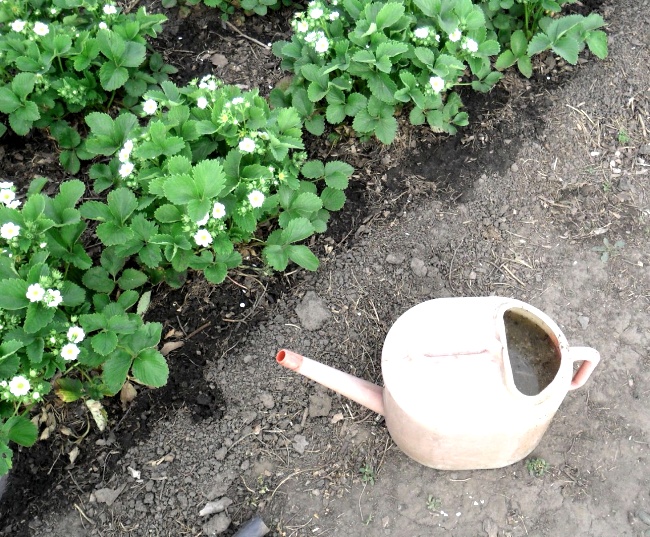
The berries of this variety are prone to gray mold, so the bed must be covered with dry mulch (straw or sawdust). It's crucial to remove weeds promptly, as the plants are completely intolerant of them. Fertilize 3-4 times per season: in early spring, before flowering, then during flowering, and in August, when fruit buds for the future harvest are forming. It's recommended to cut the bushes back for the winter and cover the bed with spruce branches or dry leaves.
Productivity
Although the first berries are the largest, and then, as fruiting ends, they become smaller, the overall yield of the variety remains high – with proper cultivation practices, 1-2 kg of berries can be harvested from a single bush. However, to achieve this, gardeners must ensure that the strawberry plant is protected from all negative factors that reduce yield.
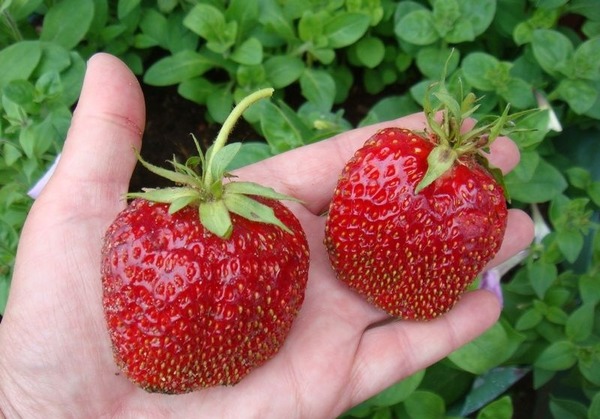
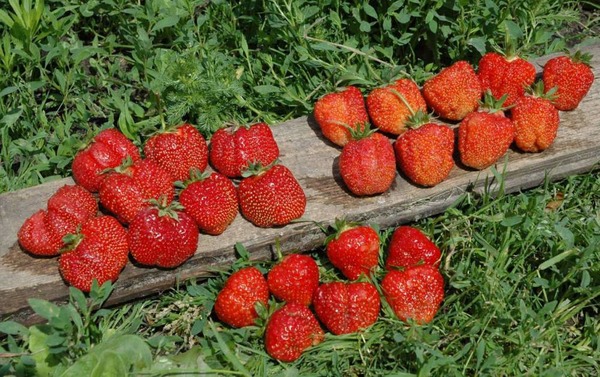
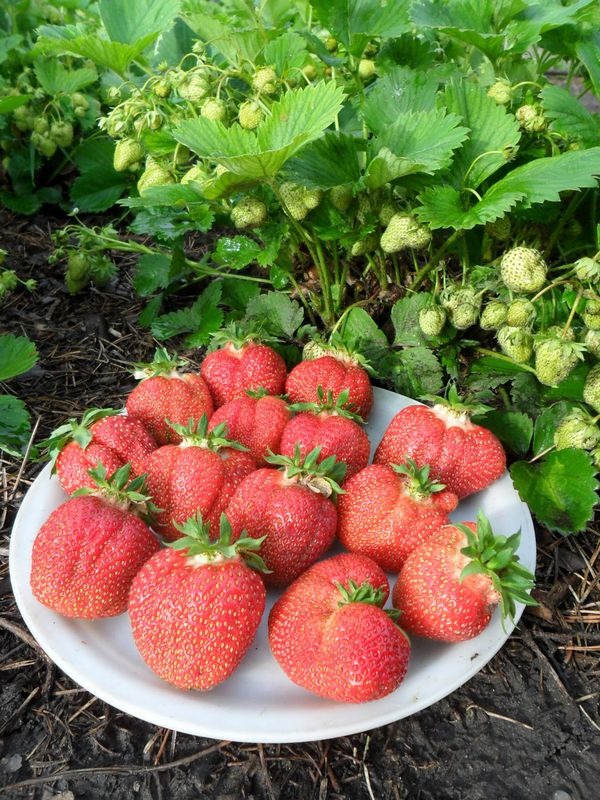
Because the fruit clusters of this strawberry variety are very heavy, sometimes containing 8-10 fairly large berries, they always lie on the surface of the bed. Even mulch in most cases doesn't prevent the fruit from rotting, so to preserve the harvest, it is recommended to support the clusters or create raised beds like ridges. This variety produces excellent yields using alternative planting methods: vertical beds, agrofibre, and other modern technologies.
Video: Planting Strawberry Seedlings
This video will show you how to plant strawberries using seedlings.