
Gigantella Strawberry: Features, Growing, and Care
Content
Peculiarities
The Gigantella strawberry was developed by Dutch breeders. The main characteristics of this variety are large fruits and high yields. However, this requires some effort to create optimal growing conditions for the plants.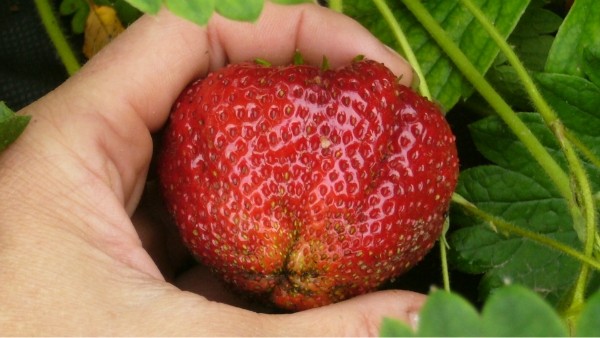
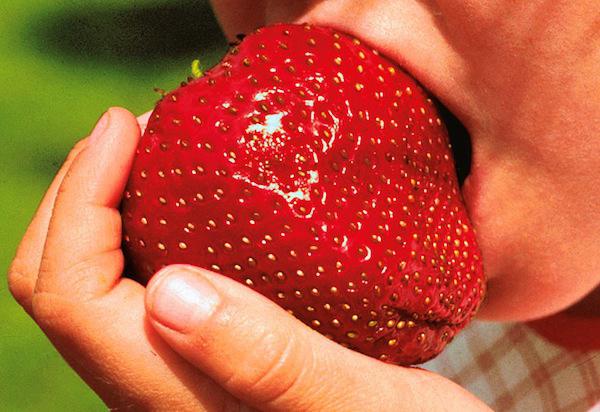
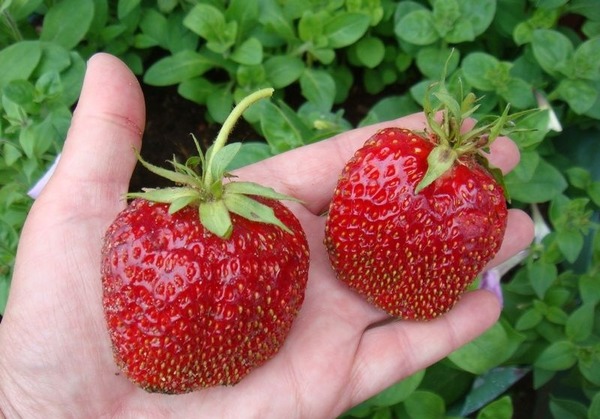
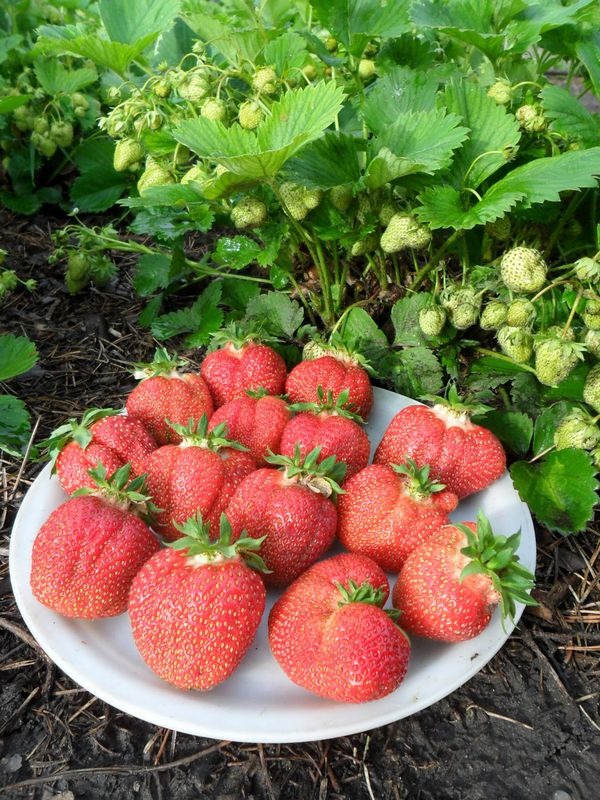
This strawberry plant is quite vigorous, reaching up to half a meter in height. Its average diameter is no more than 0.6 m. The plant produces large green leaves, among which grow large fruits with prominent seeds. Each berry weighs approximately 100 g and has an excellent flavor.
The features of Gigantella include:
- excellent frost resistance;
- unpretentiousness;
- good commercial properties of fruits.
With proper care, a single bush can yield up to 3 kg of strawberries. This variety propagates, like all other strawberries, using runners. However, seedlings can also be grown from seeds. Both methods are quite popular among gardeners in our country. However, some advise preferring seed propagation, as this strawberry variety is considered elite.
Video "Description"
This video will tell you about the characteristics of the Gigantella strawberry.
Planting dates and patterns
Many experts recommend growing Gigantella using seedlings. Typically, seedling germination should begin in February or March. Choosing the right soil mixture is crucial. The best soil mix consists of the following components:
- humus (5 parts);
- sand (3 parts).
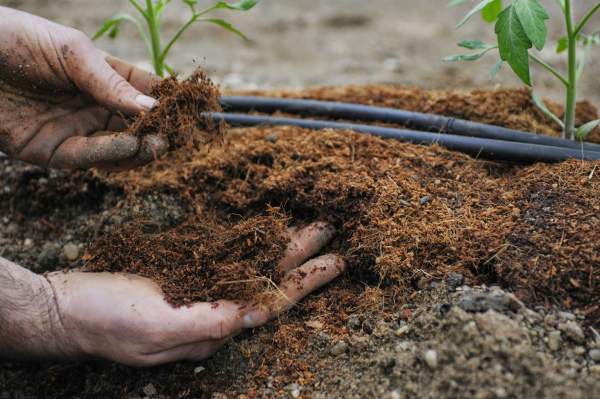
After mixing the ingredients, it's recommended to heat the resulting soil mixture in an oven at 100 degrees Celsius. Afterward, the seeds can be planted. Before planting, lightly compact the soil and water it. The seeds should be lightly covered with snow and stored in a cool place. Then, it's recommended to move the seeds to a warmer location where the temperature remains at 22 degrees Celsius.
Once the seedlings have developed several true leaves, they need to be pricked out. Remember, the air temperature should drop to 15 degrees Celsius during this time.
Typically, planting tall seedlings in open ground occurs in early May. A planting pattern should be used, with four strawberry plants per square meter. However, planting in August is also possible. However, in this case, the beds must be carefully prepared, fertilized, and watered.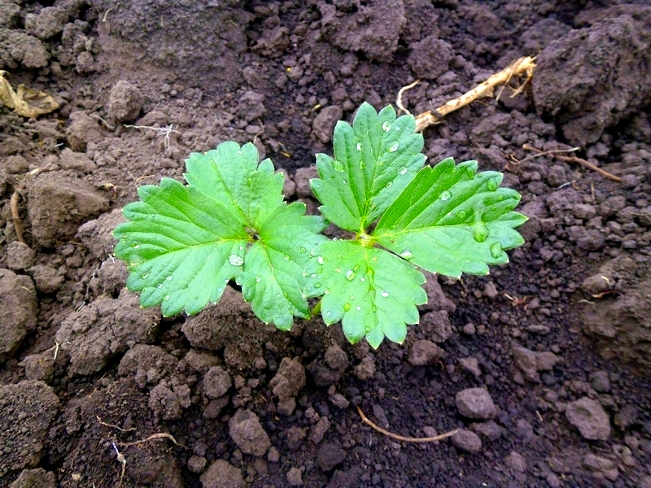
It has been noted that seedlings take root best when planted outdoors in the evening. This is because sunlight can burn young plants that are not yet fully established. However, it is also known that those bushes with more than three leaves remaining show excellent survival rates. The longest root should be pinched off. To speed up the seedlings' development, it is recommended to remove the first flower stalks.
Growing
It's worth noting that the growing location greatly influences the yield of the plantings. Gigantella strawberries will produce well in an open, well-lit area. Moreover, the soil should preferably be fertile and well-rested. Legumes are good predecessors for this crop.
To understand how to grow strawberries, you need to know all the nuances of planting care. There are cases where the seedlings were planted successfully, but improper cultivation led to disastrous results.
This variety can be grown with runners or as a carpet plant. While the former involves periodic trimming of the runners, the latter method involves the plants actively producing them at first. These runners take root. After this, vegetative propagation almost completely ceases, and the fruiting period begins.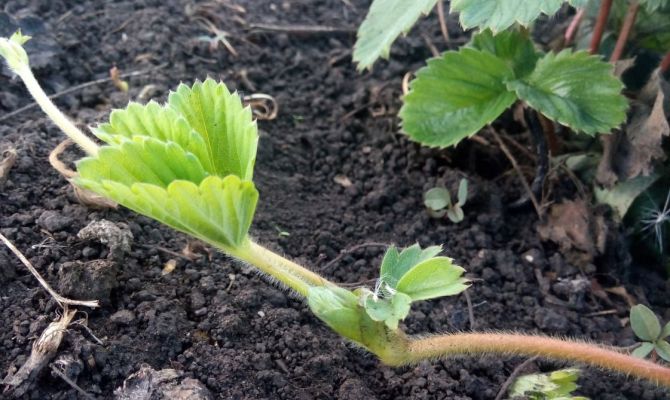
Growing this variety of strawberry has one important nuance: when planting, you should completely avoid contact between the plants and runners belonging to another variety.
The optimal soil for planting Gigantella is loamy soil, into which peat or humus should be added before planting the seedlings. You may find information that it's acceptable to use ash, compost, and fertilizers purchased from gardening stores. This will eliminate the need for additional fertilizer during the first year.
Care
Gigantella Maxim produces very large berries. However, to achieve such an attractive harvest, it's essential not only to choose and prepare the planting site correctly but also to create optimal growing conditions. Failure to do so will likely result in the fruit reaching the desired size. Furthermore, the taste of the harvest will be significantly compromised.
Plants need to be watered regularly. It's important to water them sufficiently and at the right time. This is crucial for good plant fertility. If overwatering occurs, the berries will be watery and their flavor will be far from sweet. In this case, the harvest can only be used for jam or compote.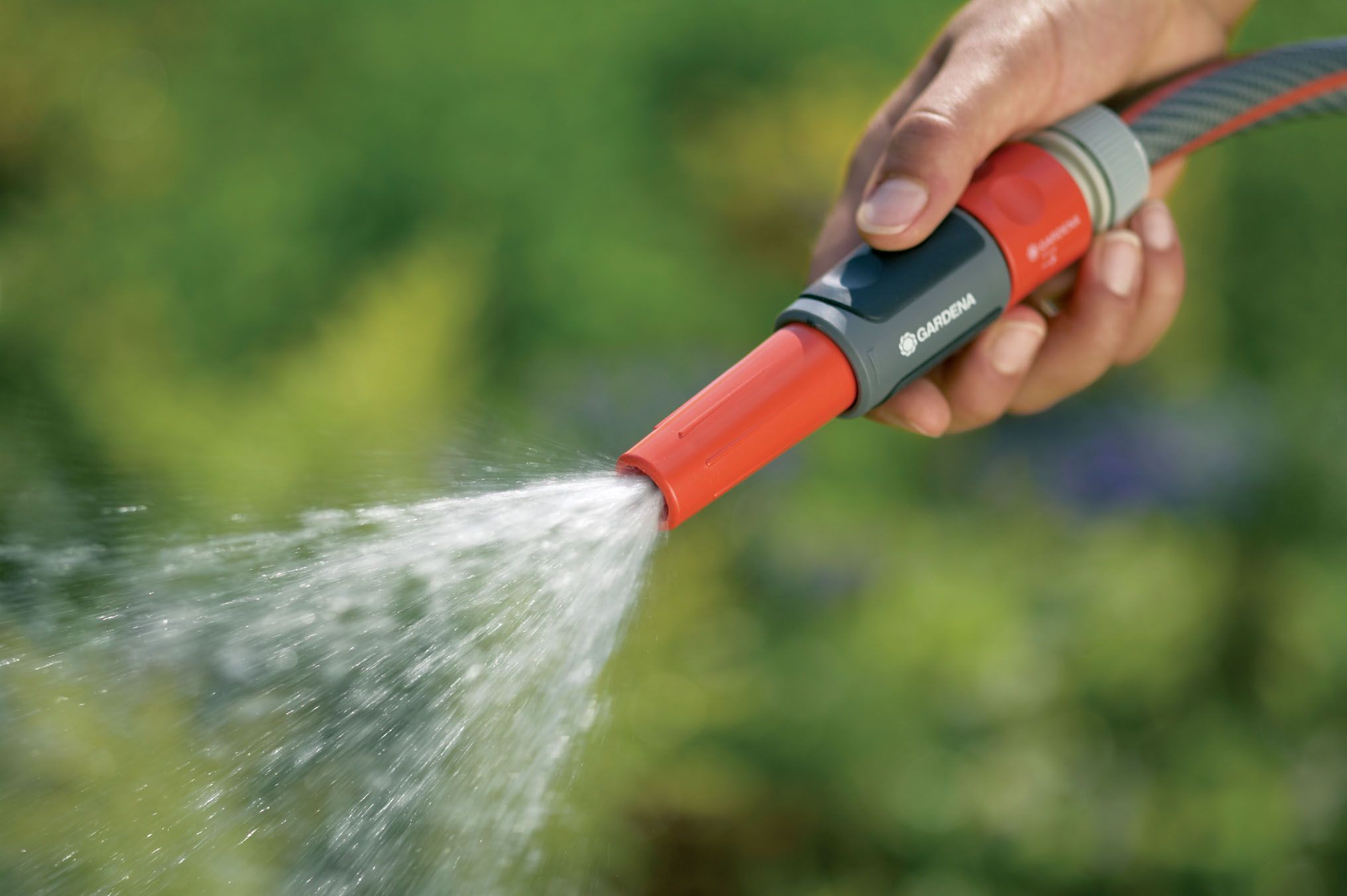
In general, caring for the plant should be the same as for other varieties of this berry crop. However, there are some nuances worth knowing. For example, the Gigantella strawberry variety is renowned for its rapid growth. Therefore, the bushes form numerous runners, which should be periodically removed to prevent them from becoming too overgrown. A couple of bushes can be saved for future propagation. In this case, you can bury five runners originating from the remaining bushes. It is also recommended to remove all remaining runners.
It's also important to monitor the condition of the plants themselves. If yellow leaves appear, it's best to pluck them off. However, such treatments should be carried out after fruiting has finished. In this case, they will be part of the bushes' preparation for winter.
The May beetle, a pest that poses a particular threat to strawberry bushes, deserves special mention. During its life cycle, it can cause irreparable damage to plants. Therefore, plantings must be treated against various fungal and viral diseases, as well as parasites. To achieve this, four sprayings of Fitosprorin or Gumi mixtures per season are usually sufficient. Sprayings are performed at the following times:
- in May (at the beginning of the month);
- During the active flowering period, experts recommend adding 5 drops of Fitoverm to the solution. The solution can be replaced with traditional remedies. For example, you can use a tincture made from the green parts of the weeds;
- at the beginning of August;
- in the second half of September.
Additionally, to protect plantings from diseases and pests, mulching should be done periodically. Experienced gardeners use black plastic, pine needles, newspaper, and shredded grass for this purpose.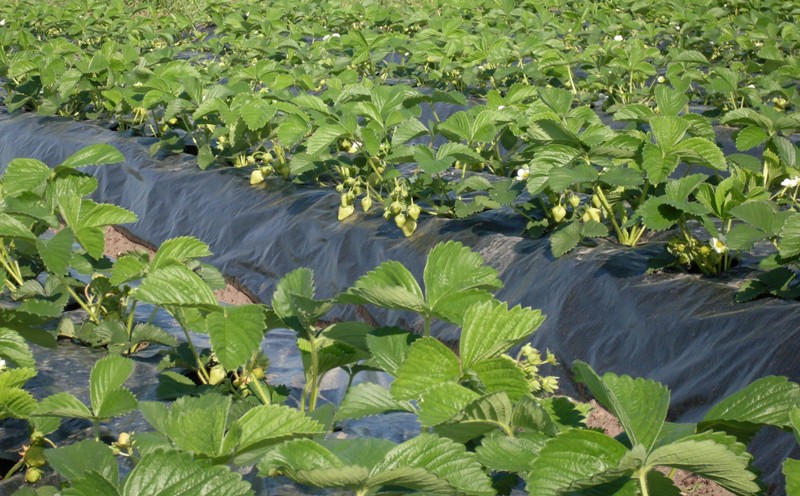
As we can see, it is quite easy to protect strawberries from pathogenic microflora that actively develops in the soil.
Regular fertilization is essential. Throughout the growing season, the soil around the plantings should be loosened periodically before applying fertilizer. Weeds should be removed. Fertilizing should also be done according to the following guidelines:
- Do not use nitrogen-containing fertilizers during the first year, as they can cause berry rot.
- from the second year the use of ammonium nitrate is permitted;
- In the third year, you can apply complex fertilizers. This fertilizing is done twice a year;
- During flowering and fruiting, fertilizers should contain potassium, magnesium and phosphorus;
- Instead of complex fertilizers, you can use liquid manure.
Thanks to its winter hardiness, this strawberry plant can be grown without covering for the winter. Furthermore, the leaves don't need to be trimmed, as they will act as a natural barrier against snow.
Advantages and disadvantages
The advantages of Gigantella include the following:
- Early ripening. The berries turn red in May and June. Ripening usually occurs 2 weeks after flowering ends;
- powerful bushes;
- large berries that have excellent taste;
- the fruits have an attractive appearance;
- good frost resistance;
- easy care.
As for drawbacks, this variety has virtually no disadvantages. However, one of them is that the harvest quickly disappears. The yield is poorly expressed in quantity, due to the formation of large berries.
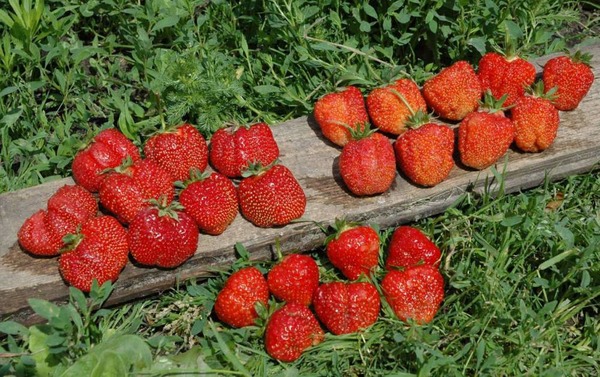
Gigantella Maxim is one of the most profitable and productive strawberry varieties, making it very popular among gardeners in our country.
Video "Growing from Seeds"
This video will show you how to grow the Gigantella strawberry variety.