
Potato varieties worth your attention
Content
Red Scarlet
It's well known that Belarusian potato varieties are among the most prized today. Potatoes from Minsk and other Belarusian cities are always popular. But many Dutch potato varieties are equally as good. One such variety is Red Scarlet. This excellent early-ripening variety is characterized by medium-large, very tasty roots. These potatoes are excellent for boiling and frying.
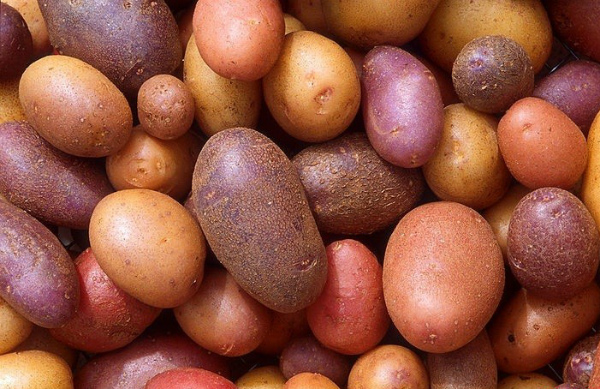
Dutch potatoes can be grown even in dry soils. But it is worth noting that Red Scarlet is prone to diseases such as phytosphorosis and scab.
The bushes of this species are low-growing and compact, blooming with light purple flowers. The potatoes are oblong and smooth. They have small eyes, and their skin is lilac, sometimes pink. The flesh of the tubers is pale yellow. The average weight of a single tuber is 80 g. With proper care, a yield of 164–192 kg, and a maximum of 400 kg, can be obtained from one hundred square meters.
Red Scarlet is most often grown in Ukraine, Belarus and Russia (especially in the central regions and the Moscow region).
The description of this species includes the following features:
- heat resistance;
- resistance to diseases such as cancer and nematodes;
- excellent shelf life of tubers;
- high output.
Red Scarlet ripens in late August – early September. One bush produces an average of 15 tubers.
Ivan da Marya
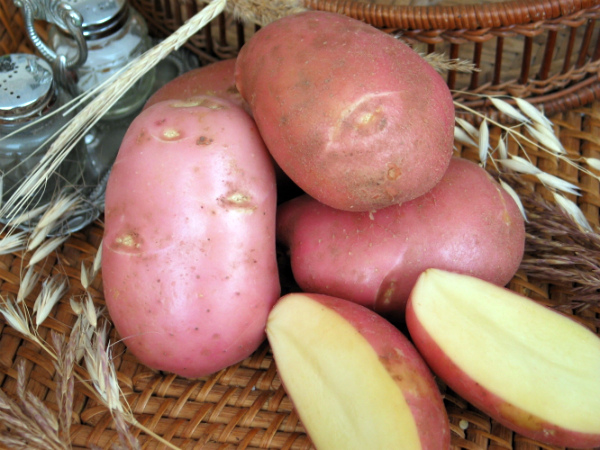
Besides Red Scarlet, the Ivan-da-Marya variety is particularly popular in Ukraine, Russia, and Belarus. Ivan-da-Marya is considered a mid-late potato. Its growing season lasts 115–120 days. The main feature of the Ivan-da-Marya potato, like Red Scarlet, is its ability to be grown in any climate. Ivan-da-Marya often thrives in areas where other varieties struggle.
It is worth noting that Ivan da Marya is also a Dutch variety.
In Holland, this potato variety was named Picasso. Ivan-da-Marya is a common name for the potato, often used in Russia, Ukraine, and Belarus.
Ivan da Marya has the following description:
- the bushes are upright and quite tall;
- white flowers form on them;
- quite abundant flowering;
- ripe root vegetables have yellow skin and a round shape;
- the peel has pink specks;
- The eyes are pink.
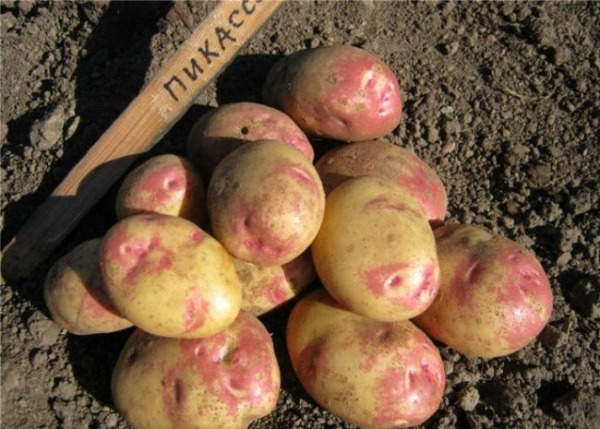
Ivan-da-Marya typically produces tubers with an average weight of about 120 g. If you cut a tuber, the flesh will be creamy. The starch content in the tubers typically ranges from 8% to 14%. The yield per bush is approximately 19 tubers.
In addition to the Red Scarlet and Ivan da Marya potato varieties, there are other varieties of this cultivated plant. We'll discuss which of them offer good yield and flavor below.
Timo
Besides Ivan-da-Marya and Red Scarlet, the Timo variety is very popular in the CIS countries. This early-ripening potato can be grown in a variety of soils. Timo has the following description:
- the bushes produce white flowers;
- the tubers are round in shape;
- dark green leaves are the main distinguishing characteristic of this type of potato;
- the bushes respond well to organic and mineral fertilizers;
- the average tuber weight is about 60–120 g;
- white inflorescences bloom on them.
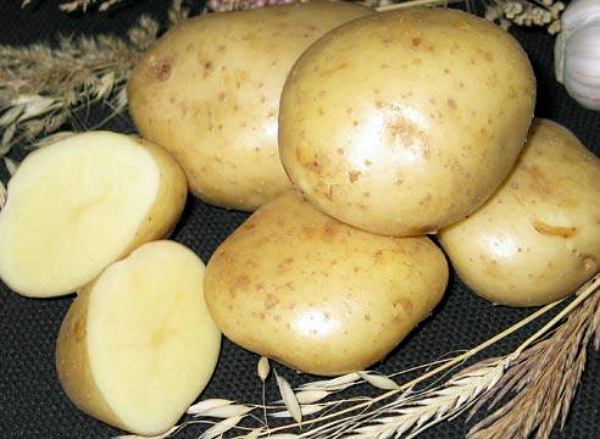
The Timo potato variety was developed in Finland and is classified as a table potato. Timo is characterized by a long shelf life. Furthermore, this variety has excellent resistance to excess moisture and high temperatures, as well as mechanical damage. Therefore, its tubers are among the most sought-after on the market.
If you ask which potato varieties are the best, Timo fits the bill perfectly across all criteria. This is because its bushes are the most resistant to Colorado potato beetles. Another characteristic of Timo is its high resistance to pathogenic viruses.
Potato tubers have an excellent flavor. The crop ripens 60–70 days into the growing season. This ripening period allows for early harvesting.
As we can see, the potato varieties listed above are characterized by excellent growth parameters. Moreover, they are productive and delicious.
Gala
Another variety worth knowing is the German Gala potato. Information about this cultivated plant will also answer the question, "Which potato varieties are best to plant?"
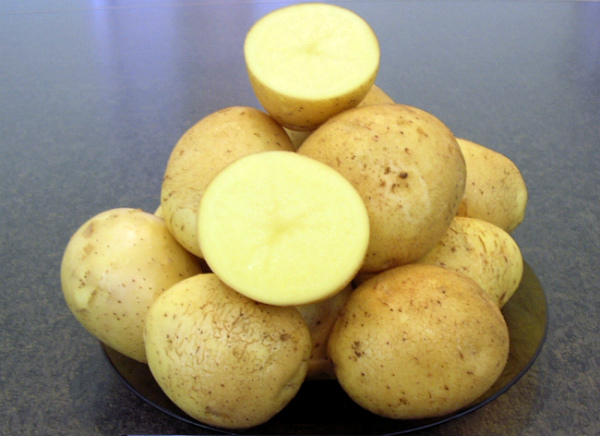
Gala has the following description:
- a medium-sized bush with fairly large leaves;
- forms single white flowers on the bushes;
- from one hundred square meters you can collect up to 400 kg;
- the bush forms round tubers with small, shallow eyes and veined yellow skin;
- the pulp is characterized by a bright yellow color;
- the ripening period is 70–80 days from the moment of planting the planting material in the ground;
- the average weight of one potato is approximately 70–120 g;
- Up to 25 tubers can be harvested from one bush.
It's worth noting that Gala tubers have a low starch content and excellent flavor. These tubers are often used in soups and salads. Popular Belarusian varieties can't always compare with this plant.
Among the disadvantages of this variety is its high susceptibility to rhizoctonia. However, the plant is resistant to nematodes.
Gala is most commonly grown in the central and northwestern regions of Russia. Many gardeners choose this potato variety not only for its excellent characteristics and taste, but also for its ease of cultivation. Gala also has a good shelf life, which can be extended by cutting back all the tops approximately two weeks before harvest. This allows the tubers to ripen thoroughly and absorb more nutrients.
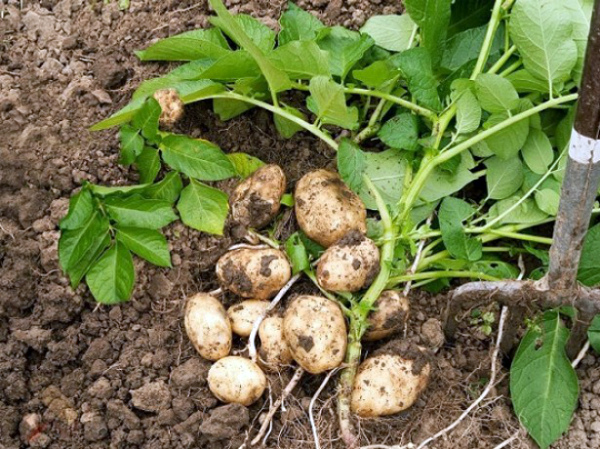
Impala
The Impala potato came to our country from Holland. It is considered an early-ripening table variety. It is grown in the southern and central regions of our country. In these regions, up to two harvests can be harvested in a single season. The variety's most important value is its consistently high yield. Impala is also highly resistant to many diseases (potato nematode, various types of cancer, common scab, and group A viruses).
Impala has the following description:
- an upright, powerful plant with bushes up to 75 cm high;
- blooms with white flowers;
- each bush is capable of forming approximately 6–8 tubers;
- the weight of one potato is approximately 80–150 g;
- the tubers are oval in shape and have shallowly set eyes;
- characterized by a thin yellow skin that has a smooth surface;
- the potato flesh is light yellow, with a high nutrient content;
- very early appearance.
Tubers ripen within 50 days of planting. One hundred square meters (100 square meters) can yield 180–360 kg.
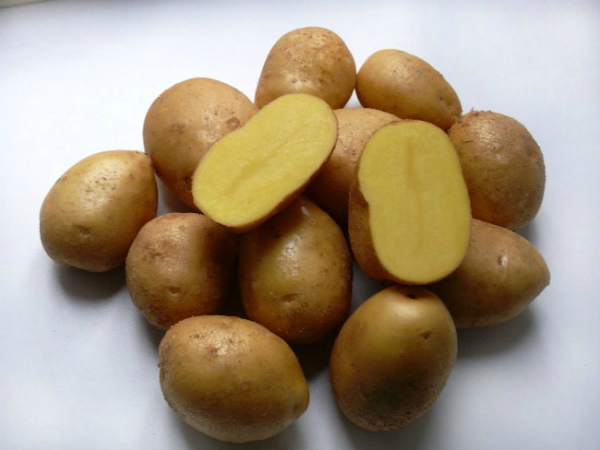
Impala has excellent flavor, making it often used in soups and purees.
If you're wondering "which potato varieties are suitable for growing in Ukraine, Russia, and Belarus," don't hesitate to choose Impala. This potato is the most popular in these countries, based on the following qualities:
- high shelf life;
- excellent presentation;
- resistance to various diseases (for example, cancer, scab, etc.).
The disadvantages of this cultivated plant include the susceptibility of the bushes to late blight and rhizoctonia.
The best time to plant this potato is early spring. Later planting, in early summer, is also possible. Plant only after the soil has warmed sufficiently. It's important to remember that Impala potatoes should be grown strictly within a proper crop rotation. If you follow proper growing practices, Impala will produce an excellent harvest.
Video: How to Choose the Best Potato Variety
Watch this video review of popular potato varieties to help you make the right choice.
Bellarosa
The Bellaraza potato, like the varieties mentioned above, is a high-yielding variety. It is considered an ideal choice for cultivation in Ukraine, Belarus, and Russia.
Bellaraza was developed in Germany. This variety is characterized by the following traits:
- an upright and tall bush with fairly large leaves;
- blooms with red-violet flowers;
- round tubers, characterized by a pink or light red skin color;
- the surface of the peel is slightly rough with shallowly set eyes;
- the flesh of the tubers is light yellow;
- The average weight of one potato was 110–210 g, and some tubers reached 800 g.
One hundred square meters (100 square meters) can yield 170–330 kg of potatoes, with a maximum yield of 385 kg. A single plant can produce up to nine tubers.
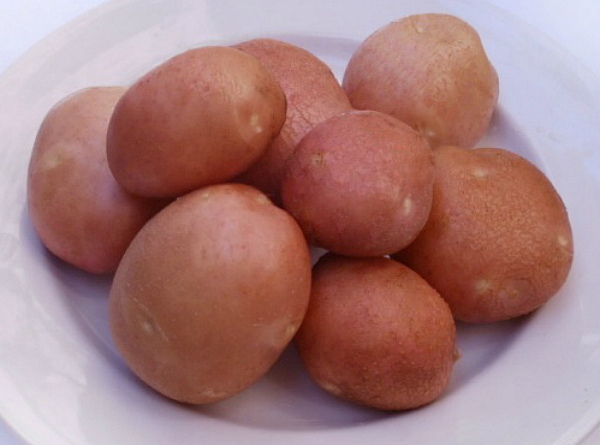
Bellaraza potatoes have excellent flavor. Boiled potatoes crumble well.
This potato is quite common in the Urals. It is also widely planted in the central European part of Russia, as well as in Ukraine and Belarus. One of the main advantages of the Bellaraza variety is its excellent resistance to canker, nematodes, viruses, late blight, and other diseases. However, a drawback is the formation of tubers with an average shelf life. This potato is grown in a variety of soil types.
As we can see, Bellaraza deserves to be considered one of the most popular and sought-after potato varieties for cultivation in our country.
Zhukovsky
The Zhukovsky variety is also an early potato variety. It was bred in Russia and produces excellent yields. Moreover, Zhukovsky can be grown in any soil. The potato harvest begins two months after planting.
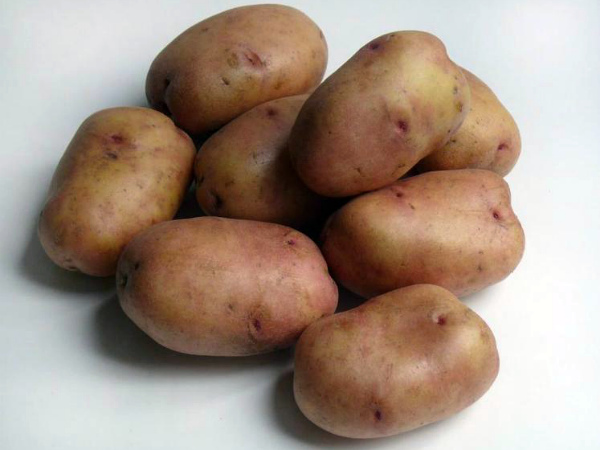
Zhukovsky has the following characteristics:
- a medium-height bush with a semi-spreading structure;
- large dark green leaves;
- the flowers are collected in compact inflorescences, their corolla is painted in a red-violet color, at the ends of which there are white stripes;
- does not form fruits from inflorescences;
- the tubers have a pink and fairly smooth skin, on which there are small eyes;
- the potatoes are large, round-oval in shape, and weigh up to 170 g;
- the flesh of the tuber is white;
- One bush produces up to 10 tubers.
Zhukovsky has a distinct flavor. Fruit ripens 60 days after planting. The variety is characterized by stable and fairly high yields (average yield 320–380 c/ha, with a maximum of 600 c/ha).
Zhukovsky is characterized by excellent resistance to mechanical damage, high cold tolerance, and drought resistance. Resistance to golden potato nematode, scab, rhizoctonia, and other diseases has been described. Furthermore, the tubers have a long shelf life. These characteristics allow the Zhukovsky variety to be grown in a wide range of climatic conditions.
Adretta
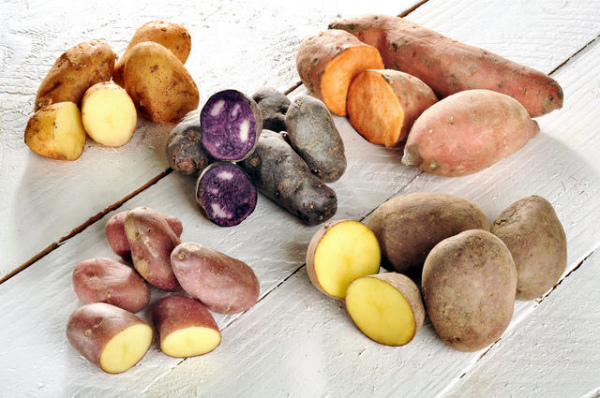
Another popular potato variety from Germany is Adretta. This variety is characterized by high yields, reaching 214–396 kg per 100 m², with a maximum yield of 450 kg. Since this variety is a mid-early variety, planting should be done in early spring.
Adretta has the following description:
- vigorous and erect bush;
- the bush forms spreading white inflorescences;
- forms oval-shaped tubers;
- the skin is rough and yellow in color, with almost no eyes;
- the flesh is yellowish;
- The average weight of potatoes is 130 g.
It's worth noting that Adretta potatoes contain many nutrients, including vitamins. They soften when boiled, making them ideal for mashed potatoes.
Adrett has the following positive traits:
- excellent presentation;
- good shelf life;
- earlier formation of tubers;
- resistance of bushes to various viral diseases.
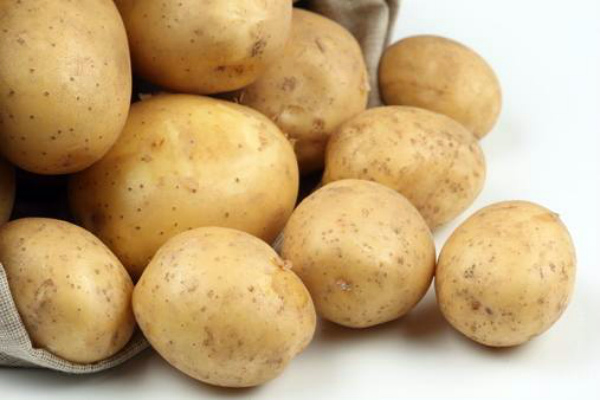
The bushes are rarely attacked by insect pests, particularly the Colorado potato beetle. Adretta has no obvious drawbacks.
Adretta is considered by gardeners to be an excellent variety in many respects, suitable for growing in a wide range of climates. This plant is most commonly grown in the Far East, Western Siberia, and the Volga region. Moreover, its bushes produce a consistently high yield.
Romano
The last potato variety we'll look at is Romano. This crop was developed by Dutch breeders and is intended for table use.
This is also a fairly profitable type of potato in terms of cultivation, which is characterized by the following parameters:
- upright and tall bushes;
- medium-sized corollas are formed on them;
- the flowers are reddish-purple in color;
- the tubers have a short oval shape;
- the weight of one root vegetable is approximately 95 g;
- the tubers have a dense and smooth skin, which is characterized by a pink color;
- medium-depth eyes form on the skin;
- The flesh of the root vegetables is light cream in color.
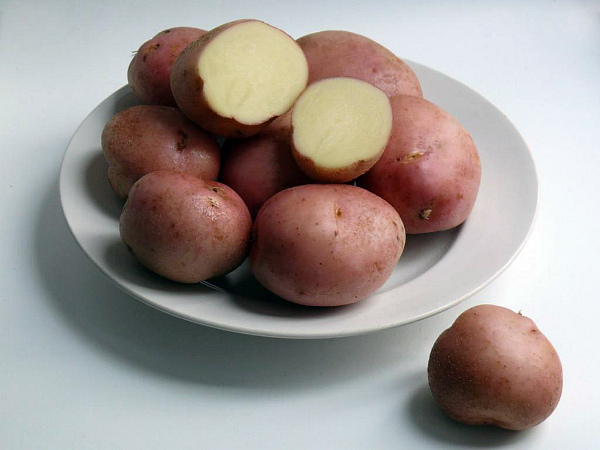
The Romano variety is characterized by excellent flavor. The bushes can be harvested three months after planting. One bush produces up to 0.85 kg. It is for its marketable appearance and high yield that Romano is prized by gardeners and potato growers, and is considered one of the most profitable potato varieties.
Furthermore, this plant has excellent tuber resistance to late blight. Romano is also relatively resistant to leaf blight, common scab, and various viral diseases.
All of the above-described potato varieties have excellent characteristics, including excellent taste, high yield, and resistance to most diseases. Moreover, the bushes of the above-mentioned varieties are rarely attacked by insect pests, including the Colorado potato beetle. Therefore, if you decide to grow potatoes in your garden, you should choose the varieties listed above. Otherwise, you may encounter problems with diseases, low yields, demanding growing conditions, and many other issues that make life much more difficult for a gardener.
Video "Elite Potatoes"
This video will give you the opportunity to take advantage of an agronomist's advice when choosing a potato variety.