
How to grow purple potatoes in your garden?
Content
Beneficial properties
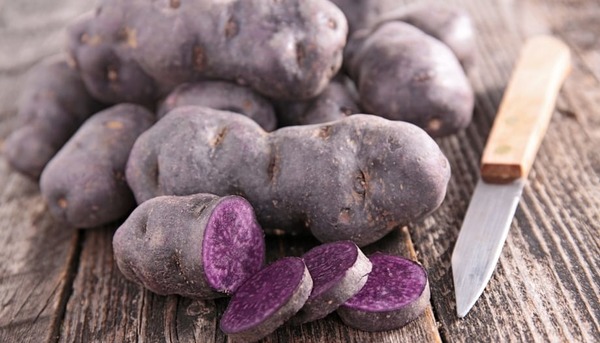
It's all about the color. Purple potatoes owe their unusual hue to special pigments called anthocyanins, which, along with other beneficial properties, are powerful antioxidants. Traditional sources of these substances include blueberries, bilberries, dark grape varieties, black currants, basil, and some other plants whose fruits or leaves are violet-blue or purple.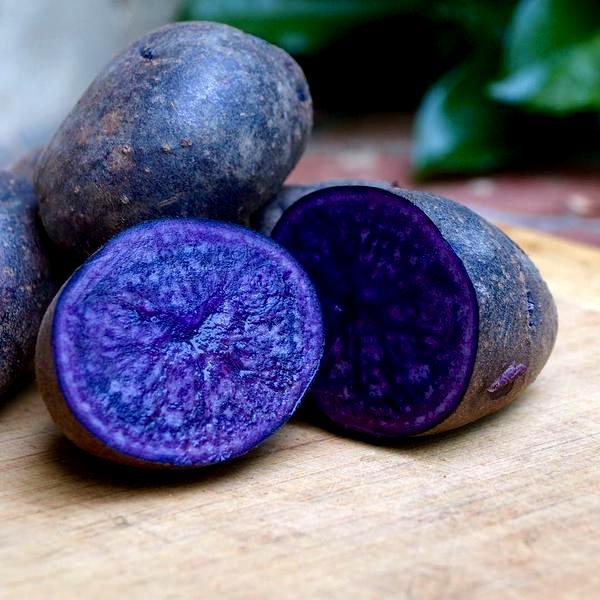
Since anthocyanins are not synthesized or accumulated in the human body, a healthy person should consume at least 15 milligrams of these substances daily to prevent various diseases. In the presence of systemic diseases, the daily requirement for anthocyanins increases several times. 100 grams of purple or blue potatoes, depending on the intensity of their color, contain between 9 and 40 mg of anthocyanins.
Daily consumption of purple potatoes and other "colored" foods activates metabolism at the cellular level, reduces the negative impact of radiation and carcinogens on the body, suppresses the growth of malignant tumors, slows the aging process, improves vision, and strengthens the immune system.
In addition, due to the increased content of chlorogenic acid, purple potatoes lower blood pressure and regulate hormonal balance, affecting the production of female sex hormones, estrogens.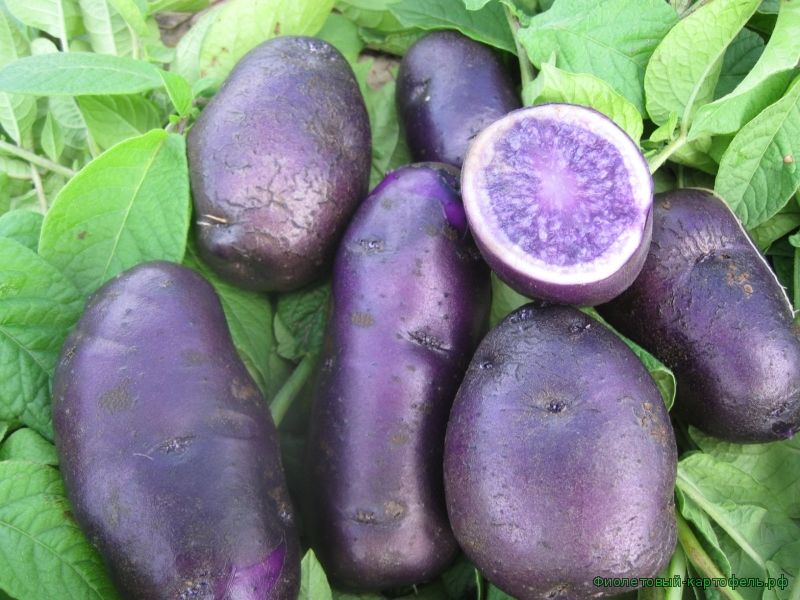
Blue potatoes are rich in potassium, calcium, phenolic acids, and two potatoes boiled in their skins replace one lemon in terms of vitamin C content.
Video "Description"
From the video you will learn many interesting facts about the purple potato variety.
Features of the species
So what is it? In an era when "ships ply..." and environmental issues are more pressing than ever, healthy foods with medicinal properties are in ever-increasing demand. The colored potato isn't a miracle of genetic engineering; it's more a product of the painstaking work of breeders. The 1817 edition of "Notes on Agriculture" mentions the French name for this vegetable—Vitalot—among six potato varieties sold in Paris markets at the time. Even Alexandre Dumas wrote about the superb taste of this potato. 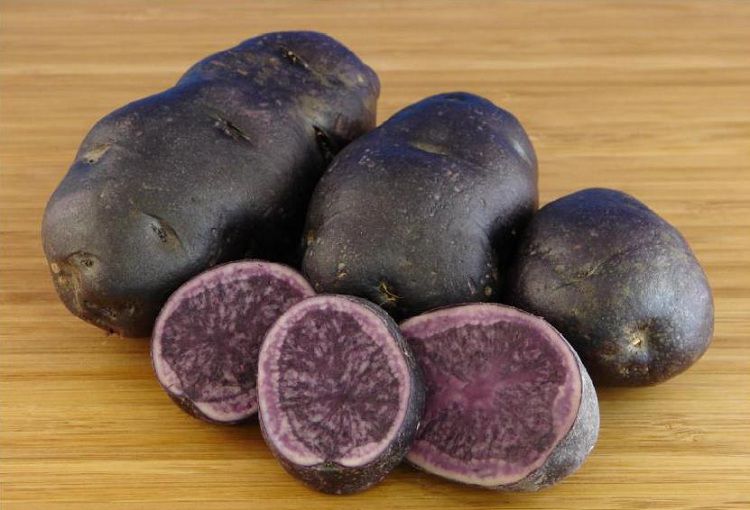 However, there is a suggestion that purple potatoes originate from South American countries – Peru or Bolivia; their wild ancestors still grow in the Andes highlands.
Today, not only Western breeders, but also Russian scientists are developing varieties that produce tubers with colored flesh.
A number of new varieties have been developed—Kongo, Baue, Hindelblank, All Blue, Red Pearl, Purple Peruvian, Alaska Sweetheart, Granberry Red—and the new Mountain Rose and All Red varieties are particularly impressive. Blue potatoes, like their light-fleshed cousins, belong to the nightshade family (not to be confused with sweet potatoes, which belong to the morning glory family).
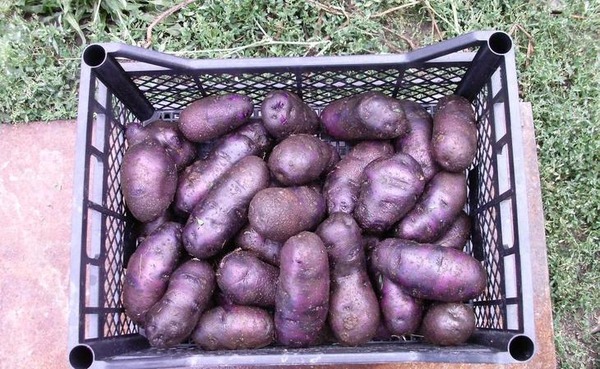
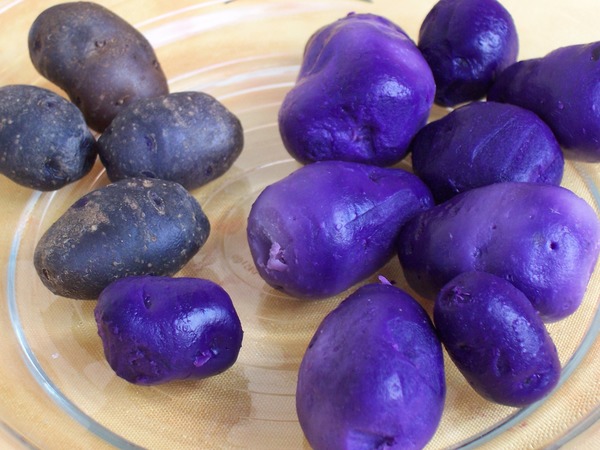
This delicacy has a typical potato-like flavor with a slight nutty note, making it easy to incorporate into your daily diet, even for those who prefer a conservative diet. It's distinguished by the vibrant color of not only the skin but also the flesh, which remains unchanged after cooking. On average, each tuber, no more than ten centimeters long, weighs 70 grams. The skin is quite thick, making it ideal for long-term storage.
Planting and care rules
Purple potatoes require more specific growing conditions than regular potatoes. The planting site for purple potatoes should be well-lit. Light soils are preferred: neutral sandy loam, sod-podzolic soil, light loam, and chernozem. The plot for purple potatoes should be tilled in the fall, adding potassium fertilizer and superphosphate. A 0.5 kg humus per 1 m² is also beneficial. Careful preparation of the tubers before planting is essential. Properly germinated planting material will ensure rapid, uniform germination, early tuber set, and reduced losses due to late blight. 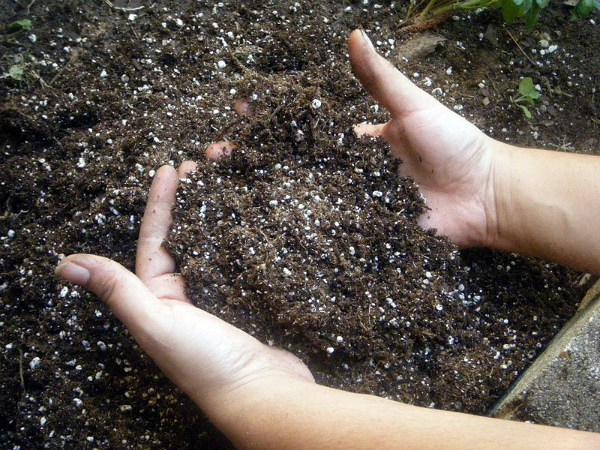 Tubers with well-developed eyes and sprouts up to 10 mm long are suitable for planting. To do this, place them in boxes (8-10 kg each) 4-6 weeks before planting. Until the first sprouts appear, maintain a temperature of 10-15°C in the room containing the planting material; then reduce it to 5-7°C. From this point on, the tubers require light to prevent excessive shoot elongation.
Under these conditions, the sprouts will form densely and acquire their characteristic color. Potatoes are planted when the soil at a depth of 10 cm has warmed to 6-8°C (usually in late April). There's no need to rush planting, as colored potatoes are susceptible to late frosts. Only healthy tubers should be planted at a depth of 7-10 cm. Rows should be arranged north to south to ensure the leaves and stems receive uniform sunlight throughout the day. Before planting, the tubers should be treated with a fungicide to prevent fungal diseases.
Colored potatoes are watered in the same way as other potato varieties. The first watering occurs when the sprouts reach 5–10 cm. At this time, the plants develop not only their above-ground parts but also produce lateral shoots. The second watering, during budding, increases the number of tubers. The third watering coincides with the end of flowering and influences the expected harvest.
These recommendations are, of course, quite general, as overwatering is likely to harm potatoes. Different soils retain moisture differently, and it's difficult to predict the weather for the coming summer. Therefore, monitor the soil moisture, remembering that potato roots are shallow—a maximum of 30 cm.
The first hilling is done after the seedlings emerge. This technique will protect the seedlings from subsequent frosts and will help retain moisture.
Later, hilling up won't hurt either when the bushes start to "fall apart" or the tubers end up on top; besides, weed control hasn't been cancelled.  And, although there are varieties resistant to a number of diseases, such as scab, potato cancer and some others, they will still need to be treated with preparations against late blight, Colorado potato beetle and other pests and diseases.
Where is it grown?
Colored-fleshed potatoes are not grown commercially in the CIS. The reason? Domestic seed stock has not yet been developed in sufficient quantities for commercial cultivation, and its yield is lower than that of cream-fleshed varieties. 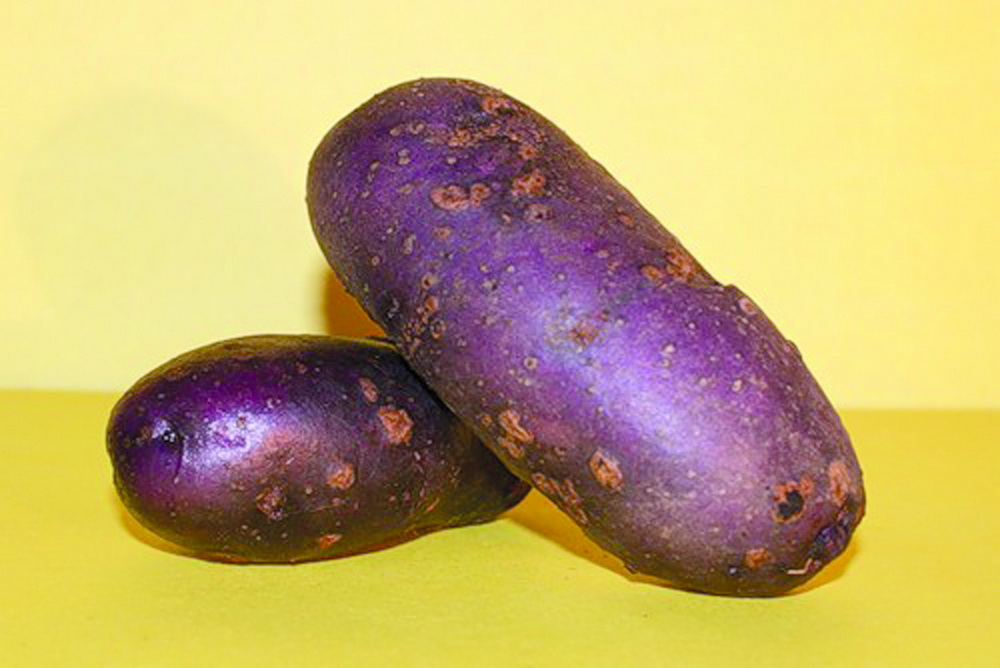 Given the high price of purple potatoes, their superior nutritional value, and the low supply while demand is growing, it's worth trying to grow them yourself, and perhaps even start your own business.
Video "Growing"
This video will show you how to plant and grow purple potatoes.