
Step-by-step instructions for growing potatoes
Content
Selecting a variety
You can get a good harvest at home by using vegetable varieties with different ripening times. It's also best to choose vegetables that are resistant to various diseases and pests. Dutch varieties are such varieties. They are less susceptible to potato nematodes and cancer. Moreover, these vegetables are naturally produced, without genetic engineering. The most famous of them are:
- Mona Lisa;
- Prior;
- Earl;
- Cleopatra;
- Asterix;
- Friesia;
- Eba.
Planting material
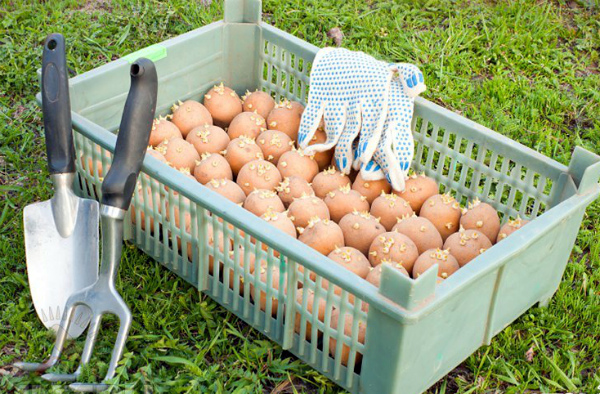
Properly growing potatoes at home means using only high-quality seeds when planting. Their purity and germination must be absolute.
So, for planting you need to select clean, even tubers of medium size.
If potatoes are grown in a large area using machinery, the seedlings are planted after sprouts half a centimeter long have formed. These sprouts are less likely to be damaged or broken during planting. When growing potatoes in a garden plot, the sprouts can be longer.
Soil preparation and tuber planting are processes that should proceed in parallel. Planting occurs immediately after soil preparation.
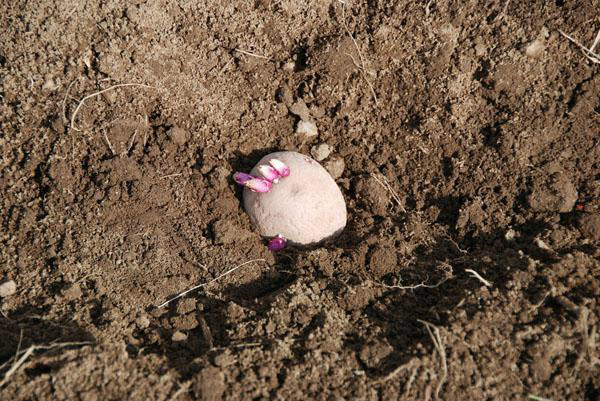
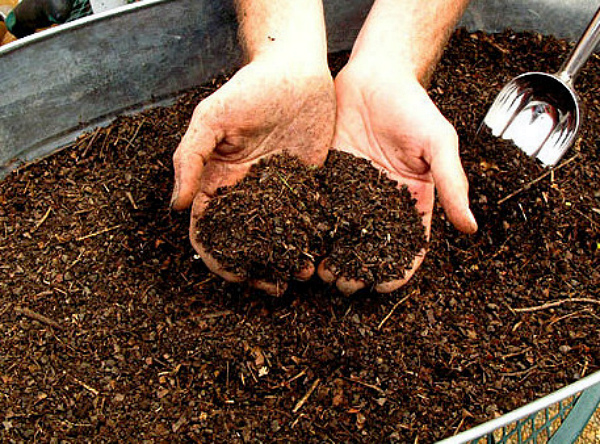
Determining whether the soil is ready for planting is easy: just hold a handful of soil in your hand and then toss it. If the soil crumbles, it's ready. Before planting, add a handful of wood ash to each hole, followed by the tuber itself, sprout-side up. You can also add onion peels to the hole to repel pests like wireworms and slugs.
Soil preparation
Soil preparation is essential for properly growing potatoes indoors. In the fall, the soil should be tilled and organic fertilizers should be added: manure, potassium salt, and superphosphate. If plowing is done on heavy, compacted soil, then phosphate-potassium fertilizers should be added during cultivation. Cultivation itself eliminates any remaining weeds. In the spring, nitrogen fertilizers, such as urea, should be added during plowing.
During autumn plowing, the topsoil is turned over with a reversible plow. Cultivation is best accomplished with a special tool – a disc cultivator. In the spring, turning is not performed. This allows the topsoil to warm up faster, which positively impacts tuber growth.
For a small garden plot, this procedure requires a pitchfork with 3 cm spacing and 6 mm thick tines. This tool will preserve the soil capillaries that are essential for vegetable growth and development. After all, capillaries conduct moisture, allowing the crop to withstand drought.
Landing
Today, there are many methods for planting and growing potatoes. Naturally, growing the vegetable efficiently means a larger harvest in the future. The main thing is to approach the matter wisely and use the option that is most convenient for you.
The most well-known and widespread planting technique is the pit method. Almost all gardeners use it. However, there are a number of other techniques besides this one.
The Dutch method ensures a good harvest without the use of toxic chemicals. It is also successfully used in regions prone to late frosts. Tubers are planted at a depth of 10 centimeters, and after the first sprouts appear, they are covered with soil. After re-sprouting, the procedure is repeated. The resulting soil depth is no different from that achieved with traditional cultivation. However, the Dutch method protects plants from frost, which increases the yield.
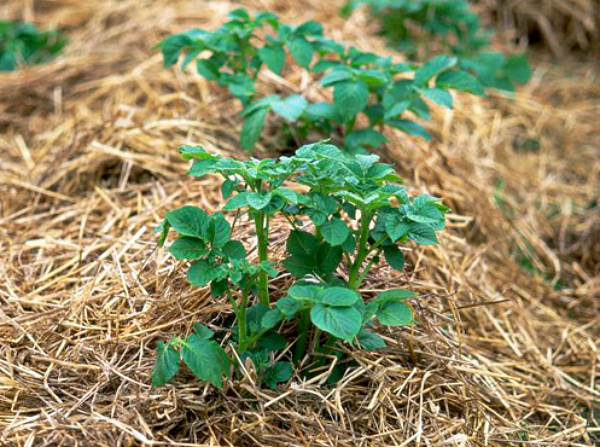
Growing potatoes in straw is a unique technique because it provides adequate moisture for the vegetable's growth. This makes it ideal for growing potatoes in arid areas.
The "hill" method differs in that the tubers with sprouts are planted in holes arranged in a circle with fertilizer. A mound of soil should be created on top, increasing in size as the green parts of the plant grow. A depression should be made at the top for watering.
The "no-bed" technique is suitable when there's not enough space to form beds. Simply dig a hole 1 meter in diameter and half a meter deep. Add compost to the bottom and place the tubers and sprouts in it. Then, cover the area with compost and water. Add more compost periodically.
The method for growing vegetables under black film involves covering the entire planting area with black film with slits in it. The tubers are planted at a depth of 10 centimeters and watered as needed.
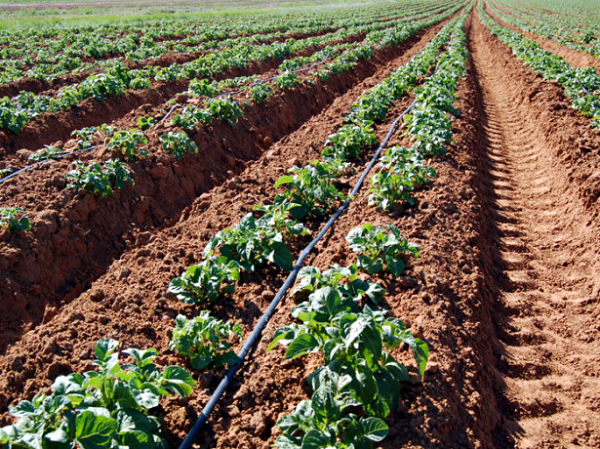
The no-hilling method is ideal for those who lack the time to meticulously care for the vegetable. It includes growing the root crop under plastic film, which eliminates the need for constant soil loosening and weeding. It also includes growing potatoes from seedlings indoors. This method is not very common, as it requires a lengthy process of growing tubers from seed. However, the advantage of this method is that seedlings can be grown even in the cold season, and planted in the ground as soon as the first warm weather arrives. This way, you can reap a bountiful harvest in no time.
Another weed-free method involves covering the growing area with pieces of cardboard, perhaps disassembled boxes. Poke holes in these and plant the sprouted tubers in them.
The straw-growing technique is also widely known and involves the following: Sprouted tubers are laid out on loosened, fertilized soil, spaced 20 cm apart. Then, cover the entire area with a layer of straw (hay). In windy weather, the straw requires additional soil. The only drawback of this method is the potential for mice infestations.
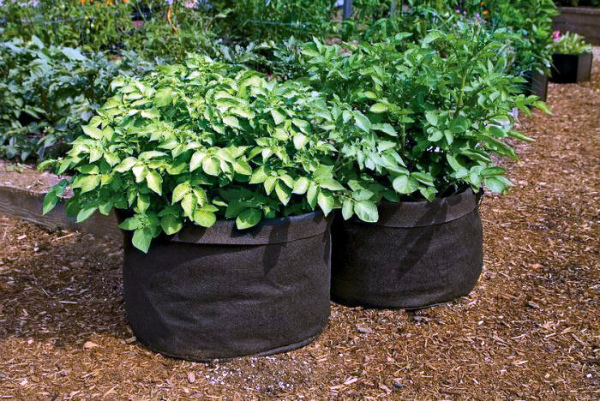
A common method used in summer cottages is to grow potatoes in bags without weeding. Bags up to half a meter deep are half-filled with rotted manure. Sprouted tubers are then placed in the bags and placed in a well-lit area. As the potatoes sprout, add soil to the bags. How do you harvest the crop? Simply cut open the bag and select all the clean roots. This method allows you to grow a bountiful harvest in a short time.
A similar method is growing potatoes in boxes. However, in this case, the harvest must be harvested gradually.
You can also grow tubers in a barrel. A bottomless metal container is ideal for barrel growing, as it helps regulate humidity. Place the barrel in open ground, and make holes every 15 cm to allow oxygen to reach the plants. Fertilize the soil, and plant sprouted tubers every 20 cm.
Video: "Giant Potato in a Box"
This video demonstrates an interesting experiment in growing potatoes in a box: the result was two-meter-long tops and large tubers.
Care
For the vegetable to grow properly, it requires careful care. The first cultivation between the rows is carried out a few weeks after planting. This process removes weeds. Fertilizing also ensures the development and growth of the potatoes. Cultivation is usually carried out with cultivators, which cover the top layer of soil containing the potatoes with loosened soil. This creates uneven, ridge-like surfaces. These ridges allow excess moisture to drain into the holes.
The first weed control treatment should be carried out 7 days after planting the tubers using harrowing. It is recommended to harrow the soil a few days after watering.
Uneven areas of the square are leveled using the microrelief created in the fall. This requires creating pits 30 centimeters deep and 60 centimeters wide.
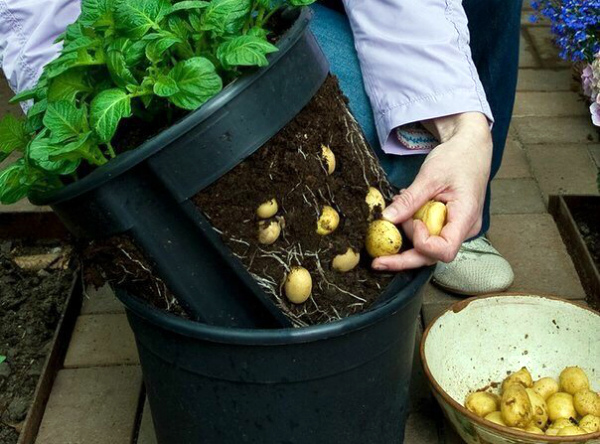
Planted tubers require watering three times throughout the season: before flowers appear, during flowering, and 10 days after it ends.
Before harvesting, all plant tops must be removed. In garden plots, they are simply mowed down; in larger areas, they are removed by desiccation.
After removing the green parts of the plant, the tubers should be left in the soil for a couple of weeks. This will help them strengthen and become more resistant to damage.
Diseases and pests
Disease and pest prevention should be carried out several times per season. Potatoes require six such treatments during the entire growing season. The first treatment should be carried out before any signs of disease appear.
Pests reduce vegetable yields. The primary goal of all gardeners is to detect pests on their crops early and take appropriate action.
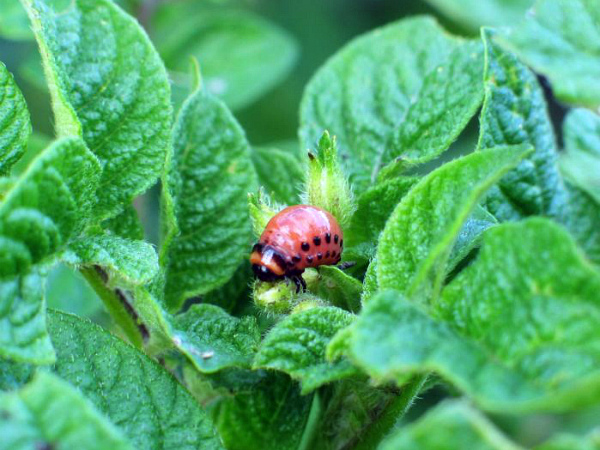
The Colorado potato beetle is one of the most common potato pests. It feeds on the plant's leaves, inhibiting its growth and eventually killing it. One method of controlling the pest is by hand-picking the beetles from the plants. Chemical sprays can also be used.
Another pest that damages vegetables is the wireworm, a type of click beetle. Its orange larvae bore tunnels into the potatoes growing in the garden. An effective method of controlling the beetle is to till the soil in the fall. The parasite, due to the soil layers being turned over, remains on the surface and is killed by frost.
The potato cutworm damages the vegetable, slowing its development. The parasitic caterpillars attack the plant stem, causing it to dry out. Excessive moisture leads to rot. Cutworms can be controlled with special traps.
So, today there are a variety of potato growing methods and technologies that can help you reap a bountiful harvest, both in your backyard and across large fields. So, even a beginner can grow this vegetable.
Video: "Methodology for Growing Potatoes in Organic Trenches"
After watching this video, you will learn how to grow potatoes in organic trenches and boxes.