
Potato harvesting with a walk-behind tractor: choosing a model or doing it yourself
Design features and types
It's important to adjust the tool's depth so that it rests on a layer of dense soil, leaving a loose layer of tubers on top. This will minimize crop losses and damage during harvesting. Any tiller digger, whether factory-made or homemade, belongs to one of the well-known types.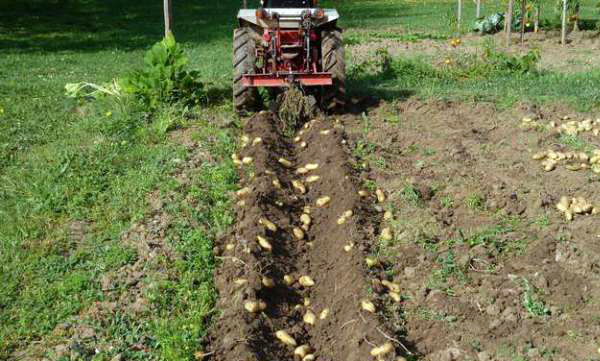
- Vibrating type. This is a trailed mechanism consisting of a ploughshare and a sieve that vibrates when a walk-behind tractor digs potatoes. The ploughshare lifts a layer of soil along with the tubers, which then passes onto a vibrating grate, through which the soil falls, and the crop remains on the grate, finally falling to the ground behind the machine. This type of potato harvesting with a walk-behind tractor is very effective, although it has a rather complex design.
- Potato digging with a walk-behind tractor using a conveyor mechanism. As in the first method, the soil is broken up by the ploughshare and transported to the conveyor platform, where the soil and remaining potato tops are removed. The clean tubers remain on a grid equipped with a special hook to support the potatoes. The conveyor mechanism is more reliable than a complex sieve-type unit. Harvesting potatoes with a walk-behind tractor using a conveyor mechanism is simple; however, as in any other case, soil compaction must be taken into account.
- The arrow-shaped type is the simplest of all known. It has no moving parts, making potato harvesting with a walk-behind tractor very easy. A blade, similar to a bayonet shovel, is fixed to a rod, which is attached to the walk-behind tractor so that the cutting surface is positioned at a slight angle to the ground surface. The soil is cut and fed onto long rods, with a gap between them that is precisely sized to catch the tubers. The soil disperses, and the potatoes fall on top of the soil, ready for harvesting.
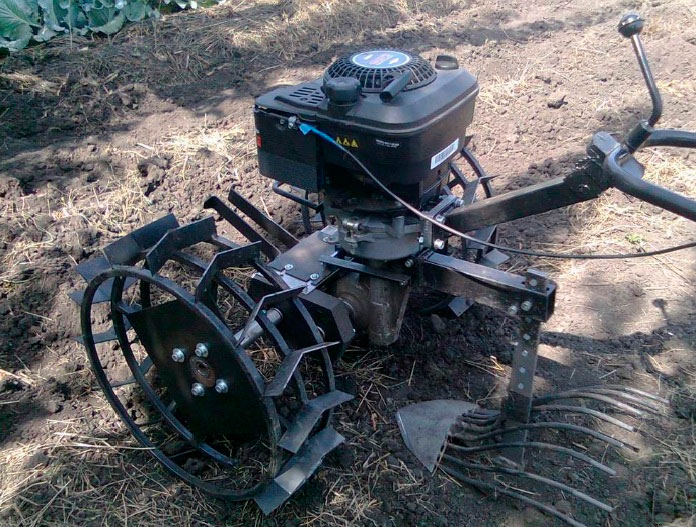
As we can see, potato harvesting with a walk-behind tractor can be carried out using various attachments, and weeding can also be done with a special mechanism. A motor cultivator typically loosens and prepares the soil before planting. A walk-behind tractor, however, has a much broader range of functions, so if equipped with special weeding tines and cutters, it can easily handle this task and ensure good soil aeration.
DIY Video
This video will show you how to make a digger yourself.
Factory
There are many models of agricultural machinery available in stores today. However, potato harvesting with a walk-behind tractor isn't always included.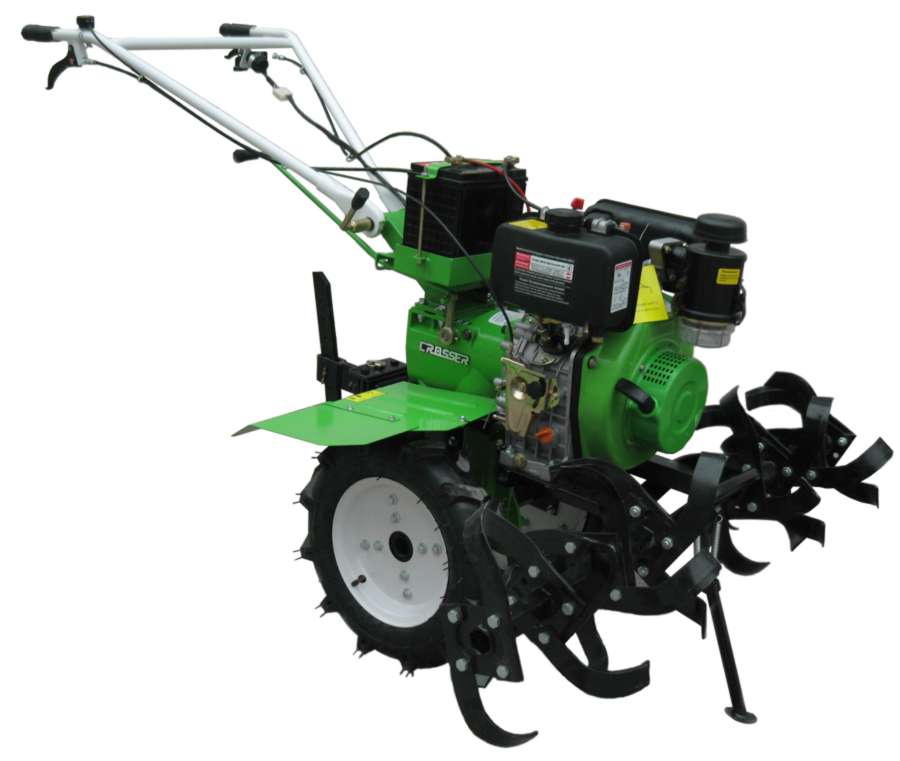
When choosing a walk-behind tractor, consider several parameters: the size of the area to be cultivated, the soil type, and the variety of tasks planned. You should also carefully examine the design to ensure it can accommodate all desired attachments.
Homemade
Despite the wide range of motorized equipment available in stores, Russians love to design tools and equipment for themselves, taking into account specific purposes, soil characteristics, and the capabilities of the person who will be using them.
This is entirely feasible for working in small areas and on soils with low to medium density. Furthermore, the cost of home-designed and manufactured devices is several times lower than what a homeowner would pay in a store.
However, the manufacture of mechanisms for heavy soils requires a deeper knowledge of mechanics and physics, and a careful selection of materials, as this makes the task significantly more difficult.


Video "Cleaning"
In the video you will see how to harvest potatoes using a digger.