
Potato ripening period and harvesting features
Content
The relationship between variety selection and harvest timing
Depending on the length of the growing season, potato varieties are divided into several groups.
Early varieties produce a harvest of marketable tubers 45-80 days after planting. This group is subdivided into ultra-early, early, and mid-early varieties. The difference lies in when the potatoes ripen. Different subgroups can reach maturity in up to 10 days.
Gardeners' favorite varieties are: Impala, Zhukovsky early, Bellarosa, Karatop, Arosa, Riviera, Red Scarlett, Talovsky 110.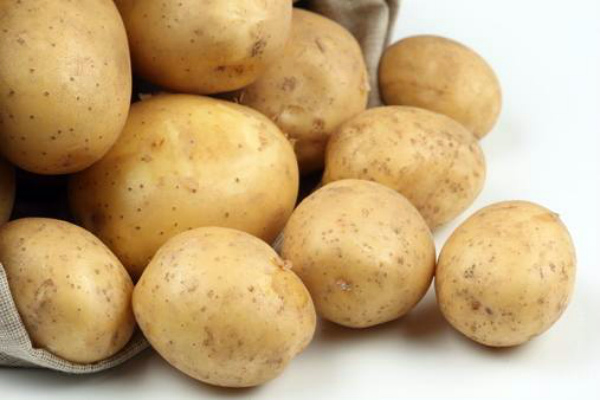
All of these varieties have their own distinctive characteristics that should be considered. For example, the Impala variety is distinguished not only by its early maturity but also by its high yield. Its tubers, with light brown skin and creamy-yellow flesh, can reach 160 g in weight. It is also valued for its relative resistance to potato cancer and nematodes.
The Riviera potato variety is attractive due to its extremely early ripening period (tubers reach marketable weight after 40 days) and high and stable yield (on the 35th day it reaches 28 t/ha).
Zhukovsky ranniy is an early variety of Russian selection, renowned for its unpretentiousness and excellent taste (which allows it to be grown in all regions of Russia). The vegetation period is 70-80 days, and it is resistant to potato nematodes, cancer, rhizoctonia, and alternaria.
The Bellarosa potato is widely known for its unrivaled taste (5 on a five-point scale) and early maturity; in the southern regions, two harvests are possible.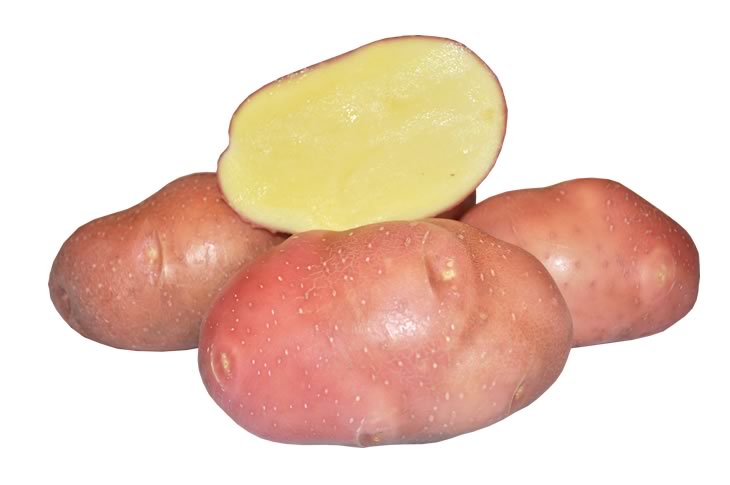
One of the latest varieties of German selection, Karatop, is also interesting for its fast ripening time.
The tubers of mid-season varieties ripen 80-85 days after planting. These include Aurora, Prince, Odyssey, Ogonyok, Kolobok, and Nikulinsky.
Late potato varieties include Golubizna, Chaika, Orlyonok, Simvol, Zhuravlinka, and Limonka. They can be harvested 110 days after planting.
To choose the right potato variety for your garden, you need to understand how potatoes grow. A biological characteristic of potatoes is their ability to form underground shoots. The ends of these shoots develop and thicken, turning into tubers. This is why potatoes require loose, moderately moist soil. Root growth in such soil begins at temperatures no lower than 8°C (46°F). Potatoes are sensitive to frost. At temperatures of -1°C to -1.5°C (-3°F to -3°F), the tops die. The ideal temperature for tuber formation is 16°C to -18°C (61°F to -62°F). Two weeks after flowering, rapid tuber growth and starch accumulation occur. Given the wide range of climatic conditions and soil composition in our country, preference should be given to regionally recognized varieties. The fastest ripening, yield, quality, and disease and pest resistance will occur where growing conditions are close to optimal.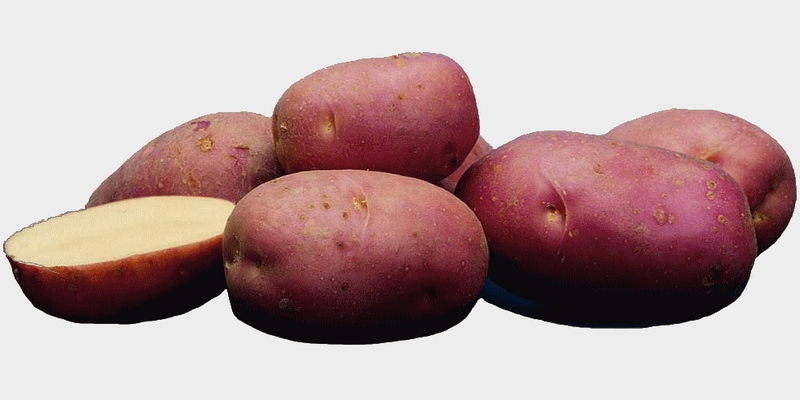
In addition, it's necessary to occasionally replace varieties, many of which lose productivity after just two or three years. It's best to use several potato varieties with different ripening times simultaneously.
Video "The Best Potato Varieties"
From the video you will learn which varieties are best to choose for planting.
Factors Affecting Ripening Time
Unfortunately, in agriculture, there can be no strict planting and harvesting schedule. Every year, these dates shift in one direction or another, influenced by a variety of factors.
Let's consider the main ones of these factors.
- Early planting. The sooner you plant potatoes in the ground, the faster the tubers will ripen. However, too much haste can be dangerous: tubers planted too early can simply rot in the ground, dying from the cold.
- Lack of moisture. Dry summers and lack of irrigation also shorten potato ripening times. But frankly, the harvest won't be a pleasant one.
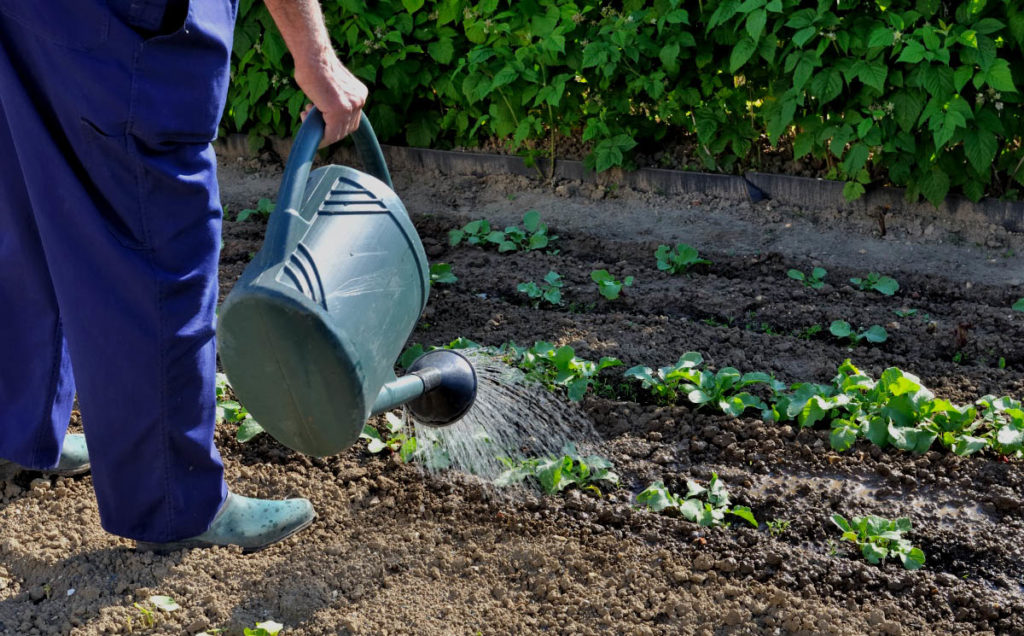
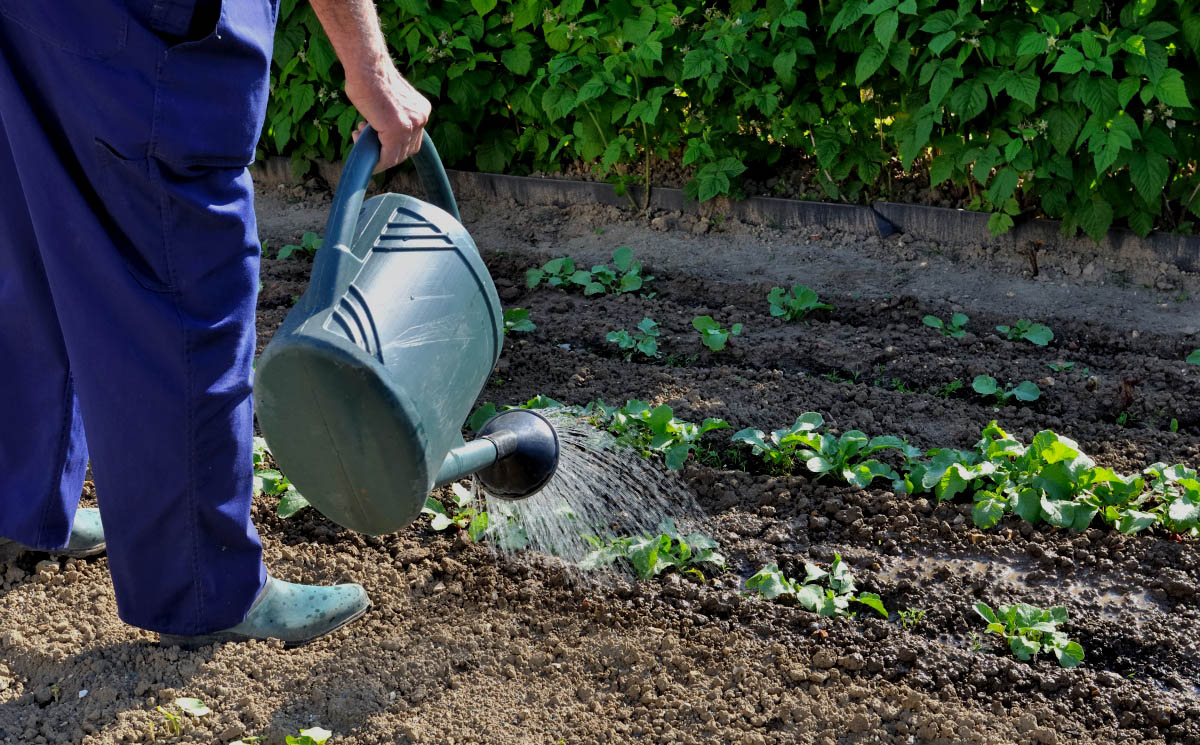
- Fertilizing the soil. Potatoes will ripen faster in poor soil, but will produce few or no tubers. Over-fertilizing prolongs the growing season. The plant grows upward rather than nourishing its roots. Potatoes dug up in the fall will not have time to ripen and may contain elevated nitrate levels.
Ways to speed up the ripening period
To get an early potato harvest, you need to choose a location that dries out earlier than others in the spring; this will allow you to plant potatoes earlier.
To retain moisture, the soil should be dug up in the fall and organic and mineral fertilizers should be added at a rate of 50 buckets of rotted manure per 100 square meters, and if there is none, then 200-300 g of ammonium nitrate or 300-500 g of ammonium sulfate and 500 g of superphosphate per 10 m2.
Despite the fact that for seed purposes it is recommended to use tubers weighing 25-30 g (they form a root system faster and better tolerate unfavorable conditions), the earliest harvest is obtained from tubers over 50 g.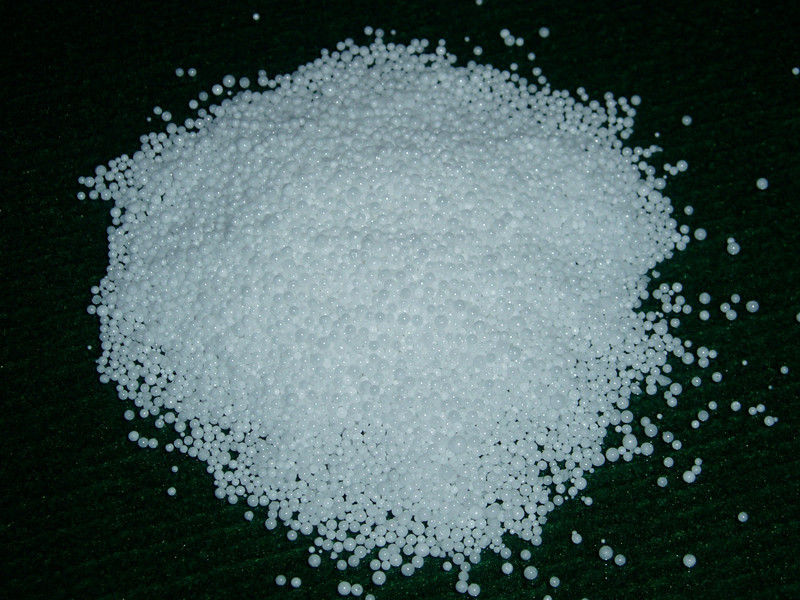
Sprouting tubers will help speed up the ripening of potatoes and increase the size of the future harvest.
The best way to do this depends on how many days it will take to plant the potatoes and the personal preferences of the gardener.
So, potatoes can be sprouted in an unheated but well-lit and ventilated room, provided the daytime temperature is between 10°C and 15°C, and at night, the temperature is no lower than 6°C. The tubers are laid out on the floor, previously covered with straw or hay. Germination takes 2-4 weeks.
To save space, tubers can be placed in boxes with holes and stacked on top of each other, alternately swapping places for uniform lighting.
Wet germination stimulates the growth of not only sprouts, but also roots, and is done as follows: potatoes are placed in boxes or baskets with the eyes facing up, layered with wet compost, peat or sawdust.
When the tubers develop their first roots, the substrate is moistened with the following mixture: 10 g each of potassium chloride, ammonium nitrate, and 50 g of superphosphate per bucket of water. For those who prefer organic fertilizers, another solution is suitable: 1 cup of wood ash per bucket of water.
Two days after watering with the nutrient mixture, water with clean water. A week later, the potatoes are ready for planting, having formed numerous roots.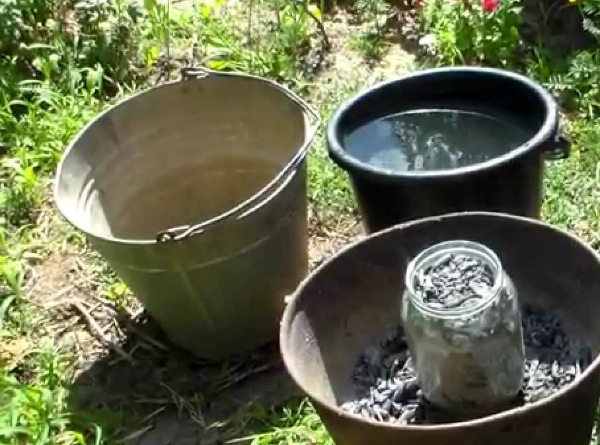
Withering is perhaps the easiest way to prepare potatoes for planting. Spread the potatoes in a single layer in a dry place. They don't need to be exposed to direct sunlight. An attic or half of the garage would work.
The wilting process lasts from one to one and a half weeks. During this time, the well-ventilated potatoes will develop eyes that will produce good seedlings.
And, of course, a worthwhile harvest can only be obtained from high-quality planting material, so it's important to select tubers that are free of damage and show no signs of disease, and of the correct shape. At every stage, from placing them in sprouting trays to planting them in the ground, mercilessly discard any questionable tubers. Avoid planting potatoes with weak, thread-like sprouts; they won't yield a good harvest anyway.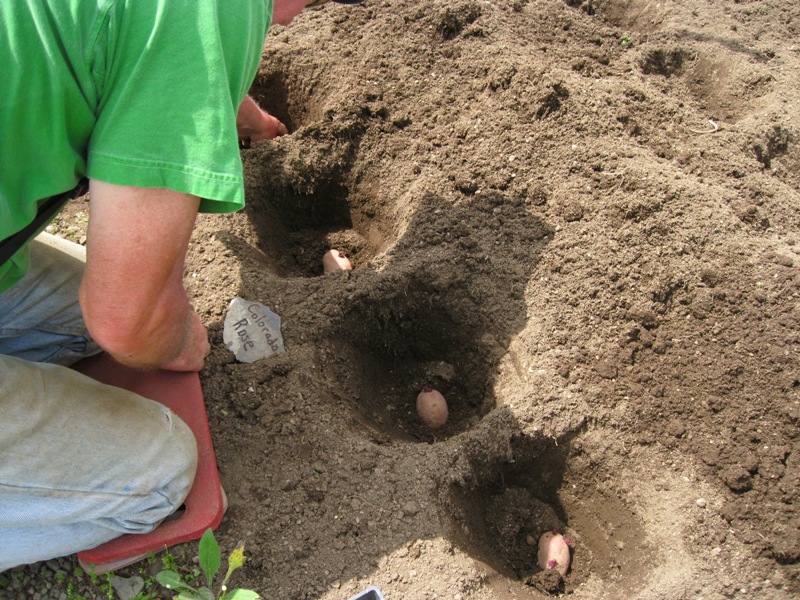
If you're harvesting your own seeds, green them before storing them in the cellar. To do this, leave the potatoes selected for seed on the ground in a well-lit area, turning them periodically.
After 7-8 days, the seed tubers, hardened and green on all sides, are ready for winter storage.
These potatoes are resistant to rot, have a longer shelf life, and are not eaten by mice.
Weather conditions during harvest
To ensure all the time and effort spent growing potatoes doesn't go to waste, it's crucial to correctly calculate when to harvest them. Potatoes dug too early will be unripe and, due to their thin skin, will rot before they reach spring. And if left in the ground for a long time after ripening, they will become limp or begin to deteriorate from the inside. Prolonged rains and early frosts can ruin the entire harvest.
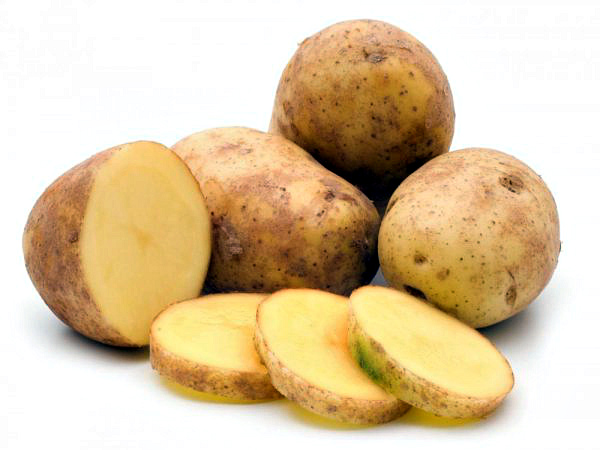
What's the best time to harvest potatoes? Typically, potatoes are dug up when 70-80 percent of the tops have dried out and fallen over. However, this can happen due to disease, and the tops of some varieties remain green until late autumn, even though the tubers are already ripe. Therefore, it's best to determine the ripeness of potatoes empirically, periodically digging up individual plants at different ends of the plot and inspecting the tubers. And most importantly, align your plans with Mother Nature's. After all, if she decides to send us rain or frost, it's better to give in and dig up the potatoes early than to harvest them rotted and caked with mud, or to leave them in the ground altogether.
Video: "How to Increase Your Yield"
From the video you will learn how to increase your potato yield.