
When to dig potatoes: harvesting tips
Content
How to determine the cleaning time?
First of all, gardeners should understand that there is no definitive date for harvesting potatoes. Several factors can influence the crop's ripening.
Potato planting time varies somewhat. If planted in late April, harvesting can begin as early as early August. Statistically, the most favorable month for planting is May. Therefore, potato harvesting can begin in late August or early September.
It's important to consider the varieties used for cultivation during the current season. Early and late varieties can have significantly different harvest times—from 4 to 6 weeks. The timing will also be affected by how the owners tended the plot and crops during the summer, the weather, and the amount of moisture and fertilizer applied to the soil.
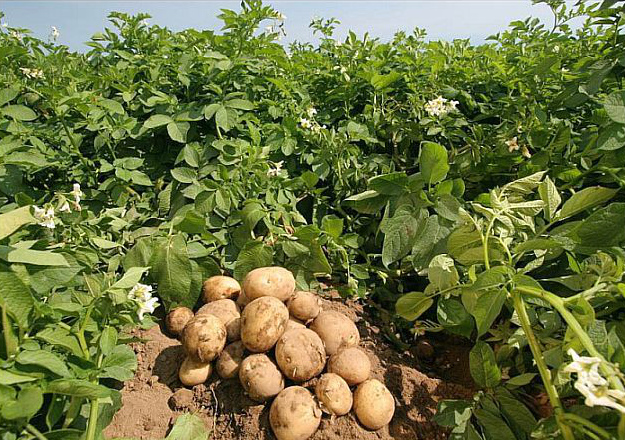
You can dig up a couple of plants in the garden as early as late July if the vegetables will be used immediately for cooking, such as new boiled potatoes. However, if you plan to store potatoes for a long time, harvesting them early is absolutely not recommended. The skin will still be too thin, significantly reducing their shelf life. Even the slightest damage to the skin will cause the tubers to spoil and rot. And if the unripe harvest starts to spoil, you could be left without any supplies for the winter and without any provisions for the following season.
When growing potatoes from seed, gardeners know the flowering time of the plants, as well as the ripening period, when purchasing a particular variety. The required dates are also usually indicated on the packaging. If, during plant care, flowering occurs on time, this means the potatoes are growing normally and will ripen on time.
Usually, most summer residents are guided by the appearance of the bush. Once the tops begin to turn yellow, there's every reason to believe the potatoes are ripening and are already in their final stages. Once the tops have dried out, and a liter of water has fallen off, you can begin digging them up in a few days.
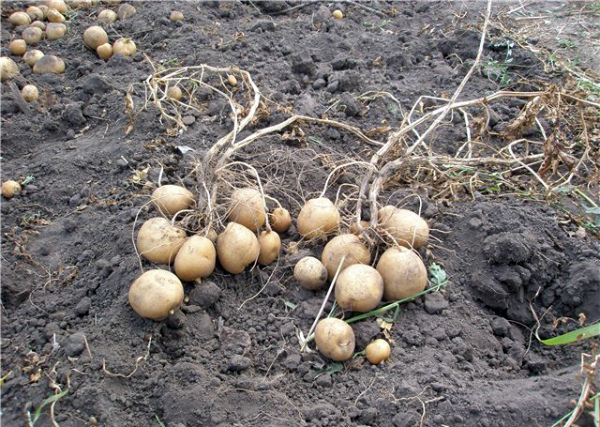
However, it often happens that some of the potato plants have already turned yellow and dried out, while others have not. This may be because, after digging up the potatoes last season and harvesting the tubers, they weren't sorted by variety, and therefore by maturity date. If this happens, you should dig up the mature plants and return to the rest in 10-14 days. By this point, you'll be able to see the changes, and then dig up the remaining potatoes. However, don't forget to continue watering the plants.
When gardeners plant a single crop variety, they will harvest it at the same interval. Typically, the harvest takes 70-100 days.
In some cases, wilted tops don't always indicate potato ripening. This can happen if the soil isn't moist enough during a particularly hot period. After a few days, the plants will begin to dry out significantly. To prevent this, proper garden maintenance is essential.
With excess moisture or nitrogen fertilizers, the tops can grow strong, while the root crops themselves do not have time to ripen by the time of harvest.
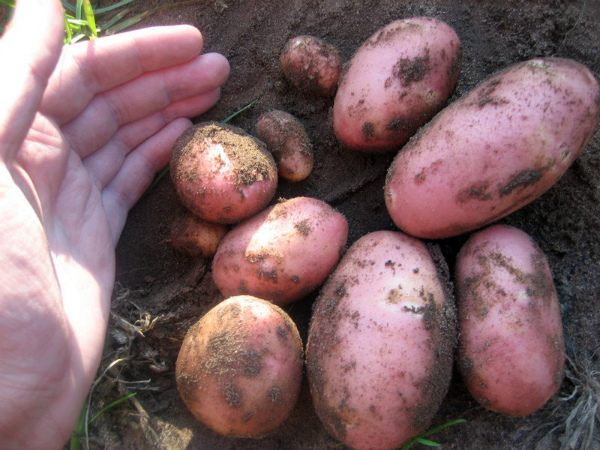
Some varieties will remain green on the top even when fully ripe. Therefore, the best time to harvest can be roughly estimated at late August and the first half of September. If in doubt, you can always try digging up a couple of bushes to check the condition of the roots of this variety.
Another way to determine the stage of potato ripeness is by the peel. If the peel is easily rubbed off and thin, it's best to hold off on harvesting.
Dig up one bush to check. If the peel isn't ripe yet, try again in 7-10 days.
To determine how many tubers you can harvest from one square meter of seedlings, you need to know the variety used during planting. Keep in mind that young potatoes will produce smaller tubers.
Cleaning methods
Many gardeners are interested in the number of potato digging techniques available. Several methods can be used during harvest.
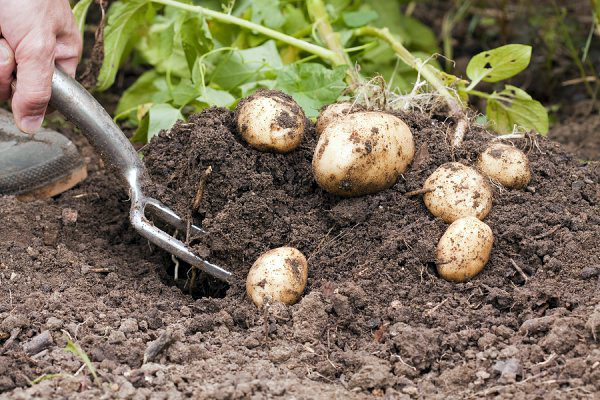
Most often, standard gardening tools are used—a shovel and a pitchfork. However, the work requires considerable physical exertion, and since most gardeners are older, this can be a problem. The lower back is particularly strained. Those with musculoskeletal issues are better off using other methods, as back pain can develop within a few hours if they are in poor health.
Large farms will need to cultivate significantly larger areas than summer residents. Special equipment has been designed for large-scale harvesting, making the job significantly easier. These include potato diggers and walk-behind tractors.
Regular physical labor can put significant strain on a gardener's back. Therefore, if you have a very large area to cultivate and have access to specialized agricultural equipment, it's best to use it.
You can begin harvesting with this equipment after you've cut off all the surface foliage. After a few days, you can begin digging up the potatoes.
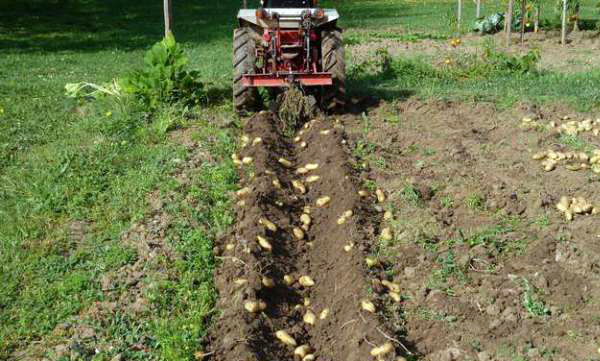
Once you've decided when to dig potatoes, you need to prepare the equipment. First, check the condition of the rotating parts. They should be well lubricated. The parts that will loosen the soil and help harvest the crop should be clear of old, hardened soil, clay, and pebbles. If the sharp edges are dull, they will need sharpening. It's important to understand that using a walk-behind tractor requires following a number of specific rules:
- all rows of planted potatoes must be even so that there is no need to change the direction of the device;
- the distance between all rows should be the same, since the wheels of the walk-behind tractor itself can drive onto the neighboring planting, damaging the tubers;
- When harvesting, it is better to use a special attachment for the cultivator, selecting a specific depth for digging the soil;
- the walk-behind tractor must be adjusted so that it moves easily, then the tubers will rise to the surface;
- To make working with a cultivator easier, it is best to dig up potatoes in alternate rows, otherwise one of the equipment wheels will move along the plowed ground, and the other along the trampled path.
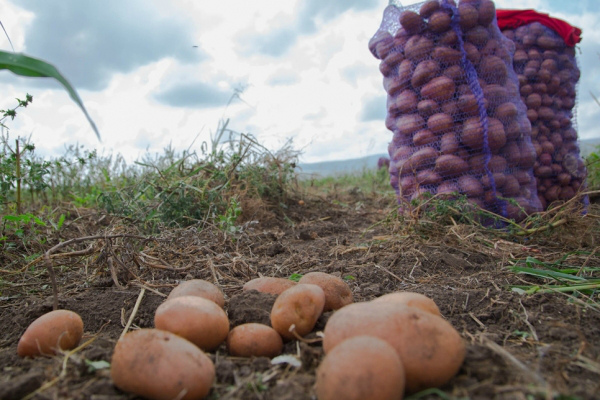
Before starting work, it's recommended to prepare a place where you'll sort or dry the harvest. Avoid throwing or dropping the tubers to prevent mechanical damage, as otherwise they'll spoil within a few weeks.
During harvesting, discard damaged and diseased potatoes immediately to avoid wasting time on them later. Place the healthy harvest in bags and store them in a cool, dry, dark place. It's best to cover the bags with a thick cloth to prevent sunlight from reaching the potatoes. This will delay sprouting. Note that it's best to sort the varieties into bags immediately to avoid confusion.
If any tops and weeds remain in the field after harvesting, they can be dried in the sun. After a few days, collect everything and then bury it in a compost pit. If during harvesting you notice signs of disease or fungus on the plant, it's best to burn the tops.
Try to follow these rules, it will help make your work of harvesting potatoes easier.
Video: "How to dig potatoes with a mini walk-behind tractor"
This video demonstrates how to quickly dig up potatoes using a Jikov motor cultivator or a mini walk-behind tractor with homemade attachments, without a shovel.