
How to Hill Potatoes by Hand: Tips for Beginners
Content
Do I need to hill up the soil?
Hilling potatoes ensures air and moisture flow to the plant's roots, allowing them to develop properly and form tubers. Another positive effect is the simultaneous removal of weeds. Therefore, it's important to know how to do it.
But before you begin hilling, be sure to analyze the climate in your region. It's common knowledge that potatoes don't like dry climates, but they also don't tolerate excessive soil moisture. Potatoes thrive at average temperatures of around 25 degrees Celsius. Therefore, when growing potatoes in northern regions, hilling is essential: an additional layer of soil covering the roots will increase the temperature.
But the situation is completely different if you live in the southern regions; there, excessive zeal when hilling can, on the contrary, unnecessarily increase the temperature and even harm the future harvest.
Here it will be enough to regularly weed and slightly loosen the top layer of soil.
Video: "When and How to Hill"
From this video you will learn when and how to hill up root crops.
When and how to properly hill up?
Choosing the right time also directly depends on the growing region: in northern regions, it's best to begin this process immediately after the seedlings emerge—this will protect the young potatoes from potential frosts and also eliminate weeds. 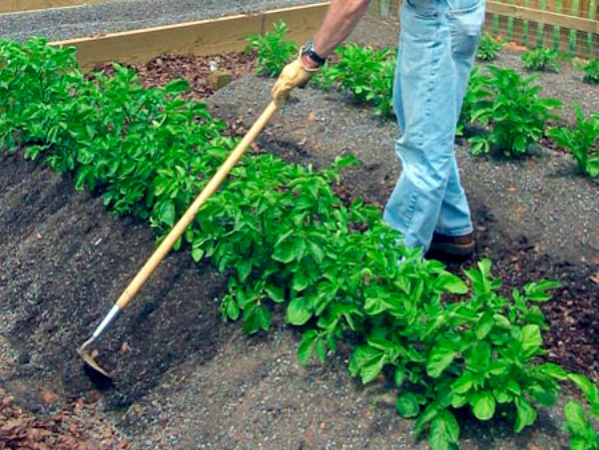 In regions with milder climates, you can weed and hill up potato beds for the first time when the plants reach 15 centimeters in height, and repeat after 20 days. Remember, don't hill up on a hot, sunny day—it will only harm the plants. It's best to choose a cloudy day, after rain, or to work the potato beds early in the morning, before the heat sets in.
Hilling methods
To determine the most efficient and quick way to hill potatoes, you need to try all available methods. Farmers have a variety of tools at their disposal to assist in this process, from a simple hoe to a walk-behind tractor. Let's take a closer look at each option.
With a hoe or a shovel
The most old-fashioned and labor-intensive manual method.
All you need is a regular shovel or hoe. Manually hilling potatoes is generally only practical for small plots, as the process is extremely time-consuming and labor-intensive: you simply cover each plant with soil, creating a mound around the stem, removing weeds along the way. If you're using a shovel, simply dig between the rows, also creating a mound of soil around the row of plants.
With a manual hiller
A slightly more modernized version, allowing for the rapid cultivation of large potato beds. This device consists of two discs spaced apart. 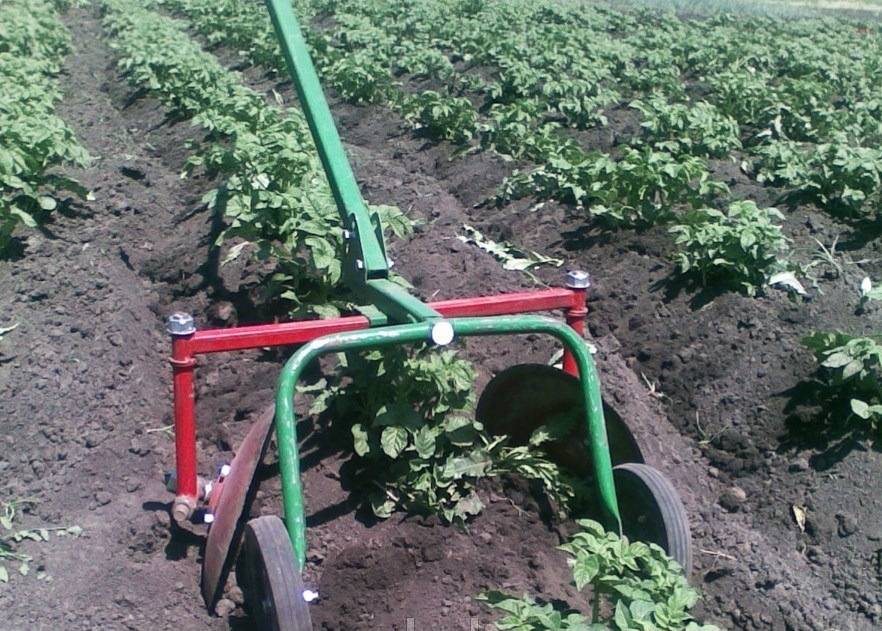 It's best to work with two people when hilling the beds: one person pulls the hiller, the other sets the direction. Potatoes hilled this way must be planted evenly, otherwise damage to individual plants is inevitable.
With a hand plow
Another, quite convenient method allows you to cultivate both sides of a row simultaneously in a single pass. The process is as follows: the metal tip of the device cuts the soil and, thanks to the side blades, directs it to the roots of plants in two adjacent rows.
This method of cultivation can be carried out with the help of a horse (in which case the plow is attached to a harness, and the person simply directs the tip), or manually by the farmer himself (in which case you will have to push the plow).
In any case, it is faster and more efficient than the manual method - you simply guide the tip without having to process each potato plant separately.
With a walk-behind tractor
The fastest and most convenient method: all you need is a walk-behind tractor and the necessary attachments for hilling. The key is to ensure the distance between the walk-behind tractor wheels matches the row spacing (this is easily achieved if you also plant potatoes using the same machine).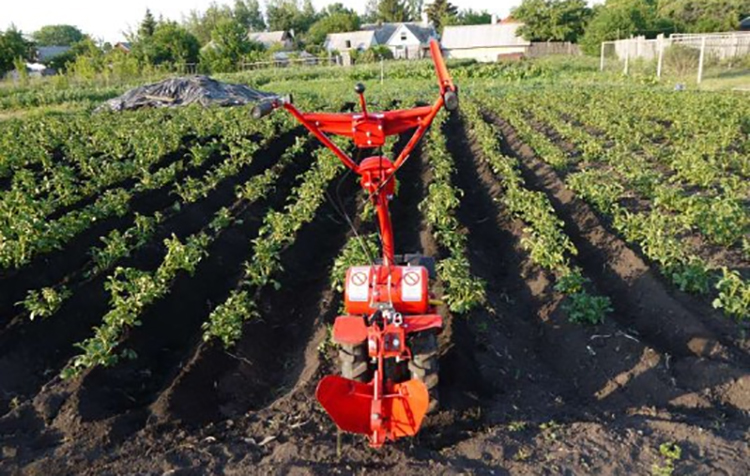
As you can see, there's nothing complicated about growing potatoes, or hilling them. Moreover, if you're not ready to spend a significant portion of your family budget on a walk-behind tractor, you can easily build a simple hiller yourself—all you need is a few hollow metal tubes and two steel disks. There are plenty of resources online to help you with this. But if your garden bed is quite small, you can easily cultivate it with a regular shovel, without the need for specialized equipment. Start small: try growing a few dozen plants (which are easy to care for and don't take much time) to test your skills. And who knows, maybe next year you'll become an avid gardener, capable of growing tons of tasty and healthy potatoes.
Video: "Hilling with a Manual Hiller"
From this video you will learn how to hill up plants by making your own hiller.