
Why and how to hill potatoes
Content
Reasons
In fact, hilling isn't just a procedure for this particular root crop. Many crops are hilled, but the goal is always the same: to produce a larger and better harvest. This is, so to speak, an overall goal. And at different stages of cultivation, hilling potatoes achieves different goals.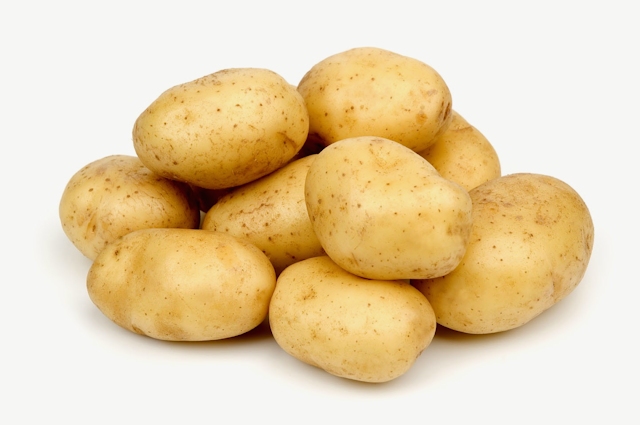
This maintenance step looks like this: we sprinkle soil around the base of the plant. Simply put, we create a small mound of soil—hence the name. Why do we do this? There are several reasons:
- by sprinkling the stems with soil, we ensure that additional tubers grow;
- we loosen the soil, therefore, we improve ventilation;
- we weed out the weeds as we go, taking care of the health of the plant;
- we provide protection from overheating and freezing;
- We create more effective access of sunlight for the bushes.
Well, it's all clear with the extra tubers—we're working for a bigger harvest, a novice gardener might say. But is it really worth the hassle of the ventilation rajas?
Of course it is! Ventilation is necessary because:
- the roots, which have nothing to breathe, die;
- if there is a lack of oxygen, they do not grow in depth;
- If the roots have nothing to breathe underground, they solve their problem by pushing their breathing shoots to the surface;
- Poor ventilation can cause plant diseases.
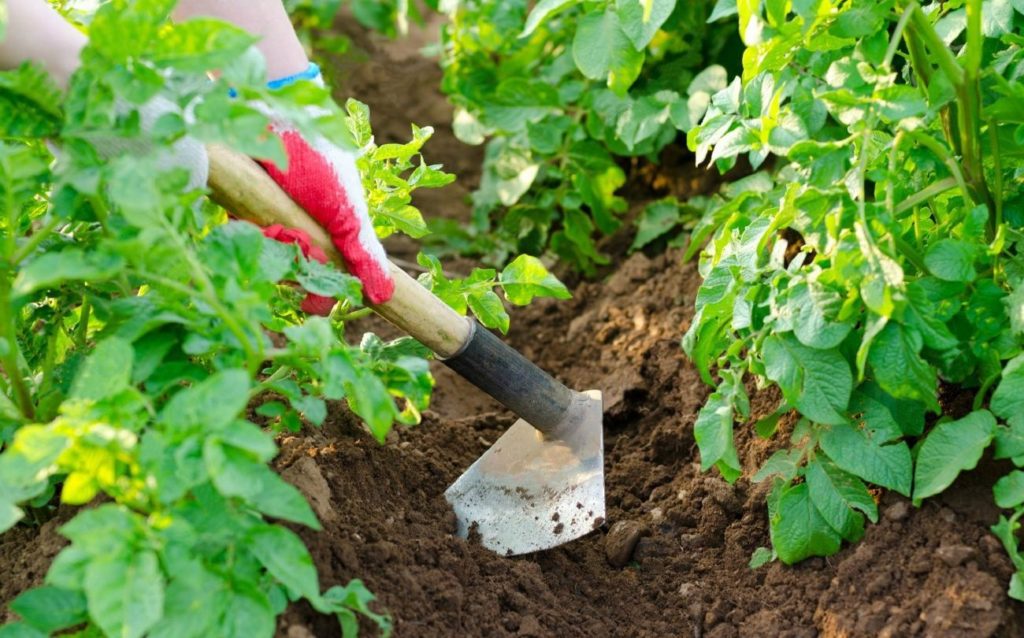
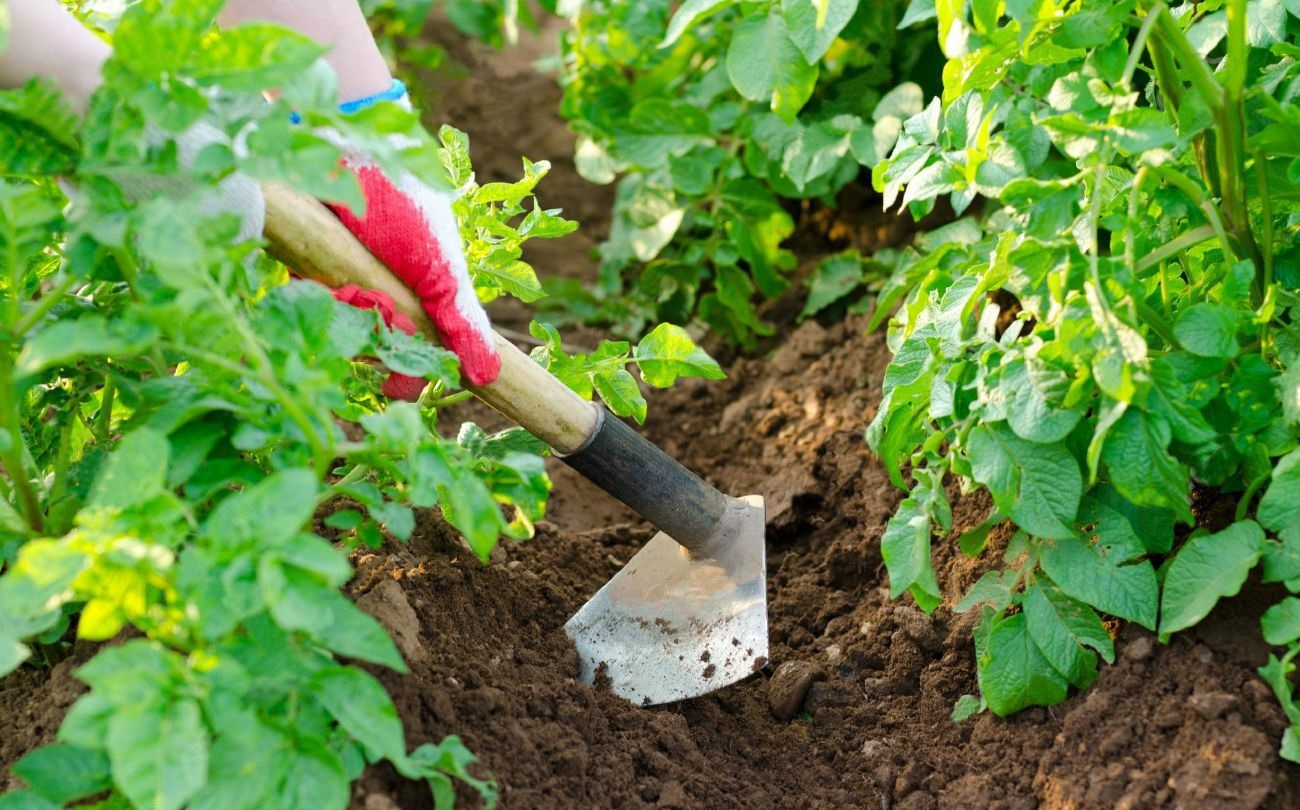
It's generally believed that properly and timely hilling of root vegetables can increase yields by 20-30 percent. Experts also claim the potatoes will taste better.
Video: How to Care for Potatoes
From the video you will learn how to hill up potatoes.
How to do it
Experienced gardeners advise that the sooner you begin hilling your plants, the better. A good indicator is the shoot height: if they've reached 17-20 cm, it's time. Why do it early? Firstly, by doing this, you won't have to do any additional weeding or soil loosening. Secondly, it provides reliable protection should cold weather return. This is especially important for northern regions.
If it has just rained and the weather is cloudy, this is the best day to hill up potatoes. During hot weather, you'll have to do this in the garden beds at dawn or after sunset, always after watering; dry soil is dangerous. Heat is dangerous for this procedure, because no matter how carefully you perform it, the roots will still be somewhat damaged. And the plants will wilt under the scorching sun.
Typically, simple farming tools are used for hilling: a hoe, a hoe, or a mattock. Using these tools, we rake the soil toward the bushes, forming fairly high and wide mounds.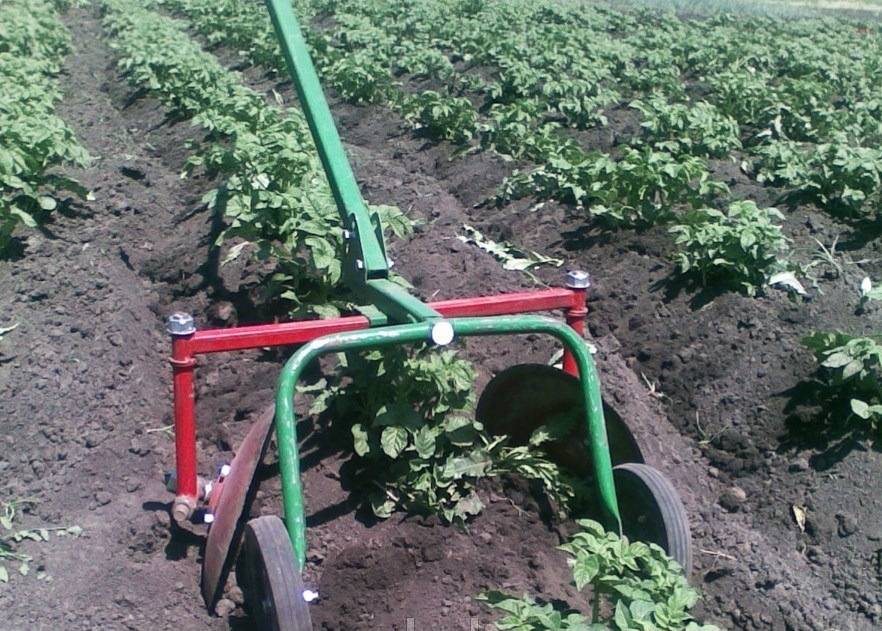
Some people use a rather primitive, but effective, technique for this: a hand-held hiller. They also build their own using a simple hoe. Or they construct something like a small plow.
And finally, the pinnacle of technical innovation—the walk-behind tractor. This thing is suitable for plowing, hilling, and other maintenance tasks.
How many times?
It's commonly believed that hilling root vegetables twice per season is sufficient. This is probably correct. But experience shows that a couple of extra rounds won't hurt. You'll notice that hilled potatoes look great in beautiful, neat beds. And in the fall, you'll see that your efforts have had a positive impact on the harvest.
The first planting, as we have already mentioned, occurs when the shoots have grown to 17-20 cm. The second is 2-3 weeks later, on the eve of flowering.
Let your gardener's intuition guide you as to whether extra hilling is necessary. In any case, if you see tubers poking out of the ground, disintegrating bushes, or other irregularities, grab a hoe.
Is this necessary?
And finally, a rather philosophical question: is there any point to this rather tedious work? Let's find out.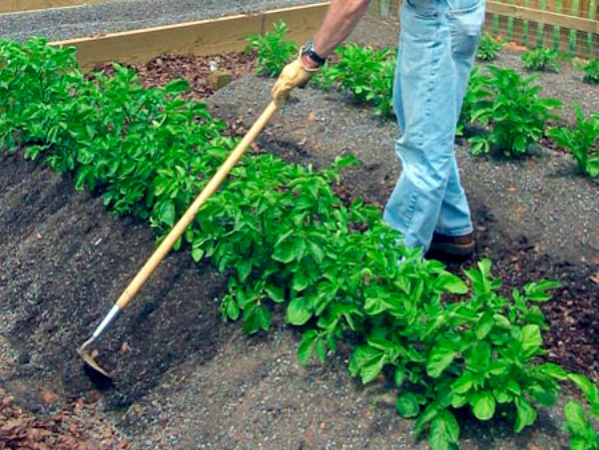
We've already discussed the reasons for hilling potatoes, and all of these are compelling reasons. However, those who doubt are right: this part of the care isn't always necessary.
First of all, it's unnecessary in southern regions with truly hot climates unless adequate watering conditions are available. Burying your plants in dry, hot soil will literally result in baked potatoes. Therefore, it's wiser to limit yourself to loosening the soil and removing any crust.
Additionally, there's a fairly ancient method of growing that eliminates the need for hilling altogether. This is called organic mulching. This method involves covering the soil with hay or straw in the fall. This allows:
- protect plantings from recurrent frosts;
- control moisture content and distribution;
- keep warm;
- save the soil from being washed away during rains;
- promote intensive growth of root crops;
- protect potatoes from diseases and pest attacks.
Over the winter, the bedding rots, and the potatoes are planted as usual. Then, the seedlings are covered with a first layer of hay or straw, and after a while (the sprouts should reach 5-6 cm), a second layer.
Now all that's left is to wait for the harvest. It doesn't even require watering, except during droughts.
You can use inorganic mulch by covering the potatoes with dark fabric or film. The key is to ensure the covering adheres tightly to the soil and is not blown away by the wind. Vegetable growers who have used mulch are satisfied with their harvests. So, there are options. If traditional hilling seems outdated or too tedious, know that there are options.
Video "When to Hill"
This video will tell you when to hill up potatoes and how to do it correctly.