
The best pesticides for controlling the Colorado potato beetle on potatoes
Content
Basic information about the pest
There's no need to describe the appearance of this insect, which hails from the distant mountains of Colorado: we're all familiar with its brightly striped back or its red-colored larvae. We also know firsthand the incredible voracity of these beetles: they're quite capable of destroying an entire potato patch. Fresh from hibernation, the insects are constantly searching for food, typically targeting tender young leaves. And it's not just potatoes that suffer—this exotic beetle poses a threat to all crops in the nightshade family.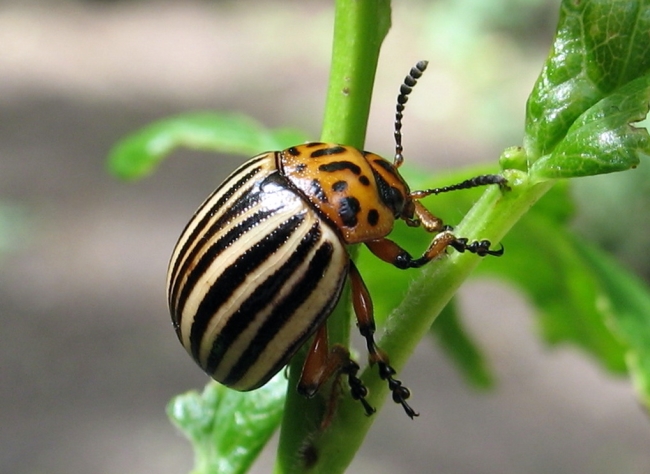
As soon as the insects emerge from hibernation in the spring, it is necessary to begin combating them: it is precisely during this period that it is necessary to treat potatoes for beetles, since they have not yet gained strength and are quite vulnerable.
Every gardener knows that potatoes fear their larvae more than adult insects. These pink creatures consume the largest amount of green matter, leading to the death of the plants. The active growth and development period of the larvae lasts only about three weeks, but this is more than enough time to destroy an entire potato bed.

Video "History of Appearance"
This video will tell you how this potato pest appeared in our region.
Safe means of control
Today, there are numerous products, both organic and chemical, for treating potato pests. Experience shows that the best results are achieved by using an integrated approach: combining synthetic products with any effective traditional method.
Mulch and potatoes
This method will appeal to those gardeners who prefer simple folk remedies: simply sprinkle the soil around the bushes with straw, and you can forget not only about weeds but also about the Colorado potato beetle – a layer of mulch creates favorable conditions for the development of other insects, for whom the beetle is a favorite delicacy.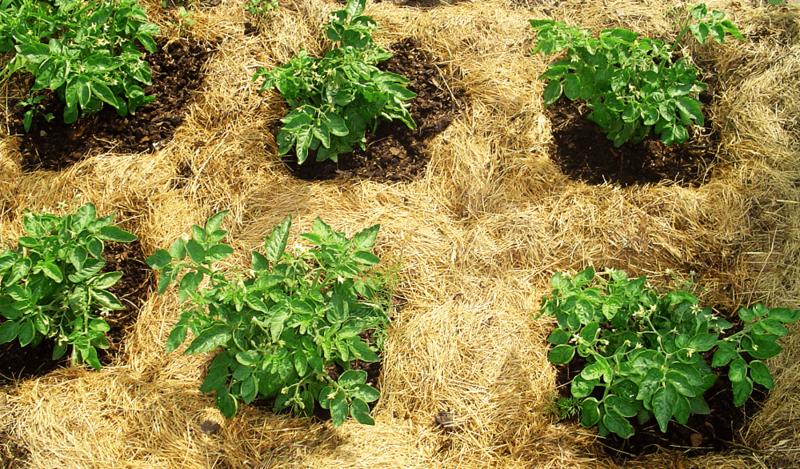
Perillus bug
A great helper in the "battle" for potatoes: this insect easily defeats the striped beetle, without farmers even having to worry about what to treat their beds with. The only downside is that the insect doesn't survive in our latitudes. Perhaps our entomologists can tell us which of our Russian residents possesses a similar set of traits?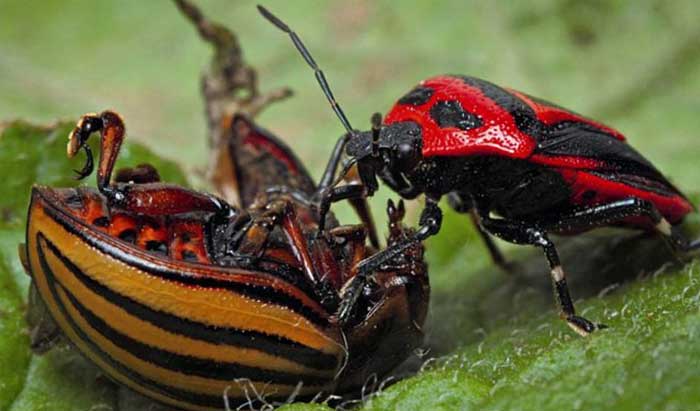
Plants against pests – folk remedies
Another way to add to the repertoire of ideas for farmers who prefer using folk remedies to combat Colorado potato beetles is to simply plant some crops that the beetles don't like, such as catnip or sage. Try sowing them around the potato bed or between the rows; we can assure you, the hated beetle won't touch your potatoes! Just remember to remove the flower heads from these herbs promptly, otherwise you risk introducing uncontrollable weeds.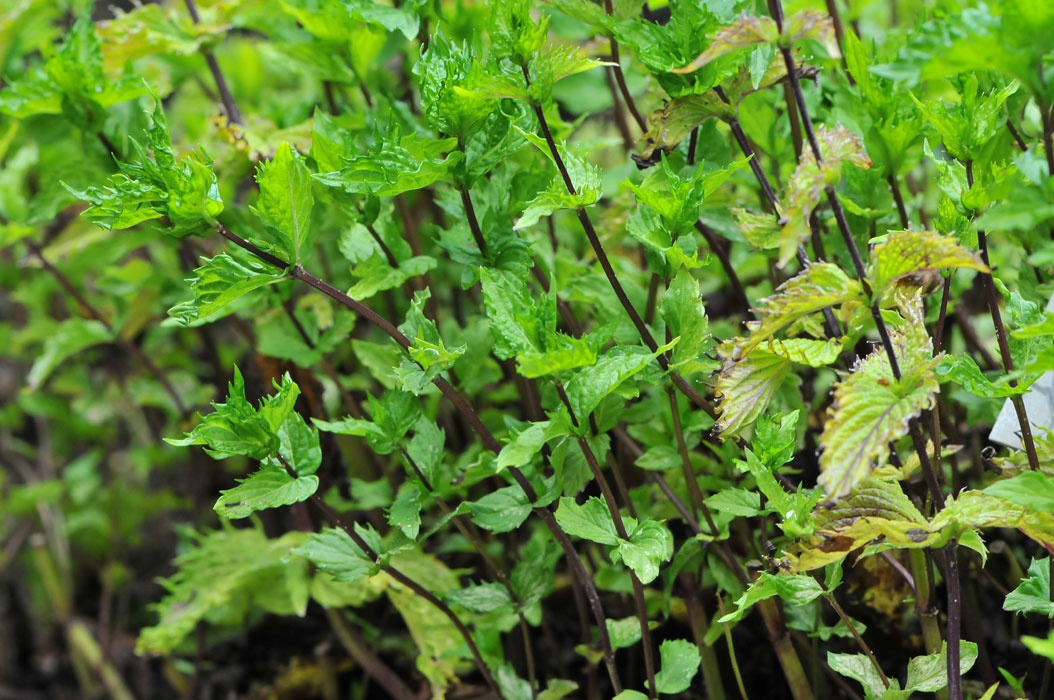
And just recently it became known that even an untreated potato bush will not be touched by the beetle if an inconspicuous, but fragrant matthiola grows nearby.
To effectively control the pest, simply sow fragrant night violets five rows apart between potatoes.
Traps
Farmers sometimes use a method called trench traps. This is effective if the chosen plot hasn't had any nightshade crops in the previous few years, meaning the beetles haven't overwintered there. Dig a shallow trench with smooth, steep sides around the entire perimeter of the potato plot and line it with thick, opaque plastic sheeting. The soil removed from the trench should be returned and leveled, and drainage holes should be made in the plastic sheeting along the bottom and sides of the trench. The method works simply: insects caught in the trap try to escape through the drainage holes and die, trapped in damp conditions beneath the plastic sheeting.
If potatoes or other nightshade crops weren't grown in the chosen area, the beetles will have to overcome an obstacle. They'll inevitably fall into the trap.
There is another trap: as soon as the potatoes are planted, but have not yet sprouted, take several tubers, cut them and soak them in a chlorophos solution for about a day.
This poisoned material should be scattered over the plot: hungry beetles, attracted by the aroma of the potato pulp, devour it and die. This can also be done in the fall, after you've harvested the entire crop, but the beetles haven't yet settled in for the winter.
Biopreparations
Recently, products based on organic substances that are unacceptable to beetles have become increasingly popular. These products emit specific pheromones that can not only block the insects' ability to reproduce but also slow down or even stop the development of the larvae.
Chemical means of control
As is well known, synthetic pesticides for Colorado potato beetles on potatoes can not only eliminate the pest but also cause significant harm to human health if overdosed. Therefore, such products should be used with caution and strictly follow the instructions.
Bordeaux mixture
Potatoes are treated with this solution when the bushes reach 25 cm in height. The solution is prepared as follows: add 150 g of lime and 150 g of copper sulfate to 10 liters of water. Repeat treatment should be carried out after 12 days. The solution is prepared similarly, but the concentration of the two solutions is increased: now, use 200 g of each solution per 10 liters of water.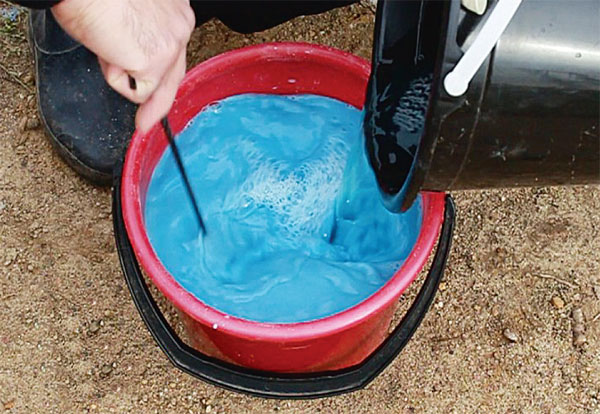
"Prestige"
This product contains two active ingredients: one provides a protective and supportive effect on the plant, and the other fights insects. This product should be applied to the tubers before planting: then your beds will be immune to the Colorado potato beetle—any insect that decides to feast on such a leaf will surely die. The product's effect lasts for about 50 days, so the potatoes should not be eaten before this period has expired.
Insecticide "Bankol"
A solution of this product is sprayed on mature potato plants. A single treatment is usually sufficient: both larvae and adult insects die as soon as they feed on the treated leaves. The product has a side effect: it can suppress the plant's reproductive function: unfortunately, seeds collected from treated plants will not produce high-quality seedlings.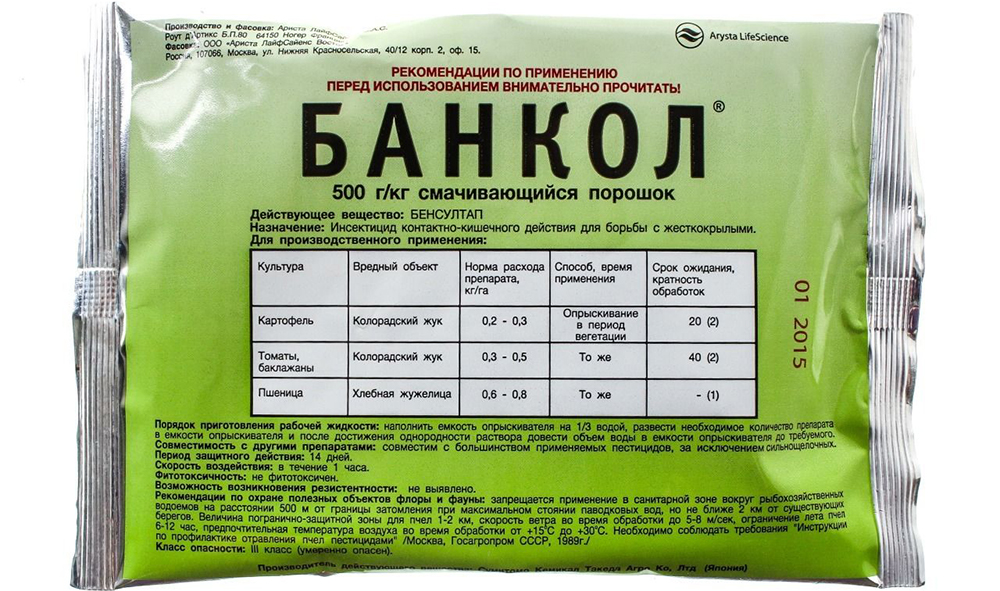
Video: How to Get Rid of a Pest
This video will show you how to control the Colorado potato beetle, a pest.