
Planting cabbage according to the lunar calendar
When to plant cabbage
If you want to stock up on cabbage for the entire summer, enough for pickling and for winter storage, think through a strategy. 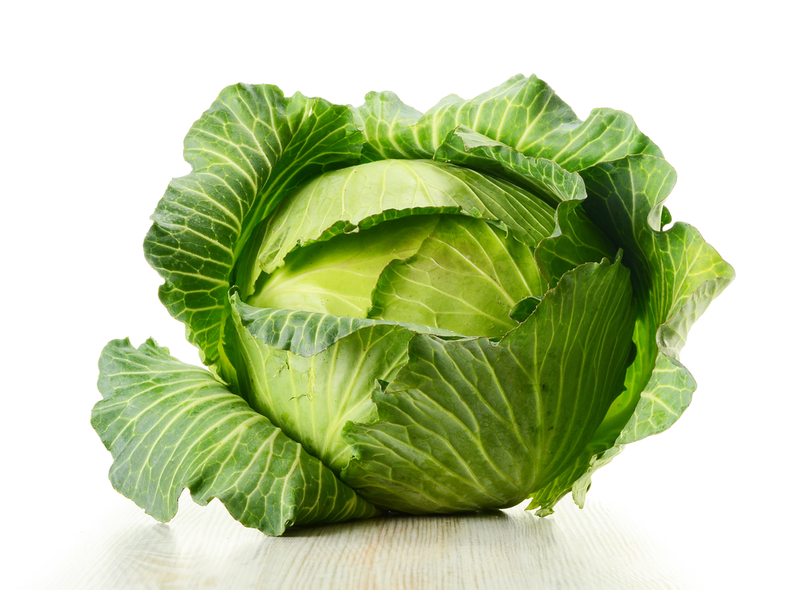 It involves sowing several varieties with different ripening times. This is both rational and practical. It makes sense to prepare the seeds:
- early varieties: they are planted gradually, several times, with a 4-day interval;
- mid-late - these need to be sown once every two months;
- late – planting time is in mid-spring.
You'll be harvesting early varieties in the last ten days of June. Mid-late varieties will be ready about a month later. And the time for late varieties is October. More precisely, the end of October. And these firm heads of cabbage will store perfectly all winter.
The first planting period concerns sowing seeds for seedlings. This is the second half of March. It's crucial to create optimal conditions. Cabbage especially favors cold and light. Therefore, we create a cold nursery.
Nothing out of the ordinary: just a box of soil. What kind? Experts prefer a potting mix of the following composition:
- turf soil – 1 part;
- humus – 1 part;
- ash (1 tbsp. per 1 kg of soil).
All this needs to be mixed well to create a breathable soil.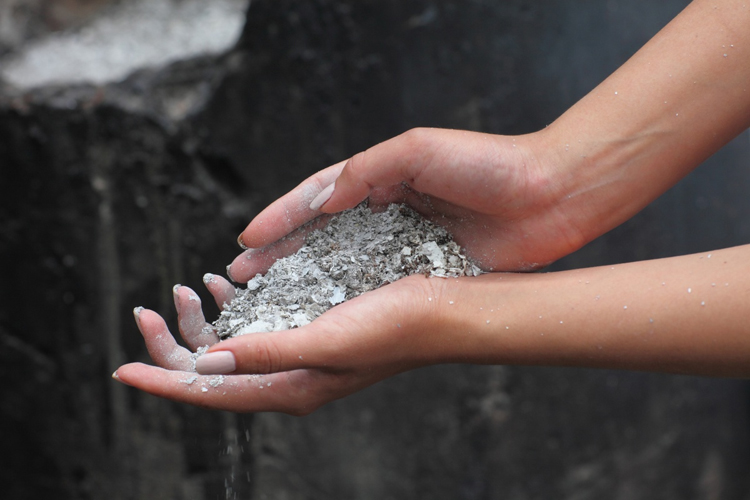
Before planting, a contrast shower of sorts will benefit the seeds. Soak them in hot water for 20 minutes, then plunge them into cold water for 5 minutes. This procedure will strengthen the health of the future cabbage and make it resistant to fungal diseases. But be careful: not all cabbage varieties benefit from this. Explanations regarding this will be included on the seed packet of the seeds you choose for planting.
We plant the seeds about 1 cm deep, cover with soil, and compact them lightly. Now water generously.
You absolutely mustn't leave this box at home; you won't get any sprouts in the warmth of your home. It's best to take the seedlings to the dacha right away. Of course, you shouldn't put it in the snow; cabbage likes the cold, but not to that extent. If the snow hasn't melted yet, clear it away. Cold soil is just what you need. Just make sure the spot you choose for the seedlings gets plenty of sun. Attach arches to the box and stretch plastic over them. That's it! Wait for the sprouts to appear. They'll delight you with their appearance in 10-12 days.
It's time to uncover this green "grove" by removing the plastic wrap. The next month involves caring for the seedlings. Strictly speaking, this involves regular watering. For now, there's no need to thin the seedlings or fertilize them. Just make sure the soil isn't dry. The future cabbage should remain in the nursery until 3-4 leaves appear, no more. This will take about 30 days.
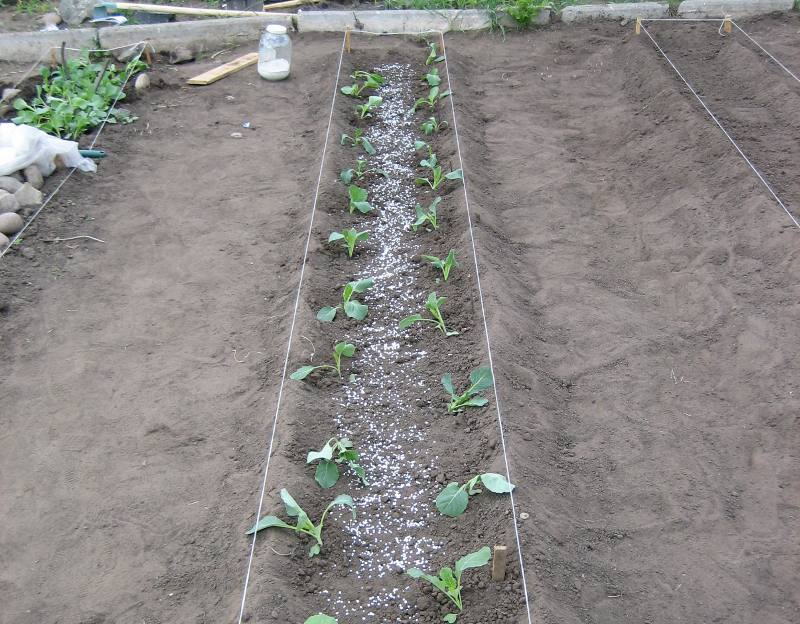
Therefore, late April and early May are the time to begin planting cabbage outdoors in spring. This is the best time for early varieties. Two weeks later, in mid-May, you can begin planting late varieties. Mid-late varieties, however, are planted in the first half of June.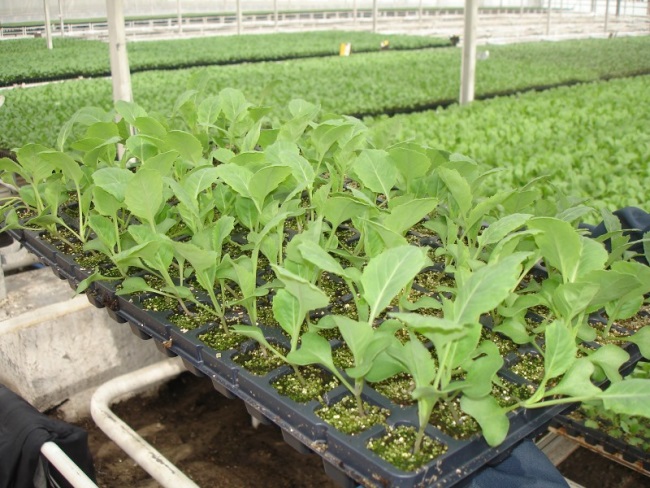
The area where your cabbage patch will be planted requires careful preparation. This preparation should begin as early as fall. Choose a dry day and dig over the area. Don't try to make it perfectly flat and smooth. On the contrary, any unevenness will benefit the cabbage. If the soil has hummocks and depressions, it will absorb moisture well throughout the winter and early spring. Once the snow melts, level the area with a rake to retain moisture longer. This type of soil is best for cabbage.
When planting cabbage at the optimal time for the chosen variety, ensure adequate spacing between seedlings. After all, cabbage loves light and space just as much as coolness and moisture.
For each hole you need to prepare the filler:
- a handful of sand;
- a handful of peat;
- two handfuls of humus;
- 50 g of ash;
- half a teaspoon of nitrophoska.
Water the thoroughly mixed mixture generously. That's it! Everything is ready for planting cabbage.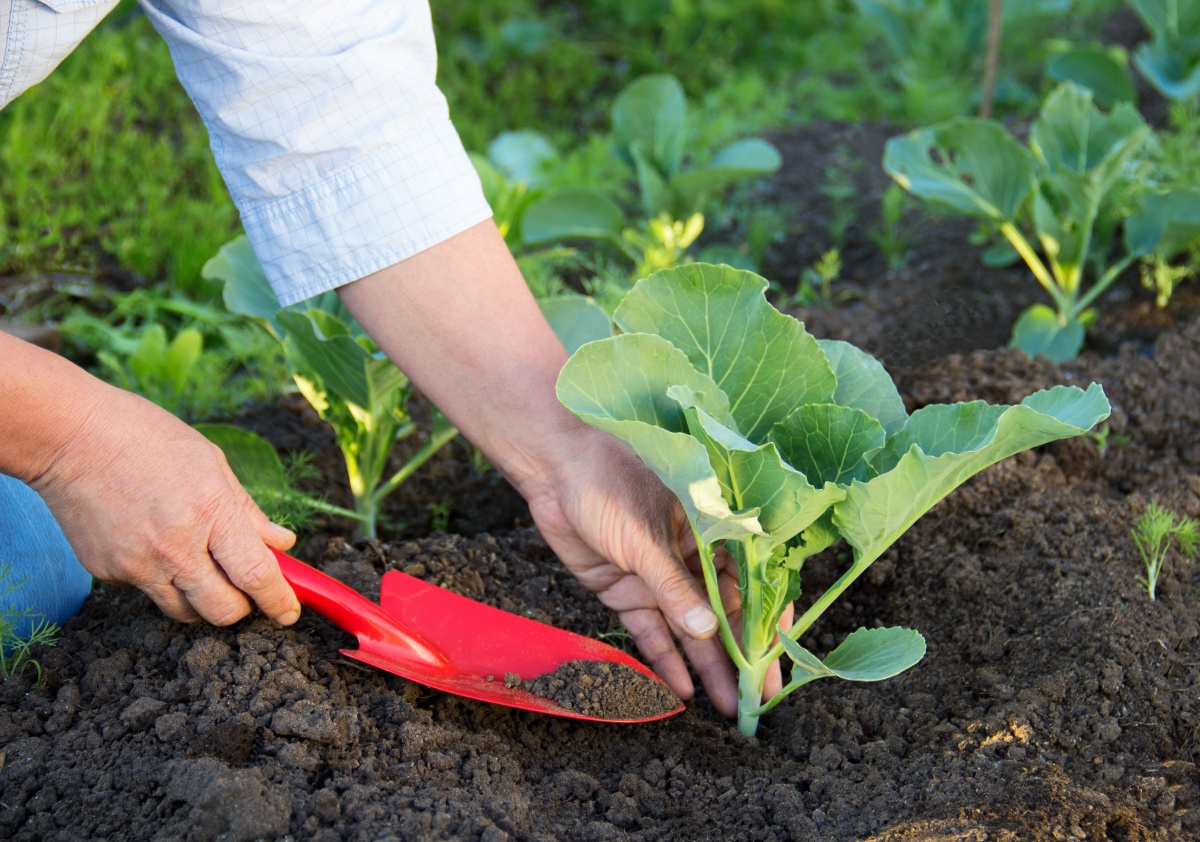
If you prefer to sow cabbage outdoors rather than grow seedlings, the timing depends on the climate in your region. Once relatively warm days arrive—when the thermometer consistently reads 8-10 degrees above zero—wait until the soil warms up.
Video "Landing"
From the video you will learn how and when to plant cabbage.
Lunar planting calendar
Increasingly, gardeners are relying on the lunar calendar, not only for advice from more experienced colleagues, but also for the latest advances in agricultural technology. No doubt, some find this mystical, completely unnecessary in such purely mundane matters as, say, growing cabbage. But don't be so quick to be ironic!
In fact, there's no mysticism here. It's just centuries of experience, which we'd forgotten and are now slowly rediscovering, revealing that our distant ancestors were very observant. They were also likely much more closely connected to nature than we are today. This closeness must have given them the opportunity to receive firsthand clues. Even today, Mother Nature is generous with her hints—if only there was a will to hear them.
A clear connection between the phases of the moon and plant life was observed long ago. There are four phases:
- waxing moon;
- waning moon;
- new moon;
- full moon.
Observant farmers noticed that with the changing phases, plant life activity sometimes intensifies, sometimes almost ceases. The night light, shifting from one state to another, affects sometimes the part of the plant above ground, sometimes the roots. From these observations, knowledge emerged. Systematization of this knowledge gave gardeners the lunar calendar.
Centuries have passed since farmers discovered from personal experience that the waning moon is a good time to plant root crops. But the waxing moon favors plants that bear fruit above ground. They knew that sowing during the new moon ensures a bountiful harvest. To get rid of weeds, you need to plow the land when the moon is in its last quarter. Large potatoes don't require fertilizer, but rather planting when the moon has almost melted into the sky. And if you want delicious pickles, don't pickle cucumbers and cabbage during the new moon—nothing good will come of it.
In other words, properly following the lunar cycles allowed for both plant health and reduced maintenance without compromising quality, resulting in an excellent harvest. So what does the Moon advise those hoping to reap a bountiful cabbage harvest?
First, some general recommendations:
- on days of eclipses – solar or lunar – take a break from gardening;
- Is the Moon in Aquarius or Leo? Don't sow or plant anything during this period;
- sowing work is also cancelled on the days when the Moon moves from one sign of the Zodiac to another;
- The best time for sowing is the waxing moon.
When sowing, it makes sense to consider the zodiac signs, looking at which sign the Moon is in. All zodiac signs are classified as more or less fertile:
- the most fertile are Scorpio, Pisces, Cancer;
- Sagittarius, Capricorn, Taurus and Libra will provide an average harvest;
- Aries, Aquarius, Gemini, Leo and Virgo are considered completely infertile.
Favorable days for sowing and planting white cabbage in 2025 are March 20, 25, 26, 30, 31; April 9, 12, 13, 18, 22, 26, 27, 28; May 4, 15, 19, 24, 25, 31; June 1, 2, 11, 16, 20.
For red cabbage - April 22, 26, 27, 28, May 8, 9, 15, 19, 24, 25, June 2, 11, 16.
Another important point: when is the best time to ferment cabbage? Nature is full of mysteries! It's possible to explain the influence of lunar cycles on the rate of growth, the characteristics of plant development, and their yield. Apparently, certain energetic processes do occur that drive the vital forces in the roots, stems, and leaves. It's much more difficult to explain the relationship between the phases of the moon and the quality of fermented or pickled cabbage. But it exists! If you choose the right day, the cabbage will not only be beautiful and crispy, but also appetizing and delicious. It will also keep for more than six months.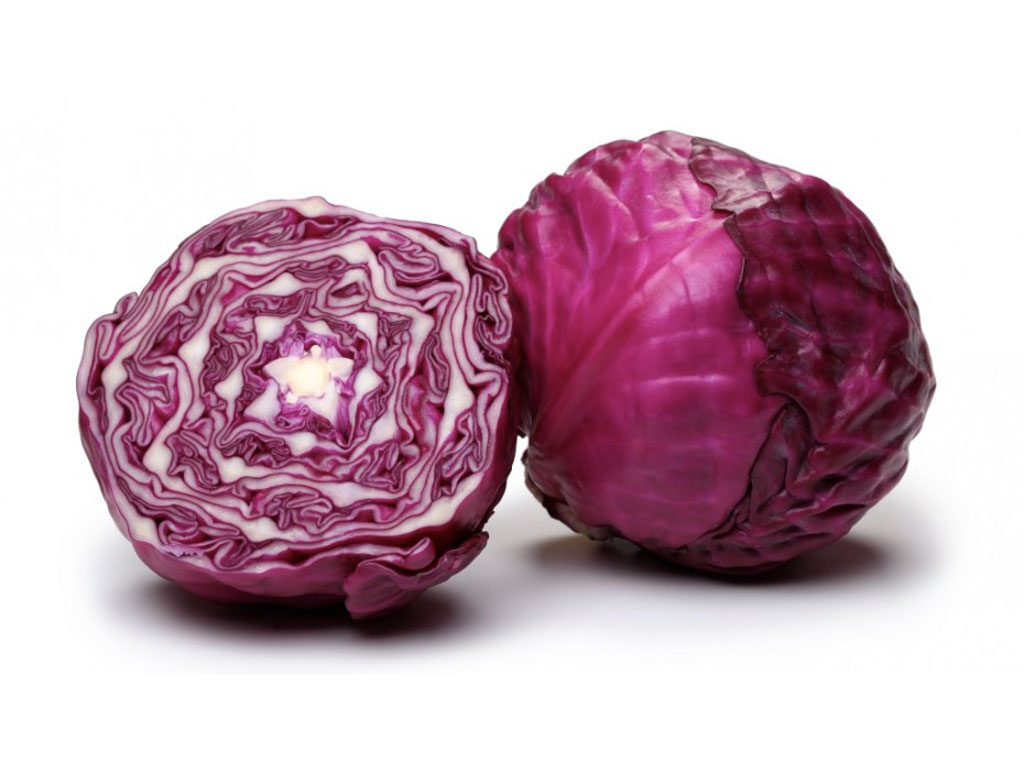
The Full Moon discourages such undertakings. Better yet, don't even try: cabbage fermented during the Full Moon will be mushy, and the flavor won't be what you'd expect. It won't last long, either—it'll spoil. The Moon under the signs of Cancer, Virgo, and Pisces is also not the best time for fermentation.
We salt cabbage during the waning moon and ferment it during the waxing moon. This is especially beneficial if the moon is in the signs of Aries, Taurus, Leo, Sagittarius, or Capricorn.
Be it mysticism or metaphysics, show me a housewife who would refuse to take the moon's phases into account when the quality of her sauerkraut is at stake! Therefore, the lunar calendar is your friend. May its clues bring you a good harvest.
Video "Growing Tips"
From the video you will learn how to best grow this vegetable.