
Characteristics of the early autumn pear variety Svarog
Description and characteristics
Svarog trees are small, with a dense, rounded crown. The bark on the main branches is brownish-gray and flaky. The shoots are chestnut-brown, with slightly pubescent, arched tips.
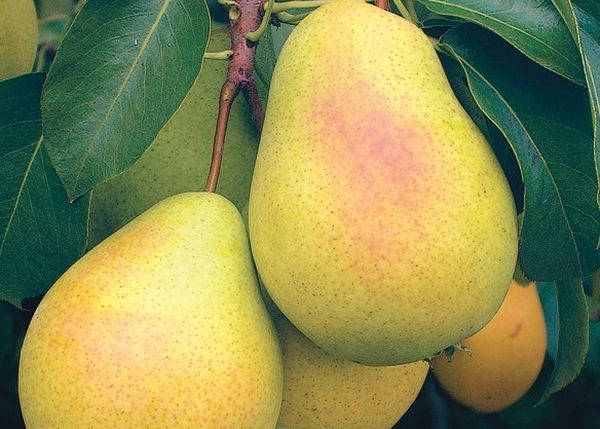
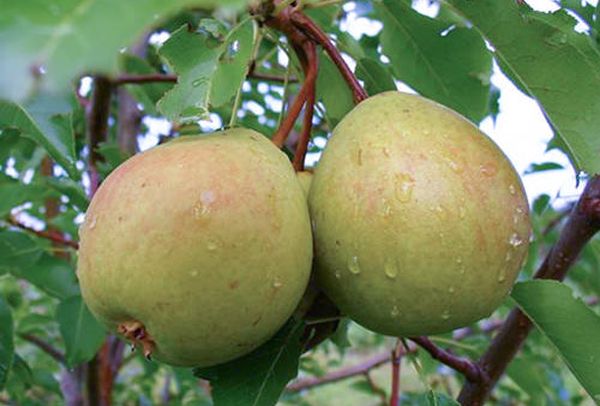
The leaves are small, light green, and elliptical, with a twisted apex. The leaves are slightly wrinkled and covered with fine hairs. According to the variety description, the fruit averages 80 g. The fruit itself has a smooth, polished surface, and can be broadly pear-shaped or a smooth cone. The skin is matte and pleasant to the touch, with slightly greenish spots visible beneath.
A ripe Siberian pear turns yellow with a slight blush. The tender flesh is a milky cream color. The pear's flavor is juicy, very pleasant, sweet, and slightly tart. The Svarog pear variety is harvested in the last weeks of September and the first weeks of October. The fruit will keep for up to three months in a cool place.
The Svarog pear has excellent characteristics: it is of average early maturity, with fruits appearing on pear trees 4–5 years after planting. Fruiting is consistent, but not abundant. Overall, yields can be rated as average. The variety copes well with winter conditions and is highly resistant to fungal diseases.
However, it tolerates drought with some difficulty. It's important to note that in insufficiently moist soils and those deficient in organic matter, the fruit's flavor deteriorates. Svarog trees are often attacked by the pear moth, a moth belonging to the leafroller family, which is a disadvantage for the fruit crop. Gardeners successfully combat the pest by removing dead bark and using traps. The Svarog pear variety also has advantages, including excellent marketability and consumer qualities (due to its excellent flavor), frost resistance, and the ability to process.
Features of cultivation
Delicious fruits can be grown in the harsh Siberian climate. The key is to choose the right pear variety. For example, the Svarog pear variety, when grown properly, is sure to reward gardeners with a bountiful harvest. It's important to note that pear trees prefer sunny locations, as shade will cause small branches to die off, resulting in reduced yields.
During the summer, Siberian pear varieties require additional irrigation. Soil composition is also key for pear trees. Chernozem, meadow-chernozem, chestnut, and gray forest soils are considered the most suitable.
Before planting a pear tree, it's important to prepare the soil. Organic and mineral fertilizers should be added. The best time to plant seedlings is in the spring—early May or late April. Dig a planting hole measuring 80 x 100 cm and 60–80 cm deep. Add approximately 8 kg of organic fertilizer to the soil intended for planting. Pruning is important for young trees to ensure crown formation and further development. In the spring, pear trees require crown thinning.
To protect against pests, the trunk and skeletal branches should be wrapped using available means.
To protect the pear tree from insect attacks, it's also important to apply a lime solution. To maintain warmth during the winter, the tree needs additional earthing. All these basic pear tree care rules are essential for the future harvest.
Video "Pear Svarog"
In this video you will hear a description of the Svarog pear variety.