
15 Best Pear Varieties for Growing in the Moscow Region
Summer varieties
Planting a beautiful pear tree at your dacha in the Moscow region isn't particularly difficult. You can harvest the sweet fruit as early as late July and early August. Gardeners in the Moscow region highly value this summer pear tree for its excellent culinary qualities, good yield, and competitive pricing.
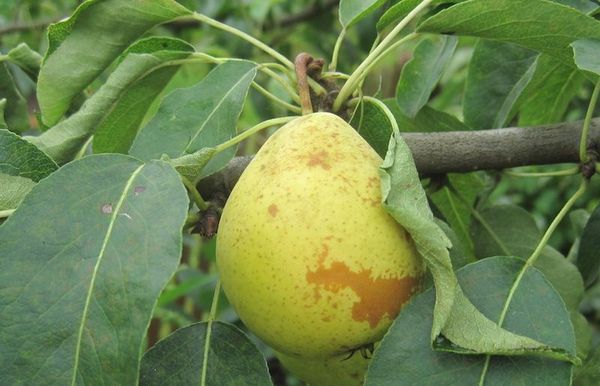
Which summer pear varieties are suitable for planting in the Moscow region?
Early ripening from Michurinsk
The variety's name, Skorospelka iz Michurinska, makes it clear that this fruit tree is one of the earliest to ripen among other pear tree varieties. Harvesting begins in late July. The plant is highly frost-resistant and produces excellent yields. The first harvest occurs in the tree's fifth year. Although resistant to scab, it can be affected by moniliosis.
Lada
The Lada beauty pear is a worthy specimen of the pear tree among other fruit crops. It is a medium-sized tree with a moderately dense crown. Gardeners note its early maturity, consistent abundant fruiting, and resistance to fungal diseases. Lada is a versatile table pear. The fruit can be eaten raw or processed.
However, the main advantage of the Lada pear is that it is self-fertile. Self-pollinating varieties do not require pollinators.
Prominent
The fruits of the Vidnaya (Bugristaya) pear are used to produce juices, fruit drinks, jams and preserves.
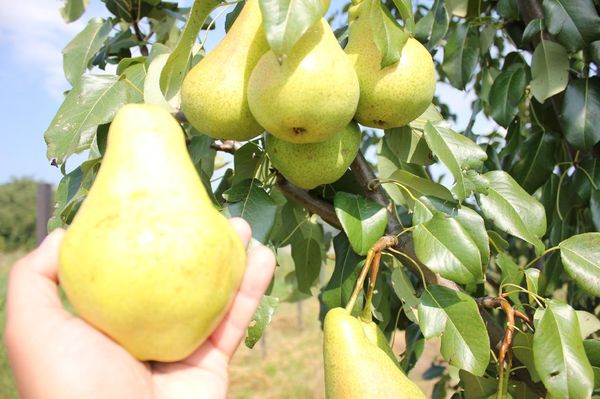
This pear tree variety is characterized by uneven ripening of its fruit, so the harvest is carried out in several stages. It is valued for its good environmental sustainability and the high consumer and commercial qualities of its fruit. However, the harvested fruit spoils quickly.
Chizhovskaya
The beautiful Chizhovskaya pear will be a true gem in any orchard. Its key advantages include low fruit droppage when ripe, high yields (a mature tree yields approximately 55 kg of fruit), and a long shelf life. Depending on the weather and climate conditions of the chosen planting region, the pear tolerates frosts well and is resilient to sudden temperature fluctuations.
Fairytale
The pear with the beautiful name "Skazochnaya" is a tall fruit tree with a narrow pyramidal crown, which can be planted along a garden fence, as it doesn't take up much space. The variety is self-fertile, but to increase the yield, it requires pollinators such as Severianka or Raduzhnaya.
The weight of a ripe pear can reach 255 g. The taste is very sweet, with a faint spicy aroma.
Tenderness
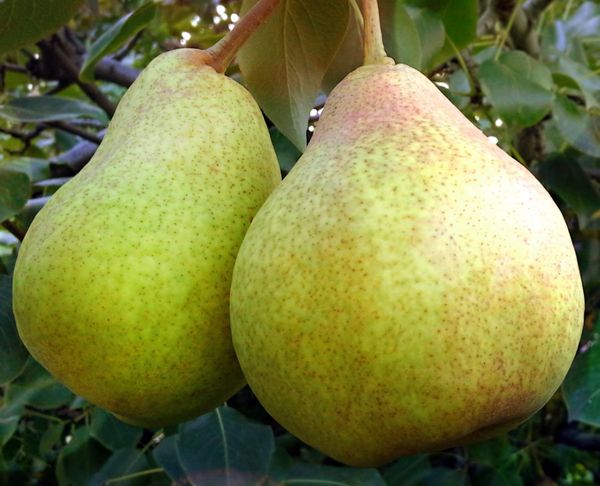
Nezhnost is widely cultivated in areas with harsh winters, as it can withstand temperatures as low as -40°C (-40°F). Gardeners report high yields: one mature tree produces approximately 45 kg of fruit. This is a versatile table variety used for juice and jam production. Its drawbacks include a short shelf life of the harvested fruit (no more than 4 weeks).
Cathedral
Farmers call the Kafedranaya pear a "working" variety. It's a fruit crop used for commercial cultivation. Gardeners note the plant's undemanding planting and care.
It is a fast-growing plant (the first harvest occurs in the tree's third year). The fruits are medium-sized, irregular in shape, and have a shelf life of only 10–12 days.
Rogneda
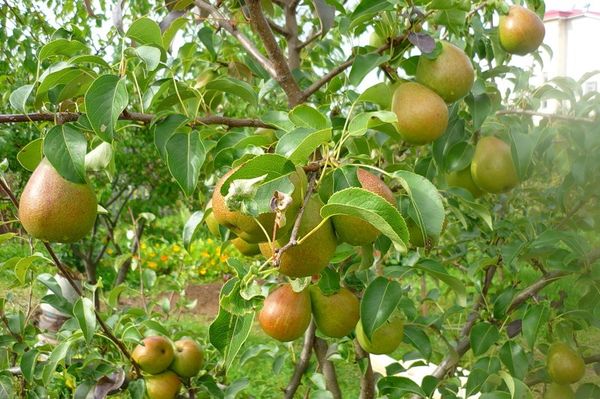
Rogneda is considered one of the best summer varieties. This pear thrives in the central Russian climate. Early ripening of this variety's fruit is typical in the Moscow region, with the harvest occurring in the second and third ten days of August.
Comprehensive resistance to fungal diseases and the ability to withstand severe frosts are the main advantages of the Rogneda pear.
Autumn varieties
The climate of central Russia is suitable for growing late-autumn and winter pear varieties. Unlike summer crops, autumn varieties yield a later harvest. The harvest period is from late September to early November. Autumn pear varieties for the Moscow region are characterized by high yields and excellent taste.
Not sure which pears to choose for the Moscow region? Unsure about choosing the right variety? We present the best late-ripening pear varieties.
Moscow Bere
The Bere Moskovskaya pear is distinguished by its early ripening period. Harvesting begins in the first week of September. Unharvested fruits quickly overripen on the tree, so it's best to harvest them a little earlier.
It is valued for its high yield, excellent frost resistance, and resistance to scab, fruit rot, and brown spot. Insufficient moisture during the growing season negatively impacts the fruit's flavor, causing the pears to become overly sour and tart.
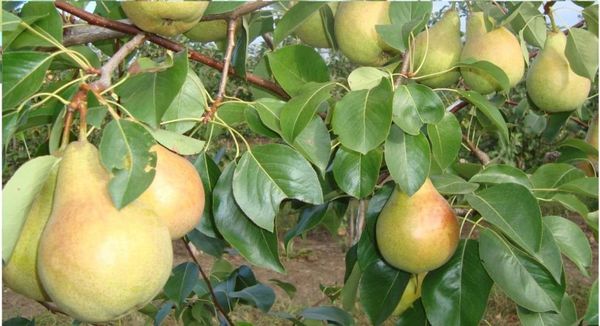
Otradnenskaya
Otradnenskaya – This beautiful pear will be a worthy addition to any orchard. A ripe fruit weighs up to 130 g. At harvest, the skin is yellow-green with a distinct blush, which changes to a rich yellow as it ripens. The tender flesh has a pleasant yellowish-white hue, a creamy texture, and a pleasant sweet-tart flavor, but no aroma.
According to the variety description, this crop is partially self-fertile and requires pollinators to increase the yield.
Muscovite
With proper planting and care, the Moskvichka pear tree will reward you with a bountiful harvest: 15-20 tons of ripe fruit can be harvested per hectare. Spring planting is recommended, allowing the seedlings to establish themselves before the first frost. The Moskvichka is self-sterile. The best pollinators are considered to be the Lada, Lyubimitsa Yakovleva, Otradnenskaya, and other varieties.
The fruits are medium-sized, broadly pear-shaped, very tasty, sweet and sour, with a pleasant fragrant aroma.
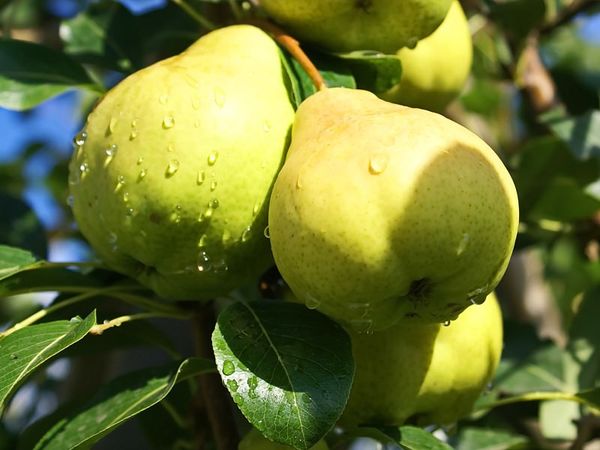
Yakovlev's favorite
This variety was grown commercially for a long time, but was gradually replaced by newer, selectively bred varieties. Its massive, wide crown made planting it unprofitable, as the trees took up a significant amount of garden space.
The Beauty Pear is prized for its high yield: a single tree can yield approximately 20 kg of ripe fruit. Thanks to its late spring flowering, it is frost-resistant in March and April.
Smartly dressed Efimova
The Naryadnaya Efimova variety belongs to the group of vigorous fruit trees. The crown is wide and not densely dense. For this reason, pears are grown in large orchards; small garden plots are unsuitable. They are popular due to the uniformity and attractive appearance of their fruit. The harvest is usually unripe, otherwise the fruit loses its flavor.
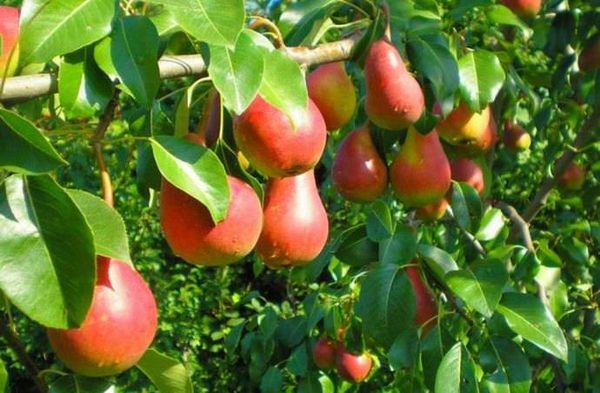
Autumn Dream
The Autumn Dream variety is often called a dwarf pear. It's a low-growing fruit tree with a sparse, pyramidal crown. Despite its compact size and resistance to various fungal diseases, Autumn Dream doesn't generate much interest among modern gardeners. This is due to the unattractive appearance of its fruit. The fruits are small and uneven, heavily covered with rust.
Sapphire
The columnar pear tree, Sapphire, is easy to care for. Among autumn varieties, it is one of the most common pears in the Moscow region. Planting the fruit trees closely together, no more than 1 meter apart, significantly saves space in the garden.
The pulp of the ripe fruit is slightly oily, has a delicate creamy texture, is juicy, has a sweet and sour taste, and has a strong aroma.
Video: "Rules for Growing Pear Trees"
In this video, you will hear useful tips from an agronomist on growing pears.