
Planting rules and care tips for the fruitful Conference pear variety
Content
History of breeding and zoning of pears Conference
The Conference pear was the result of independent cross-pollination between a wild seedling and the cultivar Leon LeClerc de Naval. In 1884, the unique hybrid form was discovered by the English breeder T. Rivers. It was only 11 years later (in 1895) that the cultivar was presented at a British exhibition. The variety is widely grown in Western Europe, as well as in Poland, Ukraine, and Belarus.
The Conference pear was added to the Russian State Register only in 2004. The variety is recommended for the North Caucasus Federal District.
Detailed description of the variety
The Conference pear is an early-ripening autumn variety. This fruit is widely grown in both home and commercial gardens.
Characteristics of the fruit tree
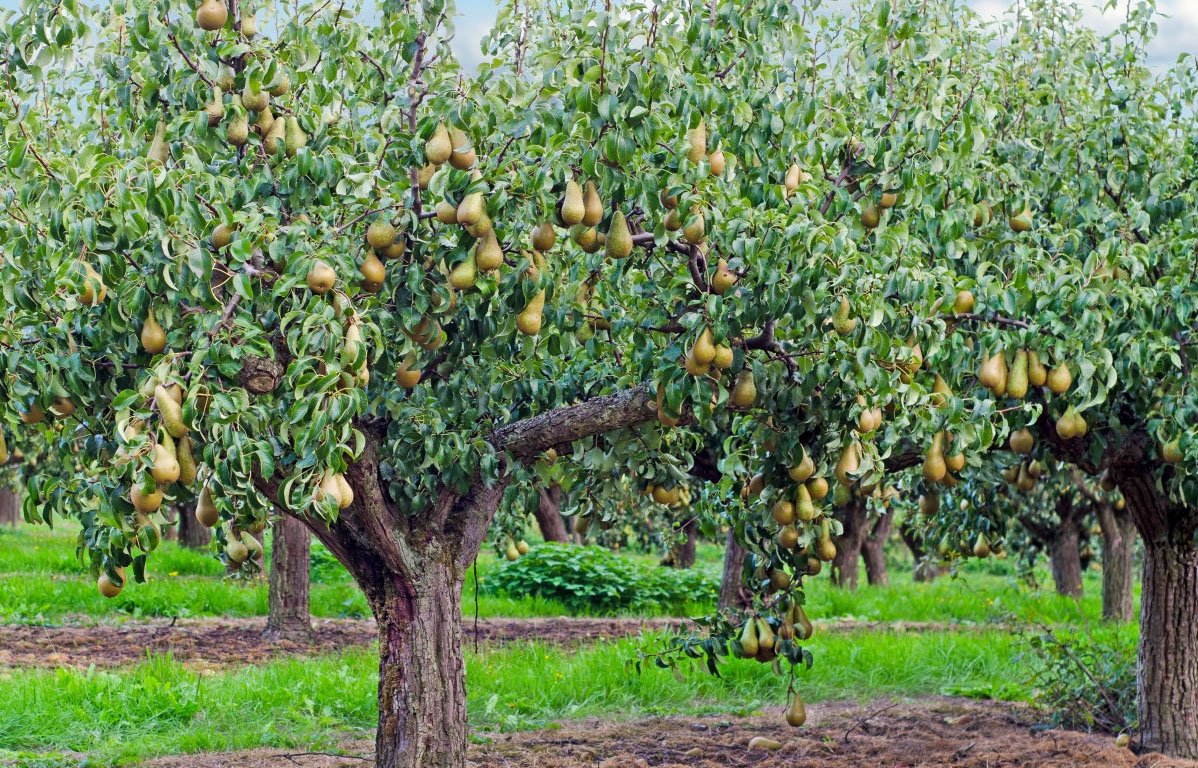
The conference tree is a vigorous fruit tree, averaging 5 meters in height. Annual fruit growth is 40–60 cm. It has a spreading, broadly pyramidal, and densely foliated crown. The smooth bark of the skeletal branches and young shoots is tinged with a brownish-red hue. The leaves are dark green and oblong-oval in shape.
The flowering period occurs in the first ten days of May. Small, five-petaled flowers are collected in inflorescences of 5–10. A distinctive feature of this variety is its self-pollination. Under favorable weather conditions, approximately 60–70% of flowers will set fruit.
Description of fruits
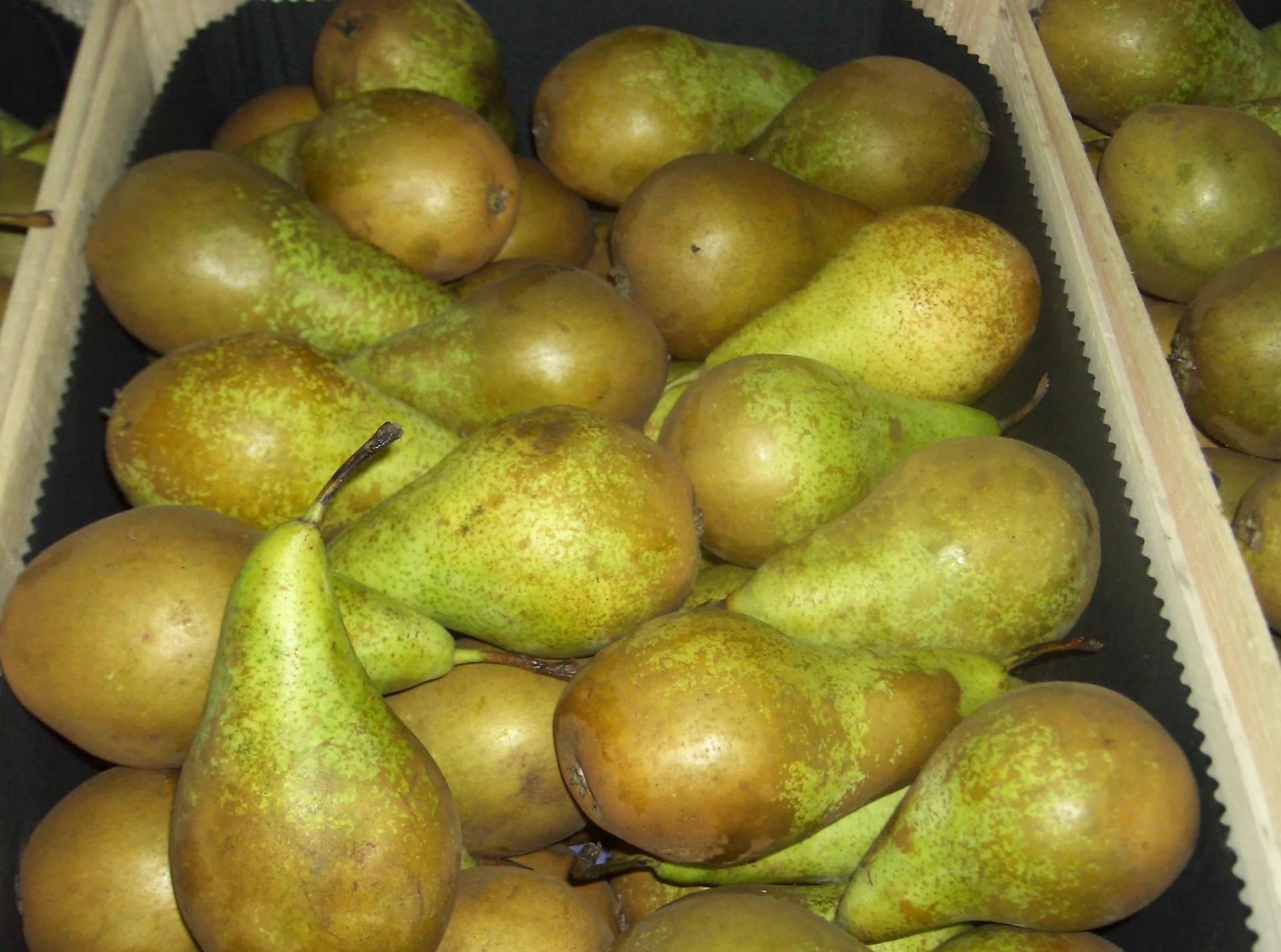
The fruits of this variety are large. Ripe fruit weighs between 150 and 190 grams. The pear shape is traditionally elongated. The skin is tough and rough. When ripe, the skin turns a brownish-yellow color with a characteristic "rusty side."
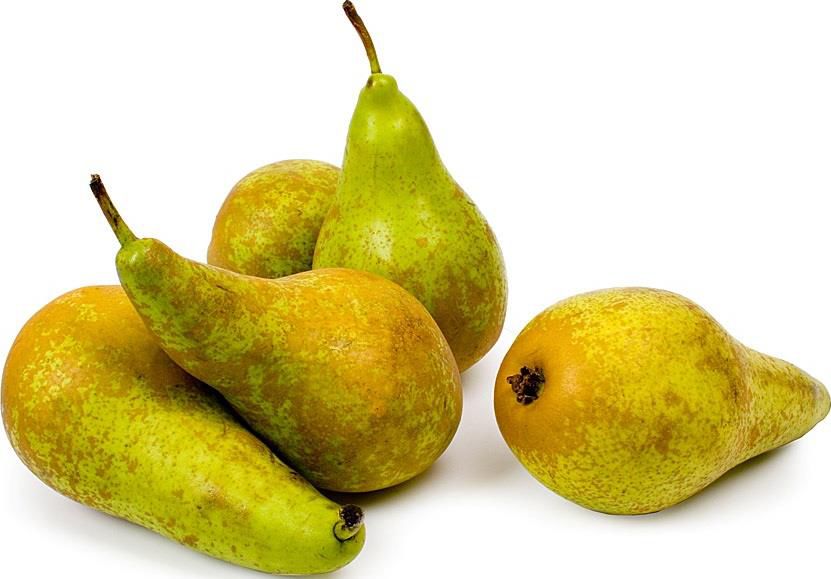
Despite its unpresentable appearance, the Conference has a wonderful taste. The flesh is tender, juicy, aromatic, and buttery. The flavor is delicately sweet, with a slight tartness to the skin.
The product is recommended for strengthening the immune system, improving metabolism and normalizing the digestive system.
Productivity and use of fruits
The Conference variety is high-yielding. Depending on growing conditions and climate, a mature tree can yield between 40 and 100 kg of fruit. The fruit can be eaten fresh. The variety is suitable for making compotes, fruit drinks, and juices.
Harvesting and storage
Harvesting begins in late September. If the summer was cold and rainy, the harvest may extend until mid-October. Pears should be stored in a cool, semi-dark place with humidity levels of 80–90%. They can be stored for up to six months.
Drought and winter hardiness
The variety is highly drought-resistant. The fruit tree thrives in direct sunlight and tolerates heat well. However, prolonged lack of water is unsafe for any fruit crop.
The Conference pear has very low winter hardiness. For this reason, the variety is recommended for southern regions with warm and mild winters. Temperatures down to -20°C are the maximum tolerance for this variety.
Advantages and disadvantages of the variety
- self-pollination;
- early fruiting;
- high yield;
- amazing taste of the fruits;
- rich biochemical composition of fruits;
- universal use of the crop;
- good transportability;
- long shelf life.
- low winter hardiness threshold;
- unpresentable appearance of fruits;
- weak immunity to pathogens causing fungal infections.
Video: "Conference Pear Varietal Description"
This video introduces the key characteristics of the culture.
Peculiarities of Growing Pear Conference
The agricultural practices described below will help increase the yield of the Conference pear variety.
Selecting a location, soil and planting material
The pear tree thrives in a location sheltered from wind and drafts. The site chosen for planting the seedling should be well-drained. A close proximity to the groundwater table is undesirable. The optimal groundwater depth is 1.5–2.5 meters. The soil should be loose and well-drained. Conference pears prefer chernozem, gray soil, or loose loam.
One-year-old seedlings with a well-developed root system are suitable for planting. High-quality planting material can often be purchased from garden nurseries.
Planting recommendations
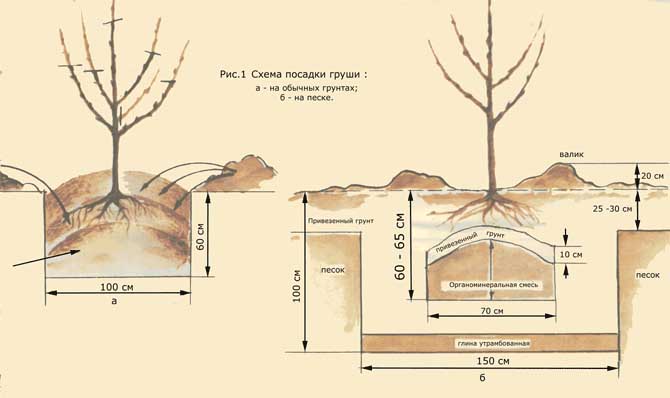
Planting in open ground is done in late spring or early fall. Prepare the planting hole in advance. The recommended depth and diameter are 80 x 80 cm. Line the bottom of the hole with drainage materials to improve water drainage. The drainage layer should be no more than 10–15 cm thick. Then add a nutrient mixture consisting of equal parts of black soil, river sand, peat, and humus. You can also add 300–400 g of superphosphate and wood ash.
Before planting, soak the seedling's roots in the growth biostimulant "Kornevin." The tree is planted deep in the center of the earthen mound formed in the hole. The root collar protrudes 6-8 cm above the soil surface. A support is installed next to the seedling.
The planted tree is tied to a support, covered with soil, watered generously around the edge of the tree trunk circle and mulched with peat or hay.
How to water and fertilize
The frequency of watering depends on the age of the pear tree. You can water the pear tree according to the following schedule:
- the first 2 years after planting in a permanent growing location - 20 liters daily (subject to hot and sunny weather);
- aged 3 to 6 years – 30–40 liters every 7 days;
- aged 6 years and older – up to 60 liters of water every 15 days.
Before flowering, treat the plant with a solution of ferrous sulfate or superphosphates diluted in water. Root feeding is performed three times per season:
- early spring – ammonium nitrate, urea or nitroammophoska;
- during the flowering period – complex mineral mixtures with a high content of phosphorus and potassium;
- at the stage of fruit filling – nitrophoska and potassium humate.
The nuances of pruning and shaping
During the growing season and in autumn, dried and weather-damaged branches should be removed from the tree.
Crown formation depends on the rootstock onto which the pear cultivar is grafted. For example, if a wild pear is used as the rootstock, a sparse, tiered crown formation is used. The crown of a tree grown on a quince rootstock is pruned to a bowl shape. When shaping the crown of a pear tree into a palmette, care must be taken to ensure that the remaining branches are aligned.
-
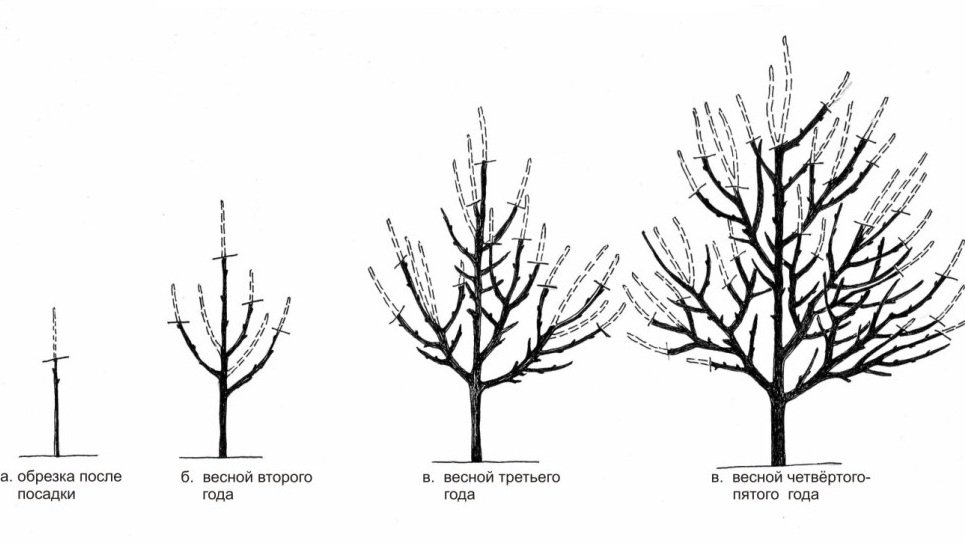
- Sparsely tiered crown formation
-
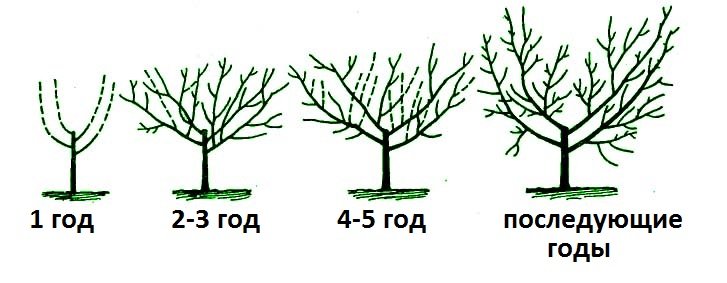
- Trimming the crown to form a bowl
-
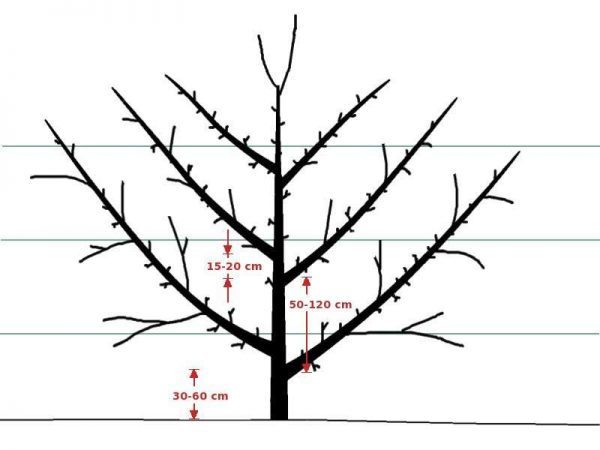
- Forming the crown of a pear tree according to the palmette type
Preparing for winter
Pear trees begin preparing for winter after the harvest is complete. First, they are watered to replenish moisture. Then, the trunk and skeletal branches are coated with lime mortar, and the area around the tree is covered with dry fallen leaves, hay, and straw. A few pine branches can be placed on top.
To increase winter hardiness, the trunk and branches of the pear are wrapped in burlap or thick agrofibre.
Methods of pest and disease control
Pear trees often suffer from insect infestations. Dangerous pests include pear leafhoppers, codling moths, hawthorn moths, spider mites, and aphids. Whitewashing the trunk with lime and periodically spraying the crown with soap and garlic solutions will help prevent these pests. Once pests have appeared, pesticides such as Karbofos, Apollo, and Vermitek will help control them.
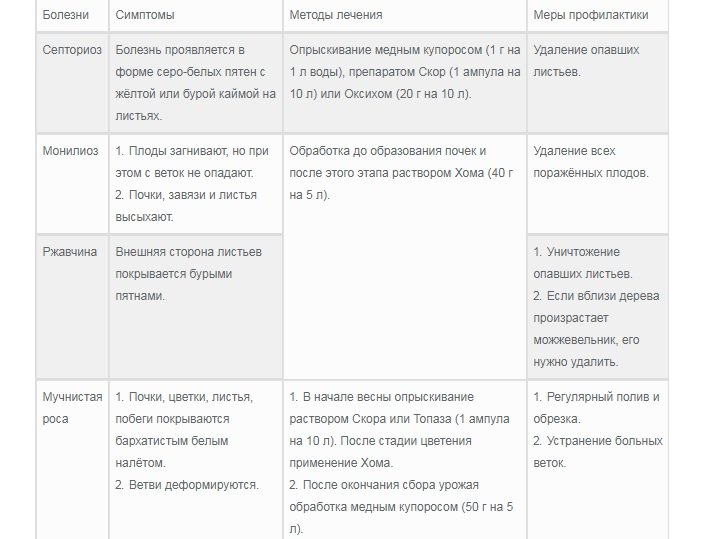
Conference vines have weak immunity to moniliosis, septoria leaf spot, powdery mildew, and rust. The table below lists effective disease prevention and control methods:
Reviews from gardeners
"Last year, I decided to diversify the fruit trees I grew in my garden and planted a 'Conference' pear. The seedling took root well, and the tree grew vigorously. The first winter passed without problems, as the plant was carefully prepared for the cold."
"I've been growing the Conference seedless pear for many years. A bountiful harvest and delicious, aromatic pears are the variety's main advantages. Among its drawbacks, I'd note the tree's vigorous growth and the need for frequent pruning."
The Conference pear is gaining popularity among both Russian and international gardeners. With proper care, this fruit tree produces a bountiful harvest of healthy fruits.