
Varieties and secrets of successful cultivation of the Duchess pear
Content
General description of the Duchess pear
The name Duchesse literally translates as "Duchess," reflecting the pear's pedigree, grandeur, and exceptional taste and appearance. It is an old English variety, developed in the mid-18th century by the Berkshire breeder Wheeler. The first mentions of it date back to 1796. The pear gained widespread popularity thanks to Robert Williams, who promoted its popularity and first presented it at an international exhibition.
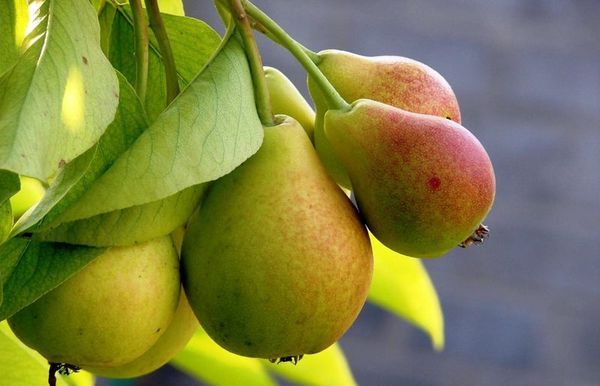
Duchesse is a versatile and widely sought-after variety. It is very productive and undemanding of soil and climate. The trees are massive and tall, reaching 20 meters in some varieties. The leaves are rounded, leathery, and dark green. The pears bloom late, so they are not damaged by recurrent frosts. They begin bearing fruit in the fifth or sixth year.
The tree's productivity increases gradually, reaching 150-260 kg depending on its size. The fruit is highly sought after due to its attractive presentation, sweet flesh, and distinctive fragrant aroma. A drawback of the pear tree is its inability to self-pollinate. To bear fruit, it requires pollinators with a similar flowering period.
Interesting fact: This variety is widely used in medicine and dietetics. The juice is used to make medicinal tinctures with honey, and the tender pulp is given to infants because it is hypoallergenic.
Varieties of the variety
The pear tree has several variations, differing in ripening time, tree appearance, and fruit taste.
Summer Duchess
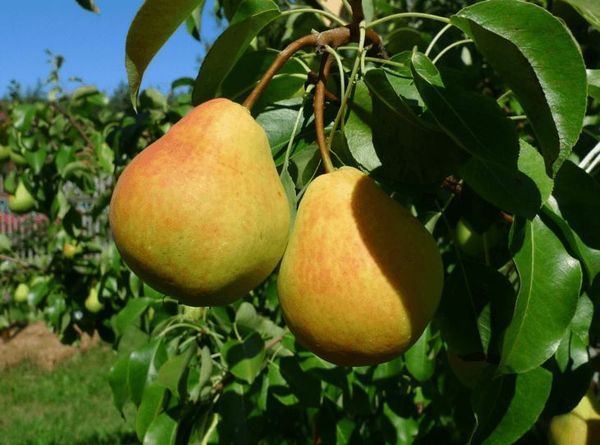
This is one of the oldest varieties. The trees are short, up to 4 meters tall, with a pyramidal, broad, and densely foliated crown. They are moderately frost- and temperature-resistant, suitable for growing in warm and temperate climates. The pears ripen in the last ten days of August. The yield per mature tree is approximately 200 kg.
The fruits are not very large (180-200 g), with a smooth, pear-shaped form that widens toward the bottom. The lemon-yellow skin, blushed on one side, is firm but thin. The flesh is juicy, aromatic, grainy, and a pleasant creamy color. The flavor is sweet, slightly spicy, with a hint of nutmeg. Pears are versatile.
Winter Duchess
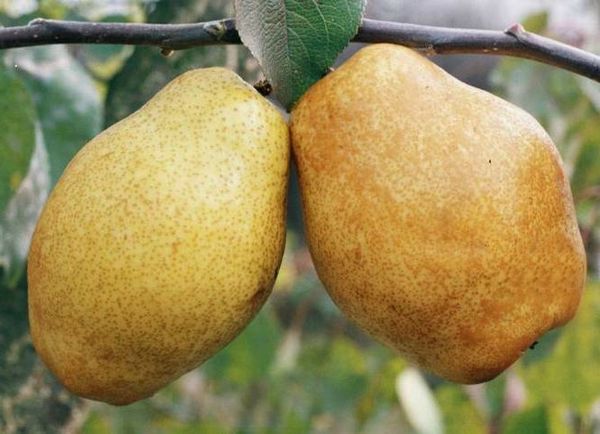
A vigorous tree, up to 20 meters tall, with a pyramidal crown. It grows slowly and bears fruit late, 6-7 years after planting. It is highly winter-hardy, but fertile soil is essential for a good harvest. Pears reach technical maturity in October, and full ripening continues until December.
The fruits are large (300-400 g), with some specimens exceeding 500 g, and barrel-shaped. The skin is shiny, yellow with a red blush. The flesh is white, very juicy and aromatic, with a sweet, slightly tart flavor. The pears transport well and can be stored in cold storage until spring.
Moscow Wild
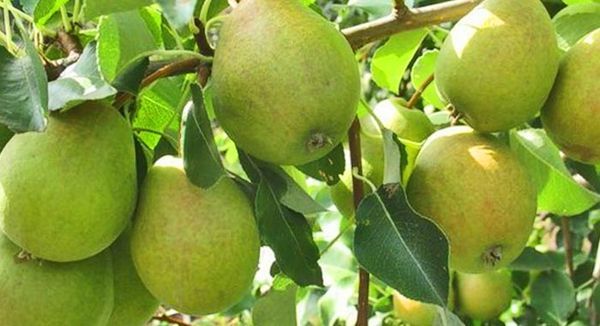
This variety is widely grown in the Moscow region. The trees are tall, up to 20 m, and productive (up to 200 kg), but abundant fruiting is only observed once every three years. The harvest begins in early October, but the harvest lasts until November. The fruits are not very large (150-300 g). The skin is greenish-yellow with a subtle blush on one side. The flesh is white, grainy, very juicy, and aromatic. These pears are suitable for preserves, but are primarily eaten fresh.
Moscow Garden
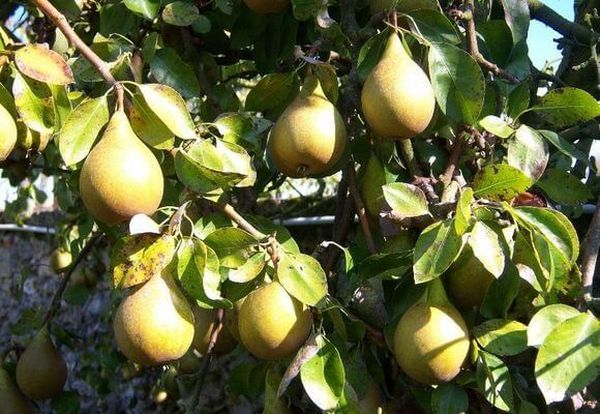
This winter variety ripens by mid-autumn. This pear tree is the tallest (up to 30 m). The fruit is heavy (up to 800 g), beautiful yellow with a bright blush on one side, and stays on the branches for a long time. The flesh is tender, aromatic, and light creamy. Yields are stable – up to 250 kg per tree. The harvest is versatile, often used in industrial production and for drying.
Angouleme
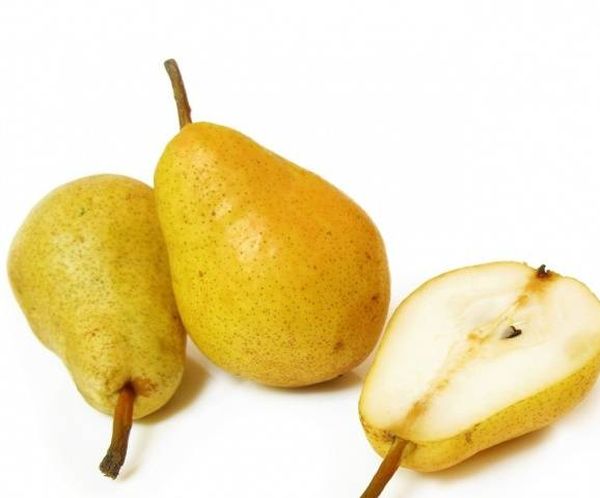
An autumn variety, producing its harvest in September to early October. It is grown only in warm climates, as it is not particularly winter-hardy. The trees are small, but they tend to bear a heavy crop, requiring some of the flowers to be plucked.
The yield is good, considering the tree's size—up to 150 kg. The fruits are quite large (600-800 g). They can remain on the tree for a long time and can be stored refrigerated for up to two months. The skin is lemon-yellow, with a slight blush. The flesh is white, grainy, and very sweet. The fruit is widely used for preserves.
Features of planting and growing Duchess pear
It's recommended to plant pear seedlings in early spring, before the buds open. However, the following planting and care considerations should be taken into account.
Soil and growing site requirements
The best location for a pear tree is a slightly elevated, sunny spot where moist air masses cannot accumulate. Soil quality isn't particularly demanding, but the tree's yield depends on its fertility, so it's important to prepare the planting holes in advance. They are dug in the fall, or at least 3-4 weeks before planting. The excavated soil is mixed with 3 buckets of compost, 2 liters of ash, and a cup of superphosphate. The hole is then filled one-third full with the resulting mixture.
Important! It's important to consider pollinators for your pear tree immediately and, if necessary, plant them nearby. Suitable pear varieties include Lyubimitsa Klappa, Lesnaya Krasavitsa, or any apple tree with a similar bloom time.
Video "Pear Tree Planting Diagram"
This video shows instructions for planting a pear tree in the garden.
Watering mode
The pear tree's root system takes a long time to develop, so young seedlings require frequent watering. Mature trees are watered as needed and routinely three times per season:
- before flowering;
- during the period of pod setting;
- after harvesting.
Each tree requires 2-3 buckets of water. In dry weather, you can sprinkle the water in the evenings by watering directly from a hose onto the leaves. To slow down evaporation, mulch the area around the tree trunk.
-
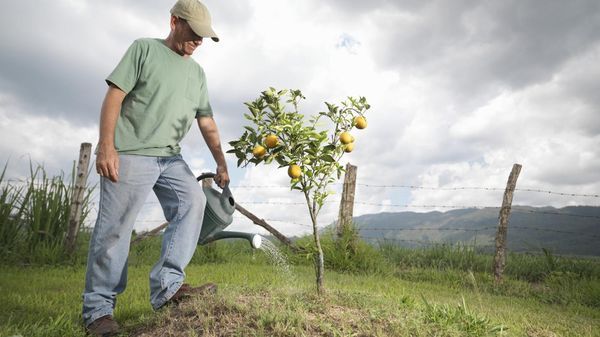
- Each tree requires 2-3 buckets of water
-
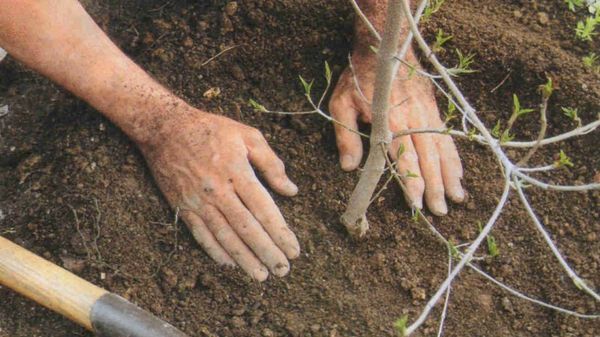
- It is recommended to plant pear seedlings in early spring.
-
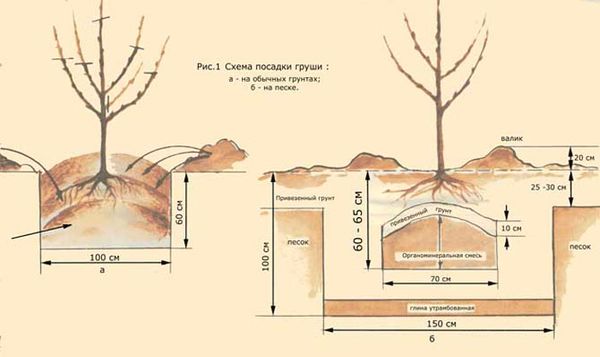
- Pear tree planting pattern
Fertilization
To ensure regular fruiting, pear trees are fertilized 2-3 times a year. At the beginning of the season (late May - June), add liquid compost (1:6) or manure (1:12) to the root zone at a rate of 10 liters per tree. A month later, apply potassium humate (150 g/10 l of water). At the end of summer, add 150 g of superphosphate or compost, scattering it under the tree.
To prevent scab, pear trees should be sprayed with Bordeaux mixture at the beginning of spring and at the end of flowering.
Pruning and shaping a pear tree
Pear trees are pruned in the spring. Crown shaping occurs during the first five years. The year after planting, the central and all lateral shoots are shortened by a quarter. The following year, the previous year's shoots are shortened by 15-20 cm, and new branches by 5-8 cm. Fruit-bearing trees receive sanitary and thinning pruning in the spring and, if necessary, in the fall. Rejuvenation pruning is performed every five to seven years.
Features of wintering
It's believed that in temperate climates, pears can overwinter without cover, but since the weather is variable, it's best to cover the area around the trunk with mulch: peat, sawdust, or dry humus. For late-winter varieties, this type of cover is sufficient. If you're growing Angoulême or a summer variety with low winter hardiness, the cover should be substantial. In addition to a 30-cm layer of mulch, wrap the trunk with a warm, breathable material up to the base of the lower branches.
Reviews from gardeners
I really like the taste of pears. The only downside is the need for pollinators, as a small plot doesn't always have room for several pears.
We've been growing this variety for about 20 years now, and every year the tree is literally covered in fruit. I love that the pears keep for a long time; they can be kept in the cellar until spring.
These pears are very juicy and flavorful, a favorite in our family. The yield is so high that we have to sell them. We make jam and juice from them for ourselves.
According to gardeners' reviews, this variety is suitable for both cottage gardens and large farms. The fruits are transportable, can be stored for a long time, and can be used in any way. Yes, the trees require pollination and the first harvest is a long wait, but the fragrant, sweet fruits, after which a number of confectionery products are named, are worth the wait.