
Growing the early summer pear variety Skorospelka from Michurinsk
Content
Description and characteristics
The tree of this variety is quite tall and grows very quickly with proper care. It has a pyramidal but spreading crown, with thin, straight, and long branches extending from the trunk at right angles. The bark is scaly, with few lenticels, and the shoots are small and brown. The leaves are small, ovoid, slightly elongated, and corrugated along the edges. The tree begins to bloom very early; the flowers are large and white. Since the tree is self-sterile, a pollinator is essential. The pear "Memory of Yakovlev" is an ideal choice for the Michurin variety.
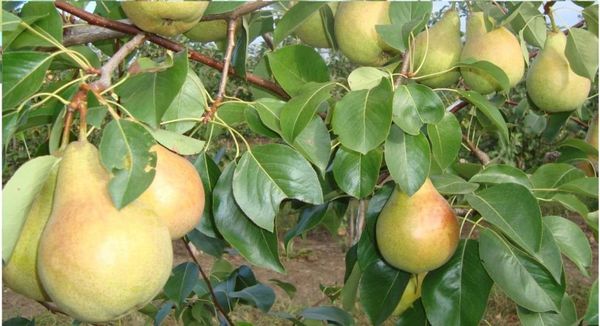
Skorospelka is always highly productive. The first harvest can be collected as early as four years after planting, and it reaches its peak yield by the age of ten. The fruits are small but very attractive. They are shaped like a chicken egg, yellow-green in color, slightly red on the side most exposed to sunlight. The flesh is juicy, sweet, and slightly tart.
Unfortunately, ripe fruit does not have a long shelf life – from five days to two weeks. The variety doesn't have a strong odor; a very faint aroma can be detected by lightly cutting the fruit. Thanks to its small size and firm skin, the Skorospelka pear from Michurinsk is ideal for canning, compotes, preserves, and jellies.
Features of cultivation
This variety doesn't require frequent watering. A single, generous watering throughout the season is sufficient, but will require approximately 100 liters of water. During dry periods, you can increase the frequency of watering to 2-3 times, otherwise the fruit will become tart.
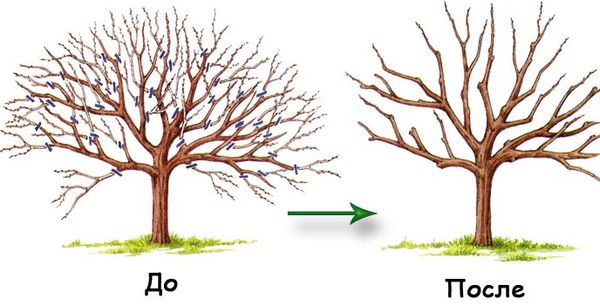
Trees are pruned in early spring and late fall. This process is essential for proper crown formation. This will make the tree more attractive, and the quality of the harvest will noticeably improve. Pruning is also done to rejuvenate the tree and remove old, dry branches. Neglecting this rule increases the risk of pest infestation.
There's no need to fertilize the seedling during the first year after planting, as it will already receive nutrients essential for its development from the fertile soil. However, after that, the pear tree will require annual feeding. There are many feeding methods, and an experienced gardener always chooses the most suitable option. Everything depends on the soil condition, the development and age of the pear tree, and the climate.
Nitrogen fertilizers are applied twice a season in the spring: when the first ovaries appear and when flowering is complete. A mineral complex is added in the fall; this supplement is available at any specialty store.
This pear variety is disease-resistant and rarely suffers from scab, but it can be susceptible to fruit rot. This can be caused by spores carried by wind or raindrops. Damaged fruit is the first to be affected by this bacterium. Therefore, at the first sign of rot, infected fruit should be removed and disinfected.
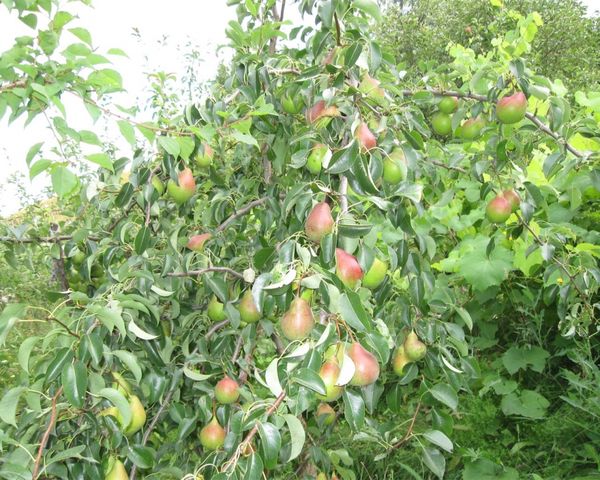
To prevent the risk of disease, it is recommended to spray the tree with urea as a preventative measure. This should be done once a year, before the buds swell. It is especially important to remove fallen leaves and dig around the trunk in the fall to eliminate most of the insects.
Since the bark peels off the trunk very easily, don't be afraid to peel it off yourself. New bark won't appear for a long time, so the trunk is coated with lime mortar.
If you're a novice gardener, there's a great reason to turn your attention to the Skorospelki pear variety—it's sure to live up to your expectations.
Video: "Pear Tree Pruning Guidelines"
This video will show you how to prune a pear tree.