
Features of planting and growing the early pear variety Severyanka
Content
Origin and characteristics of the variety
What is the origin story of the Severianka Krasnoshchekaya pear variety? The Severianka pear variety was bred in 1959 by the renowned Soviet academician and Doctor of Agricultural Sciences Pavel Yakovlev at the Michurin All-Russian Research Institute of Genetics and Breeding of Fruit Plants.
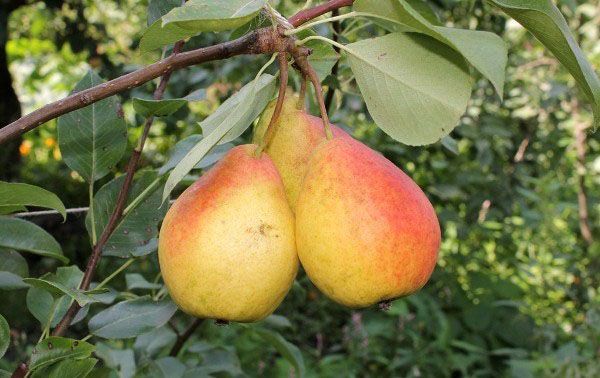
The Severyanka's "parents" are the pear varieties Koperechka No. 12 and Lyubimitsa Klappa. The pear tree has changed its name three times: initially, it was called Yakovlev's Seedling No. 103, then the name Severyanka Yakovlev was adopted, and later, the pear tree was renamed Severyanka.
The variety's name suggests that the plant was originally intended for cultivation in the harsh climatic conditions of the northern region. Although this crop has become widespread in the former Soviet Union over time, its main cultivation regions in Russia are the Ural, Volga-Vyatka, Far Eastern, East Siberian, Middle Volga, and West Siberian regions.
Severyanka Krasnoshchekaya is characterized by low self-pollination (no more than 30–35% of fruits). To increase fruiting, it requires pollinator trees. According to experienced gardeners, the Pamyat Yakovleva variety is considered the best pollinator.
Let's take a closer look at the Severyanka pear's taste, as this is of interest not only to farmers but also to ordinary consumers. The soft pink flesh has a pleasant, subtle aroma. The pear is juicy and sweet, with no tartness.
Appearance
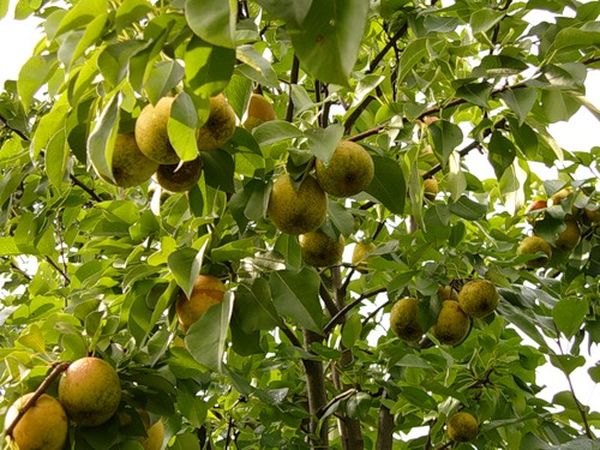
Any introduction to any fruit tree should begin with a description of the variety. The Severianka variety is a medium-sized pear tree. It has a wide, pyramidal crown. Without training, the crown can reach a diameter of 6 meters. Long, thick branches extend from the trunk at right angles. Due to its tendency to overbranch, the pear can become heavily overgrown.
The bark is dark gray. Young shoots are greenish and covered with a fine hair, which disappears as the plant matures. The leaves are dark green, complex in structure, slightly pointed and elongated at the tips.
The Severyanka pear, according to the variety description, blooms with snow-white, saucer-shaped flowers. The petal edges barely touch each other. During the blooming period, the tree is densely covered with clusters of 4-6 flowers.
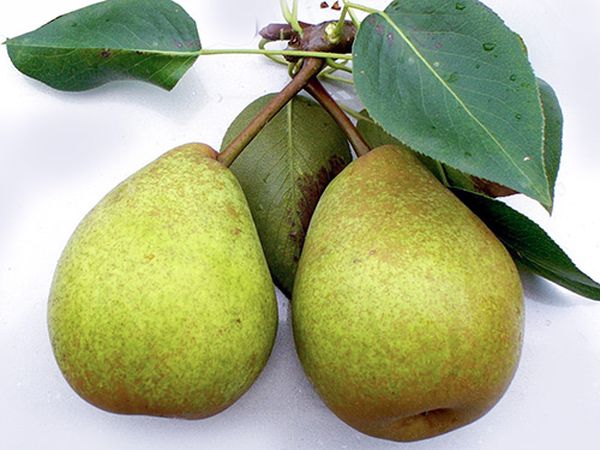
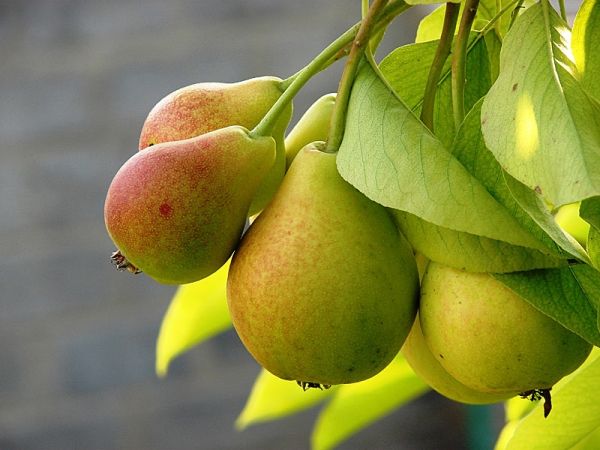
The main characteristic of Severyanka fruits is their small size. The average weight of one fruit is 80–100 g. The fruit has a slightly elongated conical shape. The pear's surface is glossy. At the initial stage of ripening, the skin is yellowish-green, gradually turning completely yellow and acquiring a light blush. The skin is soft and not rough to the touch.
Harvesting and storage
Severyanka belongs to the category of early-fruiting plants: the first pear harvest is collected from trees aged 3–4 years.
The active ripening period begins in mid-August and lasts until early September. A characteristic of this variety is the high risk of fruit drop after ripening. Within just 2-3 days, all the fruit falls from the tree. For this reason, experienced gardeners recommend not waiting for the fruit to fully ripen and harvesting a little earlier.
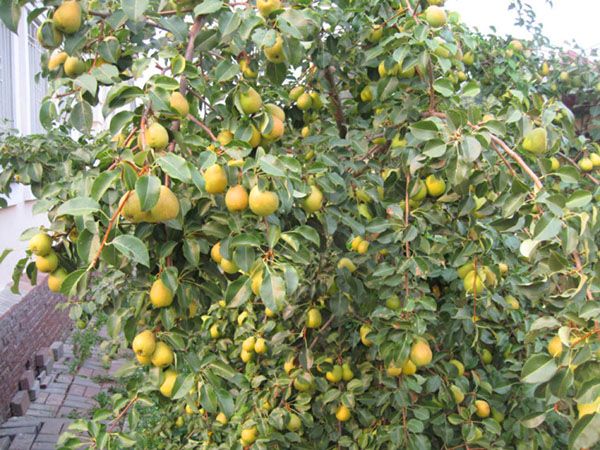
Unfortunately, this variety does not store well.
If you pick ripe fruit, its shelf life will be no more than 10 days. Slightly unripe fruit will keep for 2 months. Store the harvested fruit in a cool, dark place. A cool cellar is ideal.
Landing rules
Planting and care are two important aspects of gardening, determining whether a seedling will take root, continue to grow and develop, and how well it will bear fruit.
First, you need to choose a location to plant the pear tree. Choose a spot in the garden that receives plenty of sunlight, is free of drafts, and has a groundwater table at a depth of two meters. Ideal soil is loamy or sandy loam with plenty of organic matter.
When should I plant a pear tree seedling? This is a question often asked by novice gardeners. Both spring and fall planting are possible. However, if you plant the tree in the fall, there's a high risk that it won't establish before the first frost.
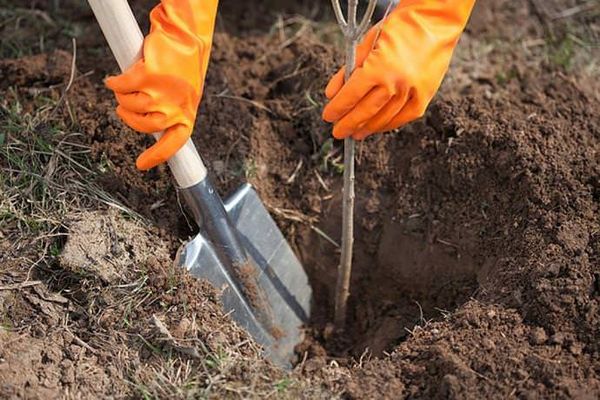
When choosing a seedling, take a closer look at two-year-old plants, as they are characterized by good endurance and high adaptability to various weather and climate conditions.
Growing conditions
The Severyanka pear is an easy-to-grow fruit tree. To ensure the tree grows well and produces abundant fruit, follow these care guidelines:
- Frequent and abundant watering is necessary, especially during periods of drought;
- do not forget to constantly loosen the soil in the tree trunk circle;
- remove weeds that clog the soil and prevent oxygen from passing through;
- Feed the trees annually with mineral and organic fertilizers;
- despite the high level of frost resistance, the plant must be wrapped up for the winter;
- To prevent pear trees from becoming overgrown, they require sanitary and formative pruning of the crown;
- Carry out preventative garden treatment, which significantly reduces the risk of various diseases and also reduces the likelihood of insect pests appearing.
Pros and cons of Severyanka
Like any fruit plant, the Severianka pear has its advantages and disadvantages. By familiarizing yourself with these, you can determine whether this crop is suitable for growing in your garden.
Pros:
- high level of frost resistance;
- early fruiting;
- excellent taste characteristics;
- the versatility of the fruit (it can be eaten raw or used to make jams and preserves);
- excellent yield (with proper care and good pollination, one adult tree can produce about 45–60 kg of fruit);
- compactness and small size of the tree (suitable for small garden plots);
- good resistance to scab.
Cons:
- small fruits;
- high fruit shedding during ripening;
- does not transport well;
- short shelf life;
- low drought resistance.
Video: "How to Plant a Pear Tree Properly"
This video will show you how to properly plant a pear tree in your garden.