
Growing the Rossoshanskaya summer pear is a beautiful experience.
Content
Characteristics of the variety
This pear variety was created by crossing two easy-to-grow varieties: Tonkovetka and Lyubimitsa Klappa. The former is known for its exceptional winter hardiness, while the latter boasts exceptional fruit flavor, which has been inherited by the Rossoshanskaya Krasnaya.
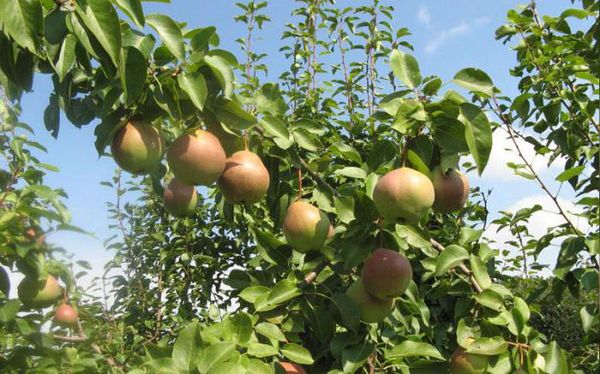
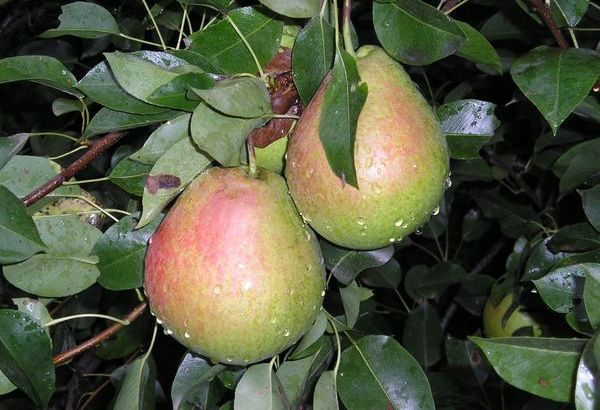
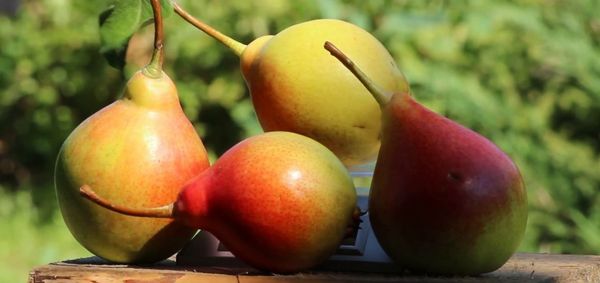
The pears of this variety, although not large (110–120 g), are very beautiful and tasty. They are smooth and even, with a classic elongated pear shape. The skin is thin, amber-yellow, and as the fruit ripens, half becomes covered with a deep crimson blush. The flesh is creamy yellow, juicy, and has a very pleasant, slightly oily consistency with a refreshing sweet and sour taste (9% sugar).
The pear tree is characterized by vigorous growth, reaching a height of 6 meters. When young, it has a narrow pyramidal crown, which becomes broader and more voluminous with age. The crown density is moderate, as shoot productivity is low. The bark of the trunk and skeletal branches is dark gray with a silvery tint, brown on young shoots, and reddish at the tips. The leaves are bright, glossy on the surface, and rise upward.
The variety is partially self-fertile, but pollinators with similar flowering times planted nearby will boost the already high yield—up to 80 kg per tree (approximately 250 c/ha). In terms of ripening time, the pear is a late-summer variety. The fruits reach harvest maturity in the second half of August, possibly earlier in southern regions. Ripe pears have excellent marketability: they do not fall off and can be stored for up to a month without losing their flavor or transportability.
The only downside is that it takes a long time to harvest, as the Rossoshanskaya Krasnaya is not an early fruiting variety. Like the Rossoshanskaya Pozdnyaya pear, it only begins to bear fruit after 6-7 years, and only if it doesn't experience frost during flowering. The trees themselves are quite frost-hardy. With their root system covered, they can withstand temperatures as low as -34°C; in the south, overwintering is no problem at all. However, as for the flowers, temperatures as low as -6°C cause 100% damage, resulting in a complete failure of the harvest.
Planting and care
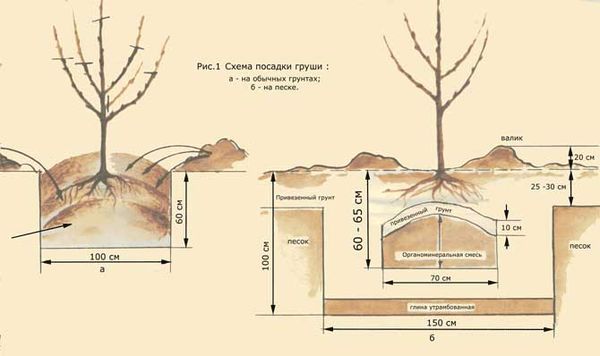
The trees aren't particularly picky about soil. They thrive in fertile black soil, loamy clay, or sandy loam, as long as sufficient organic matter is added during planting. They don't tolerate overwatering, so it's best to plant seedlings in areas with deep groundwater or at a slight elevation.
For planting, standard holes with a diameter of about 0.8 m and a depth of 0.6–0.8 m (depending on the size of the roots) with a drainage layer at the bottom are required.
Caring for pear trees involves standard procedures, each with its own unique challenges. Trees should be watered infrequently, as the soil dries out, using settled water warmed to the soil temperature. Overwatering is harmful to this pear variety, but underwatering causes the fruit to become smaller, and if drought occurs during the fruiting season, it may drop prematurely.
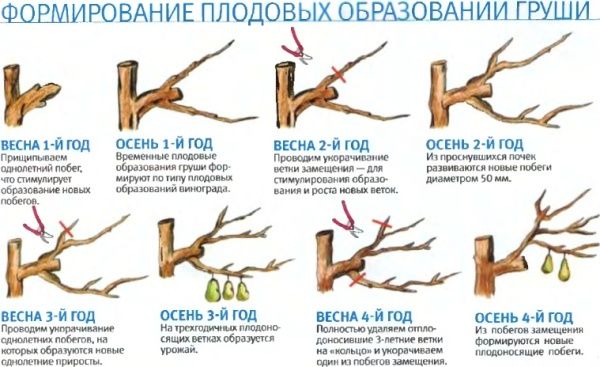
During the first few years, pear trees don't require pruning, as their branches are already quite sparse and the crown itself has a narrow pyramidal shape. As the tree begins to bear fruit and grow, two scheduled prunings will be necessary: in the spring and after the harvest. Fertilize pear trees according to the standard schedule: with nitrogen fertilizers in the spring and phosphorus and potassium in the fall.
In harsh climates, the vulnerable root system requires additional protection. Shortly before the onset of frost, the tree's trunk area is mulched with a 10-15 cm layer of organic matter, topped with a generous layer of snow. Flower buds also do not tolerate recurrent frosts well, so it is sometimes necessary to delay flowering. This is easily accomplished by piling up snow around the trunk area. This will help delay the onset of the pear tree's growth, as it will only awaken after the snow has completely thawed.
Diseases and pests
The late-summer pear variety Rossoshanskaya Krasivaya is rarely affected by pests or diseases. In southern climates, fungal diseases, particularly scab, have not been observed during all the years of cultivation. In areas with damp and cool summers, minor septoria infestations are possible.
The pear tree has virtually no insect enemies, so mandatory preventative treatments are not required, but only recommended.
Advantages and disadvantages
Like any fruit crop, this pear variety has its pros and cons. Among the first are:
- high yield, including when grown on an industrial scale;
- good commercial characteristics and taste of fruits;
- strong attachment of fruits to the tree, preventing them from falling off;
- versatility of pear use (in natural form, all kinds of preparations, juices, drying);
- a good consumption period for a summer variety (1 month);
- excellent resistance to diseases and parasitic insects;
- easy to care for.
Gardeners note the following disadvantages: small fruit size (below average), trees' extreme vulnerability during flowering, and unstable winter hardiness. In southern regions, winter hardiness is high, while in cooler climates, without proper protection, roots can freeze.
Video "Secrets of Growing Pears"
This video will teach you some useful tips for growing pears.